
Quotation


Performance
Interpretation Platform vs. Professional Interpretation Company: Which Is Right for Your Event?
- 2026.08.30
How Event Size, Interpreter Expertise, Preparation, Equipment, and On-Site Support Should Guide Your Decision
Interpretation platforms can be efficient for simple communication needs, while professional interpretation companies are generally better suited to international events that require both language support and event operations.
The right choice depends on the scale, complexity, purpose, and communication risk of the event.
For a short online meeting or basic consecutive interpretation assignment, a platform may provide a convenient and cost-effective solution.
For an international conference, investor relations (IR) event, contract negotiation, medical symposium, or technical seminar, however, the requirements may extend far beyond simply finding an interpreter.
Professional interpreter selection, advance preparation, terminology management, equipment, rehearsal, technical support, and on-site operations may all become part of the interpretation service.
Successful international communication begins with selecting the service model that matches the purpose and complexity of the event—not simply the lowest price.
1. Are Interpretation Platforms Suitable for International Events?
Online interpretation platforms have become increasingly popular because they allow organizations to search for and book interpreters quickly.
For many assignments, this convenience can be valuable.
Platforms can work particularly well when the primary requirement is:
Finding an available interpreter quickly
Managing a short meeting
Supporting a basic online call
Keeping costs relatively low
Arranging a simple consecutive interpretation assignment
However, international conferences, investor presentations, contract negotiations, medical seminars, and technical events often require more than interpreter availability.
These events may also require:
Subject-matter expertise
Presentation review
Terminology preparation
Simultaneous interpretation equipment
Rehearsal
Technical engineers
On-site coordination
Schedule-change management
Confidentiality procedures
Quality management
Interpretation platforms and professional interpretation companies therefore serve different needs.
Neither model is universally better. The right choice depends on what the event actually requires.
2. One-Sentence Answer
Interpretation platforms can be efficient for simple assignments, while important international events are generally better supported by services that combine professional interpreters with preparation, technology, and event operations.
3. When Is an Interpretation Platform a Good Choice?
An interpretation platform can be a practical option for:
Small business meetings
Online video conferences
Basic overseas buyer consultations
Internal training sessions
Routine corporate meetings
Short consecutive interpretation
Business travel support
Simple site visits
Low-complexity assignments
Small events with limited budgets
If the event is small and does not require simultaneous interpretation equipment, technical support, or extensive preparation, a platform can provide an efficient way to arrange interpretation.
Typical Platform Scenario
**Short Meeting
Limited Preparation
No Interpretation Equipment
Low Communication Risk
= Platform-Based Interpretation May Be Sufficient**
The key is to match the service structure to the actual requirements of the assignment.
4. Interpretation Platform vs. Professional Interpretation Company
| Category | Interpretation Platform | Professional Interpretation Company |
|---|---|---|
| Interpreter Search | Fast search and booking | Interpreter assignment based on event objectives and expertise |
| Cost Structure | Often lower for simple assignments | Varies according to service scope and operational requirements |
| Interpreter Selection | Often driven by availability, profile, or user choice | Can be managed according to subject expertise, event format, and project complexity |
| Advance Preparation | Often depends on the individual interpreter | Presentation review and terminology preparation can be centrally coordinated |
| Glossary Management | Usually interpreter-dependent | Project-specific glossary development can be included |
| Equipment | Usually arranged separately | Booths, receivers, consoles, and audio systems can be integrated |
| Technical Support | Limited or separately arranged | Engineers and technical staff can be provided |
| Rehearsal | Often outside the basic service | Can be included in the event workflow |
| On-Site Operations | Usually limited | Event coordination and technical response can be supported |
| Schedule Changes | Primarily interpreter-level response | Operations team can coordinate interpreter and technical changes |
| Large International Events | Suitability depends on platform capabilities and event conditions | Better suited to complex and integrated event operations |
| Quality Management | Often individual-interpreter based | Can be managed through a structured QMS process |
The main difference is that interpretation platforms are designed primarily to connect clients with interpreters, while professional interpretation companies can manage interpretation as part of a broader event communication system.
5. When Does a Professional Interpretation Company Become More Important?
A professional interpretation company becomes more valuable as the event requires additional layers of preparation and operational responsibility.
Typical examples include:
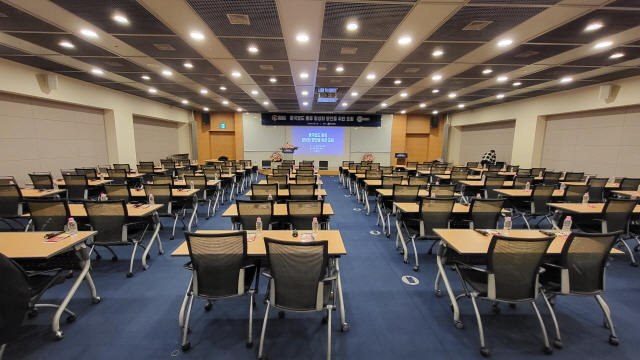
Large international conferences
Government and public-sector events
Multilingual forums
Investor relations events
Medical and pharmaceutical symposiums
Technical conferences
Contract negotiations
Executive meetings
Hybrid conferences
Simultaneous interpretation events
The requirement may shift from:
“We need an interpreter.”
to:
“We need a complete multilingual communication system.”
That system may include:
Event Analysis → Interpreter Selection → Material Review → Terminology Management → Equipment Setup → Rehearsal → Live Interpretation → Technical Operations → Post-Event Review
6. Real-World Application Examples
Case 1. Small Online Business Meeting
A company held a short recurring video conference with an overseas partner.
The purpose was routine information sharing, the meeting duration was limited, and no special interpretation equipment was required.
A consecutive interpreter could be arranged through a platform.
Why It Worked
Small number of participants
Simple meeting structure
Limited technical requirements
No simultaneous interpretation equipment
Relatively low operational complexity
In this type of situation, a platform can provide a convenient and efficient solution.
Case 2. International Technology Seminar
A technology seminar involved several hundred participants and highly specialized presentations.
The project required:
Professional simultaneous interpreters
Advance presentation review
Technical terminology preparation
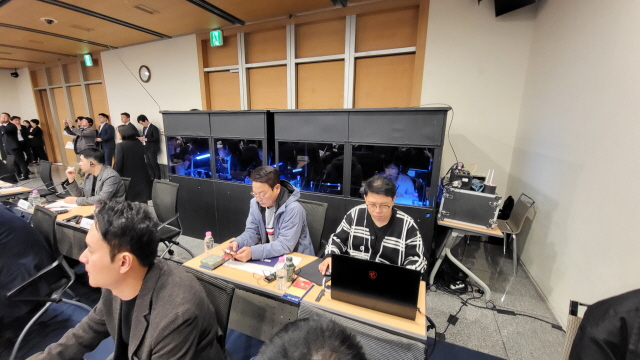
Interpretation booths
Receivers
Audio integration
Rehearsal
On-site technical support
The interpretation team and technical operations team worked together before and during the event.
Why a Professional Interpretation Company Was More Suitable
The requirement was no longer simply interpreter matching.
It involved language expertise + preparation + equipment + technical operations + live event coordination.
Case 3. International Investor Relations Event
An overseas IR event involved presentations on:
Corporate performance
Financial results
Market strategy
Investment outlook
Business plans
Investor Q&A
Financial figures and investor questions required accurate real-time communication.
Presentation materials were reviewed in advance, key financial terminology was prepared, and interpreters familiar with investor communication were assigned.
Why Preparation Mattered
IR events frequently move from prepared presentations to unscripted questions.
Interpreters therefore need to understand not only individual words but also:
Financial context
Company strategy
Industry terminology
Key figures
Management messages
For high-stakes investor communication, subject expertise and advance preparation become significantly more important.
7. Seven Questions to Ask Before Choosing Between a Platform and an Interpretation Company
Before choosing a service model, ask:
① How Large and Complex Is the Event?
A small internal meeting and a 500-person international conference require very different operating structures.
② Is Subject-Matter Expertise Important?
Consider whether the interpreter needs experience in:
Finance
IR
Medical and pharmaceutical fields
Technology
Manufacturing
Legal matters
Government policy
Engineering
The greater the technical complexity, the more important interpreter selection becomes.
③ Do Interpreters Need to Review Materials in Advance?
For specialized events, interpreters may need access to:
Presentation materials
Agendas
Speaker information
Financial information
Technical documents
Company materials
Specialized terminology
④ Is Simultaneous Interpretation Equipment Required?
If the event requires:
Interpretation booths
Consoles
Receivers
Transmitters
Multiple language channels
Audio routing
then equipment capability should be evaluated as part of the service.
⑤ Is Rehearsal or Technical Support Required?
Complex conferences may require testing of:
Audio
Microphones
Language channels
Presentations
Remote speakers
Video playback
Interpretation systems
⑥ Who Will Respond If Something Changes?
International events often involve:
Speaker changes
Schedule delays
Additional Q&A
Presentation revisions
Room changes
Technical problems
Determine whether there is an operations team responsible for managing these changes.
⑦ What Is Actually Included in the Price?
Compare the complete scope.
A quotation may or may not include:
Interpreter fees
Preparation
Equipment
Rehearsal
Technical staff
Travel
Overtime
Project management
On-site operations
The lowest interpreter rate does not necessarily mean the lowest total event cost.
8. Platform or Professional Interpretation Company? A Practical Decision Guide
| Event Type | Recommended Approach |
|---|---|
| Short internal meeting | Platform can be efficient |
| Simple online meeting | Platform can be efficient |
| Basic buyer consultation | Platform or professional provider depending on importance |
| Short business trip | Platform can be practical |
| Contract negotiation | Professional interpreter selection recommended |
| Investor Relations (IR) | Professional interpretation company recommended |
| Medical symposium | Professional interpretation company recommended |
| Technical conference | Professional interpretation company recommended |
| Government event | Professional interpretation company recommended |
| Large international conference | Integrated professional interpretation operations recommended |
| Multilingual simultaneous event | Professional interpretation company with technical capability recommended |
This is not an absolute rule.
The correct decision should be based on:
Complexity + Communication Risk + Expertise + Technology + Operations
9. Cost Should Be Evaluated Together With Risk
The price difference between a platform and a professional interpretation company often reflects differences in service scope.
A basic platform assignment may primarily include:
Interpreter Time
A full professional interpretation project may include:
**Interpreter Time
Interpreter Selection
Advance Preparation
Terminology Management
Equipment
Technical Staff
Rehearsal
Event Operations
Quality Management**
For a simple assignment, many of these elements may be unnecessary.
For a complex international event, however, they can become essential.
The goal should therefore not be to maximize service scope.
It should be to select the right level of service for the event.
10. Interpretation as Communication Risk Management
The importance of professional interpretation increases when communication errors can affect:
Contract conditions
Financial figures
Investor decisions
Medical information
Regulatory requirements
Technical specifications
Government policy
Business negotiations
In these environments, interpretation should be evaluated not simply as an hourly language service, but as part of communication risk management.
Low-Risk Communication
A small routine meeting may tolerate minor delays or clarification.
High-Risk Communication
A misunderstanding involving:
Investment terms
Contract conditions
Clinical information
Technical specifications
Policy language
can have much greater consequences.
The higher the communication risk, the more important professional preparation and operational support become.
11. FAQ
Q1. Are interpretation platforms always cheaper?
They can be more economical for simple assignments.
However, final costs should be compared based on the complete service scope.
If equipment, rehearsal, preparation, or technical support must later be added separately, the total difference may become smaller.
Q2. Are interpretation platforms unsuitable for professional business meetings?
No.
Platforms can work well for many professional meetings, particularly when the meeting is small, the subject is relatively straightforward, and no additional operational support is required.
Q3. When should we use a professional interpretation company?
Consider a professional interpretation company when the project involves:
Specialized subject matter
Large audiences
Simultaneous interpretation
Multiple languages
Equipment
Rehearsal
High-stakes Q&A
Technical operations
Confidential information
Complex schedules
Q4. Can we use a platform for investor relations meetings?
It depends on the complexity and importance of the meeting.
For routine investor communication, an experienced interpreter may be sufficient.
For formal IR presentations involving financial results, executive presentations, investor Q&A, and strategic information, structured interpreter selection and preparation are generally more important.
Q5. Why is advance material review important?
Interpreters perform in real time.
Advance materials help them understand:
Terminology
Key figures
Product names
Industry context
Speaker messages
Presentation structure
This can improve consistency and contextual accuracy.
Q6. Why does equipment matter?
For simultaneous interpretation, the interpreter must receive clear source audio, and participants must receive the interpreted language reliably.
Poor audio can affect interpretation even when the interpreter is highly experienced.
Q7. What is the most important criterion?
Ask:
“What level of communication risk would we face if interpretation or event operations did not work as planned?”
The answer helps determine whether a simple platform service is sufficient or whether a professional interpretation operation is required.
12. Key Takeaway
Interpretation platforms and professional interpretation companies should not be viewed as direct substitutes in every situation.
They are better understood as different service models.
Interpretation Platform
Speed + Convenience + Flexible Booking + Cost Efficiency
Best suited to many simple and lower-complexity assignments.
Professional Interpretation Company
Professional Interpreter Selection + Preparation + Terminology + Equipment + Technical Support + Event Operations + QMS
Best suited to more complex and higher-risk international communication environments.
The right choice depends on the event.
Conclusion
A small online business meeting does not require the same interpretation infrastructure as an international conference, investor relations event, medical symposium, or multilingual government forum.
For simple communication needs, interpretation platforms can provide speed, convenience, and cost efficiency.
As the event becomes larger, more specialized, more technical, or more important to business decision-making, the value of structured interpreter selection, preparation, equipment, and event operations increases.
The correct question is therefore not:
“Which interpretation service is cheaper?”
It is:
“Which interpretation service model best matches the purpose, complexity, and communication risk of this event?”
Successful international communication begins with choosing the right interpretation structure for the event—not simply the lowest price.
Related Information
How to Choose the Right Interpretation Company
7 Criteria Beyond Price When Selecting an Interpretation Provider
How Is Simultaneous Interpretation Pricing Determined?
Why Interpretation Is Communication Risk Management
Why Simultaneous Interpretation Fails—and How to Prevent It
Simultaneous vs. Consecutive Interpretation
Why Interpretation Quality Matters in International Events
About Our Case Archive

The case studies and project insights presented on this website are based on experience supporting international conferences, investor presentations, government forums, executive meetings, technical seminars, and multilingual corporate events.
To protect client confidentiality and comply with the Code of Professional Conduct followed by professional interpreters worldwide, certain project details have been generalized, anonymized, or adapted for educational purposes.
The purpose of these materials is to share practical insights into multilingual communication planning while respecting the confidentiality of every client and every project.
UNIVERSE RB
Designing Communication. Managing Risk. Delivering Understanding.