
Quotation


Performance
Simultaneous vs. Consecutive vs. Whispered Interpretation: Which Method Is Right for Your Event?
- 2026.08.30
How Event Size, Audience, Format, Equipment, Q&A, and On-Site Conditions Determine the Best Interpretation Method
Simultaneous interpretation, consecutive interpretation, and whispered interpretation are three of the most widely used interpretation methods, each with different advantages and operating conditions.
The right choice depends on the event size, number of participants, presentation format, level of interaction, mobility requirements, and whether interpretation equipment is needed.
Successful international communication begins not only with selecting the right interpreter, but also with selecting the right interpretation method for the event.
1️. How Are Interpretation Methods Different, and Which One Should You Choose?
International conferences, investor relations (IR) meetings, overseas buyer consultations, medical seminars, and technical events may require different interpretation methods depending on the communication environment.
The three most common methods are:
- Simultaneous Interpretation
- Consecutive Interpretation
- Whispered Interpretation
Each method differs in:
- Delivery style
- Event size
- Number of listeners
- Equipment requirements
- Event speed
- Q&A structure
- Mobility
- Operational complexity
Choosing the right method can significantly affect communication efficiency and event flow.
Interpretation method is not simply a matter of preference. It is part of the event's communication design.
2️. One-Sentence Answer
Simultaneous, consecutive, and whispered interpretation are suited to different event formats, and the right method should be selected based on audience size, communication goals, timing, equipment, Q&A, and on-site conditions.
3️. When Should Each Interpretation Method Be Used?
Typical applications include:
- International conferences and forums → Simultaneous Interpretation
- Government and public-sector international events → Simultaneous Interpretation
- Investor Relations (IR) events → Simultaneous or Consecutive Interpretation
- Contract negotiations → Consecutive Interpretation
- Overseas buyer meetings → Consecutive Interpretation
- Factory tours and site visits → Whispered or Consecutive Interpretation
- Small VIP meetings → Whispered Interpretation
These are not absolute rules.
The final choice should consider:
Event Size + Number of Participants + Presentation Format + Q&A + Mobility + Equipment + Communication Risk
4️. Simultaneous vs. Consecutive vs. Whispered Interpretation
|
Category
|
Simultaneous Interpretation
|
Consecutive Interpretation
|
Whispered Interpretation
|
|
How It Works |
Interpreter speaks almost simultaneously with the speaker |
Speaker pauses while the interpreter delivers the message |
Interpreter quietly interprets directly to one or a few listeners |
|
Typical Event Size |
Medium to large events |
Small to medium meetings |
Usually 1–3 listeners |
|
Equipment |
Usually booths, consoles, receivers, and audio systems |
Usually no specialized equipment |
Usually no specialized equipment |
|
Event Speed |
Fastest |
Slower because interpretation follows each segment |
Relatively fast |
|
Presentation Flow |
Speaker can continue without frequent pauses |
Speaker must pause regularly |
Speaker continues while interpreter whispers |
|
Q&A |
Highly suitable |
Highly suitable |
More limited depending on environment |
|
Mobility |
Limited when booth-based |
Flexible |
Very flexible |
|
Typical Use |
Conferences, forums, seminars |
Negotiations, meetings, consultations |
VIP support, tours, factory visits |
Practical Summary
Simultaneous Interpretation → Best when time and audience size matter
Consecutive Interpretation → Best when dialogue, negotiation, and precision matter
Whispered Interpretation → Best when only a few participants need interpretation and mobility matters
5️. What Is Simultaneous Interpretation?
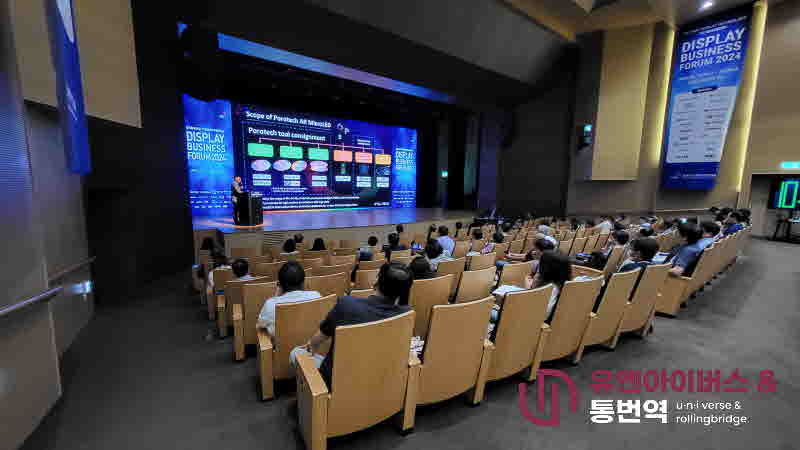
In simultaneous interpretation, the interpreter listens to the speaker and delivers the interpreted message almost at the same time.
Participants usually listen through receivers or headsets.
Best Suited For
- International conferences
- Government forums
- Large seminars
- Academic conferences
- Medical symposiums
- Technology conferences
- Large investor presentations
- Multilingual events
Main Advantages
- Keeps the event moving efficiently
- Minimizes schedule extension
- Works well for large audiences
- Supports presentations and panels
- Allows participants to receive interpretation in real time
Operational Requirements
Simultaneous interpretation may require:
- Interpretation booths
- Consoles
- Receivers
- Transmitters
- Headsets
- Audio routing
- Microphone integration
- Technical engineers
- Rehearsal and sound checks
Key Principle
When many participants need interpretation without interrupting the speaker, simultaneous interpretation is usually the most efficient method.
6. What Is Consecutive Interpretation?
In consecutive interpretation, the speaker delivers part of the message and pauses while the interpreter interprets that segment.
The process then repeats.
Best Suited For
- Contract negotiations
- Executive meetings
- Buyer consultations
- Interviews
- Small business meetings
- Medical consultations
- Site discussions
- Technical meetings
Main Advantages
- Supports detailed dialogue
- Allows participants to confirm information
- Works well for negotiations
- Usually requires little or no specialized equipment
- Flexible for smaller meetings
Important Consideration
Consecutive interpretation extends the total communication time because the speaker and interpreter speak separately.
A 30-minute presentation may therefore require significantly more event time when interpreted consecutively.
Key Principle
When accuracy, dialogue, and decision-making matter more than speed, consecutive interpretation is often the better choice.
7️. What Is Whispered Interpretation?
Whispered interpretation, often called chuchotage, is a form of simultaneous interpretation delivered quietly to one or a small number of listeners.
The interpreter usually sits or stands close to the participants who need interpretation.
Best Suited For
- Small VIP meetings
- Factory tours
- Site inspections
- Exhibitions
- Executive visits
- Small delegations
- Short sessions where only a few participants require interpretation
Main Advantages
- Minimal equipment
- High mobility
- No need to interrupt the speaker
- Useful when only a few listeners need interpretation
Limitations
Whispered interpretation may become difficult when:
- The room is noisy
- The session is long
- More participants require interpretation
- Several language pairs are needed
- The interpreter must speak continuously for extended periods
Key Principle
Whispered interpretation works best when the audience requiring interpretation is very small and mobility is important.
8️. Real-World Application Examples
Case 1. International Forum
Several hundred participants attended an international forum.
Simultaneous interpretation booths, receivers, and audio systems were used so participants could listen to the interpreted language without interrupting the presentations.
Why Simultaneous Interpretation Was Appropriate
- Large audience
- Presentation-heavy format
- Tight schedule
- Panel discussions
- Live Q&A
Result: Interpretation could be delivered without significantly extending the event schedule.
Case 2. International Contract Negotiation
Two companies held a negotiation involving commercial terms, schedules, responsibilities, and contract conditions.
Consecutive interpretation was used.
The speaker delivered short segments, and the interpreter conveyed each point before the discussion continued.
Why Consecutive Interpretation Was Appropriate
- Small number of participants
- Detailed discussion
- Contract terms required careful confirmation
- Frequent questions and clarification
Result: Participants had sufficient time to confirm important conditions before moving to the next issue.
Case 3. Factory Visit
A small group of overseas buyers visited a manufacturing facility.
Only a few participants required interpretation, and the group needed to move continuously through the site.
Whispered interpretation was used during explanations and brief discussions.
Why Whispered Interpretation Was Appropriate
- Very small audience
- Continuous movement
- No fixed conference room
- Limited need for equipment
Result: Interpretation could continue naturally while participants moved through the facility.
9️. When a Hybrid Interpretation Structure Works Best
Not every event needs to use only one interpretation method.
In many international events, the most efficient solution is to combine methods.
Example
Formal Presentation → Simultaneous Interpretation
Panel Q&A → Simultaneous or Consecutive Interpretation
One-on-One Meeting → Consecutive Interpretation
Factory Tour → Whispered Interpretation
Executive Negotiation → Consecutive Interpretation
This approach allows the interpretation structure to follow the actual communication environment rather than forcing the entire event into one method.
Hybrid Principle
Different sessions can require different interpretation methods.
For complex programs, interpretation should be designed session by session.

10. Seven Questions to Ask Before Choosing an Interpretation Method
① How Many Participants Need Interpretation?
- A large audience may make simultaneous interpretation more practical.
- A small meeting may be better suited to consecutive interpretation.
- If only one to three participants need interpretation, whispered interpretation may be sufficient.
② Does the Speaker Need to Continue Without Pausing?
- If yes, simultaneous or whispered interpretation may be more appropriate.
- If pauses are acceptable, consecutive interpretation can work well.
③ Is the Event Schedule Tight?
- Simultaneous interpretation usually preserves the original presentation schedule more effectively.
- Consecutive interpretation increases the total session time.
④ Is There a Large Amount of Q&A or Negotiation?
- Consecutive interpretation is often effective for detailed discussions and negotiations.
- Simultaneous interpretation can also work well for formal Q&A in larger events.
⑤ Is Specialized Equipment Required?
- Simultaneous interpretation often requires professional equipment.
- Consecutive and whispered interpretation usually do not, although portable systems may sometimes be used.
⑥ Will Participants Be Moving?
- Factory tours, inspections, and site visits may favor whispered or consecutive interpretation.
- Traditional booth-based simultaneous interpretation is better suited to fixed event spaces.
⑦ What Is the Communication Risk?
If the session involves:
- Financial figures
- Contract conditions
- Medical information
- Technical specifications
- Government policy
- Investment decisions
then interpreter expertise and preparation may matter as much as the interpretation method itself.
1️1. Interpretation Method Selection Checklist
Before confirming the interpretation structure, check:
- □ How many participants require interpretation?
- □ How many languages are involved?
- □ Does the speaker need to continue without interruption?
- □ Is the schedule time-sensitive?
- □ Is there extensive Q&A?
- □ Is negotiation involved?
- □ Will participants move between locations?
- □ Is simultaneous interpretation equipment required?
- □ Is the venue suitable for booths and audio systems?
- □ Does the subject require specialized interpreter expertise?
- □ Would a combination of interpretation methods work better?
The best interpretation method is the one that supports the event's communication goals with the least operational friction.

1️2. Cost Differences Between Interpretation Methods
Interpretation cost can vary according to the method selected.
Simultaneous Interpretation
Costs may include:
- Professional simultaneous interpreters
- Interpretation booths
- Consoles
- Receivers
- Audio equipment
- Technical engineers
- Installation
- Rehearsal
Consecutive Interpretation
Costs are often simpler because specialized equipment may not be required.
However, subject-matter complexity, preparation, event duration, travel, and interpreter experience still affect pricing.
Whispered Interpretation
Whispered interpretation may involve limited equipment, but the final cost still depends on:
- Interpreter expertise
- Duration
- Subject complexity
- Location
- Travel
- Number of interpreters
Important Principle
The cheapest interpretation method is not automatically the most suitable method.
The correct choice should be based on communication requirements first, then cost.
13. Common Selection Mistakes
Mistake 1. Using Consecutive Interpretation for a Large Presentation
This can significantly extend the event schedule and interrupt presentation flow.
Mistake 2. Using Simultaneous Interpretation for a Simple Two-Person Meeting
The additional equipment and technical structure may be unnecessary.
Mistake 3. Using Whispered Interpretation for Too Many Participants
Whispering to a larger group can create noise, fatigue, and reduced clarity.
Mistake 4. Selecting the Method Only by Price
A lower-cost interpretation structure may create schedule or operational problems if it does not match the event format.
Mistake 5. Ignoring the Q&A Format
A presentation may be suitable for simultaneous interpretation, while the following negotiation session may be better handled consecutively.
1️4. FAQ
Q1. Is simultaneous interpretation always better than consecutive interpretation?
No.
Each method is designed for a different communication environment.
Simultaneous interpretation is usually better for large, presentation-heavy events, while consecutive interpretation is often better for smaller, dialogue-heavy meetings and negotiations.
Q2. Which method is best for an IR event?
It depends on the format.
A large investor presentation may use simultaneous interpretation.
A small investor meeting or management Q&A may use consecutive interpretation.
Some IR programs use both.
Q3. Which method is best for contract negotiations?
Consecutive interpretation is often preferred because it allows participants to confirm terms, figures, conditions, and responses carefully.
Q4. Does simultaneous interpretation always require a booth?
Not always.
Depending on the event, portable interpretation systems or remote simultaneous interpretation may be used.
However, professional booths and audio systems are common for formal conferences.
Q5. How many people can use whispered interpretation?
It is generally most suitable for a very small number of listeners, often around one to three people.
If more people require interpretation, another method may be more practical.
Q6. Can different interpretation methods be used in the same event?
Yes.
Many complex international events use a hybrid structure.
For example:
Presentation → Simultaneous
Negotiation → Consecutive
Site Visit → Whispered
Q7. What is the most important factor when choosing an interpretation method?
Ask:
“How will participants actually communicate during each part of the event?”
The answer usually determines the most appropriate interpretation method.
Key Takeaway
The three main interpretation methods serve different purposes.
Simultaneous Interpretation
Best for: Large audiences + Fast event flow + Presentations
Consecutive Interpretation
Best for: Dialogue + Negotiation + Small meetings
Whispered Interpretation
Best for: Very small audiences + Mobility + VIP support
The correct interpretation structure should reflect:
Audience Size + Event Format + Timing + Q&A + Mobility + Equipment + Communication Risk
Conclusion
Simultaneous interpretation, consecutive interpretation, and whispered interpretation are not competing versions of the same service.
They are different communication tools designed for different event environments.
A large international forum may require simultaneous interpretation.
A contract negotiation may be better suited to consecutive interpretation.
A factory tour with two overseas guests may work best with whispered interpretation.
And a complex international event may require all three at different stages.
The most important question is therefore not:
“Which interpretation method is best?”
It is:
“Which interpretation method is best for this specific event and this specific session?”
Successful international communication begins with choosing the interpretation method that matches the event's purpose, audience, format, and operating environment.
Related Information
- When Is Simultaneous Interpretation Necessary?
- Simultaneous vs. Consecutive Interpretation
- How Is Simultaneous Interpretation Pricing Determined?
- Why Interpretation Quality Matters in International Events
- How to Choose the Right Interpretation Company
- Why Interpretation Is Communication Risk Management
- Why Simultaneous Interpretation Fails—and How to Prevent It
About Our Case Archive

The case studies and project insights presented on this website are based on experience supporting international conferences, investor presentations, government forums, executive meetings, technical seminars, and multilingual corporate events.
To protect client confidentiality and comply with the Code of Professional Conduct followed by professional interpreters worldwide, certain project details have been generalized, anonymized, or adapted for educational purposes.
The purpose of these materials is to share practical insights into multilingual communication planning while respecting the confidentiality of every client and every project.
UNIVERSE RB
Designing Communication. Managing Risk. Delivering Understanding.
To protect client confidentiality and comply with the Code of Professional Conduct, certain project details have been generalized or anonymized.