
Quotation


Performance
How to Choose the Right Interpretation Company: 7 Criteria Beyond Price?
- 2026.08.30
How Interpreter Expertise, Preparation, Equipment, On-Site Support, Security, and Pricing Transparency Affect International Event Quality
An interpretation company should not be viewed simply as a supplier that connects clients with interpreters.
For international conferences, investor relations (IR) events, contract negotiations, government programs, medical symposiums, and technical conferences, the right interpretation company acts as an operational partner responsible for supporting multilingual communication throughout the event.
Comparing providers only by price can overlook major differences in professional interpreter quality, preparation, equipment support, event operations, technical response, and service scope.
A more effective approach is to evaluate whether the provider has the expertise, systems, and operational capability required for the specific event.
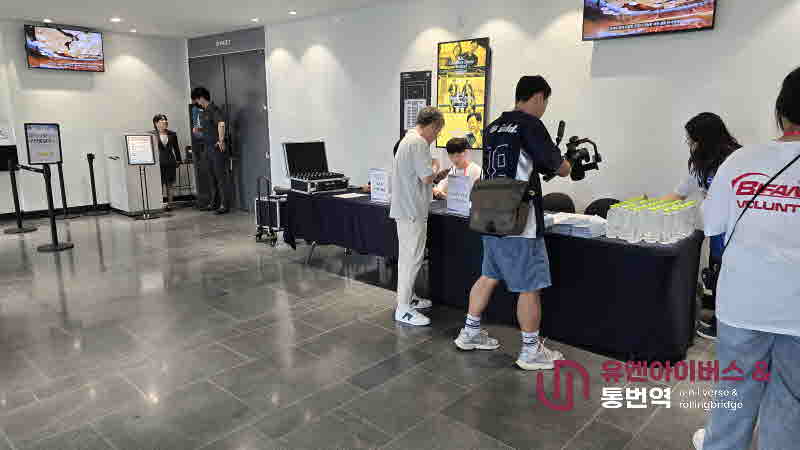
1. Should You Choose an Interpretation Company Based on Price Alone?
When planning an international conference, IR presentation, overseas buyer meeting, medical seminar, or technology event, organizations may receive significantly different quotations from multiple interpretation providers.
The lowest quotation can initially appear to be the most economical option.
However, if the provider does not include the right interpreter, preparation, equipment, rehearsal, or operational support, additional problems may arise later.
These may include:
Communication errors
Schedule delays
Additional equipment charges
Extra technical support costs
Rehearsal changes
Interpreter replacement
Additional staffing
Operational confusion
For this reason, interpretation companies should not be compared solely by the final quotation amount.
Professional interpreters, preparation, operating systems, equipment, technical support, and service scope should all be evaluated together.
2. One-Sentence Answer
A strong interpretation company should be selected based on professional interpreter quality, relevant event experience, preparation, equipment capability, on-site support, security, and transparent pricing—not price alone.
3. When Is Interpretation Company Selection Especially Important?
The choice of interpretation provider becomes particularly important for:
International conferences and forums
Government and public-sector events
Investor relations (IR) presentations
Contract and negotiation meetings
Medical and pharmaceutical symposiums
Technical conferences
Global corporate events
Multilingual simultaneous interpretation programs
As event scale and complexity increase, interpreter skill alone becomes insufficient.
The provider may also need to manage:
Multiple interpreters
Interpretation booths
Receivers and transmitters
Audio integration
Technical personnel
Rehearsals
Schedule changes
Speaker changes
Q&A
On-site troubleshooting
The more complex the event, the more important the interpretation company’s operating capability becomes.
4. Seven Criteria More Important Than Price
| Selection Criterion | What to Check |
|---|---|
| ① Industry Expertise | Can the provider assign interpreters with relevant experience in the event’s subject area? |
| ② Advance Preparation | Does the provider review presentation materials and prepare a specialized glossary? |
| ③ Event Operations Experience | Has the company managed international conferences and complex professional events? |
| ④ Equipment Capability | Can the company provide booths, receivers, consoles, and audio-system support? |
| ⑤ On-Site Response | Is an operations team available to respond to schedule changes and unexpected issues? |
| ⑥ Security & Confidentiality | Does the provider have NDA and confidential-material handling procedures? |
| ⑦ Pricing Transparency | Are included and excluded services clearly defined, including additional-cost conditions? |
A professional interpretation company does more than assign interpreters. It provides a structured operating system designed to support the event from preparation through completion.
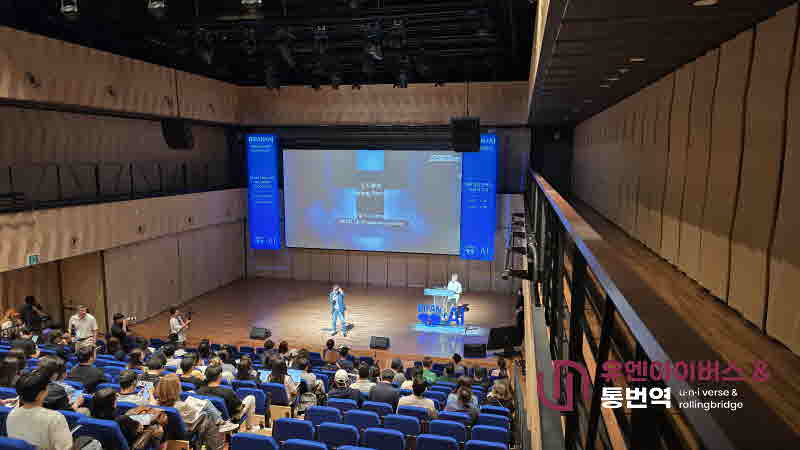
5. Why Industry Expertise Matters
An interpreter who performs well in a general business meeting may not necessarily be the best choice for every professional event.
Different environments may require different expertise.
Investor Relations
Relevant knowledge may include:
Financial statements
Revenue
EBITDA
Valuation
Market outlook
Investment conditions
Investor Q&A
Medical and Pharmaceutical Events
Relevant knowledge may include:
Medical terminology
Pharmaceuticals
Clinical trials
GMP
Regulatory terminology
Medical devices
Technology Conferences
Relevant knowledge may include:
Artificial intelligence
Semiconductors
Manufacturing
Software
Engineering
Cybersecurity
Government and Policy Events
Relevant knowledge may include:
Public-sector terminology
Policy frameworks
Institutional names
Official titles
Administrative language
The correct question is therefore not:
“Can this interpreter speak both languages?”
It is:
“Does this interpreter understand the subject matter and communication environment of this event?”
6. Why Advance Preparation Should Be Included
Professional interpretation begins before the event.
Preparation may include:
Presentation review
Agenda review
Speaker information
Company background
Product information
Financial materials
Technical documents
Contract terminology
Industry terminology
Acronyms
Glossary development
The more specialized the event, the more important this preparation becomes.
Preparation Workflow
Event Materials → Terminology Review → Context Analysis → Interpreter Briefing → Rehearsal → Live Interpretation
A provider that includes this process may quote more than one that simply assigns an available interpreter.
However, the two quotations do not represent the same service.
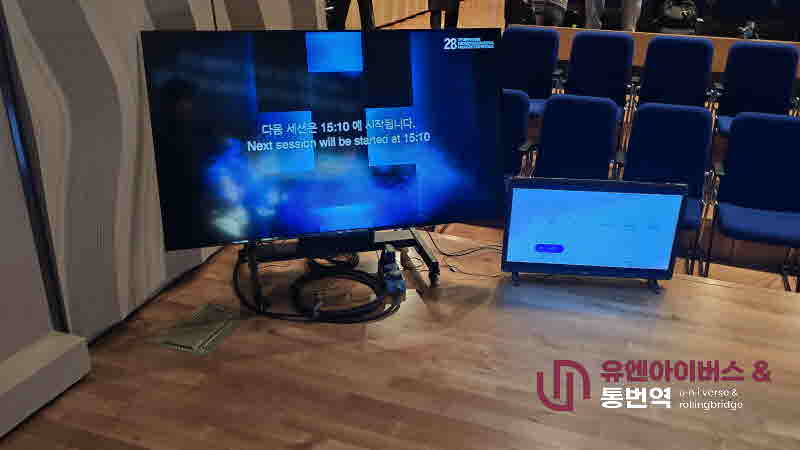
7. Why Equipment and Technical Support Matter
For simultaneous interpretation, professional equipment may be part of the interpretation system.
This may include:
Interpretation booths
Interpreter consoles
Receivers
Transmitters
Headsets
Microphones
Audio mixers
Language channels
Remote interpretation platforms
Network infrastructure
Technical personnel may also be responsible for:
Equipment setup
Audio routing
Sound checks
Receiver distribution
Language-channel monitoring
Troubleshooting
Backup systems
Even an excellent interpreter cannot provide stable communication if the technical signal is unreliable.
Interpretation quality therefore depends on both interpreter expertise and technical infrastructure.
8. Why On-Site Operations Matter
International events rarely proceed exactly as planned.
Unexpected changes may include:
Speaker replacements
Schedule delays
Additional presentations
Extended Q&A
Room changes
Remote speakers
Last-minute files
Audio problems
A professional interpretation company should be able to respond quickly to these situations.
The question is not simply whether an interpreter is present.
It is whether the provider has a system for managing the event when conditions change.
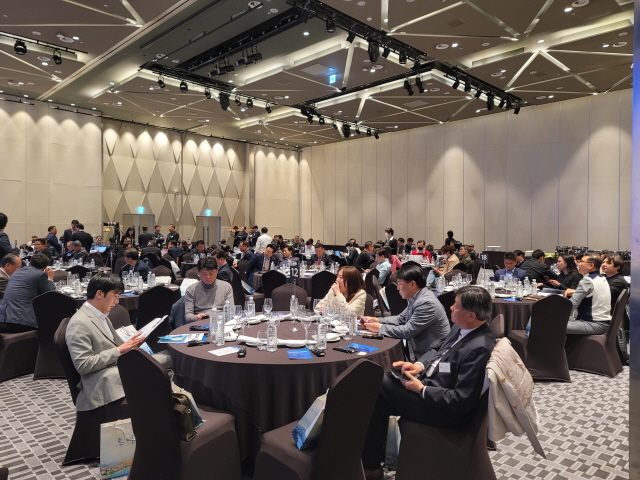
9. Real-World Application Examples
Case 1. International Seminar Selected Mainly by Lowest Price
A provider was initially selected based primarily on the lowest quotation.
Shortly before the event, the client learned that interpretation equipment and rehearsal support were not included in the original scope.
Additional charges were required, and the rehearsal schedule had to be reorganized.
Result
The final operating cost was higher than the initial quotation suggested.
Key Lesson
Compare what is included in the quotation—not only the headline price.
Case 2. Medical Symposium
A provider with interpreters experienced in medical communication was selected.
The service also included advance terminology preparation and glossary development.
Complex medical terminology and technical Q&A were handled within a more structured communication environment.
Key Lesson
Relevant subject expertise and advance preparation can be more important than a small difference in the initial fee.
Case 3. International Investor Relations Event
The selected interpretation provider included:
Presentation review
Rehearsal
Interpretation equipment
Technical operations
On-site support
On the event day, the presentation order changed unexpectedly.
The operations team immediately adjusted interpreter preparation and technical workflow, allowing the event to continue without significant delay.
Key Lesson
Operational capability becomes most valuable when the event does not follow the original plan.
10. Interpretation Company Selection Checklist
Before confirming a provider, check the following:
□ Does the company have relevant industry experience?
□ Can it reliably assign professional interpreters?
□ Are presentation materials and terminology reviewed in advance?
□ Can the provider supply interpretation equipment and technical support?
□ Does it support rehearsal and on-site operations?
□ Are confidentiality and security procedures in place?
□ Are quotation inclusions, exclusions, and additional-cost conditions clearly explained?
This checklist helps organizations move beyond price-only comparisons and evaluate the actual operating value and communication risk of each proposal.
11. What Buyers Should Compare in a Quotation
| Evaluation Area | What to Compare |
|---|---|
| Interpreter Quality | Relevant subject and event experience |
| Preparation | Presentation review, terminology management, briefing |
| Interpretation Method | Simultaneous, consecutive, remote, or hybrid |
| Equipment | Booths, consoles, receivers, audio support |
| Technical Support | Installation, testing, monitoring, troubleshooting |
| Rehearsal | Whether technical and communication rehearsals are included |
| Event Operations | On-site coordination and response capability |
| Security | NDA and confidential-material handling |
| Overtime | Additional charge conditions |
| Cancellation | Cancellation and schedule-change policy |
| Total Scope | Exactly what the quotation includes and excludes |
Buyer Principle
Two quotations with different prices may represent completely different levels of service.
12. Professional Interpretation Company vs. Interpreter Matching Service
| Category | Professional Interpretation Company | Matching-Based Service |
|---|---|---|
| Interpreter Selection | Based on event requirements and expertise | Often availability-driven |
| Preparation | Structured preparation process | Varies by individual |
| Terminology Management | Can be centrally managed | Usually interpreter-dependent |
| Equipment | Can be integrated | Often separate |
| Technical Support | Available when required | Limited |
| On-Site Operations | Coordinated | Often limited |
| Security | Defined procedures possible | Varies |
| Quality Management | System-based | Mainly individual-dependent |
| Responsibility | Event-level | Assignment-level |
A matching service can be entirely appropriate for a simple, low-risk meeting.
But as event complexity increases, professional operational support becomes more important.
13. FAQ
Q1. Should we always choose the lowest interpretation quotation?
No.
The lowest price can be appropriate if the scope and professional requirements match the event.
However, buyers should confirm whether preparation, equipment, technical support, rehearsal, travel, and on-site operations are included.
Q2. Is the most expensive interpretation company always better?
No.
Higher price alone does not guarantee better quality.
The most useful criteria are relevant expertise, interpreter fit, preparation, operational capability, equipment, security, and quality management.
Q3. Why can quotations from interpretation companies differ so much?
Providers may include different levels of:
Interpreter expertise
Preparation
Equipment
Technical support
Project management
Rehearsal
Event operations
Quality management
For this reason, the scope should be compared before the final amount.
Q4. Why is interpreter industry experience important?
Specialized events may involve financial, medical, technical, legal, or policy terminology.
Relevant experience can help the interpreter understand both terminology and context more efficiently.
Q5. Should an interpretation company provide equipment?
For simultaneous, multilingual, hybrid, or complex international events, integrated equipment capability can simplify coordination and reduce operational risk.
Q6. Why is confidentiality important?
Interpretation projects may contain sensitive information involving:
Corporate strategy
Contracts
Investment information
Financial results
Technical data
Medical information
Unreleased products
Professional providers should have clear confidentiality procedures.
Q7. What is the most important question to ask an interpretation company?
Ask:
“How will you select, prepare, and support the interpreters for our specific event?”
The answer often reveals more about the provider's professional capability than the quotation amount alone.

Key Takeaway
A professional interpretation company should provide more than:
Interpreter Matching
For complex international events, the complete service may involve:
**Event Analysis
Professional Interpreter Selection
Advance Preparation
Terminology Management
Equipment
Technical Support
Rehearsal
On-Site Operations
Security
Quality Management**
The more important the event, the more important this operating structure becomes.
Conclusion
Choosing an interpretation company should not be reduced to a price comparison.
For international conferences, government events, investor relations programs, medical symposiums, technology conferences, contract negotiations, and global corporate events, the interpretation provider becomes part of the event's communication infrastructure.
A strong provider should combine:
Professional Interpreters + Industry Expertise + Advance Preparation + Equipment + Technical Operations + Security + Transparent Pricing + Quality Management
The objective is not to select the highest-priced company.
Nor is it automatically to choose the lowest-priced provider.
The objective is to select the interpretation company whose expertise, operating structure, and service scope best match the needs and communication risks of the event.
Final Key Message
The right interpretation company is not simply an interpreter supplier—it is an operational partner for successful international communication.
Related Information
How to Choose an Interpretation Company by Service Tier
How Is Simultaneous Interpretation Pricing Determined?
Why Interpretation Is Communication Risk Management
Why Simultaneous Interpretation Fails—and How to Prevent It
Simultaneous vs. Consecutive Interpretation
Why Interpretation Quality Matters in International Events
About Our Case Archive

The case studies and project insights presented on this website are based on experience supporting international conferences, investor presentations, government forums, executive meetings, technical seminars, and multilingual corporate events.
To protect client confidentiality and comply with the Code of Professional Conduct followed by professional interpreters worldwide, certain project details have been generalized, anonymized, or adapted for educational purposes.
The purpose of these materials is to share practical insights into multilingual communication planning while respecting the confidentiality of every client and every project.
UNIVERSE RB
Designing Communication. Managing Risk. Delivering Understanding.