
Quotation


Performance
Simultaneous vs. Consecutive Interpretation: Which Is Right for Your Event?
- 2026.08.19
How Event Size, Communication Format, Timing, Industry Expertise, Q&A, and Budget Determine the Best Interpretation Method
The right interpretation method for an international event depends on the size, purpose, communication format, and operational requirements of the event.
Simultaneous interpretation is generally best suited to presentation-driven events such as international conferences, forums, and large seminars, while consecutive interpretation is particularly effective for discussion-driven environments such as buyer meetings, negotiations, interviews, and smaller professional meetings.
Neither method is inherently better.
The most effective choice depends on:
Event Size + Communication Format + Schedule + Audience + Industry Expertise + Q&A Structure + Equipment + Budget
Selecting the right interpretation method can help maintain event flow, improve communication accuracy, and create a more efficient experience for both speakers and participants.
1. Which Interpretation Method Should You Choose?
International conferences, seminars, overseas buyer meetings, investor relations presentations, and contract negotiations all require different communication structures.
Choosing a method that does not match the event can:
- Extend the event schedule
- Interrupt presentation flow
- Reduce communication efficiency
- Make Q&A more difficult
- Increase unnecessary equipment or staffing costs
- Reduce participant engagement
The first question should therefore not be:
“Which method is better?”
It should be:
“Which interpretation method best supports the purpose and communication structure of this event?”
Interpreter selection is also important.
Once professional interpretation equipment meets appropriate technical standards, the quality difference between equipment systems may become less significant than the difference created by interpreter expertise, subject-matter experience, preparation, and event fit.
For a decision-critical event, changing interpreters simply to save a relatively small amount may affect terminology accuracy, negotiation details, presentation quality, and participant confidence.
Key Principle
The interpretation method and the interpreter should be selected together as part of the overall communication strategy.
2. One-Sentence Answer
Simultaneous interpretation is generally best for presentation-driven conferences and large events, while consecutive interpretation is particularly effective for discussion-driven meetings, negotiations, interviews, and consultations.
3. When Should Simultaneous and Consecutive Interpretation Be Used?
The appropriate method varies according to the event environment.
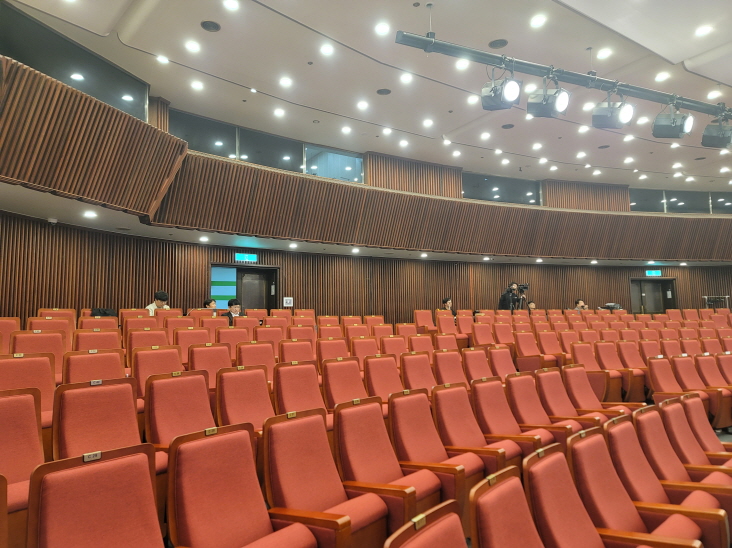
International Conferences and Forums
International conferences, policy forums, and industry forums often involve multiple speakers and participants from different countries.
In these environments, simultaneous interpretation is commonly used because interpretation is delivered while the speaker continues presenting.
This helps:
- Maintain the original schedule
- Avoid repeated pauses
- Support large audiences
- Operate multiple language channels
- Keep presentations and panel discussions moving efficiently
Participants can listen through receivers or digital language channels.
However, different parts of the same event may require different methods.
For example:
Formal Presentation → Simultaneous Interpretation
Speaker Interview → Consecutive Interpretation
Executive Meeting → Consecutive Interpretation
Large Panel Discussion → Simultaneous Interpretation
A hybrid structure can therefore be more effective than forcing one method across the entire event.
Government and Public-Sector International Events
Government ministries, municipalities, and public institutions often require formal and highly accurate communication.
Simultaneous interpretation may be suitable for:
- Ministerial conferences
- Policy presentations
- International cooperation seminars
- Government forums
- Large public-sector events
Consecutive interpretation may be more appropriate for:
- Bilateral meetings
- Delegation meetings
- Working-level discussions
- Small executive sessions
These events may include:
- Policy names
- Institutional titles
- Administrative terminology
- Legal terminology
- International cooperation language
Advance review of materials and terminology preparation is therefore especially important.
Investor Relations and Investment Presentations
IR events often contain two distinct communication structures.
Formal Investor Presentation
A company may present:
- Business model
- Financial performance
- Growth strategy
- Market outlook
- Investment plans
- Technology roadmap
When multiple investors attend, simultaneous interpretation can preserve presentation flow and reduce schedule delays.
Investor Q&A and One-on-One Meetings
For:
- Private investor meetings
- Executive discussions
- Detailed Q&A
- Follow-up negotiations
consecutive interpretation may be more suitable because participants need to clarify and confirm information interactively.
IR interpretation may involve:
- Revenue
- Profitability
- Valuation
- Investment conditions
- Market forecasts
- Financial ratios
- Technical strategy
Practical Structure
Investor Presentation → Simultaneous
One-on-One Meeting → Consecutive
Detailed Management Q&A → Consecutive or Hybrid
Contract and Negotiation Meetings
Consecutive interpretation is commonly used for contract negotiations.
These discussions may involve:
- Price
- Payment conditions
- Delivery schedules
- Scope of work
- Responsibilities
- Warranty
- Contract conditions
- Technical requirements
- Termination provisions
Because participants speak in segments and pause for interpretation, both parties have more opportunity to confirm meaning before moving forward.
This is important when discussing:
- Numbers
- Dates
- Obligations
- Responsibilities
- Commercial conditions
Key Principle
For negotiations, accurate confirmation of meaning is generally more important than maximizing communication speed.
Where appropriate, contracts, technical specifications, and negotiation materials should be reviewed before the meeting.
Overseas Buyer Meetings
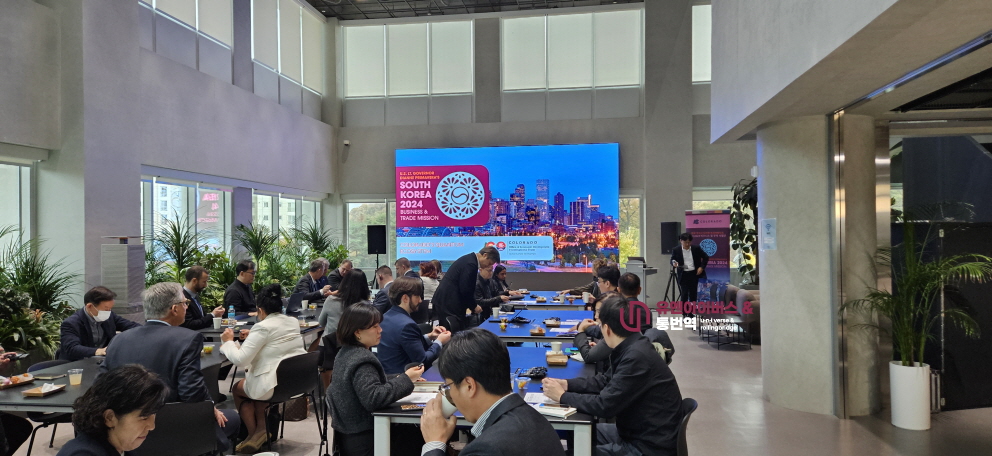
Consecutive interpretation is widely used for:
- Export consultations
- Buyer meetings
- Exhibition booth meetings
- Product discussions
- Distributor negotiations
Typical topics include:
- Product specifications
- Pricing
- Minimum order quantity (MOQ)
- Delivery schedules
- Certifications
- Payment terms
- Distribution conditions
- Technical requirements
Because the communication is question-and-answer driven, consecutive interpretation allows both sides to explain, clarify, and confirm information naturally.
For buyer presentations involving a larger audience, simultaneous interpretation may also be used.
Medical and Pharmaceutical Seminars
Medical and pharmaceutical communication often requires significant subject-matter expertise.
Typical areas include:
- Medical devices
- Pharmaceuticals
- Clinical trials
- Digital health
- Biotechnology
- GMP
- Regulatory affairs
For large academic presentations or professional seminars, simultaneous interpretation is generally appropriate because it preserves the program schedule.
For:
- Patient consultations
- Expert interviews
- Research meetings
- Small technical discussions
consecutive interpretation may be more appropriate.
Medical terminology, drug names, diseases, clinical figures, and regulatory concepts should ideally be prepared in advance.
Practical Structure
Scientific Presentation → Simultaneous
Expert Consultation → Consecutive
Detailed Q&A → Consecutive or Hybrid

Technology Conferences and Training
Technology conferences in areas such as:
- Artificial intelligence
- Semiconductors
- Manufacturing
- Software
- Energy
- Cybersecurity
- Engineering
often involve high presentation speeds and specialized terminology.
Large technical presentations and product seminars generally benefit from simultaneous interpretation.
By contrast, the following are often better suited to consecutive interpretation:
- Product demonstrations
- Hands-on training
- Factory visits
- Equipment demonstrations
- Engineer-to-engineer discussions
- Technical Q&A
For complex technical programs, combining both methods can provide a better result.
Presentation → Simultaneous
Demonstration → Consecutive
Technical Consultation → Consecutive
4. Simultaneous vs. Consecutive Interpretation
|
Category
|
Simultaneous Interpretation
|
Consecutive Interpretation
|
|
Delivery Method |
Interpretation occurs almost simultaneously with the speaker |
Interpretation follows each segment of speech |
|
Best Event Format |
Presentation-driven |
Discussion-driven |
|
Typical Events |
Conferences, forums, seminars |
Meetings, negotiations, interviews |
|
Audience Size |
Often suitable for tens to thousands of participants |
Commonly used for smaller meetings |
|
Event Timing |
Helps maintain the original schedule |
May increase total meeting time |
|
Communication Flow |
Continuous |
Interactive |
|
Equipment |
Booths, consoles, receivers, audio systems, or remote platforms may be required |
Usually little or no specialized interpretation equipment |
|
Q&A |
Effective for structured or large-audience Q&A |
Effective for detailed and interactive discussion |
|
Main Advantage |
Speed and event efficiency |
Clarification and detailed communication |
|
Typical Business Use |
International conferences and formal presentations |
Negotiations and professional meetings |
Key Insight
Simultaneous interpretation protects event flow.
Consecutive interpretation supports detailed interaction and clarification.
5. Real-World Examples
Case 1. International Forum and Conference
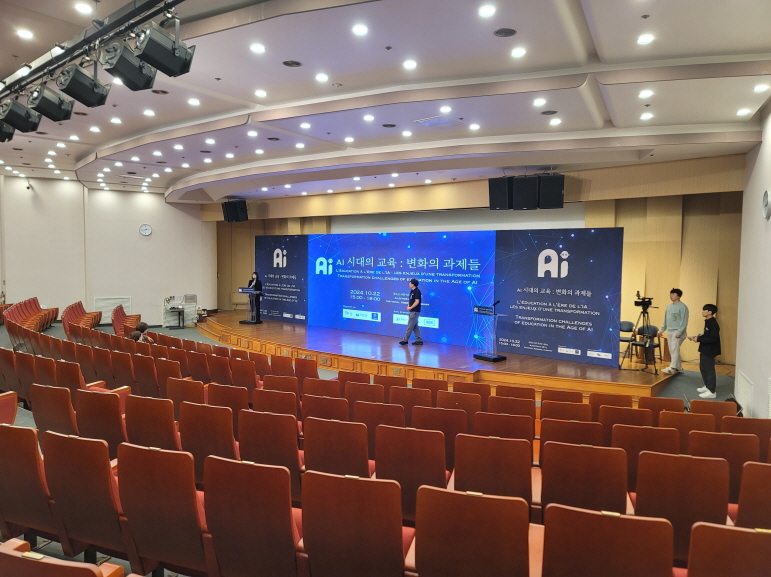
An international forum with more than 300 participants included several speakers working within a fixed schedule.
Simultaneous interpretation was used for the official presentations so participants could follow the program in real time without extending the event schedule.
After the formal program, speaker interviews and individual meetings were handled through consecutive interpretation.
Result
The event combined:
Simultaneous Interpretation for Presentation Efficiency
+
Consecutive Interpretation for Direct Communication
Case 2. Overseas Buyer Meeting and Contract Negotiation
An international buyer meeting involved discussions of:
- Product specifications
- Pricing
- MOQ
- Delivery schedules
- Technical requirements
- Contract conditions
Consecutive interpretation allowed each side to explain and confirm individual points before moving to the next topic.
Result
Participants could prioritize accurate understanding of commercial conditions rather than speed alone.
Case 3. International Technology Seminar and Product Demonstration
A specialized event involving semiconductors, AI, medical devices, and manufacturing technology included formal presentations as well as practical demonstrations.
The presentation sessions were supported through simultaneous interpretation.
Product demonstrations, technical Q&A, and individual consultations were supported through consecutive interpretation.
Result
The event maintained presentation efficiency while also allowing detailed technical discussion.
Key Lesson
One event may require more than one interpretation method.
6. Seven Factors for Choosing the Right Interpretation Method
1. Event Size and Number of Participants
Large conferences often benefit from simultaneous interpretation.
Smaller meetings generally work well with consecutive interpretation.
However, audience size alone should not determine the method.
2. Presentation-Driven or Discussion-Driven?
This is one of the most important criteria.
Presentation-Driven → Simultaneous Interpretation
Discussion-Driven → Consecutive Interpretation
3. Event Schedule
Consecutive interpretation adds interpretation time after each speaker segment.
This can significantly increase the total meeting duration.
Simultaneous interpretation helps maintain the original program schedule.
4. Industry and Communication Complexity
Medical, legal, technical, policy, financial, and investment events may require interpreters with relevant subject expertise.
The interpretation method alone does not determine quality.
Interpreter expertise and event fit remain critical.
5. Q&A Structure
Structured audience Q&A may work efficiently with simultaneous interpretation.
Detailed negotiation, consultation, or technical discussion may be better suited to consecutive interpretation.
6. Equipment Requirements
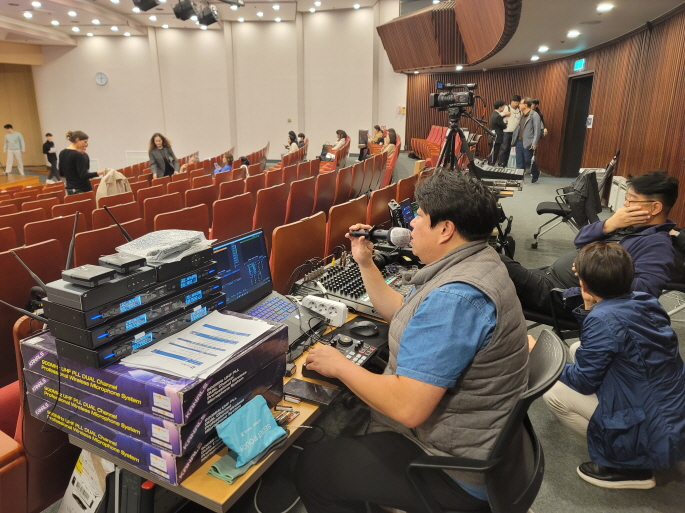
Simultaneous interpretation may require:
- Interpretation booths
- Interpreter consoles
- Transmitters
- Receivers
- Headsets
- Audio routing
- Microphones
- Remote interpretation platforms
- Network infrastructure
Consecutive interpretation can often operate without this infrastructure.
7. Budget and Event Operations
Budget should be reviewed together with:
- Interpretation method
- Number of interpreters
- Event duration
- Equipment
- Technical support
- Preparation
- Subject-matter expertise
- Rehearsal
- On-site operations
The cheapest interpretation structure is not necessarily the most efficient if it substantially extends the event schedule or does not support the required communication format.
Quick Selection Guide
|
Event Type
|
Recommended Interpretation Method
|
|
International Conference |
Simultaneous |
|
International Forum |
Simultaneous |
|
Large Seminar |
Simultaneous |
|
Government Policy Conference |
Simultaneous |
|
IR Presentation |
Simultaneous / Hybrid |
|
Investor One-on-One Meeting |
Consecutive |
|
Contract Negotiation |
Consecutive |
|
Overseas Buyer Meeting |
Consecutive |
|
Executive Meeting |
Consecutive |
|
Interview |
Consecutive |
|
Factory Visit |
Consecutive |
|
Medical Conference |
Simultaneous / Hybrid |
|
Technical Presentation + Demonstration |
Simultaneous + Consecutive |
These are general guidelines rather than fixed rules.
The final structure should be selected after reviewing the actual event program, number of participants, language requirements, Q&A format, subject complexity, technical environment, and communication goals.
Why Interpreter Expertise Still Matters
Choosing the correct interpretation method does not automatically guarantee quality.
A properly designed simultaneous interpretation system can still produce weak communication if the interpreter does not understand the subject matter.
Likewise, consecutive interpretation can become inefficient if the interpreter lacks experience in the relevant negotiation or technical environment.
Interpreter selection should therefore consider:
- Language pair
- Industry specialization
- Event experience
- Q&A capability
- Negotiation experience
- Presentation experience
- Terminology knowledge
- Preparation requirements
Key Principle
Method determines how interpretation is delivered. Expertise determines how well the communication is understood and conveyed.
FAQ
Q1. Which is better: simultaneous or consecutive interpretation?
Neither is universally better.
The right method depends on event format, schedule, audience, Q&A structure, communication objectives, and subject complexity.
Q2. Is simultaneous interpretation only for large events?
No.
A smaller presentation-driven event with a fixed schedule may also benefit from simultaneous interpretation.
Q3. Is consecutive interpretation always cheaper?
Not necessarily.
Final cost can depend on interpreter expertise, duration, location, preparation requirements, travel, and communication complexity.
Q4. Which method is better for contract negotiations?
Consecutive interpretation is commonly preferred because participants can pause, clarify, and confirm important conditions.
Q5. Which method is best for IR?
Formal investor presentations may benefit from simultaneous interpretation, while one-on-one meetings and detailed investor Q&A may be better suited to consecutive interpretation.
Q6. Can both methods be used at the same event?
Yes.
Many professional events use simultaneous interpretation for formal presentations and consecutive interpretation for interviews, negotiations, technical discussions, and smaller meetings.
Q7. Does industry expertise matter even after choosing the correct interpretation method?
Yes.
Financial, medical, technical, policy, legal, and investment communication may require relevant subject-matter experience regardless of whether simultaneous or consecutive interpretation is used.
Key Takeaway
Simultaneous and consecutive interpretation are not competing services.
They solve different communication problems.
Simultaneous Interpretation = Presentation Flow + Time Efficiency
Consecutive Interpretation = Interaction + Clarification + Detailed Communication
For many complex international events, the best solution may be a combination of both.
Conclusion
Choosing between simultaneous and consecutive interpretation should not be based on audience size or price alone.
The decision should consider:
Event Size + Communication Format + Schedule + Industry Complexity + Q&A + Equipment + Budget + Communication Goals
Simultaneous interpretation is particularly effective when maintaining presentation flow and event timing is important.
Consecutive interpretation is particularly effective when participants need detailed interaction, clarification, negotiation, and direct communication.
For international forums, investor events, medical seminars, technical conferences, and complex corporate programs, combining both methods may provide the most effective communication structure.
The most important question is therefore not:
“Which method is better?”
It is:
“Which interpretation structure best supports the communication objective of this event?”
Related Information
- What Is Simultaneous Interpretation?
- What Is Consecutive Interpretation?
- Why Interpretation Costs Vary
- How to Choose a Professional Interpreter
- Why International Event Interpretation Succeeds or Fails
- How to Choose a Professional Interpretation Company
About Our Case Archive

The case studies and project insights presented on this website are based on experience supporting international conferences, investor presentations, government forums, executive meetings, technical seminars, and multilingual corporate events.
To protect client confidentiality and comply with the Code of Professional Conduct followed by professional interpreters worldwide, certain project details have been generalized, anonymized, or adapted for educational purposes.
The purpose of these materials is to share practical insights into multilingual communication planning while respecting the confidentiality of every client and every project.
UNIVERSE RB
Designing Communication. Managing Risk. Delivering Understanding.