
Quotation


Performance
Simultaneous vs. Consecutive Interpretation: Which Is Right for Your Event?
- 2026.08.19
How Event Size, Format, Timing, Q&A, and Communication Goals Determine the Best Interpretation Method
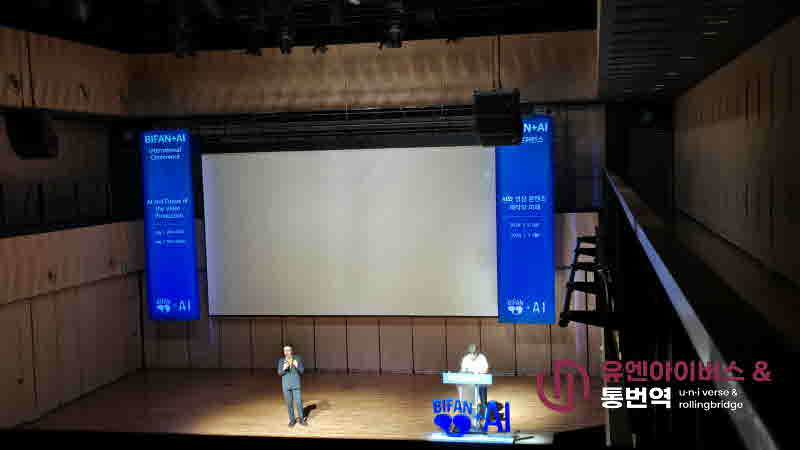
Simultaneous interpretation delivers the translated message almost in real time, making it well suited for international conferences, forums, and large-scale seminars.
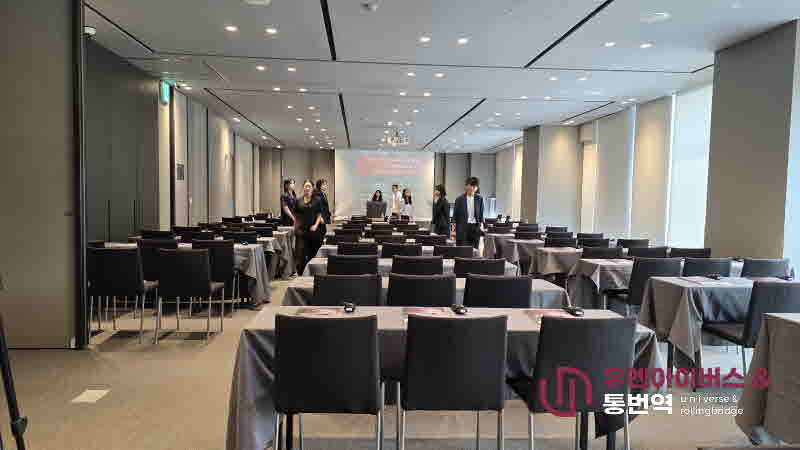
Consecutive interpretation takes place after the speaker completes a segment of speech, making it particularly effective for negotiations, buyer meetings, interviews, and smaller business discussions.
There is no single interpretation method that is always better.
The right choice depends on event size, schedule, number of participants, communication format, budget, technical requirements, and Q&A structure.
For a successful international event, understanding the difference between simultaneous and consecutive interpretation helps organizations select the right communication structure, maintain event flow, and improve communication efficiency.
1️. Simultaneous vs. Consecutive Interpretation: Which Should You Choose?
The appropriate interpretation method depends on the purpose and structure of the event.
Choosing the wrong method can extend the event schedule, interrupt communication flow, increase technical complexity, or reduce the effectiveness of discussions.
For example, consecutive interpretation may work extremely well for a small negotiation involving several decision-makers.
However, using the same method for a large international conference with multiple presentations could significantly extend the event schedule.
Likewise, simultaneous interpretation may be unnecessary for a small executive meeting where participants need to stop, clarify, negotiate, and confirm individual points.
The best interpretation method is therefore not necessarily the fastest or least expensive option—it is the method that best matches the communication objective of the event.
2️. One-Line Answer
Simultaneous interpretation is generally best for conferences and presentation-driven events, while consecutive interpretation is particularly effective for meetings, negotiations, interviews, and discussion-driven communication.
3️. When Are Simultaneous and Consecutive Interpretation Used?
Organizations commonly need to choose between the two methods for:
- International conferences and forums
- Government and public-sector events
- Investor relations (IR) presentations
- Contract negotiations
- Overseas buyer meetings
- Executive meetings
- Medical and pharmaceutical seminars
- Technical conferences
- Factory visits and inspections
- Interviews and press meetings
- Corporate training programs
- Multilingual business events
The decision should be based on the communication environment, not simply the number of attendees.
A smaller but highly structured presentation may still benefit from simultaneous interpretation, while a larger interactive workshop may require a different approach.
4️. Simultaneous vs. Consecutive Interpretation
Factor | Simultaneous Interpretation | Consecutive Interpretation |
How It Works | Interpretation is delivered almost simultaneously with the speaker | Interpreter delivers the message after the speaker pauses |
Typical Event Size | Medium to large conferences and events | Small meetings and discussions |
Event Duration | Maintains the original presentation schedule | May increase total communication time |
Communication Flow | Continuous and presentation-oriented | Interactive and discussion-oriented |
Typical Staffing | Often requires a team for extended assignments | Often handled by one interpreter depending on duration and complexity |
Equipment | Booths, consoles, receivers, audio feeds, or remote interpretation systems may be required | Often possible without specialized interpretation equipment |
Best For | Conferences, forums, seminars, presentations | Negotiations, interviews, buyer meetings, site visits |
Q&A | Effective for large or structured Q&A sessions | Effective for interactive and detailed discussions |
Preparation | Presentation materials and terminology preparation are important | Meeting objectives, terminology, and negotiation context are important |
Primary Advantage | Maintains event speed and presentation flow | Supports detailed, interactive communication |
The key difference is not simply speed.
Simultaneous interpretation prioritizes communication flow, while consecutive interpretation provides greater flexibility for direct interaction and discussion.
5️. When Is Simultaneous Interpretation the Better Choice?
Simultaneous interpretation is generally more effective when maintaining the original event schedule is important.
Typical examples include:
International Conferences
Hundreds of participants may need to follow presentations without doubling the duration of the program.
Government and Policy Forums
Multiple speakers, panel discussions, and structured Q&A sessions can be interpreted while maintaining the official schedule.
International Seminars
Participants can listen to presentations through their selected language channels without interrupting the speaker.
Multilingual Events
Several interpretation channels can operate simultaneously, allowing participants to select the language they need.
Simultaneous interpretation is particularly useful when:
- There are many participants
- Presentations are long or continuous
- Maintaining the event schedule is important
- Multiple languages are required
- Speakers should not be interrupted
- Structured panel discussions or Q&A sessions are included

6️. When Is Consecutive Interpretation the Better Choice?
Consecutive interpretation is particularly effective when participants need to communicate directly with one another.
Typical examples include:
Contract Negotiations
Participants can discuss individual conditions, pause for clarification, and confirm important details before continuing.
Overseas Buyer Meetings
Product specifications, prices, delivery schedules, and commercial terms can be discussed interactively.
Executive Meetings
A smaller number of participants can communicate directly without installing a full simultaneous interpretation system.
Factory Visits and Technical Meetings
The interpreter can move with participants while supporting explanations, questions, and technical discussions.
Consecutive interpretation is particularly useful when:
- The meeting is relatively small
- Communication is highly interactive
- Participants frequently ask questions
- Negotiation or clarification is important
- Speakers can pause between segments
- Specialized interpretation equipment is unnecessary
7️. Practical Examples
Case 1. International Forum
Several hundred participants attended an international forum with multiple presentations.
Simultaneous interpretation allowed presentations and interpretation to proceed at the same time, helping maintain the planned event schedule.
Case 2. Overseas Buyer Meeting
A smaller business meeting required detailed discussion of product specifications, pricing, delivery schedules, and commercial conditions.
Consecutive interpretation allowed participants to exchange questions and answers naturally while confirming important details throughout the discussion.
Case 3. Medical Seminar
A hybrid interpretation structure was used.
Formal presentations were supported through simultaneous interpretation, while smaller expert discussions and detailed Q&A sessions were handled through consecutive interpretation.
This demonstrates an important point: simultaneous and consecutive interpretation do not always have to be an either-or decision.
For some events, combining both methods can provide the most effective communication structure.
8️. Seven Factors to Consider When Choosing an Interpretation Method
Selection Factor | What to Consider |
1. Event Size | Number of participants and overall event scale |
2. Audience Size | How many participants require interpretation |
3. Event Schedule | Whether interpretation can extend the total event duration |
4. Communication Format | Presentation-driven or discussion-driven |
5. Budget & Technology | Whether booths, receivers, audio systems, or remote platforms are required |
6. Subject Complexity | Technical, medical, financial, legal, policy, or general business content |
7. Q&A Structure | Structured audience Q&A or interactive negotiation and discussion |
No interpretation method is automatically superior.
The right interpretation method is the one that best supports the communication objective, event structure, participants, and decision-making process.
9️. Quick Selection Guide
Event Type | Recommended Approach |
International Conference | Simultaneous Interpretation |
International Forum | Simultaneous Interpretation |
Large Seminar | Simultaneous Interpretation |
Investor Presentation | Simultaneous or Hybrid Structure |
Contract Negotiation | Consecutive Interpretation |
Overseas Buyer Meeting | Consecutive Interpretation |
Executive Meeting | Consecutive Interpretation |
Interview | Consecutive Interpretation |
Factory Visit | Consecutive Interpretation |
Presentation + Expert Discussion | Simultaneous + Consecutive Interpretation |
These are general guidelines rather than fixed rules.
The final interpretation structure should be determined after reviewing the event schedule, communication objectives, number of participants, subject complexity, Q&A format, and technical environment.
10️. FAQ
Q. Which is better, simultaneous or consecutive interpretation?
Neither method is universally better. Simultaneous interpretation is generally more efficient for presentation-driven events, while consecutive interpretation is particularly effective for interactive meetings and negotiations.
Q. Which method is better for an international conference?
Simultaneous interpretation is usually preferred when there are multiple presentations, a large audience, or a fixed event schedule.
Q. Which method is better for business negotiations?
Consecutive interpretation is often more suitable because participants can pause, clarify conditions, ask questions, and confirm important details.
Q. Does consecutive interpretation take longer?
Yes. Because the speaker and interpreter generally speak in sequence, the total communication time can be longer than with simultaneous interpretation.
Q. Does simultaneous interpretation require equipment?
For many on-site conferences, professional booths, interpreter consoles, microphones, receivers, and audio systems may be required. Remote and hybrid events may instead use digital interpretation channels.
Q. Can an event use both simultaneous and consecutive interpretation?
Yes. A conference may use simultaneous interpretation for formal presentations and consecutive interpretation for executive meetings, interviews, negotiations, or smaller expert discussions.
Q. What should be considered before choosing?
Event size alone is not enough. The event schedule, presentation format, audience, language requirements, Q&A structure, subject complexity, budget, and communication objectives should all be reviewed.
Key Takeaway
Simultaneous interpretation is designed to maintain speed and event flow.
Consecutive interpretation is designed to support detailed and interactive communication.
The question is therefore not:
“Which interpretation method is better?”
The better question is:
“Which interpretation method best supports the communication objective of this event?”
For complex international events, the most effective solution may even combine both methods.
Related Information
- What Is Simultaneous Interpretation?
- What Is Consecutive Interpretation?
- Why Do Interpretation Costs Vary?
- How to Choose a Professional Interpreter
- Simultaneous vs. Consecutive Interpretation Pricing
- How to Choose an Interpretation Company for International Events
Conclusion
Successful international communication begins with selecting the right interpretation structure.
Simultaneous interpretation is particularly effective for conferences, forums, seminars, and presentation-driven events where maintaining the original schedule is important.
Consecutive interpretation is particularly effective for negotiations, buyer meetings, interviews, executive discussions, and other situations requiring direct interaction.
The best solution is not determined by price or event size alone.
It should be selected based on event objectives, communication format, timing, audience, subject complexity, Q&A structure, technology, and budget.
When the interpretation method is properly matched to the event, organizations can improve communication accuracy, maintain event efficiency, and create a more consistent experience for international participants.
About Our Case Archive

The case studies and project insights presented on this website are based on experience supporting international conferences, investor presentations, government forums, executive meetings, technical seminars, and multilingual corporate events.
To protect client confidentiality and comply with the Code of Professional Conduct followed by professional interpreters worldwide, certain project details have been generalized, anonymized, or adapted for educational purposes.
The purpose of these materials is to share practical insights into multilingual communication planning while respecting the confidentiality of every client and every project.
UNIVERSE RB
Designing Communication. Managing Risk. Delivering Understanding.