
Quotation


Performance
Criminal Law Academic Seminar Simultaneous Interpretation | Criminal Law Theory and International Criminal Law Forum – UNIVERSE RB
- 2025.07.31
This seminar provides a comprehensive examination of key criminal law issues, ranging from the theoretical foundations of crime and punishment to criminal law reform and legislative policy.
Major topics include digital crime and cyber criminal law, international criminal law and human rights, and legal frameworks addressing crimes against children and women.
It also compares criminal trial procedures across jurisdictions to identify institutional differences and explore future directions in criminal justice policy.
Public Policy & Global Governance
Category
Description
This category covers interpretation cases related to international policy
forums, public cooperation initiatives, ODA programs, and global governance
topics including environmental and climate policy.
UNIVERSE RB provides integrated services including:
Simultaneous interpretation Consecutive interpretation International conference interpretation Policy document translation QMS-based quality management operations
We support international policy forums, government cooperation meetings, and global governance conferences with stable interpretation environments.
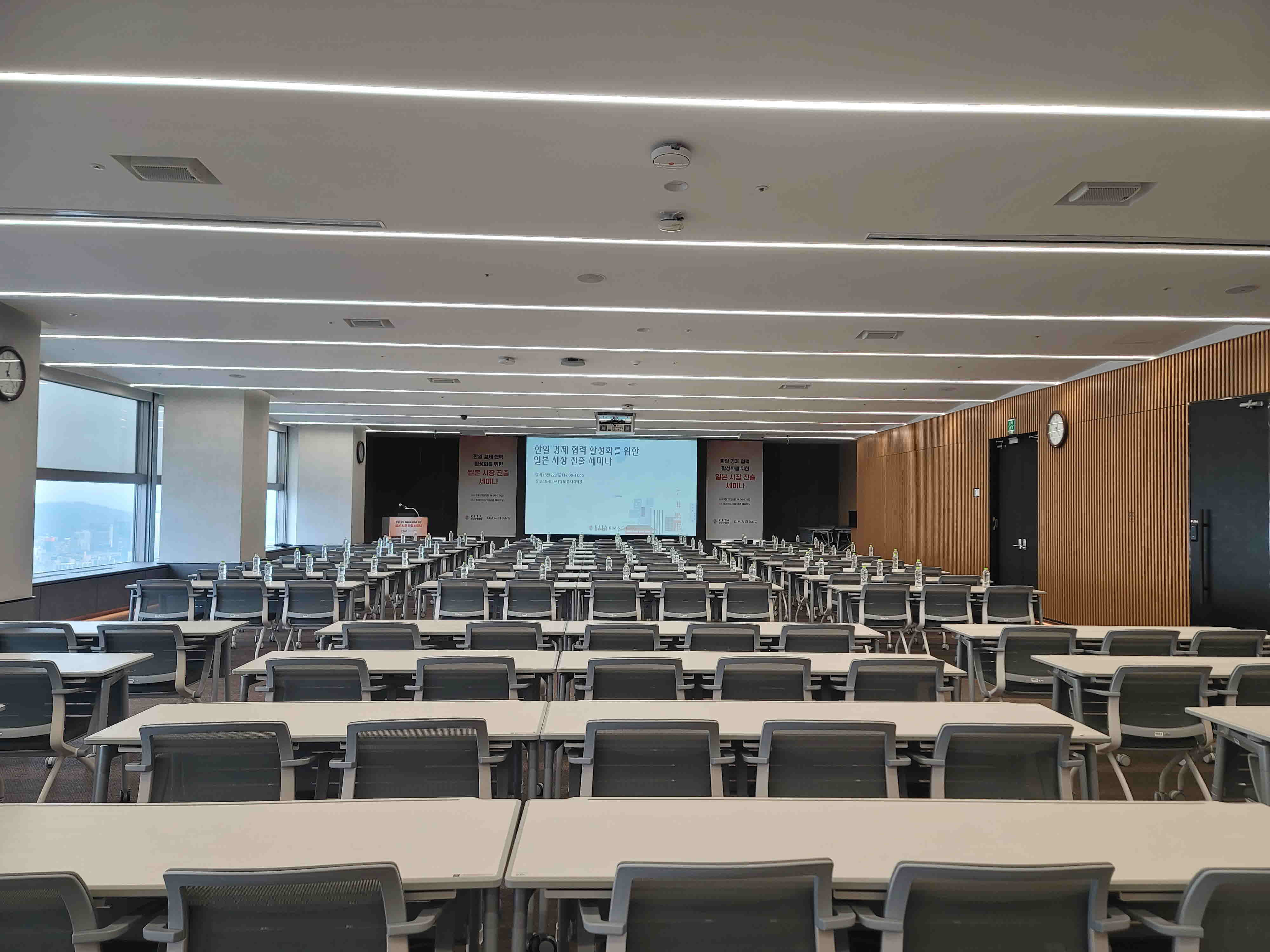
1. Event Overview
The Criminal Law Seminar was conducted as an academic legal forum focused on:
-
Theoretical foundations of criminal law
-
Case law analysis
-
Legislative developments
-
Comparative legal approaches
Given the participation of legal professionals, scholars, and representatives from international organizations across multiple jurisdictions, interpretation required more than linguistic delivery — it required the preservation of doctrinal coherence and conceptual precision.
Criminal law interpretation is a highly specialized professional domain demanding advanced legal knowledge and strict neutrality.
2. High-Complexity Factors
The field of criminal law presents the following characteristics:
-
Simultaneous discussion of abstract legal theory and concrete judicial precedents
-
Structural differences between civil law and common law systems
-
Sensitivity regarding punishment and human rights
-
Frequent citation of statutory provisions and judicial decisions
-
Potential conceptual conflicts in comparative law discussions
Terms such as actus reus, mens rea, unlawfulness, culpability, and proportionality may carry nuanced meanings across jurisdictions. Subtle translation differences can result in divergent legal interpretations.
3. Key Discussion Topics
-
Theoretical foundations of crime and punishment
-
Criminal law amendments and legislative policy trends
-
Digital crime and cyber criminal law
-
International criminal law and human rights issues
-
Legal responses to crimes against children and women
-
Comparative criminal procedure systems

4. Core Seminar Indicators
| Category | Details |
|---|---|
| Event Type | International academic conference · Legal seminar · Policy forum |
| Specialized Fields | Criminal Law · Criminal Policy · International Criminal Law · Human Rights |
| Interpretation Mode | Simultaneous · Consecutive · Panel discussion interpretation |
| Statute & Case Citation Ratio | Approx. 30–50% |
| Comparative Law Discussion Ratio | Approx. 25–40% |
| Supported Languages | English-centered multilingual support |
5. Interpretation Formats
▸ Simultaneous Interpretation
-
International academic conferences
-
Large-scale seminars
▸ Consecutive Interpretation
-
Small workshops
-
Case presentation sessions
▸ Panel Interpretation
-
Multi-party legal discussion sessions
-
Comparative law debates
6. Required Competencies
-
Advanced mastery of criminal law terminology and doctrine
-
Comparative understanding of civil law and common law systems
-
Ability to preserve logical structure and legal nuance
-
Neutral handling of sensitive legal topics
-
Accuracy in citing statutory provisions and judicial precedents
Legal interpretation requires a strict balance between literal translation and contextual adaptation.

7. Risk Management in Legal Interpretation
-
Preventing over-expansion or reduction of legal concepts
-
Avoiding errors in article numbers and case citations
-
Maintaining precision in punishment levels and legal responsibility
-
Upholding political and ideological neutrality
In criminal law interpretation, a single word choice may alter legal interpretation.
8. Application of the 9-Step QMS Framework
The seminar interpretation was managed through:
-
Analysis of seminar themes and legal scope
-
Pre-collection of relevant statutes and case materials
-
Consolidation of criminal law terminology
-
Matching interpreters with legal specialization
-
Structural rehearsal of presentations
-
Operation of statute and numerical verification checklist
-
On-site quality monitoring
-
Q&A response support
-
Post-event feedback integration
This framework minimized doctrinal and interpretative risks.
9. Representative Engagements
-
Interpretation at the congress of the International Association of Penal Law (AIDP)
-
International criminal law seminars at domestic law schools
-
Workshops in cooperation with the United Nations Office on Drugs and Crime (UNODC)
-
International cybercrime cooperation meetings

10. Professional Language Service Capabilities
-
Assignment of field-specific legal translators and interpreters
-
Rapid quotation and response system
-
Professionally trained interpreters with graduate-level specialization
-
Document translation · audiovisual translation · international seminar interpretation
-
Efficient system ensuring speed, reasonable cost, and stable quality
In large-scale international seminars, stable multilingual communication is achieved when interpretation systems, technical equipment, and interpreter operations are designed as an integrated architecture.
Conclusion
Interpretation at criminal law seminars is not merely the delivery of legal presentations.
It is a high-level professional discipline that accurately connects legal concepts across different legal systems.
Maintaining doctrinal consistency and neutrality in interpretation is a decisive factor in ensuring the credibility of international academic and legal exchange.
Through a QMS-based quality management system,
legal and interpretative risks were structurally minimized.
This
case represents one of the sessions conducted as part of international policy
cooperation and global governance discussions.
Policy environments and international cooperation frameworks continue to evolve
in response to economic, environmental, and development policy changes
→ Browse Global Governance & Climate Policy Cases
https://universerb.com/en/11_en/211?page=39

The case archive on this
website is based on interpretation and global communication experiences
conducted in international seminars, policy forums, corporate presentations,
and industry conferences.
To comply with client confidentiality and the Code of Professional Conduct,
some event details are described in a generalized manner.