
Quotation


Performance
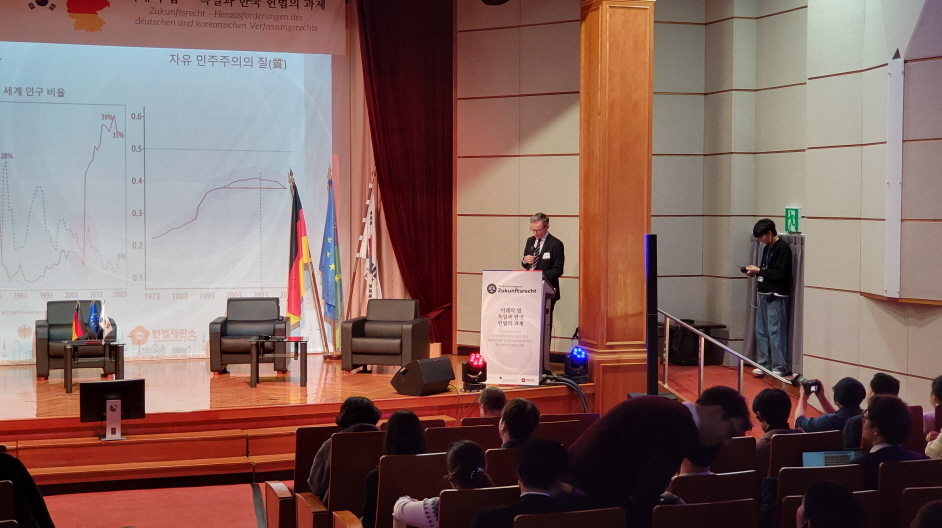
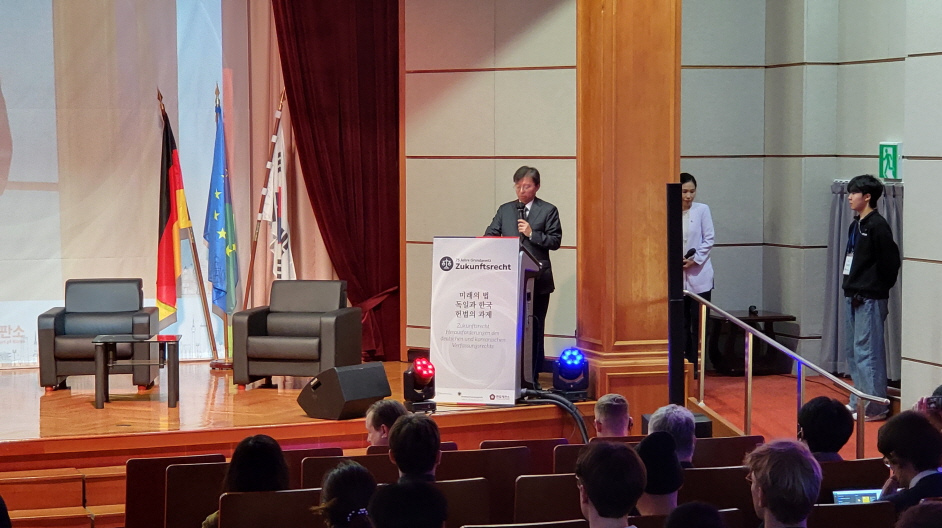
Korea–Germany Environment & Renewable Energy Forum Simultaneous Interpretation | Climate Policy · Energy Transition Forum – UNIVERSE RB
- 2026.01.14
This international energy and climate cooperation forum explores net-zero strategies, energy transition, renewable energy, and global partnerships for sustainable development.
Key interpretation topics include net-zero roadmaps, comparative climate policies of the EU and Korea, solar, wind, and offshore wind energy, Germany's Energiewende policy, smart grids and energy storage systems (ESS), hydrogen production, storage, and transportation technologies, green investment, sustainable finance, joint R&D, and technology transfer models.
Because the energy transition integrates climate policy, renewable energy, power systems, the hydrogen economy, ESG, and international cooperation, professional interpretation is essential to accurately communicate technical concepts, policy frameworks, industrial strategies, and cross-border collaboration initiatives.
Investment, IR & Global Business
Category
Description
This category covers interpretation cases related to investment communication,
including investor relations presentations, investment briefings, and global
market expansion strategies.
UNIVERSE RB provides integrated services including:
Simultaneous interpretation Consecutive interpretation IR document translation Investment presentation interpretation QMS-based quality management operations
We support investment briefings, IR presentations, and global business collaboration sessions with professional interpretation services.
Executive Summary
The Korea–Germany Environment and Renewable Energy Forum is a high-level bilateral platform integrating climate policy, energy transition strategy, renewable energy engineering, and green industrial cooperation.
The forum combines Germany’s leadership in energy transition policy with Korea’s industrial and technological strengths to advance collaborative carbon neutrality and sustainability initiatives.
Simultaneous interpretation requires precise environmental and energy terminology, accurate handling of emissions and generation data, and neutral diplomatic tone under UNIVERSE RB’s QMS-based climate and energy communication architecture.
1. Overview
The Korea–Germany Environment and Renewable Energy Forum is a high-level international forum where governments, research institutions, industry representatives, and international organizations from Korea and Germany convene to discuss climate change response, energy transition (Energiewende), carbon neutrality strategies, renewable energy technologies, and industrial cooperation.
Germany is globally recognized for its leadership in energy transition and environmental governance. This forum focuses on collaborative models that integrate Germany’s policy and technological expertise with Korea’s industrial capabilities and innovation strengths.
Simultaneous interpreters are required to accurately convey environmental and energy policy discourse, engineering terminology, and international cooperation language while maintaining neutrality, technical precision, and a professional diplomatic register.
2. Key Topics
Environmental and Climate Policy Cooperation
-
Carbon neutrality (net-zero) strategies
-
Greenhouse gas (GHG) reduction targets and international coordination
-
Comparative analysis of EU and Korean environmental policy frameworks
Renewable Energy and Energy Transition
-
Solar, onshore and offshore wind, and hydrogen energy
-
Energy transition (Energiewende) policy case studies
-
Regulatory frameworks and electricity market design
Energy Technology and Industrial Cooperation
-
Smart grids and energy storage systems (ESS)
-
Hydrogen production, storage, and transportation technologies
-
Green industrial transition and technology transfer models
Sustainability and ESG
-
Environmental ESG policies and corporate strategy
-
Sustainable finance and green investment mechanisms
-
Managing social and industrial transition impacts
Korea–Germany Cooperation and International Partnerships
-
Joint R&D initiatives and technology exchange
-
Industry–research collaboration cases
-
Multilateral environmental cooperation frameworks
3. Interpretation Format
| Session Type | Content | Interpretation Mode |
|---|---|---|
| Keynote Speeches | Energy transition vision and policy direction | Simultaneous |
| Policy Sessions | Climate, environment, and regulatory frameworks | Simultaneous |
| Technical Sessions | Renewable energy and hydrogen technologies | Simultaneous |
| Industry Presentations | Corporate case studies and cooperation projects | Simultaneous |
| Panel Discussions | Government, research, and industry dialogue | Simultaneous |
| Q&A Sessions | Audience interaction | Consecutive / Simultaneous |
4. Required Competencies
-
Strong understanding of environmental and climate policy terminology
-
Foundational knowledge of renewable energy technologies (solar, wind, hydrogen, ESS)
-
Familiarity with German and EU environmental governance discourse
-
Ability to shift register between policy dialogue and technical engineering explanation
-
Accurate interpretation of emissions metrics, generation capacity, and reduction targets
-
Neutral and formal tone suitable for international environmental forums
5. Sample Interpretation Case Types
-
Korea–Germany environmental cooperation forums
-
Renewable energy and hydrogen technology conferences
-
EU climate policy seminars
-
Carbon neutrality and ESG strategy workshops
-
Embassy- or ministry-hosted bilateral energy forums

6. Interpretation Notes
Accuracy in Environmental and Energy Terminology
Terms such as Energy Transition, Renewable Energy, Carbon Neutrality, Green Hydrogen, and Emissions Trading must be rendered precisely and consistently.
Political and Diplomatic Neutrality
Climate and energy policies reflect significant national interests. Statements must be conveyed exactly as delivered without reinterpretation or emphasis.
Careful Handling of Data and Indicators
Emission levels (tCO₂), energy output (MWh/GWh), capacity (MW), and target years must be interpreted with strict numerical accuracy.
Reflection of German and EU Policy Discourse
Distinctions among “framework,” “roadmap,” “strategy,” “directive,” and “guideline” must be preserved to reflect policy scope and legal binding force.
7. Practical Case Analysis
Case 1 – Energiewende Policy Presentation
When discussing Germany’s energy transition roadmap, interpreters must clearly differentiate between legislative mandates and policy recommendations.
Case 2 – Hydrogen Technology Engineering Session
Technical sessions on electrolysis efficiency, storage pressure systems, and transport infrastructure require precise engineering terminology and numerical handling.
Case 3 – Carbon Reduction Target Comparison
Comparative discussions on 2030 and 2050 net-zero targets require clarity in baseline years, reduction percentages, and compliance mechanisms.
8. Pricing Determination Conditions
Interpretation fees for a Korea–Germany Environment and Renewable Energy Forum are determined by:
-
Language combination (Korean–German–English multilingual configuration)
-
Number of interpreters required (team simultaneous interpretation recommended)
-
Event duration and thematic density
-
Level of technical and engineering complexity
-
Availability of preparatory policy documents and technical materials
-
Degree of diplomatic and national policy sensitivity
-
On-site, hybrid, or live-streamed format
-
Equipment configuration (booth system, IR/FM receivers, multilingual channels)
Energy and climate forums integrating policy, engineering, and international cooperation are classified as upper-tier complexity events due to technical density and diplomatic sensitivity.

9. FAQ
Q1. Why is renewable energy interpretation highly specialized?
Because it integrates environmental policy, engineering technology, emissions data, and diplomatic cooperation within a complex international framework.
Q2. How is neutrality maintained in climate policy discussions?
Interpreters convey statements exactly as expressed without evaluative framing or reinterpretation.
Q3. Is preparation essential?
Yes. Reviewing policy roadmaps, technical specifications, and emission targets ensures consistency and numerical precision.
Q4. Is simultaneous interpretation recommended?
Yes. High-density policy and engineering sessions require structured simultaneous interpretation for clarity and continuity.
Q5. How are technical metrics handled?
Through precise differentiation between capacity (MW), generation (MWh), emissions (tCO₂), and efficiency percentages to prevent misunderstanding.
10. Summary
Simultaneous interpretation for the Korea–Germany Environment and Renewable Energy Forum represents a high-level specialization integrating climate policy, renewable energy engineering, ESG strategy, and bilateral cooperation.
It requires:
-
Precise policy and technical terminology
-
Accurate numerical and data interpretation
-
Neutral and diplomatic tone
-
Deep understanding of global energy transition discourse
Interpreters serve as climate and energy communication architects, ensuring Korea–Germany cooperation messages are delivered professionally, accurately, and credibly under the UNIVERSE RB QMS framework.
This session represents one of the cases conducted as part of corporate
investment communication and global market strategy discussions.
Investment strategies and market approaches continue to evolve according to
global economic conditions and industry developments.
→ View Investment, IR & Global Business Cases
https://universerb.com/en/11_en/47?page=41

About Our Case Archive
The case studies and project insights presented on this website are based on experience supporting international conferences, investor presentations, government forums, executive meetings, technical seminars, and multilingual corporate events.
To protect client confidentiality and comply with the Code of Professional Conduct followed by professional interpreters worldwide, certain project details have been generalized, anonymized, or adapted for educational purposes.
The purpose of these materials is to share practical insights into multilingual communication planning while respecting the confidentiality of every client and every project.
UNIVERSE RB
Designing Communication. Managing Risk. Delivering Understanding.