
Quotation


Performance
[FAQ] Can We Conduct Simultaneous Interpretation via Zoom Only (Without Interpretation Equipment)?
- 2026.02.21
Interpretation Equipment · Online System Configuration
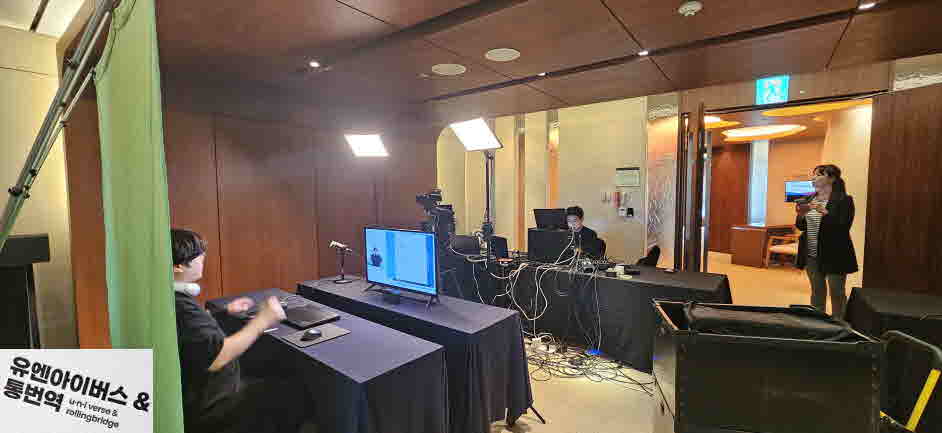
Small online meetings may use simultaneous interpretation without separate on-site interpretation equipment.
However, additional technical configuration becomes necessary when the event requires:
- Large-screen subtitle display
- Multiple interpretation languages
- Multilingual simultaneous broadcasting
- Audio-channel separation
- Interpreter monitoring
- Hybrid venue and online transmission
- Recording and archiving
- Live streaming or rebroadcasting
- Backup audio and network systems
In these cases, dedicated audio-routing, monitoring, transmission, and technical operation systems may be required.
The appropriate configuration should be determined according to the event scale, number of languages, transmission structure, and consequences of technical failure.
Zoom Operation Guidelines
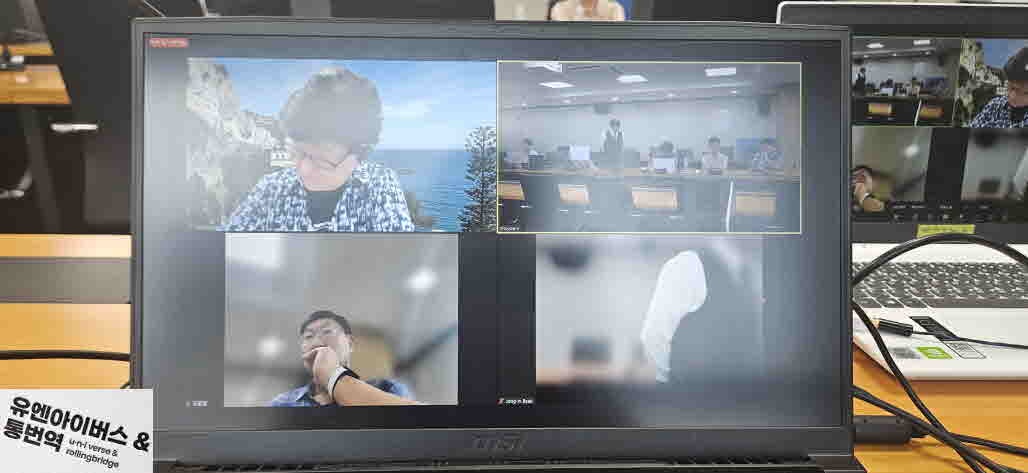
Zoom supports professional human language interpretation through separate audio channels.
According to Zoom’s current official requirements, the host must use an eligible Pro, Business, Education, or Enterprise account and enable Language Interpretation. The meeting must be scheduled with an automatically generated meeting ID rather than a Personal Meeting ID.
Language Interpretation must be configured before the meeting and cannot be used in breakout rooms. The host also needs compatible Zoom applications and appropriate account permissions. Zoom Language Interpretation requirements
Stable operation requires:
- An eligible Zoom account
- Language Interpretation enabled
- A scheduled meeting with an automatically generated meeting ID
- Correct interpreter and language-channel assignment
- Compatible and updated Zoom applications
- Stable wired or high-capacity internet connections
- Proper microphones and audio interfaces
- A technical rehearsal
- Real-time monitoring and troubleshooting
- Backup communication procedures
Professional technical management is particularly important for:
- Interpretation-channel setup
- Host and interpreter permissions
- Audio routing and separation
- Speaker and participant control
- Language-channel guidance
- Recording configuration
- Live streaming
- Real-time troubleshooting
General video-conferencing experience alone may not be sufficient for a formal multilingual event.
For important conferences, government events, and public broadcasts, professional interpretation-system operation is recommended to protect both communication quality and operational stability.
Human Interpretation Channels · AI-Translated Captions
Zoom’s human Language Interpretation and AI-translated captions are separate functions.
Function | Human Language Interpretation | AI-Translated Captions |
Output | Interpreted audio channel | Translated text captions |
Interpreter | Professional human interpreter | Automated speech recognition and translation |
Account requirements | Eligible Pro, Business, Education, or Enterprise account | Eligible Business Plus or Enterprise plan, or Translated Captions add-on |
Primary use | Professional multilingual meetings | Reference-level subtitle support |
Contextual control | Human-led | Limited |
Technical requirement | Interpreter assignment and audio-channel configuration | Caption settings, supported languages, and eligible license |
Zoom states that translated captions require an eligible Business Plus or Enterprise plan or the relevant add-on. Zoom Translated Captions requirements
Because platform plans and feature requirements may change, account eligibility should be verified before every event.
Cost Guidance
Interpretation costs are not determined solely by interpreter labor.
The final cost may include:
- Interpreter staffing
- Language-channel configuration
- Audio-routing and separation
- Transmission method
- Monitoring systems
- Streaming infrastructure
- Recording and archiving
- Technical staff
- Rehearsals
- Backup devices and connections
- On-site equipment for hybrid events
UNIVERSE RB designs the interpretation system according to the event’s format, scale, languages, audience, and communication objectives.
FAQ | Online Simultaneous Interpretation Equipment · System Setup
1) Can an online meeting be conducted without interpretation equipment?
Yes, in some cases.
A small online meeting may use the built-in human interpretation functions of platforms such as:
- Zoom
- Webex
- Microsoft Teams
Separate physical booths, transmitters, and receivers may not be required when all participants join individually through the online platform.
However, additional systems may still be necessary when the event includes:
- Multiple languages
- A physical venue
- Shared conference-room microphones
- Live streaming
- Recording
- Large-screen subtitles
- Remote and on-site participants
- External broadcast platforms
“No physical equipment” does not necessarily mean “no technical configuration.”
2) When is a professional interpretation system required?
A professional system is generally required when the event includes:
- Large-screen subtitle display
- Multiple interpretation channels
- Multilingual broadcasting
- Hybrid on-site and online participation
- Audio-channel separation
- Interpreter monitoring
- Recording or rebroadcasting
- External streaming
- High-level or public-facing sessions
- Decision-critical communication
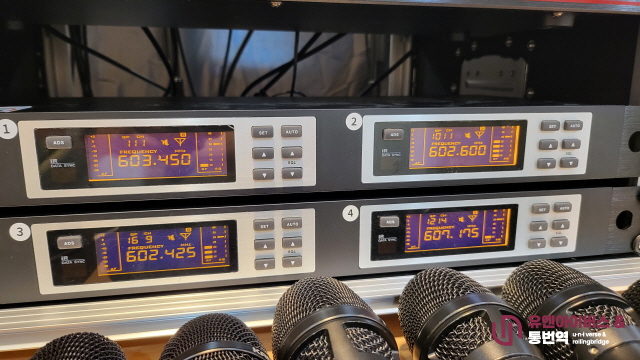
Such events require coordinated audio routing, transmission, monitoring, and real-time technical management.
3) Why are audio-routing and monitoring systems necessary?
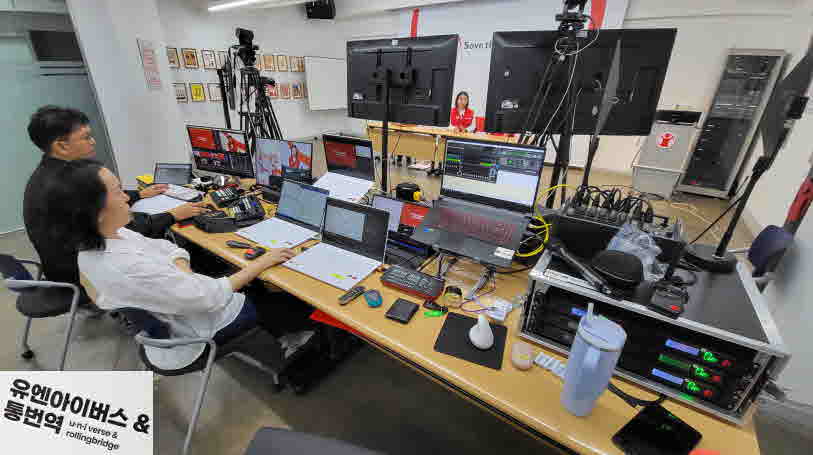
Multilingual events may involve several simultaneous audio paths:
- Speaker microphone channels
- Event master audio
- Interpreter input audio
- Interpreted language channels
- Participant listening channels
- Streaming outputs
- Recording feeds
- Venue sound-system feeds
If these signals are not separated correctly, participants may hear:
- The wrong language
- Duplicate or delayed audio
- Echo or feedback
- Mixed original and interpretation audio
- No interpretation output
Professional audio-routing and monitoring systems help prevent these failures.
4) Is simultaneous interpretation possible through Zoom?
Yes.
Zoom supports separate audio channels for professional human interpreters, subject to account, meeting, application, and configuration requirements.
For stable operation:
- Confirm that the account supports Language Interpretation
- Enable the feature in advance
- Schedule the meeting with an automatically generated meeting ID
- Assign interpreters and languages before the event
- Conduct a technical rehearsal
- Use stable internet connections and professional microphones
- Assign a dedicated operator for important events
The host should also note that Zoom Language Interpretation is not available in breakout rooms.
5) Why is a dedicated system operator necessary?
Online interpretation involves more than assigning interpreters.
A system operator manages:
- Interpreter permissions
- Language-channel activation
- Audio routing
- Speaker and participant access
- Participant language selection
- Interpreter handovers
- Recording and streaming outputs
- Network and audio monitoring
- Real-time troubleshooting
- Backup procedures
An operator is particularly important for:
- International forums
- Government conferences
- Corporate global events
- Multilingual webinars
- Hybrid conferences
- Public broadcasts
Interpreters should concentrate on interpretation rather than simultaneously managing technical problems.
6) How can online interpretation costs be controlled?
Costs can be managed through early system planning.
Effective methods include:
- Confirming languages and participant numbers early
- Distinguishing human interpretation from AI captions
- Selecting only the required transmission channels
- Using the platform’s built-in functions when suitable
- Avoiding unnecessary external streaming
- Providing materials in advance
- Conducting one structured technical rehearsal
- Using existing venue equipment when compatible
- Separating essential systems from optional recording or archive services
Removing essential monitoring or backup functions may reduce the initial quotation but increase the risk of event failure.
7) What information is required for an online interpretation consultation?
The following information helps determine the appropriate configuration:
- Event date and schedule
- Number of languages
- Language direction
- Number of participants
- Number and location of speakers
- Online, on-site, or hybrid format
- Preferred meeting platform
- Live-streaming requirements
- Recording and archiving requirements
- Subtitle requirements
- Venue audio system
- Level of confidentiality
- Presentation and Q&A structure
Based on this information, UNIVERSE RB can recommend:
- Interpretation method
- Number of interpreters
- Platform configuration
- Audio-routing structure
- Equipment requirements
- Technical staffing
- Monitoring and backup plan
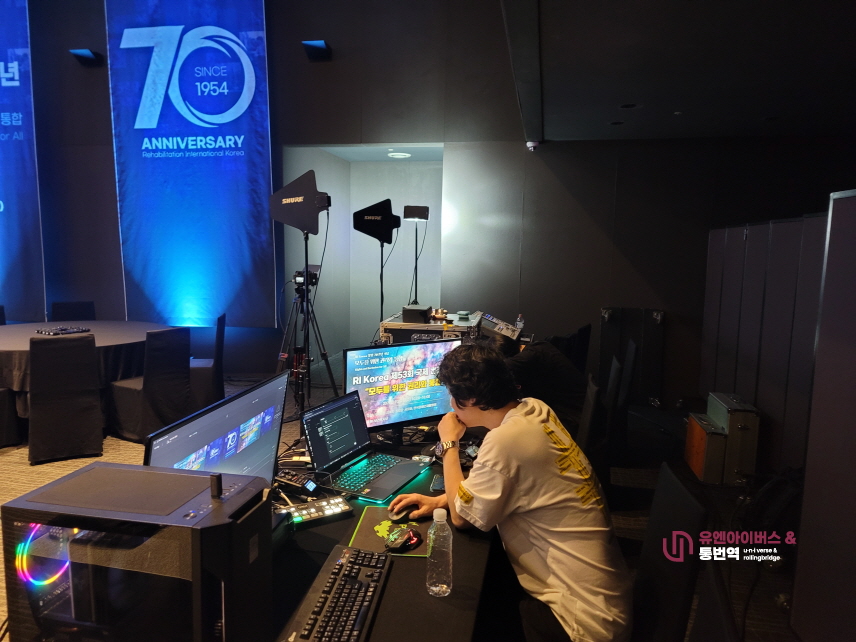
Online · On-Site · Hybrid System Comparison
Category | Online | On-Site | Hybrid |
Primary platform | Video-conferencing platform | Venue audio system | Venue and online platforms |
Interpretation channels | Digital audio channels | Transmitters and receivers | Integrated digital and venue channels |
Booths | Usually not required | Often required | May be required |
Receivers | Usually not required | Required for audience listening | Required for on-site participants |
Audio routing | Platform-based | Hardware-based | Integrated routing |
Network dependency | High | Moderate | Very high |
Technical complexity | Moderate | Moderate to high | Highest |
Operator requirement | Recommended | Recommended | Essential |
Main risk | Network and platform failure | Audio and equipment failure | Synchronization and routing failure |
Closing Statement
Online simultaneous interpretation is not simply a matter of opening a Zoom meeting and assigning interpreters.
Language channels, audio routing, participant access, network stability, monitoring, and backup procedures must operate as one integrated communication system.
UNIVERSE RB designs online, on-site, and hybrid interpretation environments according to event scale, technical risk, and communication objectives.
Quality is engineered.
Final Conclusion
Choosing an interpretation company is ultimately about choosing a communication partner.
While company size, revenue, certifications, and market visibility provide useful context, they do not by themselves determine the success of multilingual communication.
Successful outcomes are achieved through careful preparation, experienced professionals, effective project management, and a communication strategy aligned with the objectives of the event.
At UNIVERSE RB, we believe that the best interpretation projects are built on preparation rather than improvisation, systems rather than assumptions, and communication outcomes rather than marketing claims.
Our role is not simply to translate words.
Our role is to help organizations communicate with confidence across languages, cultures, and industries.

About Our Case Archive
The case studies and project insights presented on this website are based on experience supporting international conferences, investor presentations, government forums, executive meetings, technical seminars, and multilingual corporate events.
To protect client confidentiality and comply with the Code of Professional Conduct followed by professional interpreters worldwide, certain project details have been generalized, anonymized, or adapted for educational purposes.
The purpose of these materials is to share practical insights into multilingual communication planning while respecting the confidentiality of every client and every project.
UNIVERSE RB
Designing Communication. Managing Risk. Delivering Understanding.