
Quotation


Performance
[FAQ] Is AI Simultaneous Interpretation Suitable for International Conferences?
- 2026.02.20
AI Interpretation · Professional Simultaneous Interpretation
AI interpretation and professional simultaneous interpretation serve different purposes.
AI interpretation may be suitable for:
- Internal meetings
- Information-sharing sessions
- Reference-level subtitles
- Repetitive or standardized presentations
- Events where minor errors do not affect decisions
- Low-risk multilingual communication
Professional interpreters remain essential when accuracy, nuance, confidentiality, and communication risk are critical, including:
- Diplomatic forums
- Government policy conferences
- Legal proceedings
- Medical conferences
- Investor relations events
- Executive negotiations
- High-level technical symposiums
The appropriate solution should be selected according to the event’s purpose, risk level, subject complexity, and technical environment.
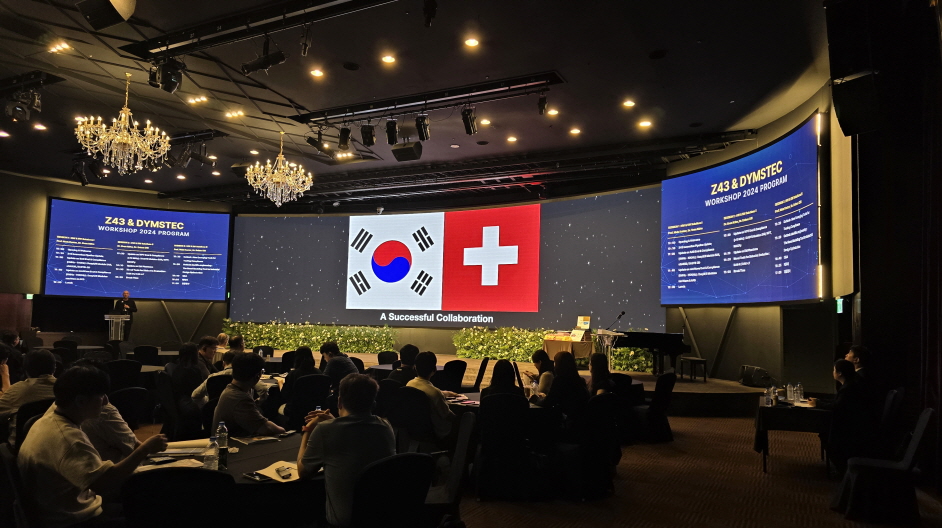
Comparison Overview
Category | AI Interpretation | Professional Simultaneous Interpretation |
General accuracy | Approximately 70–85%, depending on conditions | Professional-level accuracy with human contextual control |
Nuance and implied meaning | Limited | Context-sensitive delivery |
Unscripted Q&A | Accuracy may decline | Real-time contextual response |
Technical terminology | Requires glossary training and clear audio | Managed through preparation and subject expertise |
Numerical information | Higher risk of recognition errors | Human verification and contextual correction |
Diplomatic and policy events | Generally not recommended as the primary channel | Appropriate |
Legal and medical events | Reference use only | Professional interpretation recommended |
Internal meetings | Suitable for low-risk communication | Suitable |
Confidentiality | Depends on platform and data-processing structure | Controlled through professional and contractual procedures |
Cost | Generally lower at the language-processing level | Depends on interpreter and system configuration |
Technical infrastructure | Screens, captions, audio routing, network, and monitoring required | Booths, consoles, receivers, audio routing, and technical operation may be required |
Error correction | Limited during live delivery | Contextual correction may be possible |
Best use | Reference captions and low-risk information sharing | High-risk and decision-critical communication |
The accuracy ranges shown above are indicative rather than guaranteed. Actual performance varies according to language pair, accent, speech speed, audio quality, terminology, speaker overlap, and system configuration.
Where AI Interpretation Works Best
AI interpretation is more effective when:
- Speakers use clear microphones
- Speech speed is moderate
- Only one person speaks at a time
- Presentation materials are provided in advance
- Terminology is standardized
- Custom glossaries can be applied
- Subtitle visibility is sufficient
- Minor recognition errors are acceptable
- A technical operator monitors the output
AI performance may decline when the event includes:
- Rapid or unscripted discussion
- Strong accents or unclear pronunciation
- Overlapping speech
- Specialized technical terminology
- Proper nouns and institutional names
- Numerical, legal, or medical information
- Diplomatic and culturally sensitive expressions
- Humor, irony, or indirect language
Realistic Cost Considerations
AI interpretation may appear less expensive when only interpreter labor is compared.
However, the actual cost of an AI subtitle system may include:
- Speech-recognition and translation software
- Subtitle-generation systems
- Main screens and auxiliary displays
- Audio extraction and channel separation
- Network infrastructure
- Streaming and transmission systems
- Operator monitoring
- Backup devices and redundant connections
- Pre-event glossary configuration
- Technical rehearsals
In many cases, the technical infrastructure—not the AI subscription fee—determines the actual cost and operational stability.
A low-cost AI engine connected to an incomplete system may produce a poorer result than a simple smartphone-based application used individually.
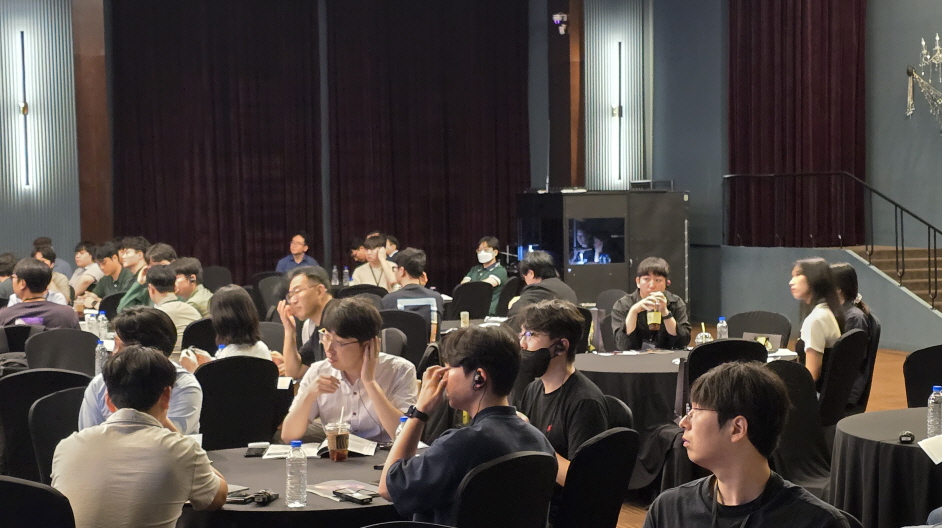
Screen Size and Subtitle Visibility
A 300-inch screen should not be treated as a universal minimum.
The appropriate screen size depends on:
- Venue dimensions
- Audience size
- Viewing distance
- Font size
- Number of subtitle lines
- Number of languages displayed
- Stage and lighting conditions
- Availability of auxiliary monitors
For a large conference hall, a 300-inch or larger main screen may be necessary. For smaller rooms, a smaller display may provide sufficient readability.
The correct standard is not a fixed screen size but whether every attendee can read the subtitles comfortably from the farthest seating position.
Subtitle design should also consider:
- High contrast
- Adequate font size
- Short line length
- Limited text density
- Stable display timing
- Clear language-channel identification
System Stability Requirements
With AI interpretation, technical stability may be more decisive than nominal language accuracy.
A complete AI interpretation environment requires:
- Clear source audio
- Proper audio routing
- Stable speech recognition
- Accurate language processing
- Readable subtitle output
- Reliable network connectivity
- Real-time technical monitoring
- A backup communication method
If one component fails, the quality of the entire system may decline.
For example:
- Poor microphone input reduces recognition accuracy
- Network instability delays subtitle output
- Small screens make accurate subtitles unusable
- Incorrect audio routing sends the wrong language to the AI engine
- Lack of monitoring allows errors to continue without correction
AI interpretation should therefore be designed as a complete technical system, not simply activated as a software feature.
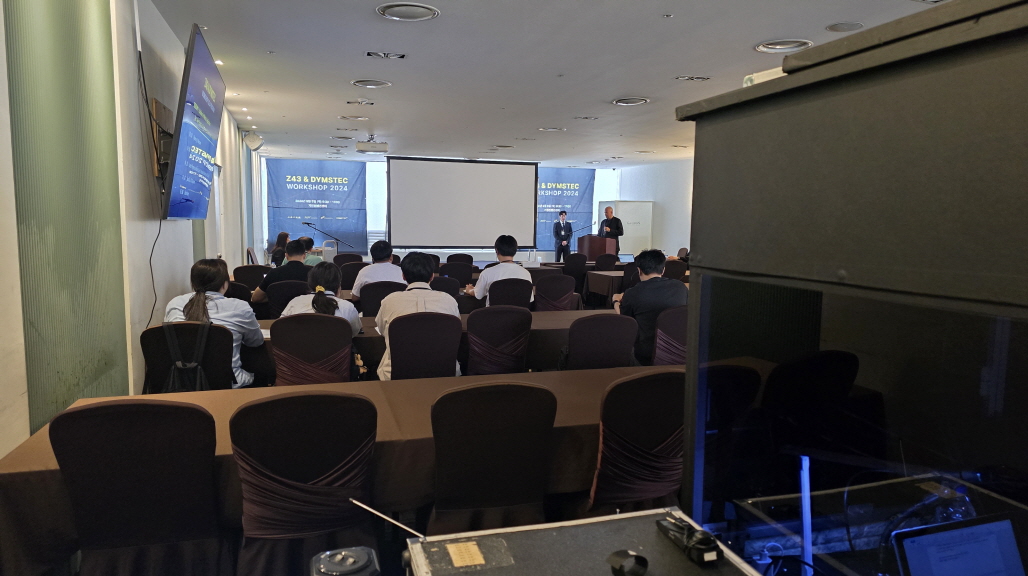
Smartphone-Based AI Interpretation
When a complete on-site AI subtitle system cannot be installed, individual smartphone-based AI interpretation may sometimes be more practical.
It may be suitable when:
- The audience is small
- Participants can use personal earphones
- The event is informal
- Interpretation is required only as a reference
- Venue screens are unavailable
- Multiple individual language preferences must be supported
However, smartphone-based interpretation also has limitations:
- Battery consumption
- Wi-Fi dependency
- Personal-device compatibility
- Audio pickup problems
- Data-security concerns
- Different results across devices
- Reduced attention to the main presentation
It should therefore be treated as a reference solution rather than an equivalent replacement for professional conference interpretation.
Recommended Operating Models
Event Type | Recommended Model |
Internal information-sharing meeting | AI interpretation may be sufficient |
Small, low-risk seminar | AI subtitles or a hybrid model |
Large presentation with standardized content | AI subtitles with full technical monitoring |
International policy forum | Professional simultaneous interpretation |
Medical, legal, or financial conference | Professional simultaneous interpretation |
Executive meeting or negotiation | Professional consecutive or simultaneous interpretation |
High-level technical symposium | Professional interpreters with AI-assisted terminology support |
Public event requiring accessibility captions | AI captions with human monitoring |
Multilingual conference with decision-critical content | Human-led interpretation system |
Human-Led Hybrid Model
AI and professional interpreters do not always need to be treated as competing alternatives.
A human-led hybrid model may use AI for:
- Terminology extraction
- Glossary development
- Presentation analysis
- Reference captions
- Session indexing
- Post-event search and review
Professional interpreters remain responsible for:
- Contextual accuracy
- Numerical precision
- Diplomatic nuance
- Legal and medical meaning
- Tone and speaker intent
- Live Q&A
- High-risk decision-making segments
This structure follows the UNIVERSE RB operating principle:
Technology-Enhanced. Expert-Led.
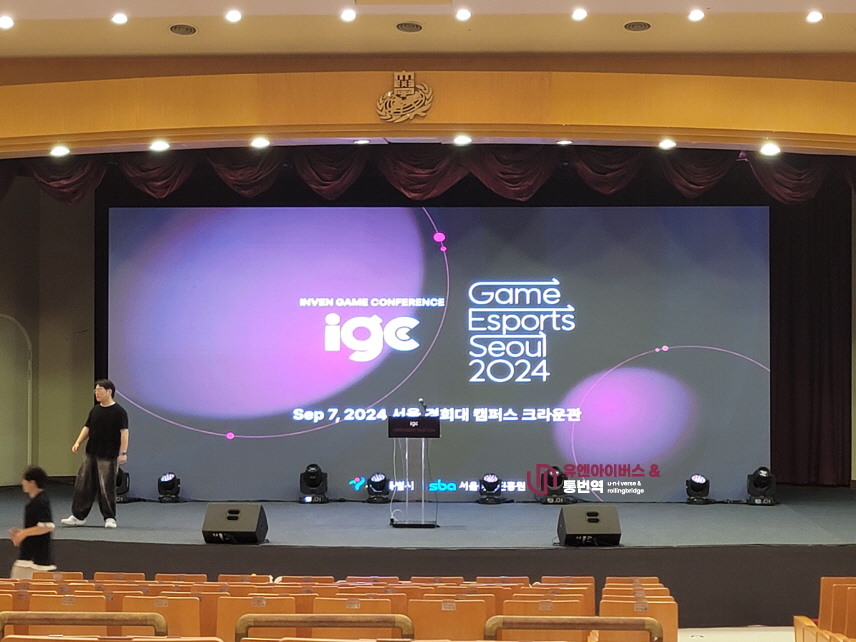
Important Note
AI interpretation should not be selected solely because its initial language-processing cost appears lower.
The final decision should consider:
- Permissible error level
- Consequences of mistranslation
- Audience expectations
- Technical infrastructure
- Confidentiality requirements
- Need for live correction
- Event formality
- Decision-making risk
Where system stability cannot be secured, a simple reference solution may be more practical than an incomplete large-scale AI subtitle system.
Where accuracy and communication outcomes directly affect policy, contracts, investment, safety, or reputation, professional human interpretation remains the appropriate primary solution.
Quality is engineered.
Final Conclusion
Choosing an interpretation company is ultimately about choosing a communication partner.
While company size, revenue, certifications, and market visibility provide useful context, they do not by themselves determine the success of multilingual communication.
Successful outcomes are achieved through careful preparation, experienced professionals, effective project management, and a communication strategy aligned with the objectives of the event.
At UNIVERSE RB, we believe that the best interpretation projects are built on preparation rather than improvisation, systems rather than assumptions, and communication outcomes rather than marketing claims.
Our role is not simply to translate words.
Our role is to help organizations communicate with confidence across languages, cultures, and industries.

About Our Case Archive
The case studies and project insights presented on this website are based on experience supporting international conferences, investor presentations, government forums, executive meetings, technical seminars, and multilingual corporate events.
To protect client confidentiality and comply with the Code of Professional Conduct followed by professional interpreters worldwide, certain project details have been generalized, anonymized, or adapted for educational purposes.
The purpose of these materials is to share practical insights into multilingual communication planning while respecting the confidentiality of every client and every project.
UNIVERSE RB
Designing Communication. Managing Risk. Delivering Understanding.