
Quotation


Performance
[FAQ] Is Single-Interpreter Simultaneous Interpretation Possible?
- 2026.02.20
Interpreter Configuration Guidelines
Single-interpreter simultaneous interpretation may be considered for small-scale, low-density events with approximately two hours or less of actual interpretation.
If the session runs longer or involves rapid speech, technical content, frequent Q&A, or continuous interpretation, quality may decline because of fatigue and reduced concentration.
For formal or high-risk events such as:
- International forums
- Government policy conferences
- Investor relations events
- High-level executive meetings
- Technical or medical conferences
a two-interpreter team is strongly recommended.
In professional conference settings, two interpreters generally alternate at regular intervals to maintain concentration, accuracy, terminology consistency, and stable performance.

Principles of Interpreter and System Design
Interpretation planning is not simply a matter of deciding how many interpreters to assign.
The appropriate configuration should be designed according to:
- Total event duration
- Actual interpretation time
- Speech density and speed
- Number of speakers
- Subject complexity
- Proportion of live Q&A
- Event formality
- Importance of the audience
- Audio and technical environment
- Communication risk
Selecting the number of interpreters based solely on price may produce an inefficient result.
For example, assigning two interpreters without sufficient subject expertise may increase the total budget without improving quality. In a short, low-density session, one highly specialized interpreter may provide a more appropriate configuration.
However, for long, continuous, or high-density simultaneous interpretation, subject expertise does not eliminate interpreter fatigue. A two-interpreter team remains the safer professional configuration.
Cases Where a Single-Interpreter Setup May Be Possible
Single-interpreter simultaneous interpretation may be considered in cases such as:
- One foreign speaker giving a presentation of approximately one hour
- A short program with a small number of speakers
- A presentation-focused event with limited Q&A
- An award or opening ceremony with short speeches and long intervals
- Several short sessions separated by sufficient breaks
- Three 30-minute presentations scheduled separately in the morning, afternoon, and evening
The total event duration alone does not determine the staffing requirement.
For example, a three-hour ceremony may involve less than one hour of actual interpretation. By contrast, a 90-minute technical panel with rapid discussion and continuous Q&A may require two interpreters.
The correct decision should therefore be based on actual interpretation workload, speech density, and communication risk.
FAQ | Single-Interpreter Simultaneous Interpretation · Team Configuration
1) Is simultaneous interpretation possible with only one interpreter?
Yes, but only under limited conditions.
A single-interpreter setup may be suitable when:
- The actual interpretation time is short
- The number of speakers is limited
- The program is presentation-focused
- Q&A is minimal
- Speech density is relatively low
- Sufficient breaks are provided
- The subject is within the interpreter’s area of expertise
The final configuration should always be determined according to the event structure and communication requirements.
2) Why do professional international conferences usually use two interpreters?
Simultaneous interpretation requires continuous listening, analysis, reformulation, and delivery in real time.
A two-interpreter team allows interpreters to alternate regularly and maintain:
- Cognitive concentration
- Technical and numerical accuracy
- Terminology consistency
- Stable voice delivery
- Quality during longer sessions
- Support when unexpected terminology or audio problems arise
Two-interpreter teams are generally recommended for:
- International forums
- Government policy conferences
- Medical and technical seminars
- Corporate investor relations events
- International cooperation meetings
- Executive-level discussions
3) How long can one interpreter provide simultaneous interpretation?
As a general operational guideline, a single-interpreter setup may be considered when the actual interpretation workload is approximately two hours or less.
It is more likely to be appropriate when:
- Interpretation is not continuous
- The event is presentation-focused
- Speech speed is moderate
- Q&A is limited
- The number of speakers is small
- Adequate breaks are included
If the session involves rapid speech, technical terminology, numerical data, or continuous discussion, two interpreters may be necessary even when the event lasts less than two hours.
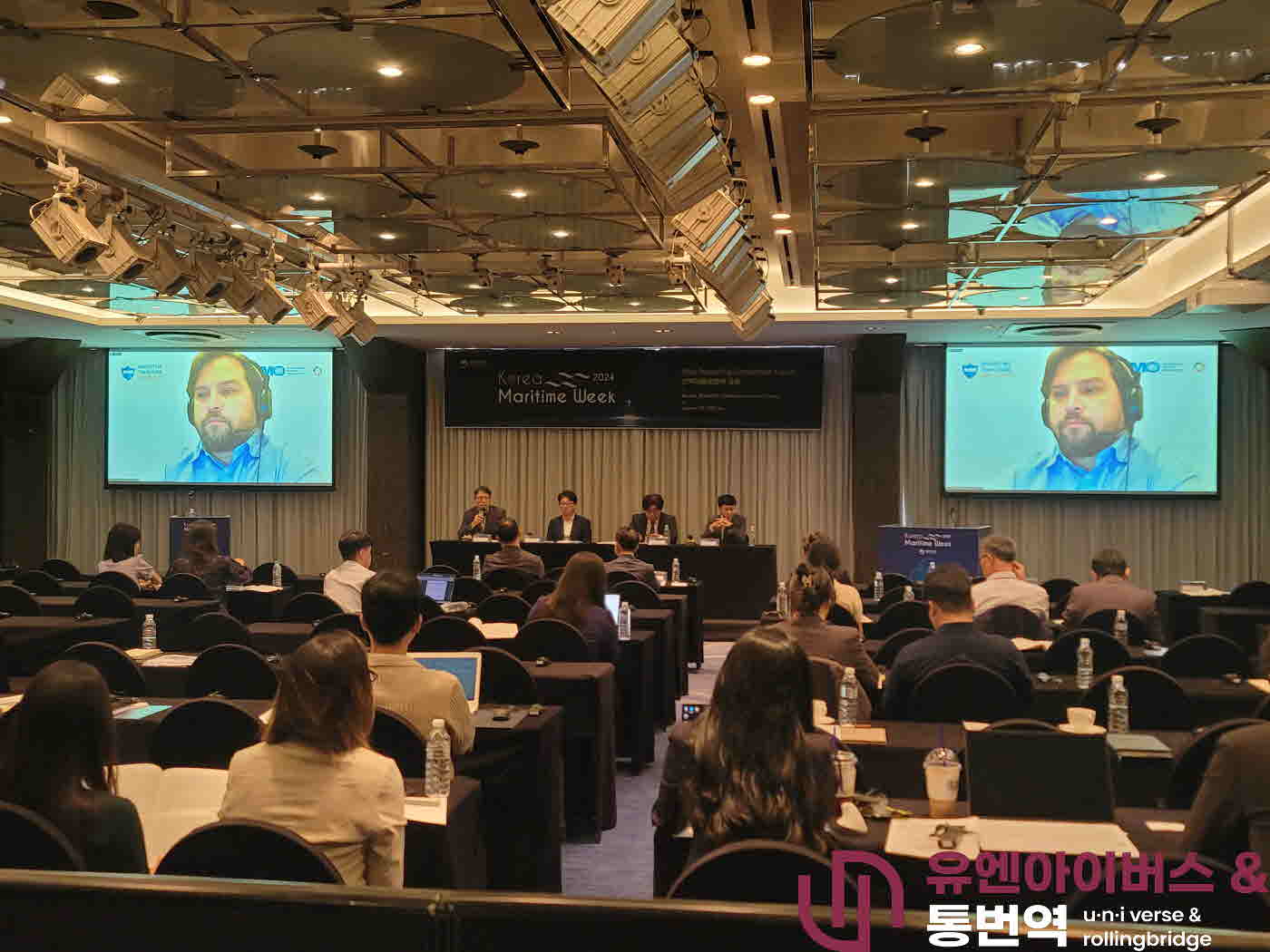
4) Can a three-hour event be handled by one interpreter?
In some cases, yes.
A single interpreter may be considered for:
- Award ceremonies
- Opening or commemorative ceremonies
- Events with brief prepared speeches
- Programs with long intervals between speakers
- Several short interpretation segments separated by sufficient breaks
The key factor is not the total scheduled duration but the actual workload.
A three-hour ceremony containing 50 minutes of interpretation may be less demanding than a continuous 90-minute technical panel.
5) How is the number of interpreters determined?
The interpreter configuration is determined by analyzing:
- Actual interpretation time
- Number of speakers
- Speech speed and density
- Technical difficulty
- Numerical and statistical content
- Proportion of Q&A and panel discussion
- Availability of presentation materials
- Event formality
- Audience and stakeholder importance
- Consequences of interpretation errors
These elements must be evaluated together before the final staffing structure is selected.
6) Does reducing the number of interpreters significantly reduce costs?
Not always.
The final cost depends on the interpreters’ expertise, event duration, preparation requirements, and system configuration.
For a short, low-density session, one highly specialized interpreter may be more appropriate than two interpreters with limited subject expertise.
However, reducing a two-interpreter team to one solely to lower the price may increase fatigue and quality risk during long or demanding sessions.
Cost efficiency should therefore be evaluated together with:
- Interpreter expertise
- Actual workload
- Event risk
- Preparation requirements
- Required quality level
7) What factors determine interpretation quality?
Interpretation quality depends on the complete event structure, including:
- Interpreter expertise
- Appropriate team configuration
- Event duration and speech density
- Audio quality
- Equipment stability
- Terminology preparation
- Availability of presentation materials
- Technical monitoring
- On-site coordination
Interpretation should therefore be understood as both a professional language service and a communication-system design process.
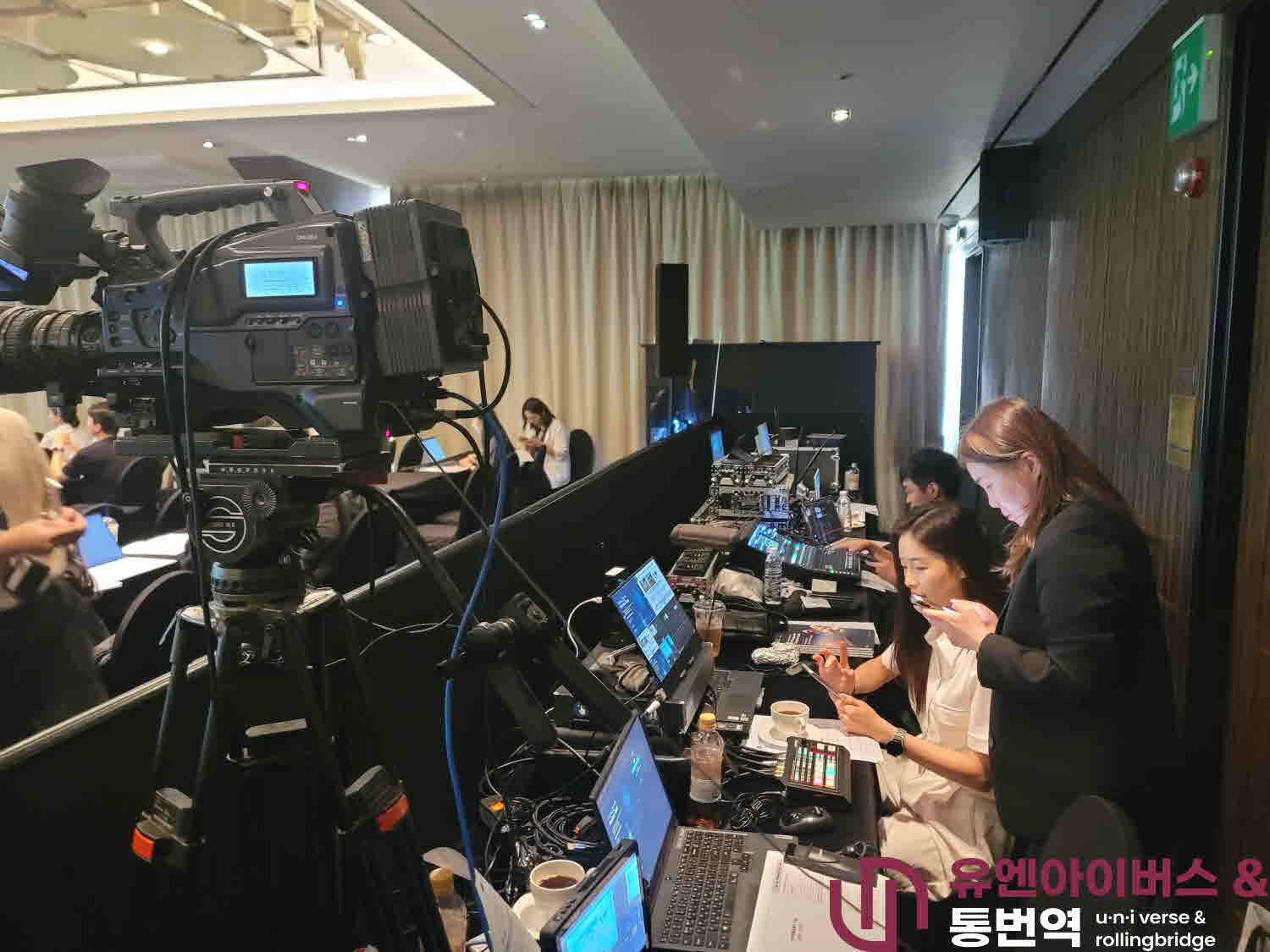
Recommended Configuration Summary
Event Structure | Recommended Configuration |
One presentation lasting approximately one hour | One interpreter may be possible |
Short, low-density event with limited Q&A | One interpreter may be considered |
Ceremony with brief speeches and long intervals | One interpreter may be possible |
Continuous session approaching two hours | Two interpreters recommended after workload review |
Technical panel with rapid discussion | Two interpreters recommended |
Medical, legal, policy, or investor event | Two interpreters strongly recommended |
Formal international conference | Two-interpreter team as the standard configuration |
Event lasting more than two hours with continuous interpretation | Two interpreters required in principle |
Closing Statement
The number of interpreters should not be determined by event duration or price alone.
A short but technically dense session may require two interpreters, while a longer ceremony with limited interpretation may be handled by one experienced interpreter.
UNIVERSE RB designs interpreter teams according to actual workload, subject expertise, event risk, and communication objectives.
Quality is engineered.
Final Conclusion
Choosing an interpretation company is ultimately about choosing a communication partner.
While company size, revenue, certifications, and market visibility provide useful context, they do not by themselves determine the success of multilingual communication.
Successful outcomes are achieved through careful preparation, experienced professionals, effective project management, and a communication strategy aligned with the objectives of the event.
At UNIVERSE RB, we believe that the best interpretation projects are built on preparation rather than improvisation, systems rather than assumptions, and communication outcomes rather than marketing claims.
Our role is not simply to translate words.
Our role is to help organizations communicate with confidence across languages, cultures, and industries.

About Our Case Archive
The case studies and project insights presented on this website are based on experience supporting international conferences, investor presentations, government forums, executive meetings, technical seminars, and multilingual corporate events.
To protect client confidentiality and comply with the Code of Professional Conduct followed by professional interpreters worldwide, certain project details have been generalized, anonymized, or adapted for educational purposes.
The purpose of these materials is to share practical insights into multilingual communication planning while respecting the confidentiality of every client and every project.
UNIVERSE RB
Designing Communication. Managing Risk. Delivering Understanding.