
Quotation


Performance
International Conference Interpretation: From Planning to On-Site Operations
- 2026.08.25
How Interpreter Selection, Preparation, Terminology Management, Equipment, Rehearsal, and QMS Support Successful International Events
International conference interpretation is not completed by what happens on the event day alone.
Successful delivery begins with event analysis, interpreter selection, advance material review, terminology preparation, equipment installation, rehearsal, on-site operations, and post-event follow-up.
Professional interpretation requires both subject-matter expertise and a stable operating system. When these elements are managed together, organizations can improve communication accuracy, reduce operational risk, and maintain a smoother event flow.
UNIVERSE RB supports international conferences, government events, global forums, corporate conferences, and other professional programs through specialized interpreters, structured quality management (QMS), and event-operation experience.

1️. Does International Conference Interpretation Happen Only on the Event Day?
For first-time organizers, it can be easy to assume that the work is complete once interpreters have been booked.
In practice, professional conference interpretation involves multiple stages:
Event Analysis → Interpreter Assignment → Material Preparation → Terminology Management → Equipment Setup → Rehearsal → Live Operations → Post-Event Review
Each stage affects the next.
If event objectives are not analyzed properly, the wrong interpretation method or staffing structure may be selected.
If presentation materials arrive too late, interpreters may have limited time to prepare terminology and understand the context.
If equipment and audio systems are not tested in advance, technical problems can affect interpretation quality and event operations.
A successful international conference is created by an operating structure—not by the interpreter alone.
2️. One-Sentence Answer
International conference interpretation is a professional service that manages the entire communication process from advance preparation through event completion—not just the hours spent interpreting on the event day.
3️. When Is Structured Conference Interpretation Particularly Important?
A professional interpretation structure is especially important for:
- International conferences and forums
- Government and public-sector events
- Investor Relations (IR) presentations
- Global corporate conferences
- Medical and pharmaceutical symposiums
- Technical conferences and product presentations
- International academic conferences
- Multilingual policy events
- Hybrid and remote international meetings
As event complexity increases, the need for interpreters, equipment, audio systems, technical staff, and project coordination also increases.
4️. The International Conference Interpretation Workflow
Stage | What Happens |
① Event Analysis | Review the event purpose, audience size, languages, keynote presentations, panels, Q&A, and schedule. This determines the interpretation method, interpreter staffing, and equipment requirements. |
② Interpreter Assignment | Select professional interpreters based on subject matter, language combination, event complexity, and speaker profile. |
③ Advance Preparation | Review presentations, speeches, agendas, speaker information, and participant lists. Prepare glossaries for specialized terminology, acronyms, names, and key messages. |
④ Equipment Setup | Install booths, consoles, transmitters, receivers, headsets, and audio systems. For remote or hybrid events, integrate interpretation channels with Zoom, Webex, Teams, or other platforms. |
⑤ Rehearsal | Test presentation flow, microphones, slides, interpretation channels, speaker transitions, and technical systems with speakers, interpreters, and operations staff. |
⑥ Live Event Operations | Provide real-time interpretation for presentations, panels, Q&A, interviews, and discussions while monitoring timing, equipment, schedule changes, and technical conditions. |
⑦ Post-Event Management | Complete equipment removal and operational wrap-up. Where required, provide recordings, operational feedback, or improvement notes for future events. |
International conference interpretation is not a few hours of live language delivery. It is a complete operational system from planning through post-event review.
Why Does the Operating Structure Matter?
Preparation Area | What Can Happen If It Is Missing |
Advance Material Review | Greater risk of terminology and context errors |
Equipment Testing | Audio failures or interruption of interpretation |
Rehearsal | Misalignment between speakers, interpreters, and technical teams |
Operations Coordination | Slower response to schedule or speaker changes |
Post-Event Review | Fewer lessons captured for future events |
A strong operating structure improves not only interpretation quality but also overall event stability.
Ultimately, international conference interpretation is not simply a few hours of interpreting on the event day. It is an integrated operating system that begins with event analysis and continues through preparation, technical setup, live operations, and post-event management.
5️. Real-World Application Examples
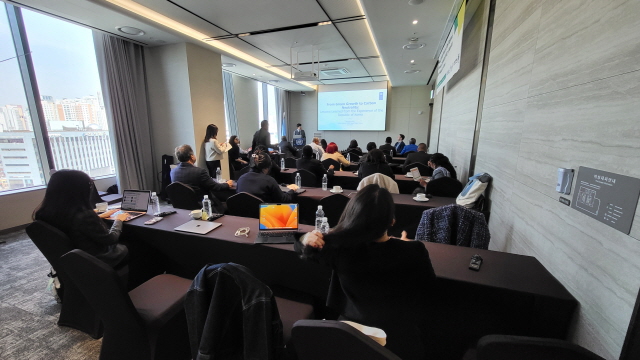
Case 1. International Policy Forum
A government-related international forum involved overseas speakers and specialized policy content.
Preparation began approximately one month before the event. Presentation materials and speeches were collected progressively, while interpreters reviewed policy terminology, institutional names, acronyms, speaker-specific content, and presentation structure.
A specialized glossary was prepared in advance to improve terminology consistency throughout the event.
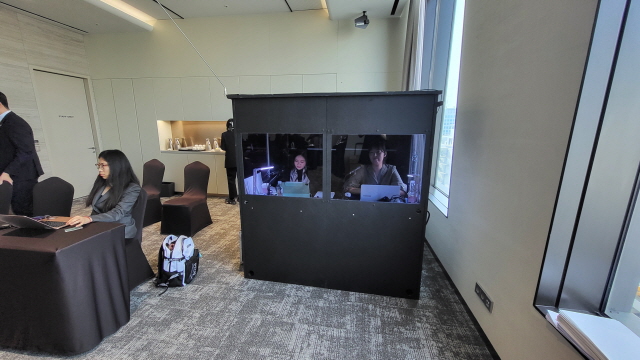
The day before the event, interpretation booths, receivers, and audio systems were installed and tested.
Speakers, moderators, interpreters, and operations staff then conducted a rehearsal to verify microphone quality, slide transitions, interpretation channels, speaker order, and technical workflow.
Advance preparation and technical coordination created a stable simultaneous interpretation environment for the event.
Case 2. International Investor Relations Event
An IR program for overseas investors included corporate introductions, financial performance presentations, investment strategy, business outlook, and investor Q&A.
The interpretation team reviewed financial terminology, industry-specific terms, presentation materials, key figures, and management messages before the event.
On the event day, the interpreters supported both formal presentations and live Q&A.
Unexpected questions and changes in presentation order were handled through coordination between the interpreters and event operations team.
IR interpretation requires more than language proficiency—it requires preparation for financial content, numbers, business strategy, and unscripted investor communication.
Case 3. International Technology Conference
A technology conference involved experts from several countries and multiple language requirements.
Before the event, technical presentations were reviewed, terminology was standardized, interpreter teams were coordinated, simultaneous interpretation equipment was configured, and hybrid online/offline systems were tested.
During the conference, the interpretation and operations teams responded to session changes, schedule adjustments, panel discussions, live Q&A, and technical issues.
The integrated interpretation structure supported stable multilingual communication across the program.
6️. Seven-Point Checklist for a Successful International Conference
① Define the Event Purpose and Language Requirements
Confirm the event objectives, audience profile, language combinations, number of participants, presentation format, and Q&A requirements.
② Assign Interpreters With Relevant Industry Experience
Interpreter selection should reflect the event's subject matter, including policy, finance, medical and pharmaceutical fields, technology, engineering, legal matters, or corporate strategy.
③ Provide Presentation Materials in Advance
Useful preparation materials may include:
- Presentation files
- Speeches
- Event agendas
- Speaker biographies
- Company information
- Technical documents
- Financial data
- Background materials
④ Prepare a Specialized Glossary
Important terminology may include industry-specific terms, acronyms, company names, product names, institutional names, professional titles, key figures, and frequently used expressions.
⑤ Test Interpretation Equipment and Audio Systems
The technical team should verify booths, consoles, receivers, transmitters, microphones, audio routing, language channels, remote platforms, and network conditions.
⑥ Conduct a Rehearsal
A rehearsal should confirm presentation sequence, speaker pace, slide transitions, microphone setup, language channels, Q&A workflow, panel discussions, and video playback.
⑦ Prepare for Unexpected Changes
The event team should be prepared for speaker replacements, program changes, additional Q&A, session delays, room changes, technical problems, remote speaker issues, and language-channel changes.
International conference success is often determined before the event begins.
7️. International Conference Interpretation as a QMS-Based Process
A professional quality-management structure can be understood as:
Planning → Interpreter Selection → Material Review → Terminology Management → Technical Preparation → Rehearsal → Live Monitoring → Post-Event Review
This process reduces dependence on last-minute improvisation.
A structured QMS helps coordinate interpreter qualifications, subject-matter expertise, preparation materials, terminology, equipment, technical personnel, event workflow, and quality monitoring.
Interpreter expertise creates capability. QMS helps make that capability repeatable and consistent.
8️. What Should Buyers Compare When Selecting an Interpretation Provider?
Do not compare only the interpreter fee.
Compare the complete service structure.
Buyer Question | Why It Matters |
How are interpreters selected? | Determines subject-matter fit |
What preparation is included? | Affects contextual readiness |
How is terminology managed? | Improves consistency |
Who provides the equipment? | Clarifies technical responsibility |
Is audio integration included? | Affects signal reliability |
Is rehearsal included? | Identifies operational problems early |
Who manages the event on site? | Clarifies operational accountability |
How are schedule changes handled? | Tests operational flexibility |
Is quality monitored throughout the event? | Supports stable delivery |
What happens after the event? | Clarifies post-event support |
The best interpretation provider should be able to explain not only who the interpreters are, but also the operating process behind them.
9️. FAQ
Q1. Is international conference interpretation only about simultaneous interpretation?
No. Simultaneous interpretation is commonly used for large presentations, conferences, forums, and seminars, while consecutive interpretation may be more appropriate for executive meetings, interviews, bilateral discussions, negotiations, and smaller Q&A sessions.
Q2. How early should interpretation planning begin?
The earlier the better for complex or multilingual events. The required preparation period depends on event size, speaker materials, number of languages, equipment requirements, venue conditions, and technical complexity.
Q3. Why are presentation materials so important?
Presentation materials allow interpreters to understand terminology, context, speaker intent, key figures, and presentation flow before the event begins.
Q4. Why is rehearsal important?
Rehearsal allows the team to identify potential problems involving microphones, presentation order, audio routing, interpretation channels, video playback, and speaker transitions before participants arrive.
Q5. Does international conference interpretation require technical staff?
Complex simultaneous, hybrid, or multilingual events often require professional technical support for interpretation booths, receivers, audio routing, online platforms, and troubleshooting.
Q6. Does a professional interpreter alone guarantee quality?
No. Interpreter expertise is essential, but preparation, terminology management, audio quality, technical systems, and event operations also influence the final outcome.
Q7. What does QMS mean in interpretation?
QMS refers to a structured quality-management process that coordinates interpreter selection, preparation, terminology, technical systems, operations, monitoring, and post-event review.

10. Conclusion
International conference interpretation begins long before the first speaker takes the stage.
Successful delivery depends on an interconnected process:
Event Analysis → Interpreter Assignment → Material Preparation → Terminology Management → Equipment Setup → Rehearsal → Live Operations → Post-Event Review
Professional interpreters remain at the center of this process.
However, the strongest outcomes occur when their expertise is supported by preparation, technology, technical operations, and systematic quality management.
For international conferences, government events, investor relations programs, medical symposiums, and technical conferences, the most important question is therefore not simply:
“Who will interpret the event?”
It is:
“How will the entire interpretation process be designed and managed from preparation through completion?”
Successful international conference interpretation is not created on the event day—it is built through preparation, expertise, technology, and quality management.
Related Information
- How Is Simultaneous Interpretation Pricing Determined?
- Why Simultaneous Interpretation Fails—and How to Prevent It
- Simultaneous vs. Consecutive Interpretation
- Why Interpretation Is Communication Risk Management
- AI Interpretation vs. Professional Interpretation
- How to Choose a Professional Interpretation Company
About Our Case Archive

The case studies and project insights presented on this website are based on experience supporting international conferences, investor presentations, government forums, executive meetings, technical seminars, and multilingual corporate events.
To protect client confidentiality and comply with the Code of Professional Conduct followed by professional interpreters worldwide, certain project details have been generalized, anonymized, or adapted for educational purposes.
The purpose of these materials is to share practical insights into multilingual communication planning while respecting the confidentiality of every client and every project.
UNIVERSE RB
Designing Communication. Managing Risk. Delivering Understanding.