
Quotation


Performance
Why Interpretation Costs Vary Even for the Same 4-Hour Event?
- 2026.08.17
How Industry Expertise, Preparation, Interpretation Technology, and Quality Management Determine Professional Interpretation Pricing
Why can two 4-hour international events have completely different interpretation costs?
The difference is not simply the number of hours. It is the level of industry expertise, preparation, technology, staffing, and quality management required to deliver reliable communication.
Interpretation for policy, medical, technical, and investor relations (IR) events often requires advance document analysis, terminology preparation, specialized interpreters, technical systems, rehearsals, and on-site support.
That is why professional interpretation pricing reflects not only interpreter time, but also the communication complexity and operational risk of the event.
1️. Why Do Interpretation Costs Vary So Much?
International event interpretation costs are not determined by interpreter fees alone.
Two events may both last four hours, but require completely different levels of preparation and operational support.
Pricing can vary depending on:
- Event complexity
- Industry specialization
- Interpretation method
- Interpreter qualifications
- Number of interpreters
- Advance preparation
- Terminology management
- Simultaneous interpretation equipment
- Technical support
- Rehearsal requirements
- On-site operations
- Quality management
For example, a four-hour general business meeting and a four-hour international medical symposium may require very different levels of subject-matter expertise and preparation.
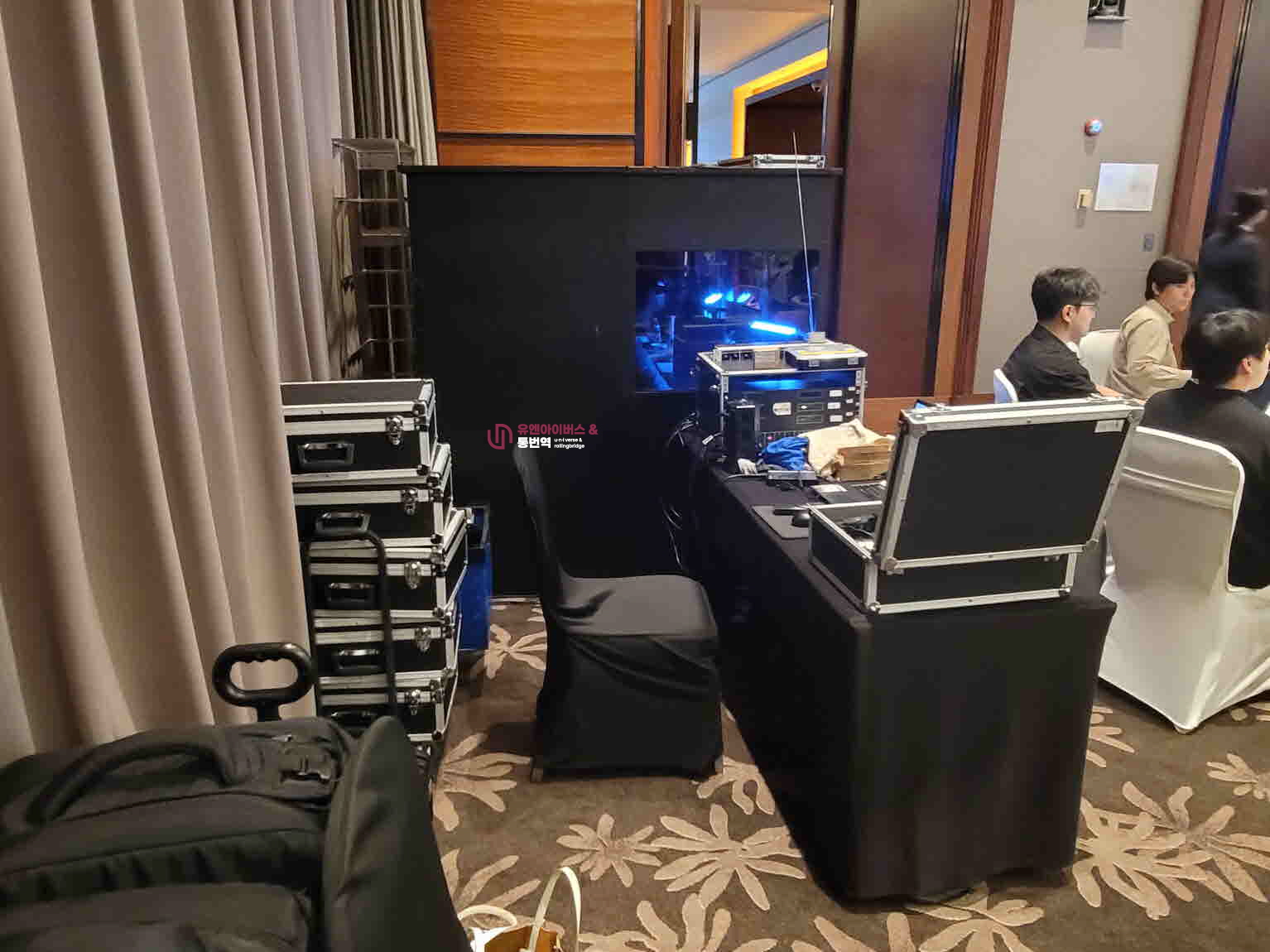
Likewise, a consecutive interpretation assignment requiring one interpreter cannot be priced in the same way as a simultaneous interpretation event requiring two interpreters, booths, consoles, receivers, audio integration, and technical personnel.
Key Insight
Interpretation pricing reflects communication complexity—not simply event duration.
For high-stakes international events, the cost also reflects the operational structure required to reduce communication risk.
2️. One-Sentence Answer
Professional interpretation costs are determined not simply by interpreter time, but by industry expertise, event complexity, preparation, staffing, technology, and quality management.
3️. When Should You Look Beyond the Lowest Price?
Organizations should evaluate the interpretation structure—not just the quotation—when planning:
- International conferences and forums
- Government and public-sector events
- Investor relations (IR) presentations
- Overseas buyer meetings
- Contract negotiations
- Medical and pharmaceutical conferences
- GMP seminars and audits
- Technology conferences
- Industrial exhibitions
- Factory inspections
- Multilingual simultaneous interpretation events
The greater the impact of communication errors on decisions, contracts, investment, safety, policy, or corporate credibility, the more important professional preparation becomes.
4️. What Determines Professional Interpretation Costs?
Cost Factor | What It Includes | Impact on Pricing |
Event Complexity | Presentation format, Q&A, negotiations, multiple speakers | High |
Industry Expertise | Policy, medical, pharmaceutical, technical, financial, legal or IR knowledge | High |
Interpretation Method | Simultaneous, consecutive, remote or hybrid interpretation | High |
Interpreter Expertise | Assignment of interpreters with relevant professional experience | High |
Advance Preparation | Review of agendas, presentations and reference materials | Medium–High |
Terminology Management | Preparation of technical terms, abbreviations and company terminology | Medium–High |
Equipment | Booths, consoles, transmitters, receivers and audio integration | Varies by event |
Technical Operations | Engineers, operators and on-site troubleshooting | Varies by event |
Rehearsal | Audio checks, interpreter preparation and workflow verification | Medium |
Quality Management | Real-time monitoring, coordination and contingency response | Medium–High |
Why Can the Same 4-Hour Event Cost More?
Because four hours of interpretation does not necessarily mean four hours of work.
A professional interpretation project may begin well before participants enter the venue.
The team may need to:
Analyze the Event → Select Interpreters → Review Materials → Prepare Terminology → Configure Equipment → Conduct Rehearsals → Operate the Event → Monitor Quality
The visible four-hour event is therefore only one part of the complete professional interpretation process.
5️. General Meeting vs. Professional International Event
Category | General Business Meeting | Professional International Event |
Event Duration | 4 hours | 4 hours |
Subject Complexity | Low–Moderate | High |
Interpreter Selection | General business experience | Industry-specific expertise |
Preparation | Basic | Extensive |
Terminology Management | Limited | Specialized terminology preparation |
Q&A Complexity | Moderate | High |
Equipment | Often unnecessary | May require a full simultaneous interpretation system |
Technical Staff | Usually unnecessary | May require engineers/operators |
Rehearsal | Limited | Often recommended |
Quality Management | Basic | Structured monitoring |
Communication Risk | Lower | Higher |
Pricing Structure | Primarily assignment-based | Expertise + preparation + system-based |
This is why comparing interpretation quotations based only on event duration can be misleading.
6️. Real-World Application Examples
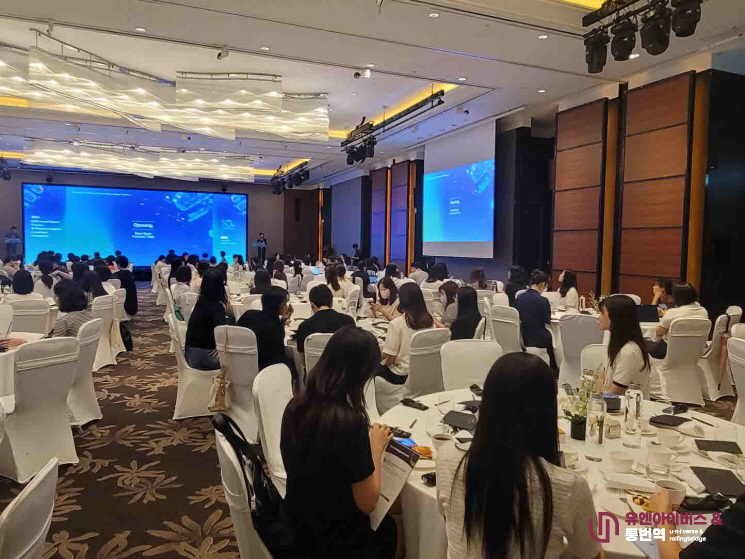
Case 1. International Policy Forum
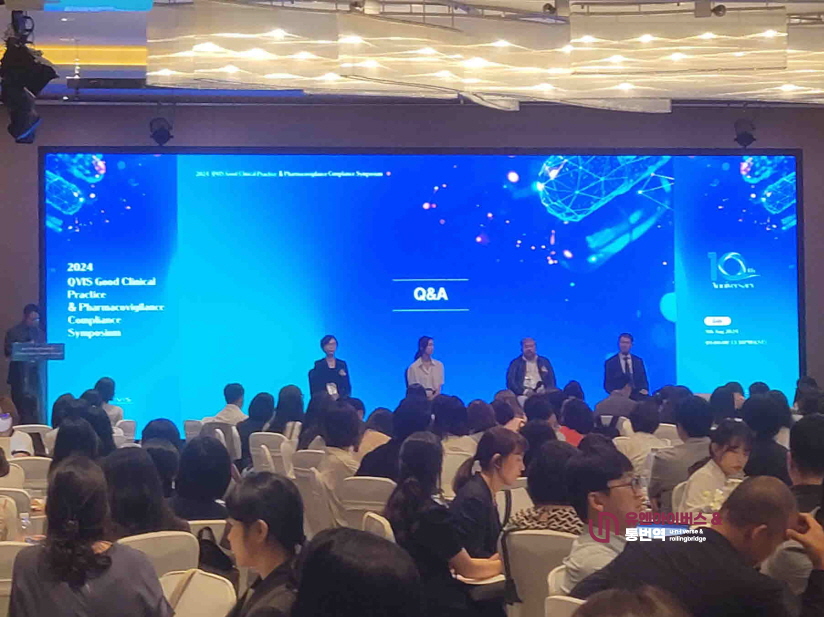
Two professional interpreters were assigned based on the policy content and communication complexity.
The event also required simultaneous interpretation equipment, rehearsal, and operational support.
By integrating interpreter expertise with preparation and technical operations, interpretation quality was maintained throughout the event.
Case 2. International Investor Relations Presentation
An interpreter with financial and investment-related experience was assigned.
Corporate materials and financial terminology were reviewed in advance to support accurate communication of financial figures, investment conditions, and investor Q&A.
The primary cost driver was therefore not simply meeting duration, but the level of financial expertise and preparation required.
Case 3. International Medical Seminar
A medical interpreter was assigned based on the subject matter.
Presentation materials and specialized terminology were reviewed in advance, and a terminology list was prepared before the event.
This preparation supported more consistent communication of medical and technical content throughout the seminar.
7️. Why Industry Expertise Changes the Cost Structure
A general meeting may primarily require strong bilingual communication skills.
A specialized event can require significantly more.
Policy and Government
Interpreters may need to understand institutional terminology, policy frameworks, official titles, diplomatic expressions, and public-sector communication.
Medical and Pharmaceutical
Medical terminology, clinical concepts, pharmaceutical terminology, regulatory requirements, and GMP-related content may require specialized preparation.
Technology and Engineering
Technical presentations may contain product specifications, engineering concepts, abbreviations, manufacturing terminology, and complex Q&A.
Investor Relations and Finance
IR interpretation can involve financial statements, valuation, investment terminology, business strategy, market data, percentages, and rapid investor questions.
The language pair may be identical, but the required expertise is not.
That difference directly affects interpreter selection, preparation, and pricing.
8️. Seven Factors More Important Than Event Duration
When comparing professional interpretation quotations, consider these seven factors:
1. Event objectives and complexity
Determine whether the event involves simple information exchange or high-stakes decision-making.
2. Industry-specific interpreter expertise
Confirm whether the interpreter has relevant experience in the event's subject area.
3. Advance material review
Presentation decks, agendas, scripts, company information, and technical documents can require preparation before the event.
4. Terminology management
Specialized terminology should be identified and prepared before interpretation begins.
5. Interpretation and audio systems
Simultaneous interpretation may require booths, consoles, transmitters, receivers, microphones, and audio integration.
6. Rehearsal and on-site technical support
Technical checks and operational preparation help reduce preventable disruptions.
7. Quality management throughout the event
Professional coordination should continue from preparation through event completion.

9️. Price Comparison: What Buyers Should Actually Compare
Instead of asking only:
“How much does a four-hour interpreter cost?”
A more useful question is:
“What is included in the interpretation service for our four-hour event?”
When comparing providers, check whether the quotation includes:
Evaluation Point | Why It Matters |
Relevant interpreter expertise | Determines subject-matter suitability |
Number of interpreters | Affects sustainability and quality for demanding assignments |
Material review | Improves preparation |
Terminology management | Reduces terminology inconsistency |
Equipment | Determines whether interpretation can be delivered reliably |
Technical personnel | Supports system stability |
Rehearsal | Identifies problems before the event |
Project coordination | Connects interpreters, speakers, venue and technical teams |
Quality management | Helps maintain consistent performance |
Contingency planning | Supports response to unexpected changes |
Key Message
The lowest quotation and the lowest total communication cost are not necessarily the same thing.
A lower initial price may be appropriate for a straightforward, low-risk meeting.
For complex international events, however, reducing necessary preparation, expertise, or technical support may increase communication and operational risk.
FAQ
Q1. Why can interpretation costs differ for the same four-hour event?
Because event duration is only one pricing factor. Industry expertise, event complexity, preparation, interpreter staffing, equipment, technical support, and quality management can significantly change the required service structure.
Q2. Does a more expensive interpreter always mean better quality?
No. The most important factor is whether the interpreter's expertise matches the event. A properly selected interpreter with relevant subject-matter experience may provide better value than simply choosing the highest-priced interpreter.
Q3. Why does simultaneous interpretation usually cost more?
Simultaneous interpretation may require multiple interpreters as well as booths, consoles, transmitters, receivers, audio integration, technical personnel, and advance testing.
Q4. Why does preparation affect interpretation pricing?
Professional interpreters may need to review presentations, technical documents, terminology, company information, speaker materials, and potential Q&A before the event.
Q5. Do medical, technical, policy, and IR events usually require specialized interpreters?
These fields often involve specialized terminology and communication risks, so relevant subject-matter experience can be particularly important.
Q6. Should companies choose the lowest interpretation quotation?
Not automatically. The quotation should be evaluated against the event's complexity, communication risk, interpreter expertise, preparation requirements, equipment, and operational support.
Q7. What should I provide to receive an accurate interpretation quotation?
Providing the event schedule, language pair, interpretation method, venue, audience size, subject area, presentation materials, number of speakers, Q&A format, and technical requirements helps determine the appropriate service structure.
Conclusion
Two four-hour events can require completely different interpretation budgets because interpretation pricing is not based on time alone.
A general business meeting may require a relatively simple interpretation structure, while an international policy forum, medical seminar, technology conference, or investor presentation may require specialized interpreters, extensive preparation, terminology management, equipment, technical personnel, rehearsal, and real-time quality management.
Professional interpretation pricing therefore reflects three fundamental elements:
Expertise + Preparation + Operational Structure
For international events where communication affects investment, contracts, policy, technical understanding, or organizational credibility, the most useful comparison is not simply which provider offers the lowest price.
It is which interpretation structure is appropriate for the communication risk and objectives of the event.
Related Information
- Why Do Interpretation Costs Vary Between Providers?
- How Are Simultaneous Interpretation Costs Determined?
- Simultaneous vs. Consecutive Interpretation: Which Is Right for Your Event?
- Why Professional Interpreters Deliver Different Results
- Seven Ways to Reduce Interpretation Risk at International Events
- How to Choose a Professional Interpretation Company
About Our Case Archive

The case studies and project insights presented on this website are based on experience supporting international conferences, investor presentations, government forums, executive meetings, technical seminars, and multilingual corporate events.
To protect client confidentiality and comply with the Code of Professional Conduct followed by professional interpreters worldwide, certain project details have been generalized, anonymized, or adapted for educational purposes.
The purpose of these materials is to share practical insights into multilingual communication planning while respecting the confidentiality of every client and every project.
UNIVERSE RB
Designing Communication. Managing Risk. Delivering Understanding.