
Quotation


Performance
Why Lower-Cost Interpretation Can Lead to Higher Total Costs?
- 2026.08.15
What 128 Professional Interpretation Projects Reveal About Expertise, Preparation, Equipment, and the True Cost of Communication Risk
An analysis of 128 interpretation projects delivered by UNIVERSE RB found that the lowest initial quotation was not necessarily the factor that determined overall cost or communication quality.
Across international conferences, contract negotiations, technical seminars, medical and pharmaceutical events, and investor relations meetings, four factors repeatedly mattered:
Industry Expertise + Interpreter Level + Advance Preparation + Operational and Technical Structure
When these elements were not appropriately matched to the assignment, communication problems could lead to direct additional costs such as:
- Additional interpretation
- Schedule delays
- Document revision
- Re-translation
- Additional staffing
- Equipment reconfiguration
- Follow-up meetings
The key issue is therefore not simply whether interpretation is expensive or inexpensive.
Interpretation cost should be evaluated together with the cost of communication failure.
128-Project Interpretation Analysis | 2026
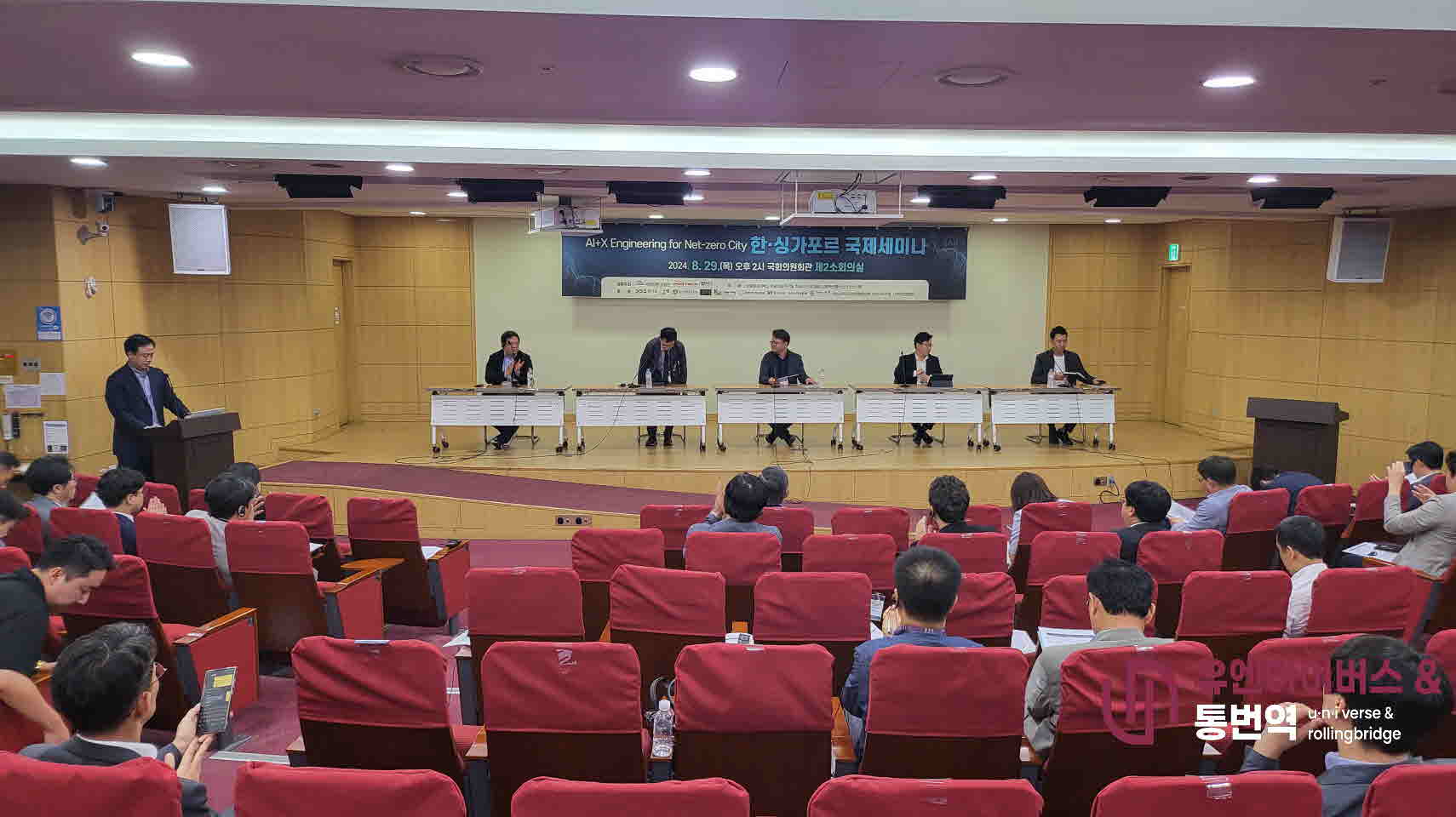
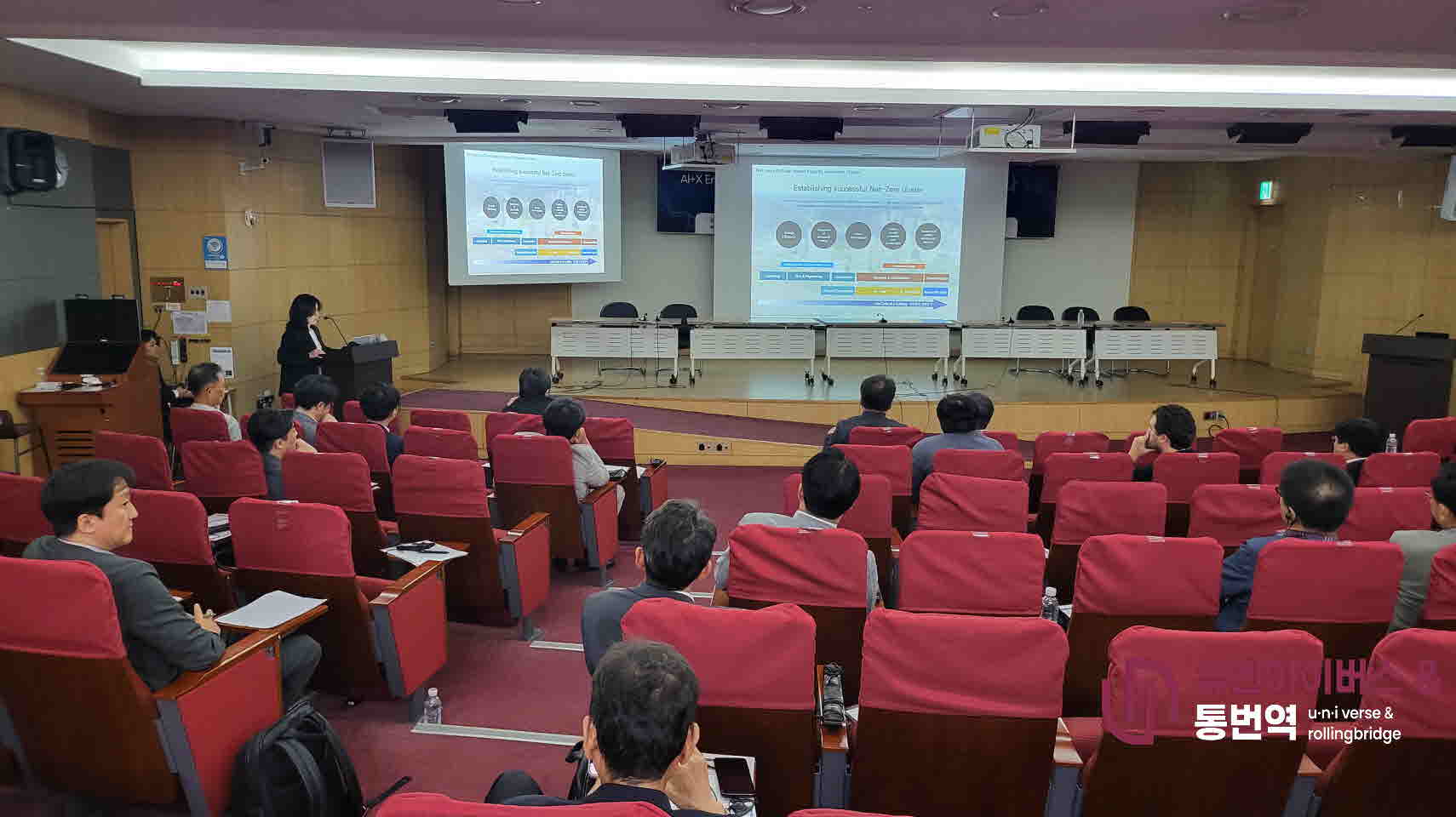
This analysis is based on interpretation projects delivered by UNIVERSE RB and reviews event type, professional specialization, operational structure, and major issues encountered during project delivery.
Projects Analyzed
Project Category | Number of Projects | Share of Total |
International Conferences and Forums | 42 | 32.8% |
Contract Negotiations and International Buyer Meetings | 31 | 24.2% |
Technical Seminars and Factory Inspections | 24 | 18.8% |
Medical, Pharmaceutical, and GMP Events | 18 | 14.1% |
Investor Relations and Investment Presentations | 13 | 10.2% |
Total | 128 | 100% |
Analysis Methodology
The analysis followed these criteria:
- Only interpretation projects actually delivered were included.
- Each event was counted as one project.
- International conferences, contract negotiations, technical seminars, medical and pharmaceutical events, IR meetings, and other professional assignments were included.
- General consultations and translation-only assignments were excluded.
- Operational outcomes and post-event feedback were reviewed.
This provides a practical view of how interpretation cost, professional expertise, preparation, and operational structure interact in real assignments.
What Was Analyzed?
The 128 projects were reviewed across several operational factors.
Analysis Area | What Was Evaluated |
Interpretation Method | Simultaneous vs. consecutive interpretation |
Industry | Finance, technology, medical, pharmaceutical, business, policy and others |
Event Complexity | Communication difficulty and event structure |
Interpreter Expertise | Professional level and relevant experience |
Preparation | Availability of presentation materials and background information |
Terminology | Complexity and specialization of terminology |
Operations | Event workflow and interpretation management |
Equipment | Booths, audio systems and other technical requirements |
Problems Encountered | Communication or operational issues |
Additional Costs | Direct costs arising during or after project delivery |
Major Interpretation Risk Categories
The analysis focused on several recurring types of communication and operational risk:
- Specialized terminology errors
- Incorrect communication of contract conditions
- Price and numerical errors
- Distortion of speaker intent or nuance
- Insufficient advance preparation
- Event-management problems
- Interpretation-equipment issues
These risks are important because they can create costs beyond the original interpreter fee.
What Counts as an Additional Cost?
For this analysis, additional costs refer only to direct operational costs actually associated with project delivery.
They include:
Additional Cost Category | Example |
Additional Interpretation | Additional interpreter hours or another interpretation session |
Schedule Delays | Additional event or operational time |
Equipment Response | Reinstallation or additional on-site technical work |
Document Revision | Correction or modification of materials |
Re-translation | Translation work required again |
Additional Staffing | Additional personnel required to resolve operational issues |
Follow-Up Meetings | Additional meetings or consultations |
Important Scope Limitation
The analysis does not include indirect or hypothetical losses such as:
- Lost contracts
- Lost revenue
- Reduced company valuation
- Reputational damage
- Lost investment opportunities
Only direct operational costs were considered.
This distinction is important because it prevents hypothetical business losses from being presented as measured financial results.
1. Is the Cheapest Interpretation Quote Really the Most Economical?
Not necessarily.
A company may save money on the initial interpretation quotation but later require:
Additional Interpretation + Document Revision + Schedule Changes + Additional Staffing + Follow-Up Communication
In those situations, the initial saving does not represent the final cost of the assignment.
The purchasing decision should therefore consider two different numbers:
Initial Interpretation Cost
What the buyer pays before the event.
Total Communication Cost
The initial interpretation cost plus any direct additional costs created by communication or operational problems.
One-Sentence Answer
Interpretation costs can be reduced, but the additional costs created by an inappropriate interpretation structure can exceed the original savings.
2. Why Low-Cost Interpretation Can Become Expensive
The problem is not low pricing itself.
A lower-cost interpretation structure can be appropriate when:
- Communication risk is low
- Terminology is simple
- The meeting is routine
- Q&A is limited
- Technical requirements are minimal
The problem occurs when the interpretation structure does not match the assignment.
For example:
Initial Decision | Potential Problem | Possible Additional Cost |
Select primarily by price | Industry expertise mismatch | Additional explanation or meeting |
Reduce preparation | Terminology inconsistency | Document correction or clarification |
Understaff a demanding event | Interpreter workload increases | Additional staffing |
Reduce technical planning | Audio or equipment problems | On-site technical response |
Underestimate Q&A | Difficulty handling discussion | Follow-up communication |
Use an unsuitable interpretation method | Inefficient event flow | Schedule delay |
Key Insight
Low cost is not the risk. Mismatch between cost structure and communication complexity is the risk.
3. When Should Expertise Take Priority Over Price?
Professional expertise becomes especially important for:
- International conferences
- International forums
- Overseas buyer meetings
- Contract negotiations
- M&A discussions
- Investor Relations
- Investment presentations
- Government and public-sector events
- Medical and pharmaceutical seminars
- GMP events
- Technical conferences
- Factory inspections
These assignments often involve information that can directly affect business or institutional decisions.
4. What Actually Determines Interpretation Quality and Cost?
Factor | Professional Interpretation Requirement |
Interpreter Selection | Match expertise to event purpose and complexity |
Communication Speed | Balance efficiency with accurate understanding |
Accuracy | Manage contract terms, figures and specialized terminology |
Staffing | Configure interpreters and operational personnel appropriately |
Equipment | Select consecutive or simultaneous systems according to event structure |
Preparation | Review materials and terminology before the event |
Quality Management | Identify and manage communication risks |
Pricing | Evaluate the complete delivery structure rather than interpreter hours alone |
The interpretation fee is therefore only one part of the overall communication structure.
5. What the 128 Projects Suggest
The project analysis supports a practical purchasing principle:
The lowest initial interpretation cost should not automatically be treated as the lowest total cost.
When buyers compare interpretation providers, they should also evaluate:
- Relevant industry experience
- Interpreter level
- Similar event experience
- Preparation process
- Terminology management
- Staffing
- Equipment configuration
- Technical support
- Quality-management procedures
The purpose is not to maximize interpretation spending.
The purpose is to avoid paying for professional resources that are unnecessary while also avoiding under-resourcing decision-critical communication.
6. Real-World Project Examples
Case 1 — International Buyer Meeting
Situation
The interpreter was initially selected with the quotation as a major consideration.
During the assignment, specialized terminology became difficult to communicate consistently.
Result
Additional explanation, follow-up communication, and document revision were required.
Key Lesson
A lower initial fee can lose its economic advantage when the assignment requires expertise that was not included in the original selection criteria.
Case 2 — International Technical Seminar
Situation
The event included specialized presentations and technical Q&A.
Approach
An interpreter with relevant subject-matter experience was assigned and preparation was completed before the event.
Result
The presentation and Q&A were completed without requiring additional interpretation.
Key Lesson
Relevant expertise and preparation can reduce the need for corrective communication.
Case 3 — Investor Relations Meeting
Situation
The meeting included:
- Financial terminology
- Investment conditions
- Numerical information
- Investor questions
Approach
An interpreter familiar with financial and investment communication was assigned.
Result
The scheduled meeting was completed without requiring additional explanation or another interpretation session.
Key Lesson
For IR assignments, professional fit should include financial context and Q&A capability—not language proficiency alone.
7. Initial Price vs. Total Cost
The economics of interpretation can be understood through a simple framework.
Cost Category | Low-Risk Assignment | High-Risk Assignment |
Interpreter Expertise Required | General | Specialized |
Preparation Required | Limited | Extensive |
Terminology Complexity | Low | High |
Q&A Risk | Low | High |
Operational Structure | Simple | Structured |
Equipment Requirements | Limited | May be substantial |
Cost of Communication Error | Relatively low | Potentially significant |
Primary Purchasing Priority | Efficiency | Accuracy + Risk Management |
This explains why the same pricing strategy should not be applied to every event.
8. The Hidden Cost of Interpretation Errors
An interpretation error does not always end when the meeting ends.
It can create additional work.
For example:
Terminology Error
→ Clarification
→ Document Revision
→ Additional Communication
or:
Contract Condition Misunderstanding
→ Internal Review
→ Additional Negotiation
→ Follow-Up Meeting
or:
Equipment Problem
→ Event Delay
→ Technical Response
→ Additional Operating Time
These are examples of how an initially small communication problem can create measurable operational costs.
9. Why Preparation Matters
Preparation is one of the most important variables in professional interpretation.
Depending on the assignment, preparation may include:
- Presentation review
- Company background analysis
- Industry terminology
- Glossary preparation
- Speaker information
- Product information
- Financial terminology
- Technical documentation
- Acronyms
- Event schedule
- Q&A expectations
Preparation does not eliminate every possible interpretation error.
It reduces avoidable uncertainty before the interpreter begins working in real time.
Key Principle
The cost of preparation should be compared with the cost of correction.
10. Why Equipment and Operations Matter
Interpretation quality is not determined by the interpreter alone.
For simultaneous interpretation, the communication chain may involve:
Speaker Microphone
→ Audio System
→ Interpreter Booth
→ Interpreter Console
→ Transmission System
→ Receiver
→ Audience
A problem at any point can affect communication.
Professional interpretation planning may therefore require:
- Interpretation booths
- Consoles
- Transmitters
- Receivers
- Audio distribution
- Sound engineering
- Remote interpretation systems
- Platform integration
- Technical monitoring
This is why two quotations that appear to cover the “same interpretation event” may actually represent very different service structures.

11. The Economic Value of the Right Interpreter
The most expensive interpreter is not automatically the best choice.
Likewise, the cheapest interpreter is not automatically the most economical choice.
The objective is:
Right Expertise × Right Event × Right Structure × Right Cost
For a routine meeting, a simplified structure may be sufficient.
For a complex IR presentation, contract negotiation, medical seminar, or international conference, additional expertise and preparation may be economically justified because the communication risk is higher.
12. How Buyers Should Compare Interpretation Quotations
Instead of asking only:
“How much does the interpreter cost?”
buyers should also ask:
Question | Why It Matters |
Does the interpreter have relevant industry experience? | Reduces expertise mismatch |
Has the interpreter handled similar events? | Improves event fit |
What professional level is being assigned? | Clarifies capability |
Will materials be reviewed beforehand? | Improves preparation |
How will terminology be managed? | Improves consistency |
How will Q&A be handled? | Reduces real-time communication risk |
Is the staffing structure appropriate? | Reduces workload risk |
What equipment is included? | Clarifies technical scope |
Who manages technical operations? | Reduces event disruption |
What quality-management process is used? | Clarifies how communication risk is controlled |
Buyer Principle
Compare scope, expertise, and risk management—not price alone.
13. Cost Optimization Does Not Mean Choosing the Highest Tier
Professional interpretation procurement should not become an argument for always buying the most expensive service.
That would create unnecessary cost.
Instead:
Low Complexity
Use an appropriately simplified interpretation structure.
Moderate Complexity
Increase industry matching and preparation.
High Complexity
Use specialized interpreters, structured preparation, appropriate staffing, and technical support.
Decision-Critical Communication
Prioritize accuracy, expertise, and risk management.
The objective is cost optimization, not maximum spending.
14. AI + Human Cost Optimization
AI can also support preparation efficiency.
AI may assist with:
- Document analysis
- Terminology extraction
- Glossary development
- Acronym identification
- Background research
- Presentation analysis
Professional interpreters remain responsible for:
- Context
- Real-time meaning
- Negotiation intent
- Q&A
- Ambiguity
- Decision-critical communication
Key Principle
AI can reduce preparation friction. Professional interpreters remain responsible for communication judgment.
15. Frequently Asked Questions
Q1. Is cheap interpretation always risky?
No.
Lower-cost interpretation can be entirely appropriate for simple, low-risk communication.
The key issue is whether the interpreter and operating structure match the assignment.
Q2. Why can a cheaper quotation eventually cost more?
If the assignment requires additional interpretation, document revision, schedule changes, technical intervention, additional staffing, or follow-up meetings, the total direct cost may increase beyond the initial quotation.
Q3. Does this analysis prove that expensive interpretation always produces better results?
No.
The analysis does not support that conclusion.
Price alone does not determine quality.
Professional fit, preparation, event structure, and operational management matter.
Q4. What did the 128-project analysis include?
The analysis included:
- 42 international conferences and forums
- 31 contract and international buyer assignments
- 24 technical seminars and factory inspections
- 18 medical, pharmaceutical, and GMP events
- 13 IR and investment presentations
Total: 128 projects
Q5. Were translation projects included?
No.
Translation-only assignments and general consultations were excluded from this analysis.
Q6. What additional costs were analyzed?
The analysis focused on direct operational costs including:
- Additional interpretation
- Schedule delays
- Equipment response
- Document revision
- Re-translation
- Additional staffing
- Follow-up meetings
Q7. Does the analysis include lost contracts or reputational damage?
No.
Potential indirect losses such as lost contracts, revenue loss, investment loss, or reputational damage were excluded.
This analysis focuses on direct operational costs.
Q8. How should companies choose the right interpretation service?
Evaluate:
Event Complexity + Industry Expertise + Interpreter Level + Preparation + Equipment + Quality Management + Communication Risk
The correct service structure should reflect the actual requirements of the event.

Key Takeaways from 128 Interpretation Projects
The analysis leads to five practical conclusions:
- The lowest quotation is not automatically the lowest total cost.
- Industry expertise matters when terminology becomes specialized.
- Preparation can reduce avoidable communication problems.
- Equipment and operational structure matter, particularly for simultaneous interpretation.
- The most economical solution is the one appropriately matched to the event's complexity and communication risk.
Final Conclusion
Interpretation cost should not be evaluated as interpreter labor alone.
Across the 128 interpretation projects analyzed, professional expertise, interpreter level, advance preparation, event structure, and technical operations were important factors in determining how the assignment was delivered.
When communication problems require:
Additional Interpretation + Schedule Changes + Document Revision + Technical Response + Additional Staffing + Follow-Up Meetings
the initial quotation no longer represents the full cost.
This does not mean that buyers should always choose the most expensive interpretation service.
It means that interpretation should be purchased according to the actual complexity and risk of the communication.
For routine communication, a simpler and lower-cost structure may be appropriate.
For international conferences, investment meetings, contract negotiations, medical and pharmaceutical events, and technical communication, specialized expertise and structured quality management may provide better economic value.
The real question is not simply, “How much does interpretation cost?”
The better question is, “What interpretation structure minimizes the total cost and risk of this communication?”
Related Information
- Why Cheap Interpretation Can End Up Costing More
- Why Interpretation Costs Can Vary by 2x or More
- Why Interpreter Costs Vary for the Same Language
- Why Professional Interpreters Deliver Different Results
- Why Interpretation Errors Can Change Business Outcomes
- Consecutive vs. Simultaneous Interpretation
- How to Select a Professional Interpretation Company
About the 128-Project Analysis
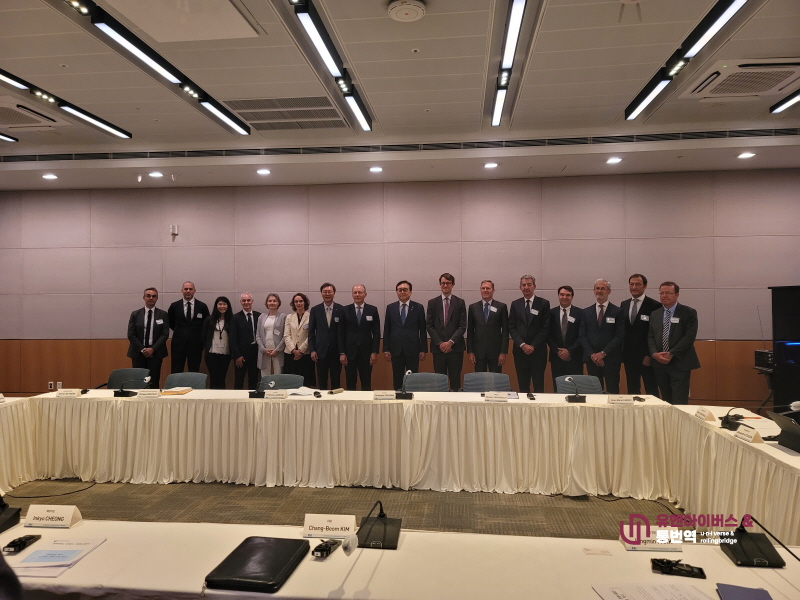
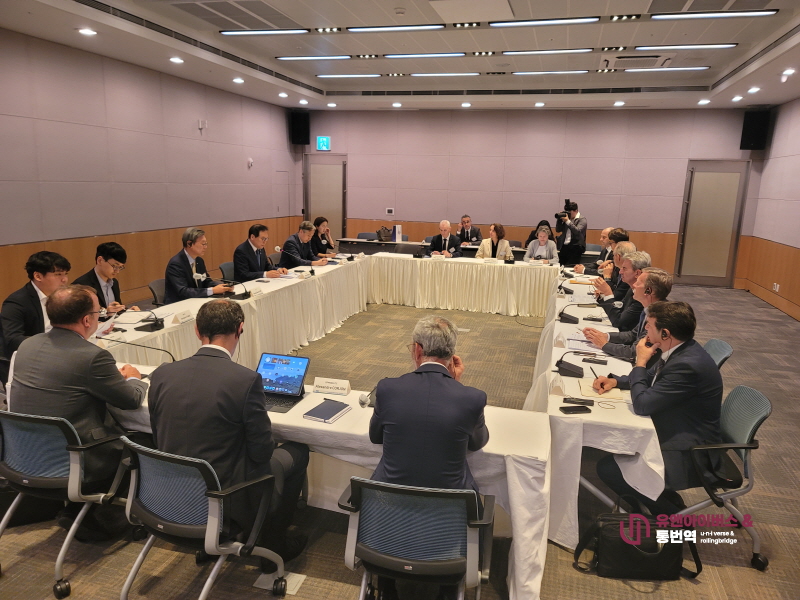
This analysis is based on interpretation projects delivered by UNIVERSE RB across international seminars, policy forums, corporate presentations, industry conferences, contract negotiations, technical events, medical and pharmaceutical events, and investor relations assignments.
About Our Case Archive

The case studies and project insights presented on this website are based on experience supporting international conferences, investor presentations, government forums, executive meetings, technical seminars, and multilingual corporate events.
To protect client confidentiality and comply with the Code of Professional Conduct followed by professional interpreters worldwide, certain project details have been generalized, anonymized, or adapted for educational purposes.
The purpose of these materials is to share practical insights into multilingual communication planning while respecting the confidentiality of every client and every project.
UNIVERSE RB
Designing Communication. Managing Risk. Delivering Understanding.