
Quotation


Performance
Why Interpretation Quality Depends on the System, Not Just the Interpreter
- 2026.08.10
How QMS-Based Preparation, Terminology Management, and Event Operations Improve Communication Outcomes
Interpretation quality is often assumed to depend primarily on the individual interpreter.
That is only part of the picture.
Professional interpretation may range from approximately USD 350 for a straightforward assignment to USD 3,500+ for a complex international event, but the difference is not simply language ability.
The real difference often lies in the quality management system behind the interpreter.
A qualified interpreter may still struggle when:
- Preparation materials are unavailable
- Terminology is inconsistent
- Roles are unclear
- Audio conditions are poor
- Q&A is not planned
- Technical support is insufficient
This is why professional interpretation should be managed as a complete communication system.
Preparation + Terminology Management + Interpreter Deployment + Technical Support + On-Site Operations + Quality Control
Together, these elements determine whether multilingual communication remains stable throughout an event.
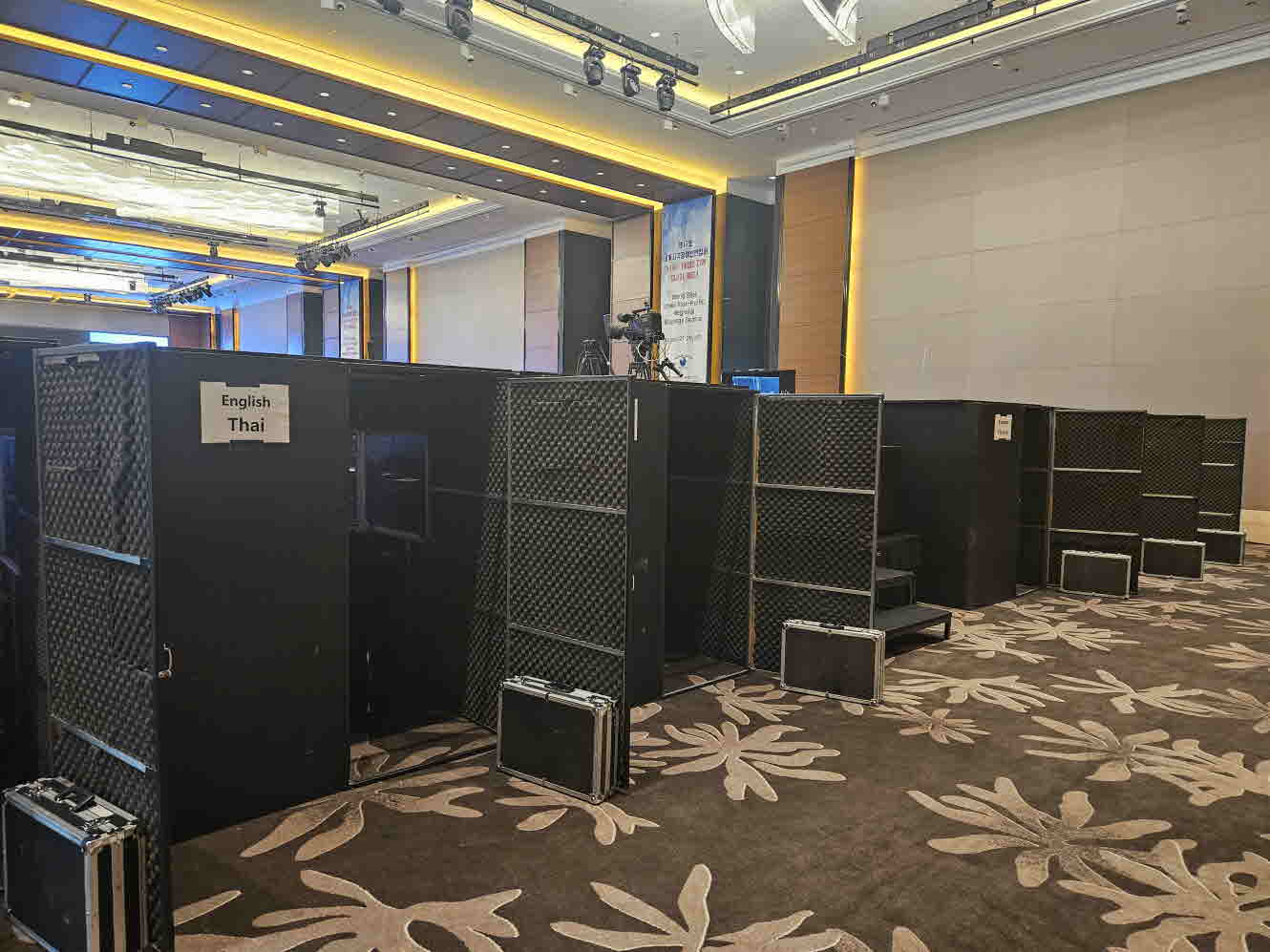
Executive Summary
The same interpreter can produce very different outcomes depending on the system supporting the assignment.
Professional interpretation quality is influenced by:
- Interpreter expertise
- Advance preparation
- Terminology management
- Event structure
- Technical environment
- Project coordination
- Quality assurance
A QMS-based approach connects these elements before the event begins.
Key Insight
Successful interpretation is not created by one excellent interpreter alone. It is created by a system that enables qualified interpreters to perform consistently.
1. Is a Great Interpreter Enough?
Not always.
Even when interpreters have similar language ability and professional experience, event outcomes can vary significantly.
Why?
Because interpretation is delivered inside an operating environment.
If that environment is poorly designed, problems may include:
- Terminology errors
- Missing information
- Delayed communication
- Inconsistent wording
- Audio interruptions
- Q&A difficulties
- Schedule disruption
The issue is therefore not always individual interpreter performance.
It may be the absence of a structured quality-management process.
One-Sentence Answer
Professional interpretation quality is created not only by interpreter capability, but by a QMS that manages preparation, terminology, deployment, technical conditions, and event operations.
2. What Is a QMS-Based Interpretation System?
QMS stands for Quality Management System.
In professional interpretation, a QMS is a structured process used to reduce communication variability and operational risk before, during, and after an event.
A typical QMS-based interpretation workflow may include:
Project Analysis
→ Interpreter Selection
→ Material Review
→ Terminology Preparation
→ Technical Planning
→ Rehearsal
→ Live Operation
→ Quality Monitoring
→ Post-Event Review
The objective is not to eliminate every possible communication challenge.
The objective is to identify and control avoidable risks before they affect the event.
3. When Is QMS-Based Interpretation Especially Important?
Structured quality management becomes increasingly important when communication directly affects decisions, technical understanding, public messaging, or institutional outcomes.
Typical applications include:
- International conferences
- Global policy forums
- Government and public-sector events
- Investor Relations (IR)
- Investment presentations
- Technical seminars
- Academic conferences
- Medical and pharmaceutical conferences
- GMP meetings and audits
- Multilingual conferences
- International buyer meetings
- Contract negotiations
- Executive meetings
These environments often involve:
- Specialized terminology
- High information density
- Real-time Q&A
- Multiple speakers
- Numerical information
- Technical systems
- Decision-making communication
The greater the complexity, the greater the value of structured quality management.

4. Key Features of a QMS-Based Interpretation System
Category | QMS-Based Interpretation |
Operating Model | Quality management begins before the event and continues through completion |
Preparation | Presentation materials, terminology, speakers, and event objectives are reviewed |
Accuracy Support | Glossaries, reference materials, and preparation improve terminology consistency |
Interpreter Deployment | Interpreters are selected according to expertise, event structure, and communication risk |
Project Team | Project manager, professional interpreters, and technical engineers may work together |
Equipment | Booths, audio systems, receivers, remote interpretation systems, or hybrid infrastructure are configured as required |
Q&A Management | High-risk interactive sessions are anticipated and prepared for |
Quality Control | Communication and operational risks are monitored throughout the project |
Cost Structure | Pricing reflects interpreter expertise plus preparation, technical operation, and quality-management requirements |
Key Principle
International event quality is determined by how well people, preparation, technology, and operations work together.
5. Why Can Interpretation Cost USD 350 vs. USD 3,500+?
A large price difference does not mean that one interpreter is simply "ten times better."
The communication structure may be completely different.
Cost Driver | Lower-Complexity Structure | Complex / High-Risk Structure |
Typical Cost | Approx. USD 350–550 | Approx. USD 1,500–3,500+ |
Interpreter Structure | One interpreter | Specialist team or multiple interpreters |
Communication Risk | Low | High |
Preparation | Basic | Extensive material and terminology review |
Q&A | Limited | Intensive and unpredictable |
Languages | One language pair | Multiple languages or channels |
Equipment | Minimal | Booths, receivers, consoles, audio systems |
Technical Support | Limited | Dedicated engineers or technical staff |
Quality Management | Basic | Structured QMS-based operation |
Event Type | Routine meeting | Conference, IR, policy, technical or executive event |
Key Insight
The cost difference reflects the amount of communication infrastructure required—not simply the interpreter's hourly rate.
6. Why Preparation Matters
Professional interpretation begins before the event.
Preparation may include reviewing:
- Presentation slides
- Speaker biographies
- Company information
- Technical documents
- Financial information
- Policies and regulations
- Product terminology
- Industry-specific language
- Acronyms
- Expected Q&A topics
This allows interpreters to enter the event with a better understanding of both terminology and context.
Without preparation, interpreters must solve more problems in real time.
Preparation Improves
- Terminology consistency
- Numerical accuracy
- Speaker understanding
- Contextual interpretation
- Q&A performance
- Communication flow
For complex international events, preparation is not an administrative extra.
It is part of the interpretation process.
7. Why Terminology Management Matters
The same term may have different meanings depending on industry and context.
Examples include terminology from:
- Finance
- Investment
- Healthcare
- Pharmaceuticals
- Engineering
- Manufacturing
- Government policy
- Artificial intelligence
- Law
- International trade
A QMS-based process may organize terminology before the event through:
- Glossaries
- Termbases
- Acronym lists
- Client terminology
- Product names
- Speaker-specific references
This helps maintain consistency across:
- Presentations
- Q&A
- Multiple interpreters
- Multiple sessions
- Multi-day events
Key Point
Terminology consistency is not created during the event. It is prepared before the event.

8. Why On-Site Operations Matter
Interpretation quality can deteriorate even when interpreters are well prepared if event operations fail.
Typical operational risks include:
- Poor microphone input
- Incorrect audio routing
- Missing receivers
- Wrong language channels
- Delayed speaker materials
- Schedule changes
- Unplanned Q&A
- Remote connection problems
Professional event operation therefore connects:
Interpreters + Project Management + Audio + Equipment + Event Schedule
This is especially important for simultaneous, multilingual, hybrid, and remote interpretation.
9. The Role of the Project Manager
Complex interpretation projects often require coordination beyond the interpreters themselves.
A project manager may be responsible for:
- Client communication
- Interpreter coordination
- Schedule management
- Material distribution
- Technical coordination
- Venue communication
- Language-channel planning
- Last-minute changes
- Risk escalation
The project manager helps ensure that interpreters can focus on interpretation rather than operational problems.
10. The Role of Technical Engineers
For simultaneous interpretation, technical reliability directly affects communication quality.
Engineers may manage:
- Interpretation booths
- Consoles
- Microphones
- Receivers
- Transmitters
- Audio interfaces
- Mixers
- Remote interpretation platforms
- Streaming integration
- Backup systems
A professional interpreter cannot accurately interpret information that cannot be heard clearly.
Key Principle
Interpreter quality cannot compensate for a failed audio system.
11. Real-World Application Examples
Case 1 — International Academic Conference
Challenge
Multiple speakers presented specialized academic content followed by live Q&A.
QMS Approach
- Presentation materials reviewed in advance
- Specialized terminology prepared
- Interpreter roles coordinated
- Technical rehearsal completed
Outcome
Presentations and Q&A were delivered within the planned event structure with more consistent terminology and communication flow.
Case 2 — Government International Conference
Challenge
Multiple languages, institutional terminology, and a fixed event schedule required coordinated operation.
QMS Approach
- Language channels planned
- Terminology aligned
- Interpretation and audio systems tested
- On-site operations coordinated
Outcome
Multilingual communication continued without significant interruption and the conference remained within the planned schedule.
Case 3 — International Buyer Contract Negotiation
Challenge
The meeting involved commercial terms, technical specifications, and negotiation intent.
QMS Approach
- Terminology prepared in advance
- Business context reviewed
- Interpreter selected according to subject expertise
- Negotiation structure analyzed
Outcome
Both sides were able to discuss technical and contractual conditions with fewer communication gaps and more consistent terminology.

12. Interpreter-Only vs. QMS-Based Interpretation
Area | Interpreter-Only Model | QMS-Based Interpretation |
Interpreter Selection | Availability or résumé | Expertise + event structure + risk |
Preparation | Individual responsibility | Structured preparation process |
Terminology | Individual judgment | Shared terminology management |
Technical Planning | Separate or limited | Integrated |
Q&A Strategy | Reactive | Planned |
On-Site Operation | Interpreter-centered | Team-based |
Quality Control | Individual performance | System-managed |
Risk Management | Limited | Structured |
Outcome Consistency | More variable | More predictable |
The difference is not that professional interpreters become less important.
The opposite is true.
A QMS creates the conditions in which professional interpreter expertise can be used most effectively.
13. AI + Human + QMS Strategy
AI can improve efficiency when integrated into a professional quality-management process.
AI Support
AI can assist with:
- Document analysis
- Terminology extraction
- Acronym identification
- Glossary generation
- Numerical consistency checks
- Background research
- Repetitive content analysis
Professional Interpreters
Human professionals remain responsible for:
- Context
- Meaning
- Speaker intent
- Q&A
- Negotiation nuance
- Diplomatic language
- Real-time judgment
QMS
The QMS connects both sides by managing:
- Workflow
- Terminology
- Preparation
- Interpreter deployment
- Quality control
- Risk management
Key Principle
AI supports analysis. Professionals make judgments. QMS connects the entire process.
14. How Buyers Should Evaluate an Interpretation Company
Before selecting an interpretation provider, organizations should ask:
Buyer Question | Why It Matters |
How are interpreters selected? | Determines expertise fit |
What preparation is included? | Determines contextual readiness |
How is terminology managed? | Reduces inconsistency |
Who manages the project? | Determines operational accountability |
How is Q&A prepared? | Reduces real-time communication risk |
Who manages equipment? | Protects technical reliability |
Is rehearsal included? | Identifies problems before the event |
How are schedule changes handled? | Reveals operational flexibility |
How is quality monitored? | Determines consistency |
What backup systems exist? | Reduces interruption risk |
A professional interpretation company should be able to explain the process behind the interpreter—not merely provide a résumé.
15. Frequently Asked Questions
Q1. Isn't a highly experienced interpreter enough?
Not always.
Experience is essential, but preparation, terminology management, technical conditions, event structure, and operational support also influence final interpretation quality.
Q2. What does QMS mean in interpretation?
QMS stands for Quality Management System.
It refers to the structured process used to manage interpreter selection, preparation, terminology, technical operation, workflow, and quality throughout the project.
Q3. Does QMS make interpretation more accurate?
A QMS cannot guarantee that every sentence will be perfect.
However, structured preparation, terminology control, role definition, and technical planning can reduce avoidable communication errors and improve consistency.
Q4. Why does QMS-based interpretation cost more?
Because the service may include more than interpreter time.
Depending on the event, the project may also require:
- Project management
- Preparation
- Terminology development
- Multiple interpreters
- Technical engineers
- Equipment
- Rehearsal
- Quality monitoring
The cost reflects the communication structure required.
Q5. Is QMS necessary for every meeting?
No.
A simple, low-risk business meeting may require a relatively straightforward interpretation structure.
QMS becomes increasingly valuable as event complexity, technical requirements, language count, Q&A, and communication risk increase.
Q6. Is QMS especially important for simultaneous interpretation?
Yes.
Simultaneous interpretation depends on multiple interconnected elements, including interpreters, audio input, booths, consoles, receivers, technical staff, and event scheduling.
Structured management becomes more important as the system becomes more complex.
Q7. Can AI replace a QMS?
No.
AI can support individual tasks such as terminology extraction and document analysis.
A QMS coordinates people, technology, preparation, risk, and event operations as a complete workflow.
Q8. What is the biggest advantage of QMS-based interpretation?
Consistency.
The objective is to reduce dependence on individual circumstances and create a more predictable communication outcome across different projects and event environments.

Key Takeaway
Professional interpretation quality depends on more than the individual interpreter.
It is created through:
**Professional Interpreter
- Advance Preparation
- Terminology Management
- Technical Environment
- Project Management
- Quality Control**
The interpreter remains at the center of communication.
The QMS creates the structure that allows that interpreter to perform consistently.
Final Conclusion
Interpretation should not be managed simply as the purchase of an interpreter's time.
For international conferences, policy meetings, investor events, technical seminars, medical conferences, and contract negotiations, communication quality depends on an interconnected operating system.
A professional interpreter provides expertise.
Preparation provides context.
Terminology management provides consistency.
Technical systems provide reliable delivery.
Project management connects the workflow.
QMS brings these elements together.
The most important question is therefore not simply:
"Who is the interpreter?"
It is:
"What system supports the interpreter?"
Because when communication matters, quality is not only performed—it is designed.
Related Information
- Why a Good Interpreter Is Not Enough
- Simultaneous Interpretation Cost Guide
- Consecutive Interpretation Cost Guide
- How to Select a Professional Interpretation Company
- Why the Same Interpreter Can Deliver Different Results
- How to Prevent Interpretation Failures at International Conferences
About Our Case Archive

The case studies and project insights presented on this website are based on experience supporting international conferences, investor presentations, government forums, executive meetings, technical seminars, and multilingual corporate events.
To protect client confidentiality and comply with the Code of Professional Conduct followed by professional interpreters worldwide, certain project details have been generalized, anonymized, or adapted for educational purposes.
The purpose of these materials is to share practical insights into multilingual communication planning while respecting the confidentiality of every client and every project.
UNIVERSE RB
Designing Communication. Managing Risk. Delivering Understanding.