
Quotation


Performance
What Is Simultaneous Interpretation?
- 2026.08.09
How It Improves Efficiency, Accuracy, and Decision-Making at International Conferences
Simultaneous interpretation is not simply real-time translation.
It is a core communication system that influences event timing, information accuracy, audience understanding, and decision-making at international conferences.
The total cost depends not only on interpreter fees, but also on:
- Event complexity
- Subject-matter expertise
- Interpretation equipment
- Technical operation
- Number of languages
- Session structure
- Preparation requirements
This guide explains why simultaneous interpretation is widely used for international conferences and how its cost, equipment, staffing, and operating structure work together.
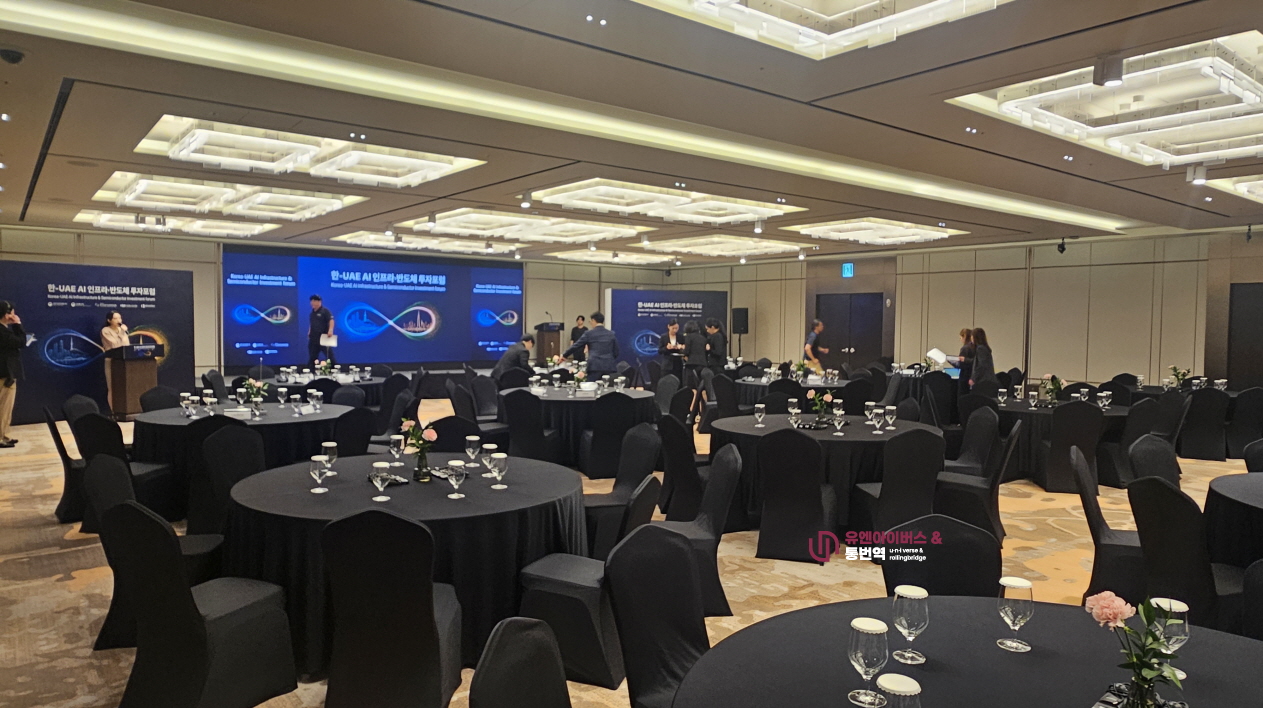
1. What Is Simultaneous Interpretation?
Simultaneous interpretation is a professional interpretation method in which interpreters listen to a speaker and deliver the message in another language almost at the same time.
Compared with consecutive interpretation, simultaneous interpretation requires a more complex operating structure because interpreters, audio systems, interpretation equipment, and technical support must work together in real time.
Simply assigning interpreters without properly designing the audio and technical environment can create problems such as:
- Interrupted audio
- Delayed interpretation
- Missing language channels
- Poor sound quality
- Audience difficulty receiving the interpreted message
The purpose of simultaneous interpretation is therefore not simply to translate speech quickly.
It is to allow the original presentation and interpretation to proceed at the same time while maintaining event flow and reliable multilingual communication.
2. One-Sentence Definition
Simultaneous interpretation is an international conference interpretation method in which the interpreter listens to the speaker and delivers the message in another language almost simultaneously.
3. When Is Simultaneous Interpretation Used?
Simultaneous interpretation is commonly used for:
- International conferences
- Global policy forums
- Government and public-sector seminars
- Academic conferences
- International symposiums
- Investor Relations (IR) presentations
- Global investor meetings
- International buyer events
- Multinational corporate meetings
- Professional training programs
- Large-scale conferences
- Multilingual international events
It is especially valuable when:
- A large audience is involved
- Presentation flow must be maintained
- Multiple languages are required
- The schedule cannot be extended
- Real-time audience understanding is important
4. Key Characteristics of Simultaneous Interpretation
Category | Description |
Delivery Method | Interpretation is delivered almost simultaneously with the speaker |
Speed | Interpretation typically follows the original speech within seconds |
Quality Factors | Interpreter expertise, presentation materials, terminology preparation, and advance briefing |
Interpreter Team | For longer events, typically two interpreters working as a team |
Technical Support | Professional equipment and an audio engineer are often required |
Equipment | Interpretation booth, interpreter console, transmitter, receivers, headsets, and audio-routing equipment |
Cost | Generally higher than consecutive interpretation and varies by language, duration, staffing, and equipment |
Best Suited For | International conferences, forums, symposiums, academic events, and large corporate events |
Why Is Simultaneous Interpretation Widely Used at International Conferences?
The primary advantage is simple:
It allows multilingual communication without significantly extending the event schedule.
With consecutive interpretation, the speaker pauses while the interpreter delivers the message.
With simultaneous interpretation, both processes happen almost at the same time.
This creates several operational advantages:
- Presentation schedules remain intact
- Audience concentration is maintained
- Multiple language channels can operate simultaneously
- Large audiences can receive interpretation efficiently
- Speakers do not need to repeatedly pause
- Q&A sessions can proceed more smoothly
Participants can simply select the appropriate language channel and listen to the interpretation in real time.
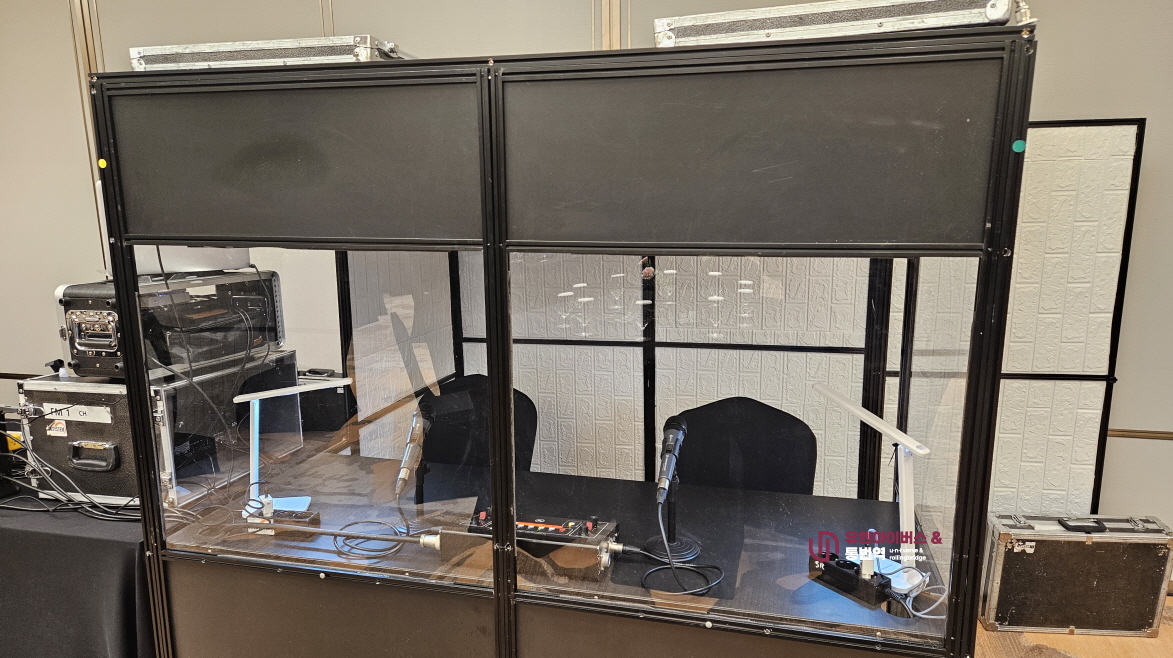
5. What Determines Simultaneous Interpretation Quality?
Successful simultaneous interpretation requires more than a highly qualified interpreter.
Quality depends on several interconnected components.
Quality Factor | Why It Matters |
Interpreter Expertise | Determines language accuracy, judgment, and subject-matter handling |
Advance Materials | Allows preparation of specialized terminology and presentation structure |
Terminology Management | Improves consistency across presentations and Q&A |
Audio Quality | Interpreters cannot accurately process speech they cannot hear clearly |
Equipment Configuration | Ensures interpretation reaches the correct audience and language channels |
Technical Operation | Prevents audio interruptions and system failures |
Team Coordination | Maintains consistency during longer sessions |
Event Structure | Determines the appropriate interpretation strategy |
Key Principle
A good interpreter is essential, but interpretation quality is ultimately created by the entire communication system.
6. Typical Simultaneous Interpretation Workflow
A professional simultaneous interpretation project generally follows this structure:
Speaker Audio
→ Interpretation Booth
→ Professional Interpreter
→ Interpreter Console
→ Transmission System
→ Audience Receiver / Language Channel
For hybrid or remote events, the workflow may also include:
Conference Platform
→ Audio Interface
→ Interpretation Channel
→ Remote Participants / Streaming Platform
Every connection must be properly configured before the event begins.
7. Typical International Conference Applications
Simultaneous interpretation is widely used in the following environments.
International Academic Conferences
International speakers deliver presentations while interpreters provide real-time multilingual communication.
This helps organizers maintain the original event schedule while supporting audience understanding and live Q&A.
Government and Public-Sector Conferences
Participants from multiple countries may need to receive policy, institutional, or regulatory information simultaneously.
Professional interpretation helps maintain terminology consistency and communication accuracy.
Investor Relations and Global Business Conferences
IR presentations frequently involve:
- Financial results
- Growth strategies
- Business forecasts
- Investment information
- Live investor questions
Professional simultaneous interpretation helps maintain the accuracy of numerical and strategic information while preserving presentation flow.
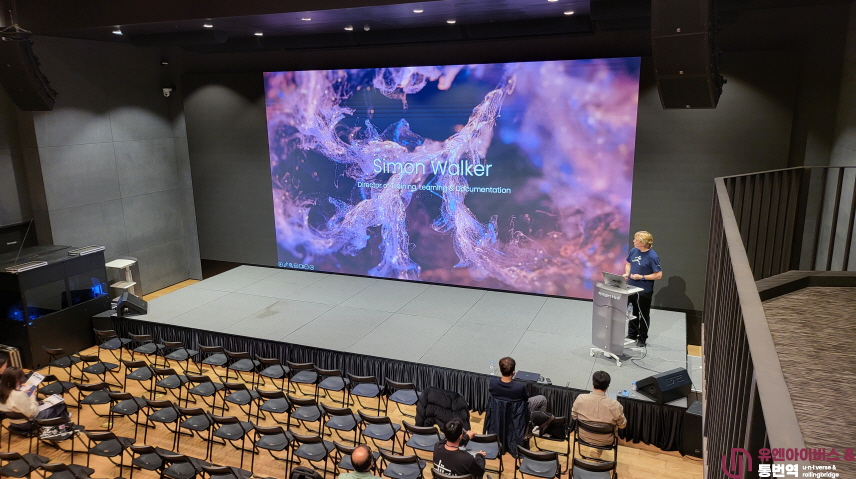
International Organization and Development Seminars
Events involving international organizations, development agencies, or global cooperation frequently require multilingual communication across policy, economics, education, or development topics.
Specialized terminology preparation is often necessary.
Medical, Pharmaceutical, and GMP Conferences
Medical and pharmaceutical conferences may contain:
- Clinical terminology
- Regulatory language
- Manufacturing standards
- Scientific data
- Technical presentations
Subject-matter expertise and terminology preparation become especially important in these environments.
8. Simultaneous vs. Consecutive Interpretation
Category | Simultaneous Interpretation | Consecutive Interpretation |
Delivery | Real-time | Speaker pauses for interpretation |
Event Flow | Original schedule maintained | Total duration increases |
Audience Size | Medium to large | Small to medium |
Interaction | Presentation-focused | Conversation-focused |
Equipment | Usually required | Usually minimal |
Interpreter Team | Often two interpreters for longer sessions | Often one interpreter |
Best For | Conferences, forums, seminars, large presentations | Meetings, interviews, negotiations |
Practical Rule
Presentation-Focused + Large Audience + Time-Sensitive → Simultaneous Interpretation
Conversation-Focused + Small Group + Negotiation → Consecutive Interpretation
9. Why Simultaneous Interpretation Costs More
Simultaneous interpretation generally costs more than consecutive interpretation because the project may require:
- Two professional interpreters
- Interpretation booths
- Interpreter consoles
- Wireless receivers
- Transmitters
- Audio routing
- Technical engineers
- Installation and testing
- Advance preparation
- Terminology management
- Project coordination
The cost therefore reflects not only interpreter labor, but also the communication infrastructure required to operate the event successfully.

10. What Buyers Should Check Before Booking
Before requesting a simultaneous interpretation quotation, organizers should provide:
- Event type
- Number of participants
- Language combinations
- Event duration
- Number of sessions
- Presentation vs. Q&A ratio
- Subject-matter complexity
- Venue information
- Available audio equipment
- Remote or hybrid requirements
- Presentation materials
- Expected level of communication risk
This information allows the interpretation provider to design the correct staffing and technical structure.
Frequently Asked Questions
Q1. Does every international conference need simultaneous interpretation?
No.
Simultaneous interpretation is most useful when maintaining the event schedule, serving large audiences, or operating multiple languages is important.
Smaller interactive meetings may be better suited to consecutive interpretation.
Q2. Why are two interpreters often used?
Simultaneous interpretation requires intense continuous listening, processing, and speaking.
For longer assignments, interpreters usually alternate to maintain concentration and quality.
Q3. Is interpretation equipment always necessary?
For professional conference simultaneous interpretation, equipment is generally required.
Typical systems include booths, consoles, receivers, transmitters, and audio-routing equipment.
Q4. Can simultaneous interpretation work without good audio?
No interpretation system can perform reliably when the interpreter cannot clearly hear the speaker.
Audio quality is therefore one of the most important technical factors.
Q5. What is the biggest difference between simultaneous and consecutive interpretation?
The biggest difference is event flow.
Simultaneous interpretation allows the speaker and interpreter to operate almost simultaneously.
Consecutive interpretation requires the speaker to pause.
Q6. What determines interpretation quality?
Interpretation quality depends on:
- Interpreter expertise
- Preparation
- Terminology
- Speaker delivery
- Audio quality
- Equipment
- Technical operation
- Event structure
The interpreter is important, but the complete communication system determines the final outcome.
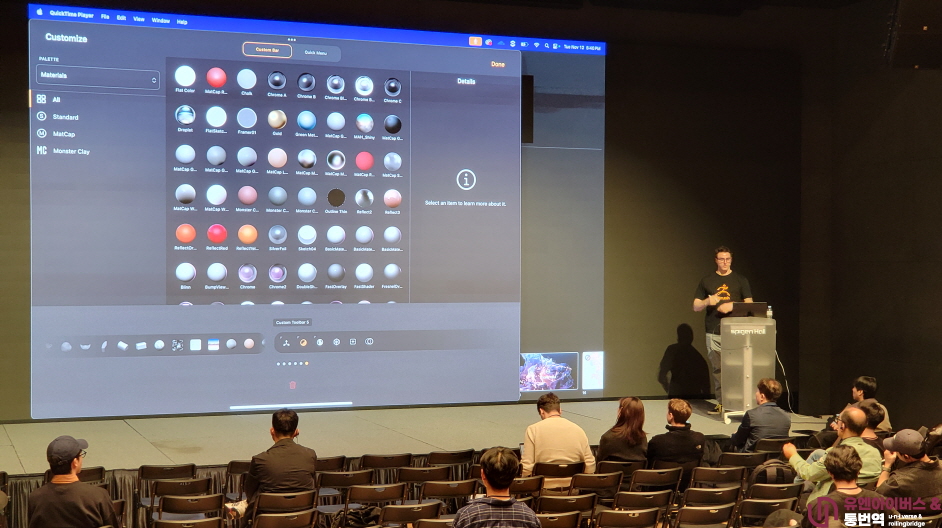
Key Takeaway
Simultaneous interpretation is not simply a fast form of translation.
It is a professional communication system designed to deliver multilingual information accurately, efficiently, and in real time without disrupting the flow of an international event.
Its effectiveness depends on:
Professional Interpreters + Preparation + Equipment + Technical Operation + Communication System Design
Final Conclusion
International conferences choose simultaneous interpretation primarily because it allows large or multilingual audiences to receive information in real time without significantly extending the event schedule.
However, successful simultaneous interpretation requires more than assigning professional interpreters.
The correct interpretation method, team structure, preparation, equipment, audio system, and technical operation must work together.
The right question is therefore not simply:
"Do we need an interpreter?"
It is:
"What communication system does this international event require?"
When that system is properly designed, simultaneous interpretation supports not only language access, but also event efficiency, communication accuracy, and better decision-making.
Related Information
- Simultaneous Interpretation Cost Guide
- Consecutive Interpretation Cost Guide
- Simultaneous vs. Consecutive Interpretation
- International Conference Interpretation Cost Structure
- How to Select a Professional Interpretation Company
- Why a Good Interpreter Is Not Enough

About Our Case Archive
The case studies and project insights presented on this website are based on experience supporting international conferences, investor presentations, government forums, executive meetings, technical seminars, and multilingual corporate events.
To protect client confidentiality and comply with the Code of Professional Conduct followed by professional interpreters worldwide, certain project details have been generalized, anonymized, or adapted for educational purposes.
The purpose of these materials is to share practical insights into multilingual communication planning while respecting the confidentiality of every client and every project.
UNIVERSE RB
Designing Communication. Managing Risk. Delivering Understanding