
Quotation


Performance
Why AI Simultaneous Interpretation Needs Pauses Understanding the Technical Limits of QR-Based Speech Translation
- 2026.07.28
"Why Isn't the Translation Appearing Yet?"
One of the first questions people ask after trying QR-based AI interpretation is:
"The speaker has already finished talking. Why hasn't the translation started?"
This behavior is not necessarily a system malfunction.
It is a natural consequence of how today's AI speech translation systems process spoken language.
Executive Summary
Most QR-based AI simultaneous interpretation platforms begin translation only after the system determines that a sentence has ended.
Unlike human interpreters, AI systems cannot always recognize sentence boundaries while speech is still in progress.
Instead, they rely on signals such as:
- Short pauses
- Changes in intonation
- Silence detection
- End-of-speech confidence thresholds
Only after these signals are detected does the translation engine begin processing.
For this reason, AI interpretation may introduce noticeable delays during continuous speech.
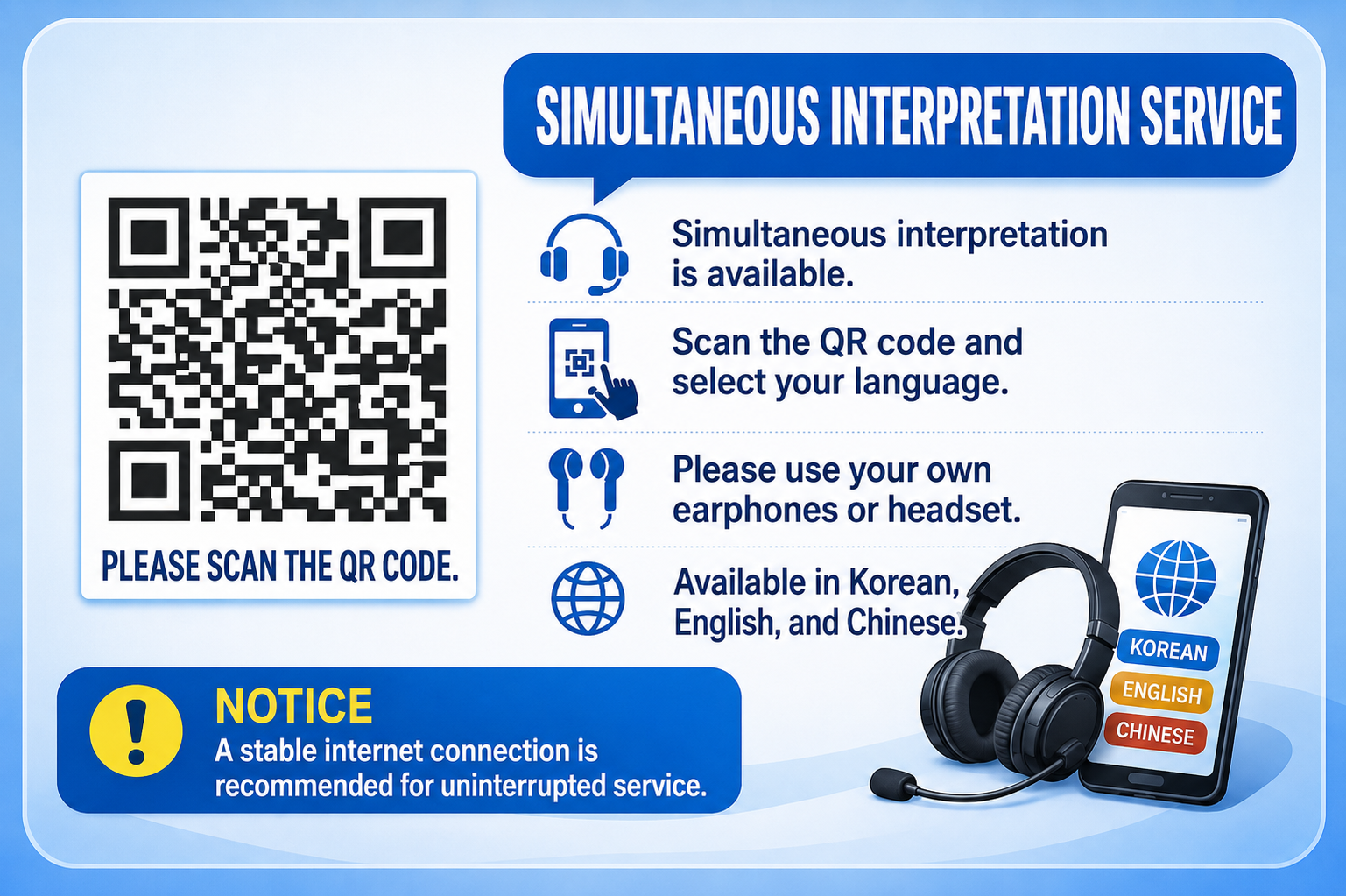
QR AI Interpretation vs. Human Simultaneous Interpretation
| Category | QR AI Interpretation | Professional Human Interpretation |
|---|---|---|
| Typical Cost | Lower | Higher |
| Interpreter | AI-powered | Professional interpreters |
| Equipment | Usually QR access only | Booths, receivers, consoles, audio systems |
| Initial Investment | Lower | Higher |
| Primary Advantage | Cost efficiency | Communication accuracy and stability |
| Best Use Cases | Simple presentations, guidance, repeated information | Conferences, negotiations, panel discussions, Investor Relations, policy forums |
Lower cost generally comes with greater operational limitations.
Professional interpretation requires a higher initial investment but provides significantly greater communication reliability in complex environments.
Recommended Operating Conditions for QR AI Interpretation
QR-based AI interpretation performs best when the following conditions are met:
- Clear and consistent speech
- Stable internet connectivity
- Distinct pauses between sentences
- Limited interruptions
- Minimal overlapping speakers
Most providers of QR AI interpretation platforms also recommend these conditions to achieve optimal recognition accuracy.
Key Observation
QR AI interpretation offers an efficient solution for many events.
However, it should be selected according to the communication environment rather than price alone.
The technology is most effective when speech follows a predictable structure.
How QR AI Interpretation Works
Most AI simultaneous interpretation systems follow a processing pipeline similar to the following:
Speech Input
↓
Speech Recognition (STT)
↓
Sentence Segmentation
↓
Machine Translation (NMT / LLM)
↓
Speech Synthesis (TTS)
Among these stages, sentence segmentation is often the most important factor affecting latency.
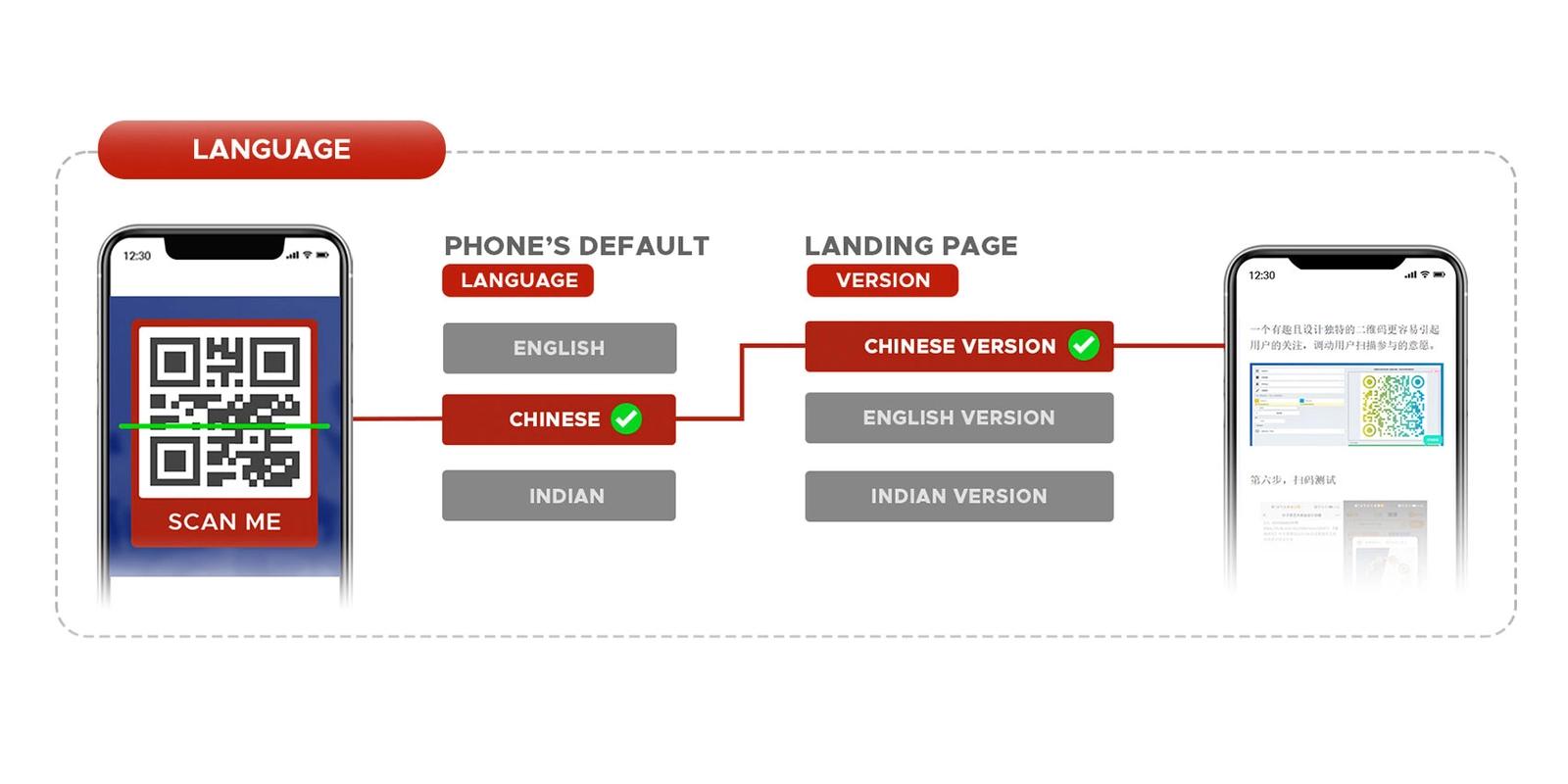
Why Sentence Boundaries Matter
Unlike human interpreters, AI systems generally require sufficient input before translation can begin.
This creates a fundamental difference.
| Human Interpreter | AI System |
| Predicts meaning continuously | Waits for sufficient input |
| Interprets while listening | Processes after segmentation |
| Uses context proactively | Depends on recognized sentence boundaries |
Human interpreters process meaning continuously.
AI systems often process language after enough information has been collected.
Why Pauses Trigger Translation
Speech recognition systems receive one continuous audio stream.
The challenge is determining where one sentence ends and the next begins.
To estimate this boundary, AI systems commonly monitor:
- Silence duration
- Intonation changes
- Speech confidence
- End-of-utterance detection
When these indicators exceed predefined thresholds, the system begins translation.
In simplified terms:
Speech Continues
↓
Pause Detected
↓
Sentence Boundary Estimated
↓
Translation Starts
This explains why translation sometimes appears only after a brief pause.
What Happens During Continuous Speech?
Scenario 1: No Pause
If the speaker continues without interruption:
- Audio continues to accumulate.
- Translation may be delayed.
- Output may not appear immediately.
Long uninterrupted speech generally increases processing latency.

Scenario 2: Automatic Sentence Splitting
When no clear pause exists, the AI may divide sentences automatically.
For example:
Original:
We believe this project will expand our global market...
Possible segmentation:
We believe this project...
will expand our global market...
If the segmentation occurs at an inappropriate point, the translated meaning may become less natural or partially distorted.
Why Live Q&A Is More Challenging
Interactive sessions create additional complexity.
Typical characteristics include:
- Short, incomplete sentences
- Frequent speaker changes
- Interruptions
- Overlapping speech
- Context-dependent questions
These conditions make it more difficult for AI systems to determine:
- Sentence boundaries
- Speaker transitions
- Question-and-answer relationships
- Appropriate translation timing
As a result, latency and recognition errors are more likely during live discussions than prepared presentations.
Why Human Interpreters Behave Differently
Professional simultaneous interpreters process speech differently.
Typical workflow:
Speech Input
↓
Meaning Analysis
↓
Prediction
↓
Immediate Interpretation
↓
Continuous Delivery
Professional interpreters do not wait for complete sentences.
Instead, they anticipate meaning using:
- Context
- Grammar
- Subject knowledge
- Speaker intent
- Experience
This allows interpretation to begin while the speaker is still talking.

AI vs. Human Interpretation
| Category | AI Interpretation | Human Interpretation |
| Input Method | Buffered processing | Continuous listening |
| Processing | After segmentation | Real time |
| Prediction | Limited | Strong contextual prediction |
| Immediate Correction | Limited | Continuous self-correction |
| Complex Q&A | Challenging | Well suited |
| Negotiation Support | Limited | Excellent |
Technical Perspective
From an engineering viewpoint:
Many QR AI interpretation systems primarily process speech in sequential segments.
Professional interpreters process communication as an ongoing stream of meaning.
This distinction explains much of the difference in responsiveness.
Sources of Delay
Latency generally increases when:
- Sentences become longer.
- Speakers rarely pause.
- Audio quality decreases.
- Multiple speakers overlap.
- Network quality fluctuates.
Possible outcomes include:
- Delayed translation
- Missing output
- Fragmented translation
- Incorrect segmentation
- Reduced contextual accuracy
These are common technical characteristics rather than isolated system defects.
Recommended Applications
Well Suited
- Visitor guidance
- Museum tours
- Facility introductions
- Training sessions
- Orientation programs
- Repetitive announcements
- Simple presentations
Less Suitable
- International conferences
- Executive meetings
- Investor Relations presentations
- Live panel discussions
- Negotiations
- Medical consultations
- Technical presentations
- Interactive Q&A sessions
Choosing the Right Interpretation Strategy
UNIVERSE RB helps organizations determine whether AI interpretation or professional interpreters are more appropriate for each event.
The selection depends on:
- Communication complexity
- Number of languages
- Speaker interaction
- Q&A intensity
- Technical terminology
- Business risk
- Audience expectations
The objective is not to replace people with AI.
It is to apply the most appropriate communication solution for each situation.
Expert Conclusion
| QR AI Interpretation | Professional Human Interpretation |
| Begins after the system identifies a sentence boundary | Begins interpreting while understanding the speaker's meaning |
The difference lies not only in translation quality but in the underlying communication process.
Practical Conclusion
The occasional delay observed in QR AI interpretation is generally not a malfunction.
It reflects the current architecture of speech recognition and machine translation systems.
QR-based AI interpretation delivers meaningful value for:
- Guidance
- Workshops
- Internal meetings
- Repetitive information
- Cost-sensitive communication
Professional human interpretation remains the preferred solution when communication involves:
- Real-time decision-making
- Negotiation
- Investor communication
- Medical discussions
- Policy forums
- Technical conferences
- High-stakes multilingual interaction
AI helps reduce operational costs. Professional interpreters help reduce communication risk.
Case Archive Notice
The case archive on this website is based on interpretation and multilingual communication projects involving international conferences, corporate presentations, policy forums, executive meetings, and global business events.
To protect client confidentiality and comply with the international Code of Professional Conduct, some operational details have been generalized.