
Quotation


Performance
The Hidden Cost of Low-Cost Interpretation How Cost-Cutting Increases Communication and Business Risk
- 2026.07.28
Executive Summary
Selecting an unverified interpreter or relying primarily on AI-based interpretation to reduce costs may lead to consequences far beyond a lower service fee.
The result can include:
- Event disruption
- Communication breakdown
- Negotiation failure
- Operational errors
- Suspension of business cooperation
An analysis of multiple emergency interpretation cases handled by UNIVERSE RB found three recurring patterns:
- Low-cost interpretation led to operational errors.
- Excessive dependence on AI distorted decision-making.
- Non-professional interpretation contributed to failed negotiations.
The central conclusion is clear:
Reducing interpretation costs without controlling quality increases communication risk.
Definition
Interpretation is not simply the translation of words.
It is a real-time communication system that supports decisions, negotiations, presentations, and international collaboration.
Interpretation quality is determined by four core capabilities:
- Professional interpreting competence
- Industry-specific expertise
- Real-time response capability
- Understanding of the communication structure
When price becomes the primary selection criterion, one or more of these capabilities may be compromised.
Low-cost interpretation should therefore not be viewed simply as a cost-saving method.
It is better understood as a structure that transfers communication risk from the service provider to the client.
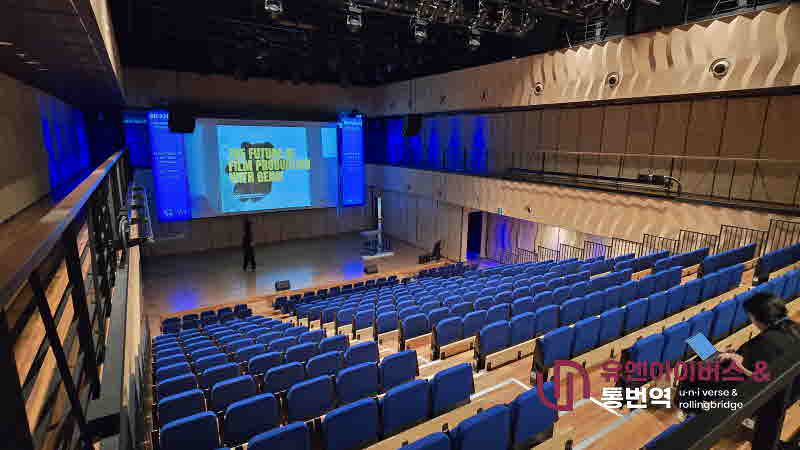
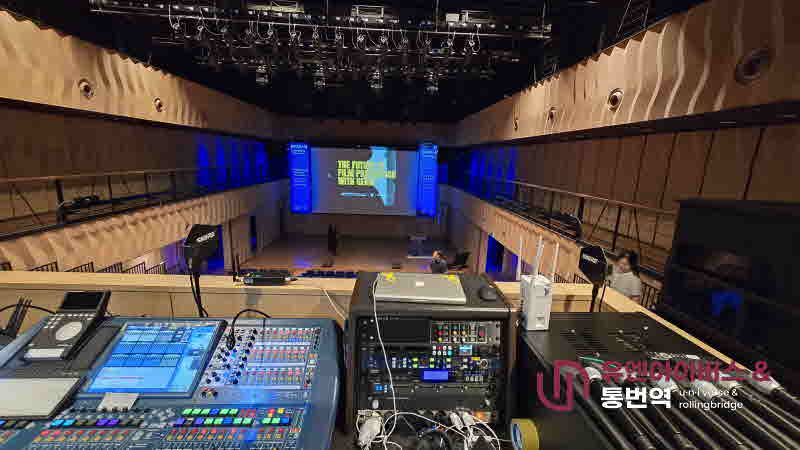
UNIVERSE RB specializes in interpretation system design for international seminars, Investor Relations presentations, policy forums, executive meetings, and multilingual business events.
Data-Based Analysis of Emergency Interpretation Cases
Analysis period: January 1–December 31,
2025
Analysis criteria: Cases urgently referred to UNIVERSE RB after failures
involving externally arranged interpretation
Total cases reviewed: Multiple incident-response cases
The following analysis illustrates how initial cost savings can lead to substantially higher total costs after communication failure.
How Interpretation Failures Increase Total Cost
|
Case
|
Initial Interpretation Method
|
Initial Cost
|
Communication Failure
|
Professional Reassignment Cost
|
Total Cost
|
Cost Increase
|
|
Medical Admission Interview |
Platform-based student interpreter |
Approx. USD 60 |
Medical communication failure |
Approx. USD 1,900 |
Approx. USD 1,960 |
Approximately 32× |
|
International Client Meeting |
Low-cost freelance interpreter |
Approx. USD 75 |
Negotiation failure |
Approx. USD 900 |
Approx. USD 975 |
Approximately 13× |
|
Corporate Meeting Interpretation |
Non-professional interpreter |
Approx. USD 50 |
Interpretation not properly delivered |
Approx. USD 1,125 |
Approx. USD 1,175 |
Approximately 22× |
|
AI-Based Interpretation |
Automatic translation or tablet conversation mode |
USD 0–40 |
Operational communication errors |
Approx. USD 750 |
Up to approx. USD 790 |
Approximately 20× |
|
Corporate Collaboration Project |
Machine-translation-based communication |
USD 0 |
Collaboration breakdown and project suspension |
USD 2,250+ |
USD 2,250+ |
Business loss not fully measurable |
*USD amounts are approximate and have been rounded for international reference. Actual quotations may vary depending on exchange rates, project structure, language combination, preparation requirements, and communication risk.
These figures illustrate an important pattern:
The lowest initial cost can produce the highest final cost when communication risk is not controlled.
Key Findings
- Initial costs were low, but total costs increased significantly after communication failures.
- In several cases, final costs rose by more than ten times the original amount.
- Medical, Investor Relations, and negotiation assignments showed the greatest potential impact.
- AI-based and non-professional interpretation could not reliably manage decision-critical communication.
- The consequence was not limited to interpretation quality; the entire business communication process was affected.
Data-Based Conclusion
The cases reviewed during 2025 demonstrate that professional interpretation should not be treated simply as a cost to minimize.
It is a cost associated with controlling communication risk.
The same pattern appeared repeatedly:
Lower initial cost → communication failure → emergency reassignment → higher total cost
The Cost Escalation Structure
The structure is typically as follows:
- A low-cost interpreter or automated tool is selected.
- Initial spending appears lower.
- A communication error occurs.
- The meeting, interview, or project is disrupted.
- Professional interpretation is urgently reassigned.
- The total project cost increases.
In practical terms:
Low cost at the beginning often becomes higher cost at the end.
Case Analysis
Case 1. Medical Admission Interview
High-Risk Communication Failure
Situation
- A foreign patient participated in a pre-admission medical interview.
- Medical professionals and the patient needed to exchange decision-critical information.
- A student interpreter recruited through a general platform was assigned.
- The initial interpretation cost was approximately USD 60.
Problems
- Medical terminology and symptom descriptions were interpreted inaccurately.
- The patient’s condition was not communicated clearly.
- The intent of the physician’s questions was misunderstood.
- The patient’s responses were distorted during interpretation.
Outcome
- There was a risk of incorrect assessment of the patient’s condition.
- Confusion arose regarding the direction of treatment.
- The consultation was delayed.
- Additional professional interpretation support became necessary.
- The total cost increased to approximately USD 1,960.
Root Causes
- Insufficient understanding of medical terminology
- Limited real-time response capability
- Lack of experience with doctor-patient communication
- Inadequate preparation and quality verification
Key Lesson
Medical interpretation requires more than conversational fluency.
It requires terminology accuracy, neutrality, information retention, and an understanding of the consequences of communication errors.
Case 2. International Client Meeting
Negotiation Failure Structure
Situation
- A business meeting was conducted with an overseas buyer.
- The discussion included pricing, delivery schedules, and contractual conditions.
- A low-cost interpreter was recruited through a general freelance platform.
- The initial interpretation cost was approximately USD 75.
Problems
- The interpreter lacked knowledge of the industry and products.
- The negotiation flow could not be followed accurately.
- Key conditions involving price, timing, and responsibilities were communicated incorrectly.
Outcome
- Both parties developed different understandings of the proposed conditions.
- Confidence in the communication process declined.
- The negotiation failed to progress.
- The potential contract was not concluded as intended.
- The total interpretation-related cost increased to approximately USD 975.
Root Causes
- Limited business interpretation experience
- Poor understanding of negotiation structure
- Inability to manage commercial intent and conditions
- Word-level translation without communication analysis
Key Lesson
Negotiation interpretation requires an understanding of:
- Commercial intent
- Conditions and concessions
- Pricing and delivery obligations
- Relationship dynamics
- Real-time decision-making

Case 3. Interpretation Was Not Properly Delivered
Breakdown of the Basic Function
Situation
- A bilingual foreign national or international student was assigned to a small corporate meeting.
- The client expected full consecutive interpretation.
- The initial service cost was approximately USD 50.
Problems
- The assigned individual could not deliver complete interpretation.
- The question-and-answer structure was not understood.
- Instead of interpreting, the individual mainly smiled, reacted, or provided incomplete summaries.
Outcome
- The meeting could not proceed normally.
- Communication between the participants stopped.
- The event had to be suspended.
- A replacement interpreter was urgently required.
- The total cost increased to approximately USD 1,175.
Root Causes
- Lack of professional interpretation experience
- Poor understanding of meeting structure
- Insufficient preparation
- No prior verification of interpretation competence
Key Lesson
Bilingual ability is not the same as professional interpreting ability.
A person may understand both languages while still being unable to retain, analyze, restructure, and deliver the speaker’s meaning accurately.
Case 4. AI-Dependent Interpretation
Overreliance on Technology
Situation
- A tablet or mobile conversation mode was used.
- Automatic translation was treated as the primary method of real-time communication.
- The initial technology cost was approximately USD 0–40.
Problems
- Context was lost because the output relied heavily on literal translation.
- Industry terminology was translated incorrectly.
- The conversation became slower and fragmented.
- Speaker intent and decision-related nuances were not captured.
Outcome
- Operational communication errors occurred.
- Work instructions were not delivered correctly.
- The project team developed conflicting understandings.
- Professional interpretation was later required.
- The total communication recovery cost increased to approximately USD 790.
Root Causes
- Excessive confidence in automated translation
- Limited contextual analysis
- Inability to manage changing dialogue
- Absence of professional human judgment
Key Lesson
AI can support basic information exchange.
It should not be treated as a complete replacement for professional interpretation in negotiations, medical discussions, technical meetings, or executive decision-making.
Case 5. Suspension of Business Cooperation
The Most Serious Outcome
Situation
- Two companies conducted an international collaboration project.
- Communication was managed primarily through automated translation.
- The initial translation tool cost was effectively USD 0.
Problems
- Contract conditions and role allocation were misunderstood.
- Technical requirements were communicated inaccurately.
- Each party developed a different understanding of the project direction.
- Misunderstandings accumulated over time.
Outcome
- The collaboration structure broke down.
- The project was suspended.
- Financial loss and reputational damage followed.
- Trust between the organizations deteriorated.
- Recovery and professional communication support costs exceeded USD 2,250.
- The total business loss could not be fully measured.
Root Causes
- No structured decision-making communication process
- Absence of professional interpretation
- Misunderstanding translation and interpretation as interchangeable
- No accountable person responsible for contextual accuracy
Key Lesson
Communication failure is not always caused by one dramatic mistranslation.
Small inaccuracies can accumulate into:
- Loss of trust
- Contract disputes
- Operational delays
- Relationship breakdown
- Project cancellation
Common Structure Across the Five Cases
All five cases followed a similar pattern:
Low-cost selection
→ Lower interpretation quality
→ Communication error
→ Reassignment, failure, or financial loss
The main lesson is:
Interpretation incidents are rarely isolated mistakes. They are usually the predictable result of choosing the wrong communication structure.
Four High-Risk Factors
Interpretation failures are commonly associated with four weaknesses:
- Insufficient professional interpreting competence
- Lack of industry-specific expertise
- Failure to respond accurately in real time
- Poor understanding of the communication structure
When these weaknesses overlap, both the probability and impact of communication failure increase.
Why Professional Interpretation Costs More
Professional interpretation fees are not based solely on labor time.
They reflect the cost of controlling real-time communication risk.
Professional interpretation may require:
- Understanding of specialized industries
- Analysis of presentation and meeting materials
- Terminology preparation
- Accurate delivery of figures, conditions, and contractual language
- Real-time decision-making
- Management of questions and objections
- Understanding of negotiation and presentation structures
- Quality control and contingency planning
In high-risk communication:
- A mistranslated figure may affect an investment decision.
- A misunderstood condition may create a contractual dispute.
- A delayed interpretation may disrupt an entire event.
- An inaccurate response may damage trust between organizations.
Professional interpretation therefore represents the cost of protecting communication, decisions, and business continuity.
Simultaneous vs. Consecutive Interpretation
|
Category |
Simultaneous Interpretation |
Consecutive Interpretation |
|
Communication Structure |
Presentation-centered |
Dialogue-centered |
|
Typical Initial Cost |
Higher |
Lower |
|
Impact on Duration |
Maintains the original schedule |
May extend the session by 1.5–2 times |
|
Primary Risk Focus |
Maintaining flow and complete delivery |
Maintaining accuracy and dialogue structure |
|
Best Suited For |
Seminars, conferences, multilingual events |
Meetings, interviews, negotiations |
Core Difference
Simultaneous Interpretation
- Higher initial cost
- Maintains the original event duration
- Allows the speaker to continue without pausing
- Suitable for conferences and presentation-centered events
- Usually requires two interpreters for sustained sessions
- May require booths, receivers, consoles, and technical engineering
Consecutive Interpretation
- Lower initial operational cost
- Requires the speaker to pause
- Extends the meeting duration
- Suitable for dialogue-centered meetings and negotiations
- Usually requires one interpreter
- Generally requires less equipment
Consecutive interpretation may appear less expensive when only the interpreter fee is considered.
However, longer sessions may create additional costs involving:
- Venue rental
- Staff time
- Participant concentration
- Schedule delays
- Overtime
- Reduced event efficiency
The correct method should therefore be selected according to the event structure—not the interpreter fee alone.
The UNIVERSE RB Interpretation Strategy
UNIVERSE RB does not approach interpretation as a simple staffing service.
We design each assignment as an integrated communication system.
Our framework includes:
- Interpreter assignment based on project requirements
- Internal interpreter classification and quality review
- Industry-specific professional matching
- Risk-based communication design
- Combined simultaneous and consecutive formats
- Separate planning for presentations and Q&A sessions
- Equipment and platform integration
- Advance terminology preparation
- Technical coordination
- Contingency planning
The objective is not merely to respond to interpretation incidents.
It is to eliminate the conditions that create them.
AI + Human Integrated Strategy
UNIVERSE RB uses artificial intelligence where it improves efficiency and preparation.
AI Supports
- Terminology extraction
- Document analysis
- Background research
- Presentation structure review
- Repeated phrase identification
- Workflow planning
Professional Interpreters Manage
- Real-time judgment
- Decision-related communication
- Context and speaker intent
- Negotiation dynamics
- Questions and objections
- Communication risk
AI supports the process. Human professionals remain accountable for the result.
Industries We Support
UNIVERSE RB provides interpretation system design for:
- International seminars
- Global conferences
- Investor Relations presentations
- Medical and biotechnology events
- Government and public policy forums
- Executive meetings
- International negotiations
- Engineering and manufacturing events
- Technology and AI conferences
What Determines Interpretation Pricing?
Professional interpretation fees are influenced by:
- Interpreter experience and project fit
- Industry complexity
- Q&A requirements
- Event structure
- Communication risk
- Interpretation method
- Number of languages
- Number of participants
- Equipment requirements
- Preparation materials
- Lead time
- Remote or onsite delivery
- Recording and platform requirements
The central principle is:
Price is determined by the communication structure—not by time alone.
Frequently Asked Questions
Why is low-cost interpretation risky?
Because a low-cost provider may not be able to manage decision-critical communication, specialist terminology, unexpected questions, or live negotiation dynamics.
The risk depends on the assignment.
A lower-cost option may be suitable for a simple, low-risk situation, but it should not be selected without verifying whether the provider can manage the actual communication environment.
Can AI replace professional interpretation?
AI can support:
- Basic translation
- Terminology preparation
- Captions
- Low-risk information exchange
- Document analysis
It should not be treated as a complete replacement for professional interpreters in:
- Negotiations
- Investor Relations
- Medical communication
- Policy discussions
- Legal or contractual meetings
- Executive communication
- Complex live Q&A sessions

Why are professional interpretation fees higher?
Because professional interpretation includes preparation, specialist knowledge, real-time judgment, quality management, and communication risk control.
The fee reflects the responsibility involved—not simply the number of hours worked.
Is the lowest-priced quotation always unsuitable?
No.
The lowest-priced option may be appropriate for a simple, low-risk assignment.
However, quotations should be compared based on:
- Interpreter experience
- Industry specialization
- Preparation scope
- Number of interpreters
- Equipment inclusion
- Technical support
- Q&A coverage
- Quality management
- Contingency planning
The correct question is not only whether the price is low.
It is whether the service scope matches the project risk.
Are USD prices fixed?
No.
The USD amounts shown in this analysis are approximate reference values.
Actual pricing may vary depending on:
- Exchange rates
- Language combination
- Project location
- Event duration
- Industry specialization
- Interpreter availability
- Equipment requirements
- Preparation scope
- Communication risk
A project-specific quotation is required for accurate pricing.
Conclusion
Reducing interpretation costs is not always the same as reducing total project costs.
When an assignment involves business decisions, investors, patients, public policy, contracts, or international stakeholders, communication failure can create consequences far greater than the original interpretation fee.
Professional interpretation protects:
- Decisions
- Relationships
- Trust
- Event continuity
- Communication structure
- Business operations
The key question is therefore not only:
“How much does interpretation cost?”
The more important question is:
“How much communication risk can this project afford?”
UNIVERSE RB designs professional interpretation systems for international seminars, Investor Relations presentations, policy forums, executive meetings, technical events, and multilingual conferences.
Our approach combines professional interpreters, QMS-based quality management, AI-supported preparation, equipment, platforms, and event-specific communication design.
Check Interpretation Costs Based on Your Event
Interpretation pricing should be reviewed according to:
- Event format
- Duration
- Industry
- Language combination
- Number of participants
- Q&A structure
- Equipment requirements
- Communication risk
An event-based review provides a more accurate assessment than a simple hourly quotation.
Case Archive Notice
Executive Summary
Selecting an unverified interpreter or relying primarily on AI-based interpretation to reduce costs may lead to consequences far beyond a lower service fee.
The result can include:
- Event disruption
- Communication breakdown
- Negotiation failure
- Operational errors
- Suspension of business cooperation
An analysis of multiple emergency interpretation cases handled by UNIVERSE RB found three recurring patterns:
- Low-cost interpretation led to operational errors.
- Excessive dependence on AI distorted decision-making.
- Non-professional interpretation contributed to failed negotiations.
The central conclusion is clear:
Reducing interpretation costs without controlling quality increases communication risk.
Definition
Interpretation is not simply the translation of words.
It is a real-time communication system that supports decisions, negotiations, presentations, and international collaboration.
Interpretation quality is determined by four core capabilities:
- Professional interpreting competence
- Industry-specific expertise
- Real-time response capability
- Understanding of the communication structure
When price becomes the primary selection criterion, one or more of these capabilities may be compromised.
Low-cost interpretation should therefore not be viewed simply as a cost-saving method.
It is better understood as a structure that transfers communication risk from the service provider to the client.
UNIVERSE RB specializes in interpretation system design for international seminars, Investor Relations presentations, policy forums, executive meetings, and multilingual business events.
Data-Based Analysis of Emergency Interpretation Cases
Analysis period: January 1–December 31, 2025
Analysis criteria: Cases urgently referred to UNIVERSE RB after failures involving externally arranged interpretation
Total cases reviewed: Multiple incident-response cases
The following analysis illustrates how initial cost savings can lead to substantially higher total costs after communication failure.
How Interpretation Failures Increase Total Cost
Case | Initial Interpretation Method | Initial Cost | Communication Failure | Professional Reassignment Cost | Total Cost | Cost Increase |
Medical Admission Interview | Platform-based student interpreter | Approx. USD 60 | Medical communication failure | Approx. USD 1,900 | Approx. USD 1,960 | Approximately 32× |
International Client Meeting | Low-cost freelance interpreter | Approx. USD 75 | Negotiation failure | Approx. USD 900 | Approx. USD 975 | Approximately 13× |
Corporate Meeting Interpretation | Non-professional interpreter | Approx. USD 50 | Interpretation not properly delivered | Approx. USD 1,125 | Approx. USD 1,175 | Approximately 22× |
AI-Based Interpretation | Automatic translation or tablet conversation mode | USD 0–40 | Operational communication errors | Approx. USD 750 | Up to approx. USD 790 | Approximately 20× |
Corporate Collaboration Project | Machine-translation-based communication | USD 0 | Collaboration breakdown and project suspension | USD 2,250+ | USD 2,250+ | Business loss not fully measurable |
*USD amounts are approximate and have been rounded for international reference. Actual quotations may vary depending on exchange rates, project structure, language combination, preparation requirements, and communication risk.
These figures illustrate an important pattern:
The lowest initial cost can produce the highest final cost when communication risk is not controlled.
Key Findings
- Initial costs were low, but total costs increased significantly after communication failures.
- In several cases, final costs rose by more than ten times the original amount.
- Medical, Investor Relations, and negotiation assignments showed the greatest potential impact.
- AI-based and non-professional interpretation could not reliably manage decision-critical communication.
- The consequence was not limited to interpretation quality; the entire business communication process was affected.
Data-Based Conclusion
The cases reviewed during 2025 demonstrate that professional interpretation should not be treated simply as a cost to minimize.
It is a cost associated with controlling communication risk.
The same pattern appeared repeatedly:
Lower initial cost → communication failure → emergency reassignment → higher total cost
The Cost Escalation Structure
The structure is typically as follows:
- A low-cost interpreter or automated tool is selected.
- Initial spending appears lower.
- A communication error occurs.
- The meeting, interview, or project is disrupted.
- Professional interpretation is urgently reassigned.
- The total project cost increases.
In practical terms:
Low cost at the beginning often becomes higher cost at the end.
Case Analysis
Case 1. Medical Admission Interview
High-Risk Communication Failure
Situation
- A foreign patient participated in a pre-admission medical interview.
- Medical professionals and the patient needed to exchange decision-critical information.
- A student interpreter recruited through a general platform was assigned.
- The initial interpretation cost was approximately USD 60.
Problems
- Medical terminology and symptom descriptions were interpreted inaccurately.
- The patient’s condition was not communicated clearly.
- The intent of the physician’s questions was misunderstood.
- The patient’s responses were distorted during interpretation.
Outcome
- There was a risk of incorrect assessment of the patient’s condition.
- Confusion arose regarding the direction of treatment.
- The consultation was delayed.
- Additional professional interpretation support became necessary.
- The total cost increased to approximately USD 1,960.
Root Causes
- Insufficient understanding of medical terminology
- Limited real-time response capability
- Lack of experience with doctor-patient communication
- Inadequate preparation and quality verification
Key Lesson
Medical interpretation requires more than conversational fluency.
It requires terminology accuracy, neutrality, information retention, and an understanding of the consequences of communication errors.
Case 2. International Client Meeting
Negotiation Failure Structure
Situation
- A business meeting was conducted with an overseas buyer.
- The discussion included pricing, delivery schedules, and contractual conditions.
- A low-cost interpreter was recruited through a general freelance platform.
- The initial interpretation cost was approximately USD 75.
Problems
- The interpreter lacked knowledge of the industry and products.
- The negotiation flow could not be followed accurately.
- Key conditions involving price, timing, and responsibilities were communicated incorrectly.
Outcome
- Both parties developed different understandings of the proposed conditions.
- Confidence in the communication process declined.
- The negotiation failed to progress.
- The potential contract was not concluded as intended.
- The total interpretation-related cost increased to approximately USD 975.
Root Causes
- Limited business interpretation experience
- Poor understanding of negotiation structure
- Inability to manage commercial intent and conditions
- Word-level translation without communication analysis
Key Lesson
Negotiation interpretation requires an understanding of:
- Commercial intent
- Conditions and concessions
- Pricing and delivery obligations
- Relationship dynamics
- Real-time decision-making
Case 3. Interpretation Was Not Properly Delivered
Breakdown of the Basic Function
Situation
- A bilingual foreign national or international student was assigned to a small corporate meeting.
- The client expected full consecutive interpretation.
- The initial service cost was approximately USD 50.
Problems
- The assigned individual could not deliver complete interpretation.
- The question-and-answer structure was not understood.
- Instead of interpreting, the individual mainly smiled, reacted, or provided incomplete summaries.
Outcome
- The meeting could not proceed normally.
- Communication between the participants stopped.
- The event had to be suspended.
- A replacement interpreter was urgently required.
- The total cost increased to approximately USD 1,175.
Root Causes
- Lack of professional interpretation experience
- Poor understanding of meeting structure
- Insufficient preparation
- No prior verification of interpretation competence
Key Lesson
Bilingual ability is not the same as professional interpreting ability.
A person may understand both languages while still being unable to retain, analyze, restructure, and deliver the speaker’s meaning accurately.
Case 4. AI-Dependent Interpretation
Overreliance on Technology
Situation
- A tablet or mobile conversation mode was used.
- Automatic translation was treated as the primary method of real-time communication.
- The initial technology cost was approximately USD 0–40.
Problems
- Context was lost because the output relied heavily on literal translation.
- Industry terminology was translated incorrectly.
- The conversation became slower and fragmented.
- Speaker intent and decision-related nuances were not captured.
Outcome
- Operational communication errors occurred.
- Work instructions were not delivered correctly.
- The project team developed conflicting understandings.
- Professional interpretation was later required.
- The total communication recovery cost increased to approximately USD 790.
Root Causes
- Excessive confidence in automated translation
- Limited contextual analysis
- Inability to manage changing dialogue
- Absence of professional human judgment
Key Lesson
AI can support basic information exchange.
It should not be treated as a complete replacement for professional interpretation in negotiations, medical discussions, technical meetings, or executive decision-making.
Case 5. Suspension of Business Cooperation
The Most Serious Outcome
Situation
- Two companies conducted an international collaboration project.
- Communication was managed primarily through automated translation.
- The initial translation tool cost was effectively USD 0.
Problems
- Contract conditions and role allocation were misunderstood.
- Technical requirements were communicated inaccurately.
- Each party developed a different understanding of the project direction.
- Misunderstandings accumulated over time.
Outcome
- The collaboration structure broke down.
- The project was suspended.
- Financial loss and reputational damage followed.
- Trust between the organizations deteriorated.
- Recovery and professional communication support costs exceeded USD 2,250.
- The total business loss could not be fully measured.
Root Causes
- No structured decision-making communication process
- Absence of professional interpretation
- Misunderstanding translation and interpretation as interchangeable
- No accountable person responsible for contextual accuracy
Key Lesson
Communication failure is not always caused by one dramatic mistranslation.
Small inaccuracies can accumulate into:
- Loss of trust
- Contract disputes
- Operational delays
- Relationship breakdown
- Project cancellation
Common Structure Across the Five Cases
All five cases followed a similar pattern:
Low-cost selection
→ Lower interpretation quality
→ Communication error
→ Reassignment, failure, or financial loss
The main lesson is:
Interpretation incidents are rarely isolated mistakes. They are usually the predictable result of choosing the wrong communication structure.
Four High-Risk Factors
Interpretation failures are commonly associated with four weaknesses:
- Insufficient professional interpreting competence
- Lack of industry-specific expertise
- Failure to respond accurately in real time
- Poor understanding of the communication structure
When these weaknesses overlap, both the probability and impact of communication failure increase.
Why Professional Interpretation Costs More
Professional interpretation fees are not based solely on labor time.
They reflect the cost of controlling real-time communication risk.
Professional interpretation may require:
- Understanding of specialized industries
- Analysis of presentation and meeting materials
- Terminology preparation
- Accurate delivery of figures, conditions, and contractual language
- Real-time decision-making
- Management of questions and objections
- Understanding of negotiation and presentation structures
- Quality control and contingency planning
In high-risk communication:
- A mistranslated figure may affect an investment decision.
- A misunderstood condition may create a contractual dispute.
- A delayed interpretation may disrupt an entire event.
- An inaccurate response may damage trust between organizations.
Professional interpretation therefore represents the cost of protecting communication, decisions, and business continuity.
Simultaneous vs. Consecutive Interpretation
Category | Simultaneous Interpretation | Consecutive Interpretation |
Communication Structure | Presentation-centered | Dialogue-centered |
Typical Initial Cost | Higher | Lower |
Impact on Duration | Maintains the original schedule | May extend the session by 1.5–2 times |
Primary Risk Focus | Maintaining flow and complete delivery | Maintaining accuracy and dialogue structure |
Best Suited For | Seminars, conferences, multilingual events | Meetings, interviews, negotiations |
Core Difference
Simultaneous Interpretation
- Higher initial cost
- Maintains the original event duration
- Allows the speaker to continue without pausing
- Suitable for conferences and presentation-centered events
- Usually requires two interpreters for sustained sessions
- May require booths, receivers, consoles, and technical engineering
Consecutive Interpretation
- Lower initial operational cost
- Requires the speaker to pause
- Extends the meeting duration
- Suitable for dialogue-centered meetings and negotiations
- Usually requires one interpreter
- Generally requires less equipment
Consecutive interpretation may appear less expensive when only the interpreter fee is considered.
However, longer sessions may create additional costs involving:
- Venue rental
- Staff time
- Participant concentration
- Schedule delays
- Overtime
- Reduced event efficiency
The correct method should therefore be selected according to the event structure—not the interpreter fee alone.
The UNIVERSE RB Interpretation Strategy
UNIVERSE RB does not approach interpretation as a simple staffing service.
We design each assignment as an integrated communication system.
Our framework includes:
- Interpreter assignment based on project requirements
- Internal interpreter classification and quality review
- Industry-specific professional matching
- Risk-based communication design
- Combined simultaneous and consecutive formats
- Separate planning for presentations and Q&A sessions
- Equipment and platform integration
- Advance terminology preparation
- Technical coordination
- Contingency planning
The objective is not merely to respond to interpretation incidents.
It is to eliminate the conditions that create them.
AI + Human Integrated Strategy
UNIVERSE RB uses artificial intelligence where it improves efficiency and preparation.
AI Supports
- Terminology extraction
- Document analysis
- Background research
- Presentation structure review
- Repeated phrase identification
- Workflow planning
Professional Interpreters Manage
- Real-time judgment
- Decision-related communication
- Context and speaker intent
- Negotiation dynamics
- Questions and objections
- Communication risk
AI supports the process. Human professionals remain accountable for the result.
Industries We Support
UNIVERSE RB provides interpretation system design for:
- International seminars
- Global conferences
- Investor Relations presentations
- Medical and biotechnology events
- Government and public policy forums
- Executive meetings
- International negotiations
- Engineering and manufacturing events
- Technology and AI conferences
What Determines Interpretation Pricing?
Professional interpretation fees are influenced by:
- Interpreter experience and project fit
- Industry complexity
- Q&A requirements
- Event structure
- Communication risk
- Interpretation method
- Number of languages
- Number of participants
- Equipment requirements
- Preparation materials
- Lead time
- Remote or onsite delivery
- Recording and platform requirements
The central principle is:
Price is determined by the communication structure—not by time alone.
Frequently Asked Questions
Why is low-cost interpretation risky?
Because a low-cost provider may not be able to manage decision-critical communication, specialist terminology, unexpected questions, or live negotiation dynamics.
The risk depends on the assignment.
A lower-cost option may be suitable for a simple, low-risk situation, but it should not be selected without verifying whether the provider can manage the actual communication environment.
Can AI replace professional interpretation?
AI can support:
- Basic translation
- Terminology preparation
- Captions
- Low-risk information exchange
- Document analysis
It should not be treated as a complete replacement for professional interpreters in:
- Negotiations
- Investor Relations
- Medical communication
- Policy discussions
- Legal or contractual meetings
- Executive communication
- Complex live Q&A sessions
Why are professional interpretation fees higher?
Because professional interpretation includes preparation, specialist knowledge, real-time judgment, quality management, and communication risk control.
The fee reflects the responsibility involved—not simply the number of hours worked.
Is the lowest-priced quotation always unsuitable?
No.
The lowest-priced option may be appropriate for a simple, low-risk assignment.
However, quotations should be compared based on:
- Interpreter experience
- Industry specialization
- Preparation scope
- Number of interpreters
- Equipment inclusion
- Technical support
- Q&A coverage
- Quality management
- Contingency planning
The correct question is not only whether the price is low.
It is whether the service scope matches the project risk.
Are USD prices fixed?
No.
The USD amounts shown in this analysis are approximate reference values.
Actual pricing may vary depending on:
- Exchange rates
- Language combination
- Project location
- Event duration
- Industry specialization
- Interpreter availability
- Equipment requirements
- Preparation scope
- Communication risk
A project-specific quotation is required for accurate pricing.
Conclusion
Reducing interpretation costs is not always the same as reducing total project costs.
When an assignment involves business decisions, investors, patients, public policy, contracts, or international stakeholders, communication failure can create consequences far greater than the original interpretation fee.
Professional interpretation protects:
- Decisions
- Relationships
- Trust
- Event continuity
- Communication structure
- Business operations
The key question is therefore not only:
“How much does interpretation cost?”
The more important question is:
“How much communication risk can this project afford?”
UNIVERSE RB designs professional interpretation systems for international seminars, Investor Relations presentations, policy forums, executive meetings, technical events, and multilingual conferences.
Our approach combines professional interpreters, QMS-based quality management, AI-supported preparation, equipment, platforms, and event-specific communication design.
Check Interpretation Costs Based on Your Event
Interpretation pricing should be reviewed according to:
- Event format
- Duration
- Industry
- Language combination
- Number of participants
- Q&A structure
- Equipment requirements
- Communication risk
An event-based review provides a more accurate assessment than a simple hourly quotation.
Case Archive Notice
The case archive on this website is based on interpretation and global communication assignments involving international seminars, policy forums, corporate presentations, industry conferences, and business meetings.
To protect client confidentiality and comply with the international Code of Professional Conduct, some client names, event details, financial information, and operational circumstances have been generalized.
All USD amounts are approximate reference values and may vary depending on exchange rates and project conditions.
The case archive on this website is based on interpretation and global communication assignments involving international seminars, policy forums, corporate presentations, industry conferences, and business meetings.
To protect client confidentiality and comply with the international Code of Professional Conduct, some client names, event details, financial information, and operational circumstances have been generalized.
All USD amounts are approximate reference values and may vary depending on exchange rates and project conditions.