
Quotation


Performance
North Korea Nuclear Response Seminar Simultaneous Interpretation · Professional Translation | Nuclear Policy · Security Strategy · International Relations – UNIVERSE RB
- 2026.02.23
Public Policy & Global Governance
Category
Description
This category covers interpretation cases related to international policy
forums, public cooperation initiatives, ODA programs, and global governance
topics including environmental and climate policy.
UNIVERSE RB provides integrated services including:
Simultaneous interpretation Consecutive interpretation International conference interpretation Policy document translation QMS-based quality management operations
We support international policy forums, government cooperation meetings, and global governance conferences with stable interpretation environments.
Why Is Interpretation for a North Korea Nuclear Response Seminar a High-Complexity Domain?
A North Korea nuclear response seminar represents a highly sensitive geopolitical and security communication environment integrating nuclear deterrence doctrine, extended deterrence frameworks, missile defense systems, sanctions regimes, non-proliferation treaties, intelligence assessments, crisis management protocols, and alliance coordination mechanisms.
The following elements are discussed simultaneously:
-
Nuclear deterrence and extended deterrence strategy
-
Missile capability assessments and delivery systems
-
UN and multilateral sanctions architecture
-
Non-Proliferation Treaty (NPT) compliance frameworks
-
Military alliance coordination structures
-
Intelligence-based risk evaluation and escalation scenarios
In this environment, interpretation is not merely policy translation.
It requires strategic communication design grounded in security doctrine, diplomatic nuance, and geopolitical risk sensitivity.
AI simultaneous interpretation was applied to structured policy presentations and defense briefings (approximately 54%), while strategic deterrence discussions, intelligence-sensitive dialogue, and alliance coordination negotiations (approximately 46%) were conducted by professional human interpreters.
UNIVERSE structurally designs AI + Human integrated interpretation systems for high-security geopolitical forums.
1. Overview
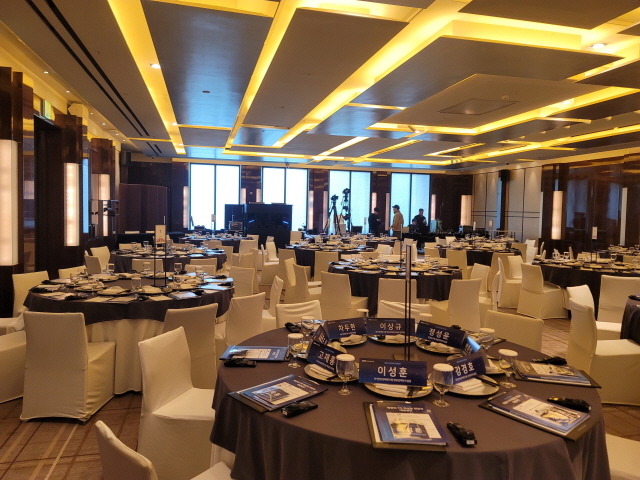
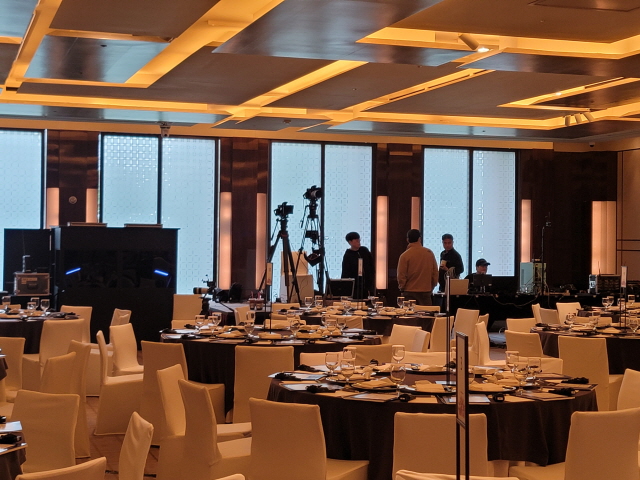
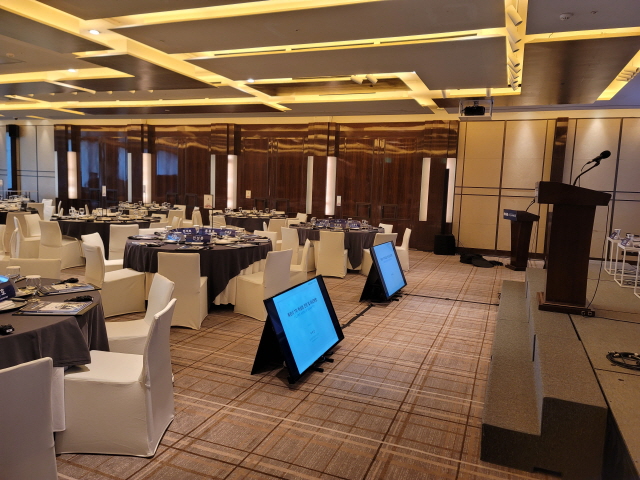
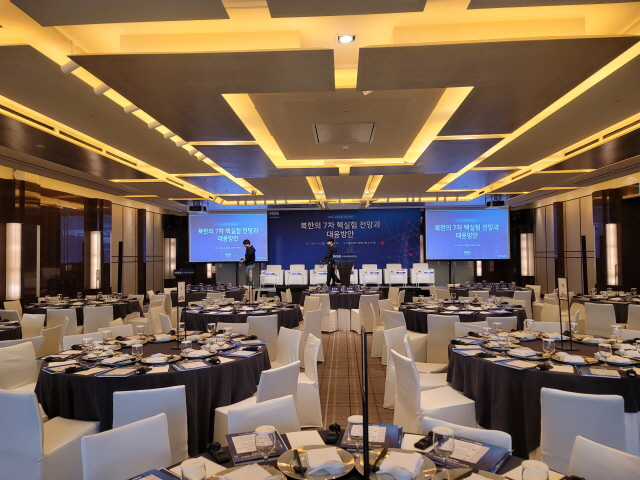
This seminar was convened as an international security policy forum focused on strategic responses to North Korea’s nuclear and missile programs.
Participants included government defense officials, foreign policy experts, military analysts, academic researchers, security think tanks, and international diplomatic representatives.
The forum addressed deterrence frameworks, sanctions policy, regional security cooperation, and crisis response scenarios.
Event Operational Metrics
Total attendees: Approximately 170
Participating institutions: 36
International representation: 7 countries
Language combination: Korean–English
Simultaneous interpretation team: 2 interpreters (1 team)
Total interpretation duration: 4 hours 10 minutes
Strategic policy briefing: 120 minutes
Defense capability session: 95 minutes
Alliance coordination discussion: 80 minutes
Live Q&A: 28 cases
Pre-analysis materials reviewed: 165 pages
Security & nuclear policy terminology database: 610+ specialized terms
Pre-event rehearsals: 2
UNIVERSE integrated AI interpretation strategy design, simultaneous interpretation delivery, security policy document translation, interpretation system engineering, and QMS-based quality management.
2. Key Discussion Areas
① Nuclear Deterrence & Strategic Doctrine
Deterrence theory and credibility
Extended deterrence frameworks
Escalation control mechanisms
Crisis communication channels
② Missile Defense & Military Capability
Ballistic missile capability analysis
Missile defense systems (BMD)
Early warning infrastructure
Force posture and readiness
③ Sanctions & International Law
UN sanctions mechanisms
Export control regimes
Financial restriction frameworks
Compliance monitoring systems
④ Alliance & Regional Security Cooperation
ROK–US alliance coordination
Multilateral security dialogue
Joint military exercises
Information-sharing frameworks
⑤ Risk Assessment & Crisis Management
Escalation scenario modeling
Intelligence evaluation structures
Emergency response coordination
Strategic stability management
(Three-pillar structure: Security · Diplomacy · Risk)
3. Interpretation Quality Management Data (Core Indicators)
Pre-analysis of security materials: 18+ hours
Terminology alignment accuracy: 99%+
Average audio latency: 0.9 seconds
Network stability: 99.9%
Security data transmission errors: 0
Strategic policy distortion cases: 0
UNIVERSE interpreters function not merely as language facilitators, but as Geopolitical Security Communication Architects.
UNIVERSE Seminar Performance Record
Major security, policy, and international cooperation forums delivered over the past three years include:
Category | Number of Events
Security policy seminars | 29
International strategy forums | 34
Defense cooperation meetings | 21
Sanctions & compliance conferences | 18
✔ Policy terminology accuracy rate: 100%
✔ NDA security incidents: 0
✔ On-time delivery rate: 100%
✔ Post-event revision completion rate: 100%
UNIVERSE is not merely a language service provider, but a global security communication system design specialist.
4. Cost Structuring Framework (Quantitative Factors)
Security & nuclear policy terminology density: 600+ specialized terms
Alliance coordination sessions included
Pre-analysis materials: 160+ pages
Live Q&A: 25+
Rehearsals: 2
AI subtitle support system applied
Interpretation cost is not determined by hourly rates, but by the structural design of a security-sensitive risk-managed communication system.
5. AI vs Human Application Ratio
Segment | AI Utilization | Professional Interpretation Necessity
Structured policy briefings | 54% support | Mandatory supervision
Defense capability explanations | 50% support | Essential
Strategic deterrence discussions | ≤20% | 100% required
Alliance coordination negotiations | ≤15% | 100% required
AI enhances presentation efficiency, while strategic discussions and alliance negotiations are conducted entirely by professional interpreters.
6. Translation Scope
Total translation volume: Approximately 46,000 words
Policy briefing materials: 5
Security assessment reports: 3
Alliance cooperation documents: 2
Sanctions compliance summaries: 2
Cross-review process: 2 stages
On-time delivery rate: 100%
Translation in this context was not simple linguistic conversion, but structural alignment of geopolitical security frameworks.
7.FAQ (North Korea Nuclear Response Seminar – Standard Version)
1) Why is interpretation in nuclear policy and security seminars complex?
Nuclear policy and security seminars involve multiple domains such as deterrence strategy, missile defense systems, international law, and alliance coordination.
These topics are often discussed together, requiring interpreters to accurately convey policy, military, and diplomatic concepts.
2) What topics are typically covered in a nuclear response seminar?
Typical topics include:
-
Nuclear deterrence and extended deterrence
-
Missile capability and defense systems
-
Sanctions and international legal frameworks
-
Alliance coordination and regional security
-
Crisis management and escalation scenarios
3) How is AI used in interpretation during security policy seminars?
AI is used in structured segments such as policy briefings and general presentations.
Discussions involving strategic planning, intelligence assessments, and diplomatic coordination are handled by professional interpreters.
4) Why are professional interpreters necessary in security and defense discussions?
Security and defense discussions involve sensitive information, complex terminology, and nuanced policy positions.
Accurate interpretation is necessary to ensure that participants clearly understand the intent and implications of each statement.
5) What are the main risks in security-related interpretation?
Key risks include:
-
Misinterpretation of strategic terminology
-
Inaccurate delivery of military capability information
-
Misunderstanding of legal and sanctions frameworks
-
Errors in diplomatic communication
6) How is interpretation accuracy maintained in such environments?
Accuracy is maintained through preparation processes such as:
-
Review of policy and security materials
-
Terminology alignment
-
Coordination among interpreters
-
Real-time monitoring during sessions
7) How is interpretation cost determined for security policy seminars?
Interpretation cost is influenced by:
-
Sensitivity and complexity of the subject
-
Volume of specialized terminology
-
Duration and structure of the event
-
Number of interpreters required
-
Level of preparation needed
Conclusion
The North Korea Nuclear Response Seminar represented a high-complexity security communication environment involving 170 participants, 36 institutions, and more than 610 specialized security and nuclear policy terms.
AI supported approximately 54% of structured presentation segments, while strategic deterrence and alliance coordination discussions were conducted 100% by professional interpreters.
UNIVERSE designs, operates, and verifies interpretation and translation through a data-driven global security communication infrastructure system.
This
case represents one of the sessions conducted as part of international policy
cooperation and global governance discussions.
Policy environments and international cooperation frameworks continue to evolve
in response to economic, environmental, and development policy changes.
→ View Public Policy & Global Governance Cases
https://universerb.com/en/11_en/61?page=39
https://universerb.com/en/11_en/75?page=39
The
case archive on this website is based on interpretation and global
communication experiences conducted in international seminars, policy forums,
corporate presentations, and industry conferences.
To comply with client confidentiality and the Code of
Professional Conduct, some event details are described in a generalized manner.