
Quotation


Performance
North Korea Policy Seminar Simultaneous Interpretation | Security Strategy · Diplomatic Communication · Korean Peninsula Policy Forum – UNIVERSE RB
- 2025.08.04
This Korea policy forum examines diplomatic, security, and humanitarian issues surrounding the Korean Peninsula while exploring regional peace, international cooperation, and policy developments.
Key interpretation topics include North Korea policy and peace initiatives, denuclearization negotiations and international sanctions, North Korea's economic and social developments, humanitarian assistance and human rights, inter-Korean cooperation, and multilateral strategies toward the Korean Peninsula.
Because discussions on Korean Peninsula affairs involve diplomacy, international law, security, and human rights, professional interpretation is essential to accurately convey policy intent, diplomatic language, and sensitive geopolitical issues with precision and neutrality.
Public Policy & Global Governance
Category Description
This category covers interpretation cases related to international policy forums, public cooperation initiatives, ODA programs, and global governance topics including environmental and climate policy.
UNIVERSE RB provides integrated services including:
Simultaneous interpretationConsecutive interpretationInternational conference interpretationPolicy document translationQMS-based quality management operations
We support international policy forums, government cooperation meetings, and global governance conferences with stable interpretation environments.
Executive Summary
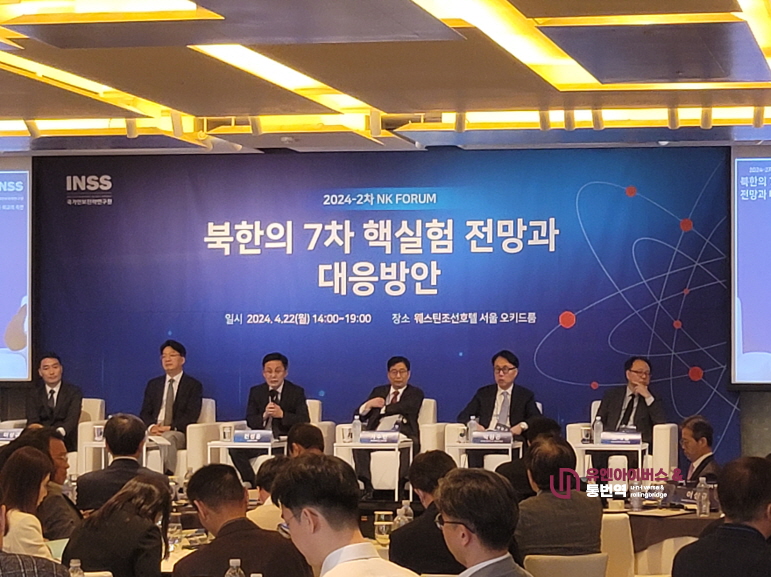
The North Korea Policy Seminar is a high-sensitivity diplomatic and security forum addressing inter-Korean relations, denuclearization negotiations, sanctions enforcement, and humanitarian coordination.
This environment requires:
Absolute political neutrality
Diplomatic nuance and calibrated tone
Sanctions and international law literacy
High-speed policy dialogue management
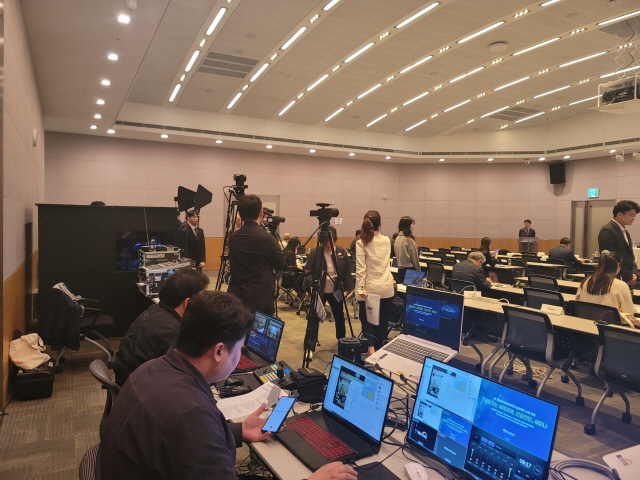
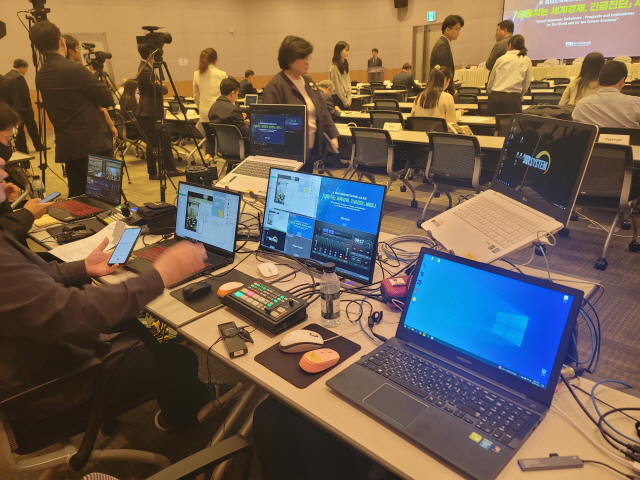
AI-assisted terminology alignment supports structured presentations, while human interpreters maintain full control over politically sensitive, security-related, and diplomatic exchanges.
Interpretation is conducted under the QMS 9-Step Quality Management System to ensure zero distortion of policy language and sanction terminology.
1. Overview
The North Korea Policy Seminar convenes:
Government officials
Foreign policy experts
Academic researchers
Think tanks and research institutes
International organizations
Security and humanitarian stakeholders
Core topics include political strategy, economic conditions, sanctions frameworks, inter-Korean engagement, and regional security architecture.
Given the geopolitical sensitivity of the Korean Peninsula, interpretation must ensure:
Contextual precision
Terminological consistency
Diplomatic neutrality
Institutional credibility
Simultaneous and consecutive interpretation were provided for:
Keynote speeches
Policy briefings
Multilateral panel discussions
Closed-door strategic sessions
Live Q&A
2. Key Interpretation Topics
2.1 Diplomacy and Peace Process
Inter-Korean dialogue frameworks
Confidence-building measures
Regional security architecture
2.2 Denuclearization and Sanctions
UN Security Council resolutions
Sanctions enforcement mechanisms
Negotiation dynamics
2.3 Economic and Social Developments
Domestic market changes
Cross-border economic analysis
Industrial and infrastructure conditions
2.4 Humanitarian and Human Rights Issues
Aid coordination
Human rights reporting
NGO and international agency cooperation
2.5 International Policy Responses
Multilateral coordination strategies
Diplomatic messaging alignment
Strategic risk assessment
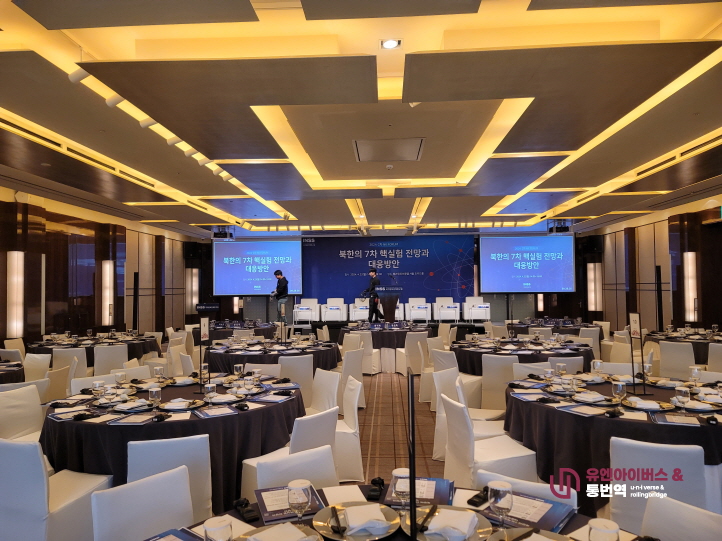
3. Preparation Materials
Official policy papers and white papers
UN Security Council sanctions documentation
Regulatory frameworks and compliance terminology
Standardized spellings of DPRK names and geographic locations
Recent analytical and intelligence-based reports
Glossary alignment included:
Denuclearization terminology
Sanctions compliance vocabulary
Diplomatic protocol language
Inter-Korean cooperation terminology
4. Interpretation Considerations
Political Neutrality
Interpretation must not imply endorsement, criticism, or strategic bias.
Diplomatic Tone Control
Terms such as “pressure,” “engagement,” “conditional dialogue,” or “strategic patience” require calibrated rendering.
Legal and Sanctions Precision
Misinterpretation of sanction categories or regulatory language may affect compliance understanding.
Proper Noun Standardization
North Korean names and institutional designations must follow standardized transliteration systems.
Context Sensitivity
Audience may include:
Security analysts
Diplomats
Media
Civil society representatives
Tone adaptation without distortion is essential.
5. Case Examples
Case 1: High-Level Policy Dialogue
Simultaneous interpretation during a diplomatic roundtable addressing denuclearization negotiation frameworks.
Maintained consistent rendering of sanction terminology and negotiation phases.
Outcome: Zero terminological deviation recorded.
Case 2: Sanctions Compliance Forum
Interpretation of UN sanction categories and enforcement mechanisms.
Delivered regulatory language with legal precision and neutrality.
Outcome: 100% numerical and legal accuracy maintained.
Case 3: Humanitarian Coordination Session
Consecutive interpretation during closed-door humanitarian coordination discussions.
Managed sensitive human rights terminology without political distortion.
Outcome: Contextual nuance preserved across multilateral stakeholders.
6. Frequently Asked Questions (FAQ)
Q1. Why is North Korea policy interpretation considered high-risk?
Because inaccurate rendering of sanctions, diplomatic language, or policy nuance may influence institutional understanding and public messaging.
Q2. Is simultaneous interpretation suitable for diplomatic forums?
Yes. Simultaneous interpretation ensures continuity during keynote and multilateral discussions, while consecutive interpretation may be used for small-group negotiations.
Q3. How are sanctions and UN terminology managed?
Through prior glossary validation, cross-reference review of UN resolutions, and QMS-controlled terminology alignment.
Q4. How is neutrality ensured?
Interpreters operate under strict professional neutrality standards and calibrated diplomatic language protocols.
Q5. Can interpretation support closed-door security discussions?
Yes. All sessions are conducted under confidentiality and security compliance standards.
7. Pricing Determination Conditions
Fees for North Korea Policy Seminar interpretation are determined by:
1) Political Sensitivity Level
Government participation
Security implications
Media exposure
2) Legal and Sanctions Complexity
Volume of regulatory discussion
References to UN resolutions
Compliance framework interpretation
3) Format and Structure
Simultaneous vs consecutive interpretation
Closed-door vs public session
Multilingual requirements
4) Preparation Intensity
Volume of policy documentation
Glossary preparation and validation
Intelligence and regulatory cross-check
5) Risk Sensitivity
Diplomatic risk
National security implications
Institutional reputation considerations
Pricing reflects preparation depth and geopolitical sensitivity.
8. AI and Human Hybrid Architecture
| Segment | AI Support | Human Interpreter |
|---|---|---|
| Structured policy slides | 50–60% | Supervision |
| Sanctions terminology | Assisted | 100% control |
| Diplomatic nuance | Minimal | 100% |
| Live negotiation | None | 100% |
| High-speed Q&A | None | 100% |
AI Role:
Terminology reinforcement
Proper noun consistency
Structured policy recognition
Human Role:
Diplomatic nuance calibration
Political neutrality control
Real-time risk management
Multistakeholder communication handling
9. QMS 9-Step Quality Management System
Policy scope analysis
Sanctions and legal framework review
Terminology mapping
Diplomatic tone alignment
AI glossary integration
Acoustic and system optimization
Real-time monitoring
Post-session policy review
Documentation and archival
Quality Indicators
Policy terminology alignment: 99%+
Numerical accuracy: 100%
Political distortion: 0 cases
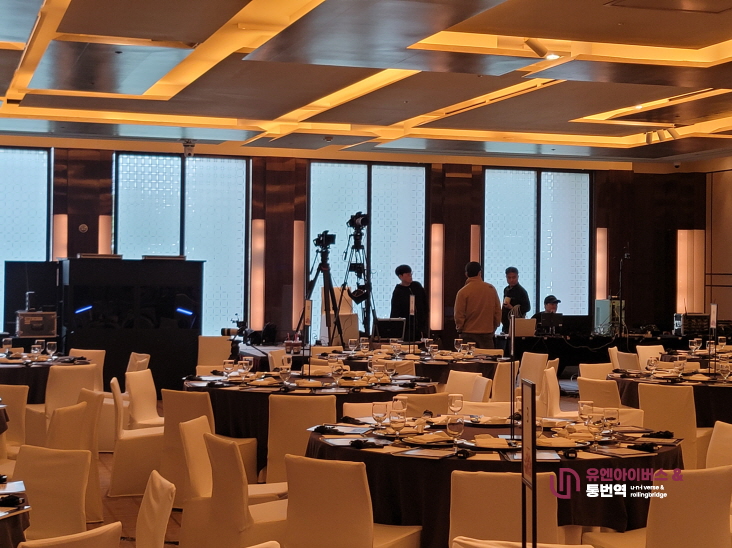
In large-scale international seminars, stable multilingual communication is achieved when interpretation systems, technical equipment, and interpreter operations are designed as an integrated architecture.
10. Conclusion
North Korea Policy Seminar interpretation is not merely language delivery.
It is structured diplomatic and security communication management requiring:
Political neutrality
Sanctions literacy
Regulatory accuracy
Diplomatic tone calibration
Real-time precision
UNIVERSE RB designs geopolitical communication systems under the QMS 9-Step framework to ensure zero distortion in high-sensitivity policy discussions.
This case represents one of the sessions conducted as part of international policy cooperation and global governance discussions.
Policy environments and international cooperation frameworks continue to evolve in response to economic, environmental, and development policy changes.
→ Explore International Policy Forum Cases
https://universerb.com/en/11_en/61?page=39
The case archive on this website is based on interpretation and global communication experiences conducted in international seminars, policy forums, corporate presentations, and industry conferences.
To comply with client confidentiality and the Code of Professional Conduct, some event details are described in a generalized manner.