
Quotation


Performance
CharIN Seminar Simultaneous Interpretation · Professional Translation | EV Charging · eMobility · Charging Standards – UNIVERSE RB
- 2026.02.23
Public Policy & Global Governance
Category
Description
This category covers interpretation cases related to international policy
forums, public cooperation initiatives, ODA programs, and global governance
topics including environmental and climate policy.
UNIVERSE RB provides integrated services including:
Simultaneous interpretation Consecutive interpretation International conference interpretation Policy document translation QMS-based quality management operations
We support international policy forums, government cooperation meetings, and global governance conferences with stable interpretation environments.
Why Is Interpretation at a CharIN Seminar a High-Difficulty Domain?
The CharIN (Charging Interface Initiative e.V.) Seminar represents a highly complex technical and policy communication environment where international EV charging standards (CCS), high-voltage charging systems, charging infrastructure interoperability, smart grid integration, ISO/IEC technical standards, and regulatory policy frameworks converge simultaneously.
In particular, the following elements are discussed concurrently:
-
CCS (Combined Charging System) standard architecture
-
ISO 15118-based Plug & Charge protocol
-
High-voltage DC fast charging architecture
-
V2G (Vehicle-to-Grid) integration models
-
Charging infrastructure interoperability
-
Grid integration strategies
-
Carbon neutrality policies and global regulatory frameworks
In this environment, interpretation extends beyond technical terminology delivery.
It requires integrated understanding of international standard structures, power infrastructure systems, and regulatory policy frameworks — a form of strategic communication design.
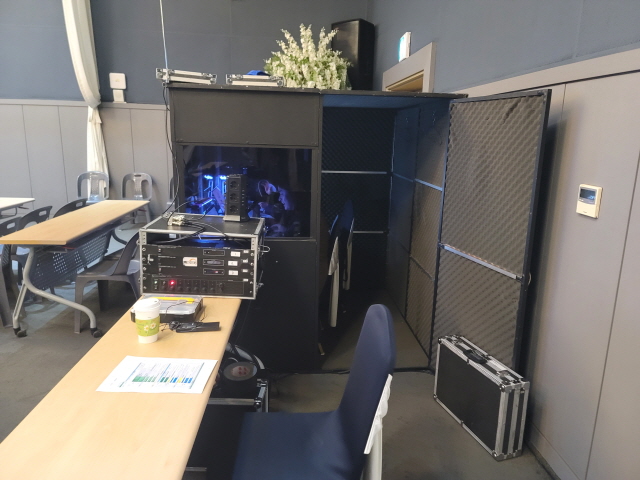
AI simultaneous interpretation was applied to structured technical presentation segments (approximately 56%), while standardization consultations, technical specification coordination, and policy risk discussions (approximately 44%) were conducted entirely by professional interpreters.
UNIVERSE structurally designs AI + Human integrated interpretation systems optimized for international standard forums.
1. Overview
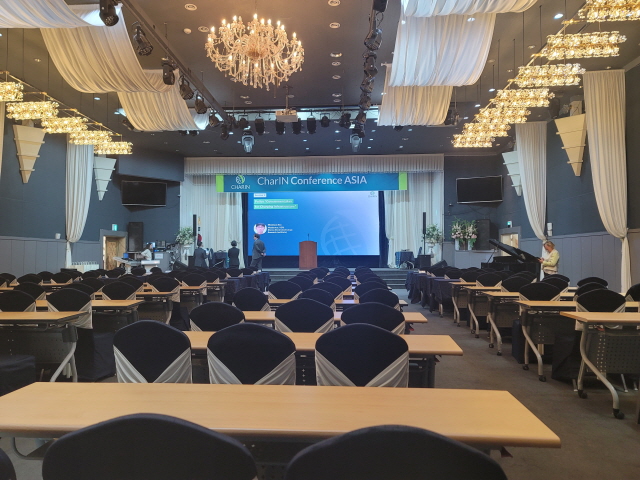
This seminar was convened as an international technology and policy forum focused on the global expansion of EV charging standards and the advancement of international interoperability.
Participants included:
-
Global OEM automotive manufacturers
-
Charging infrastructure manufacturers
-
Power and energy companies
-
Standardization body representatives
-
Government and regulatory officials
-
Smart grid and battery technology enterprises
Discussions centered on CCS standard expansion, Plug & Charge implementation, DC fast charging technologies, V2G integration strategies, and international regulatory compliance frameworks.
Event Operational Metrics
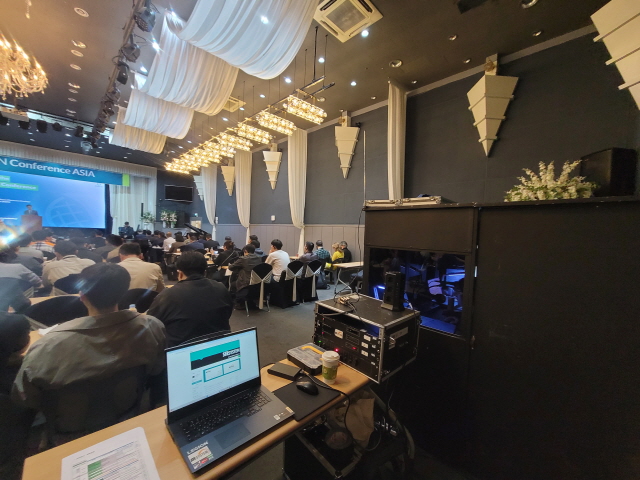
Total attendees: Approximately 180
Participating organizations: 40
Participating countries: 9
Language combination: Korean–English
Simultaneous interpretation setup: Two interpreters (team-based)
Total interpretation duration: 4 hours 20 minutes
Session Breakdown:
International standards briefing: 110 minutes
Charging technology architecture session: 95 minutes
Policy and regulatory consultations: 85 minutes
Live Q&A sessions: 31 exchanges
Pre-analysis materials: 170 pages
EV and charging standards terminology database: 710+ terms
Rehearsals conducted: 2
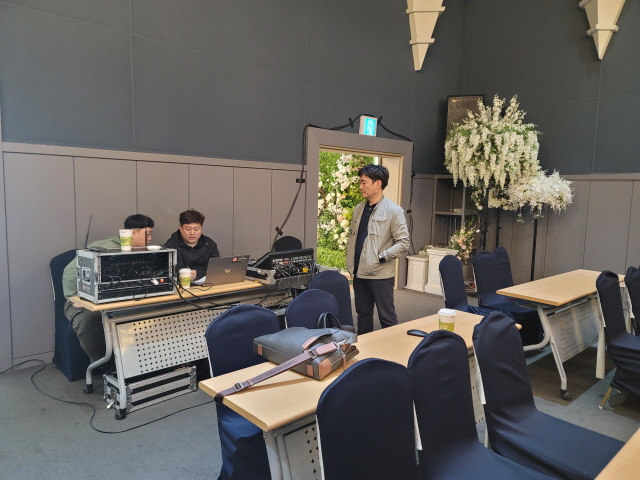
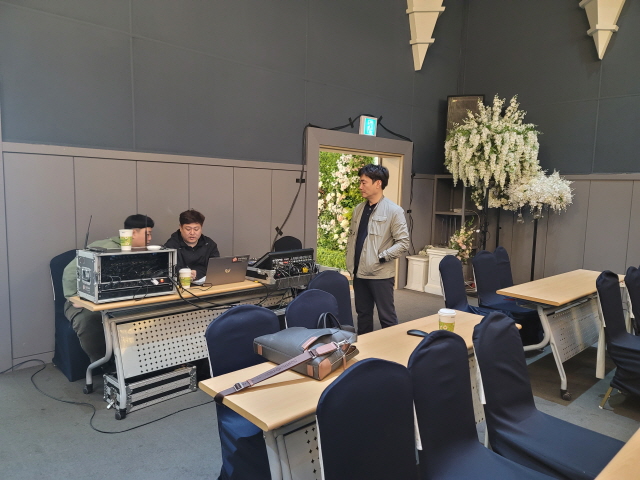
UNIVERSE provided integrated AI interpretation strategy design, simultaneous interpretation services, technical and standards document translation, interpretation system architecture, and QMS-based quality management.
2. Key Discussion Areas
① CCS International Standard Architecture
Differences between CCS Type 1 and Type 2
ISO 15118 protocol framework
Plug & Charge certification structures
Communication interface design
② High-Voltage DC Charging Technology
800V platform compatibility
Power conversion systems
Thermal management architecture
Charging speed optimization strategies
③ V2G and Smart Grid Integration
Bidirectional charging structures
Energy Storage System (ESS) integration
Grid stability management
④ International Regulatory and Policy Frameworks
EU and U.S. charging standard policies
Carbon neutrality strategies
Public infrastructure deployment guidelines
⑤ Interoperability and Certification Systems
Charger–vehicle communication standards
Testing and certification processes
Global mutual recognition frameworks
(Standards · Technology · Policy – Three-Pillar Structure)
3. Interpretation Quality Management Data (Key Indicators)
Pre-event technical and policy material analysis: 19+ hours
Terminology alignment accuracy: 99%+
Average audio latency: 0.7 seconds
Network stability: 99.9%
Technical numerical transmission errors: 0 cases
Standard-related misunderstanding incidents: 0 cases
UNIVERSE interpreters serve not merely as linguistic transmitters, but as EV Infrastructure Communication Architects.
4. Cost Determination Structure (Quantitative Factors Reflected)
EV and charging standards terminology density: 700+ terms
Standardization and policy-focused sessions included
Pre-analysis materials exceeding 170 pages
Live Q&A exceeding 30 exchanges
Two rehearsals conducted
AI subtitle support system applied
Interpretation fees are not determined solely by hourly rates.
They reflect the design of an international standards risk management communication system.
5. AI vs. Human Application Ratio
Segment | AI Utilization | Professional Interpreter Requirement
Structured standards briefings | 56% support | Mandatory supervision
Charging technology presentations | 52% support | Required
Standard specification consultations | Below 25% | 100% essential
Policy and regulatory discussions | Below 15% | 100% essential
AI effectively supports presentation flow,
while standard negotiations and policy risk coordination are handled entirely by professional interpreters.
6. Translation Scope
Total translation volume: Approximately 50,000 words
Technical specification documents: 4
Standards guidelines: 3
Policy briefing materials: 2
Certification process documents: 2
Two-stage cross-review conducted
On-time delivery rate: 100%
Translation is not merely linguistic conversion;
it is a process of ensuring structural integrity within international standards communication.
7.FAQ (CharIN Seminar)
1) Why is interpretation at a CharIN seminar complex?
CharIN seminars involve international EV charging standards, high-voltage charging systems, interoperability frameworks, and regulatory policies.
These elements are discussed together, requiring interpreters to convey both technical specifications and policy-related concepts accurately.
2) What topics are typically covered in a CharIN seminar?
Typical topics include:
-
CCS (Combined Charging System) standards
-
ISO 15118 Plug & Charge protocols
-
High-voltage DC fast charging systems
-
V2G (Vehicle-to-Grid) integration
-
Interoperability frameworks
-
Regulatory and policy developments
3) How is AI used in interpretation during CharIN seminars?
AI is used in structured segments such as technical presentations and standard briefings.
Discussions involving standardization, technical specifications, and policy coordination are handled by professional interpreters.
4) Why are professional interpreters necessary in EV charging standard discussions?
EV charging standards involve detailed technical specifications, communication protocols, and compliance requirements.
Accurate interpretation is necessary to ensure that all participants understand system compatibility and regulatory expectations.
5) What are the main risks in EV infrastructure interpretation?
Key risks include:
-
Misinterpretation of technical standards
-
Inaccurate delivery of interoperability requirements
-
Misunderstanding of grid integration models
-
Errors in regulatory and policy communication
6) How is interpretation accuracy maintained in such technical and policy environments?
Accuracy is maintained through preparation processes such as:
-
Review of technical and policy materials
-
Terminology alignment
-
Coordination among interpreters
-
Real-time monitoring during sessions
7) How is interpretation cost determined for EV and standardization seminars?
Interpretation cost is influenced by:
-
Technical and regulatory complexity
-
Volume of specialized terminology
-
Duration and structure of sessions
-
Number of interpreters required
-
Level of preparation needed
Conclusion
The CharIN Seminar represented a highly complex international standards communication environment involving 180 participants and more than 710 specialized EV and charging standard terms.
AI supported approximately 56% of structured presentation segments,
while standard specification consultations and policy-regulatory coordination were conducted entirely by professional interpreters.
UNIVERSE operates as a data-driven international standards communication infrastructure system,
designing, executing, and verifying interpretation and translation processes with measurable precision.
This
case represents one of the sessions conducted as part of international policy
cooperation and global governance discussions.
Policy environments and international cooperation frameworks continue to evolve
in response to economic, environmental, and development policy changes.
→ View Public Policy & Global Governance Cases
https://universerb.com/en/11_en/91?page=39
https://universerb.com/en/11_en/254?page=39
The
case archive on this website is based on interpretation and global
communication experiences conducted in international seminars, policy forums,
corporate presentations, and industry conferences.
To comply with client confidentiality and the Code of
Professional Conduct, some event details are described in a generalized manner.