
Quotation


Performance
Why UNIVERSE RB Operates a Liaison Office in Ethiopia
- 2026.01.14
Local Operational Control for African Interpretation and Translation Projects
1. Why an Interpretation Company Operates a Local Liaison Office
The purpose of establishing a liaison office overseas is not simply market expansion.
The primary objective is to secure operational control over project execution and quality management.
Through a local liaison office, the following operational capabilities can be ensured:
Direct management of local interpreters and linguistic resources
Consistent application of project-specific quality standards
Immediate response to unexpected operational situations
Prevention of communication gaps during on-site project execution
In summary, the liaison office structure allows interpretation quality and project risks to be managed directly rather than relying solely on remote coordination.
2. African Projects Require Strong Local Response Capacity
Ethiopia is widely recognized as a key diplomatic and international cooperation hub in Africa.
Numerous projects involving international collaboration take place in the country, including:
Government-to-government cooperation programs
International organization initiatives
Official development assistance (ODA) projects
International policy conferences and seminars
These projects often present operational challenges such as:
Frequent schedule changes
Administrative and on-site environmental variables
Cultural differences in communication practices
Operational issues difficult to resolve through remote communication alone
In this context, a liaison office is not merely a language service provider.
It functions as a local operational hub capable of resolving real-time project execution issues on site.
3. Why a “Liaison Office” Structure Matters
In international projects, interpretation and translation quality is determined by more than linguistic ability alone.
Successful project execution requires coordinated management of several factors:
Understanding of local administrative systems
Awareness of regional communication practices and cultural expectations
Time-sensitive operational conditions
Rapid response to unexpected field situations
Without a structure capable of managing these variables locally, project stability may be compromised.
The Ethiopia Liaison Office was established to address these operational realities and serve as a reliable local coordination base for international projects.
4. Representative Project Experience
Korea–Africa Business Summit 2023
UNIVERSE RB supported interpretation and on-site communication coordination for this international cooperation event involving:
government representatives
corporations
international organizations
The project required stable interpretation services and real-time coordination under complex diplomatic and business environments.
5. Service Scope of the Ethiopia Liaison Office
Through the Ethiopia liaison office, UNIVERSE RB provides a range of services including:
On-Site Interpretation Services
International conference interpretation
Government and institutional meeting interpretation
On-site operational interpretation for project teams
Document Translation and Language Review
Policy and administrative document translation
Contract and project documentation translation
Linguistic proofreading and review
Localization Support
Cultural and communication localization for international projects
Local adaptation strategies for program implementation
Communication Coordination
Inter-organizational communication facilitation
Operational coordination for project stakeholders
Support for International Organizations and Public Projects
ODA programs
International cooperation initiatives
Government policy events and public-sector projects
Our goal is not merely to provide language services but to deliver execution-oriented interpretation and translation support adapted to the local operational environment.
6. Supported Languages
Amharic
Official working language of the Ethiopian federal government
Widely used in government, administration, education, and media
Written using the Geʽez script
Predominantly used in Addis Ababa and central regions
Oromo (Afaan Oromo)
The most widely spoken language in Ethiopia
Spoken by approximately 30–40% of the population
Primary language of the Oromo people
Uses a Latin-based writing system
Widely used throughout the Oromia region
About UNIVERSE RB
UNIVERSE
This international ethics and governance conference explores ethical leadership, responsible AI, ESG management, and global governance frameworks for sustainable organizations.
Key interpretation topics include ethical governance and accountability, transparency, trust, compliance, Responsible AI frameworks, algorithmic bias and explainable AI (XAI), ESG strategies, human rights, labor and supply chain ethics, international ethics guidelines, and comparative ethical standards across countries and industries.
Because ethical governance integrates corporate leadership, artificial intelligence, ESG, regulatory compliance, and international standards, professional interpretation is essential to accurately communicate ethical principles, policy frameworks, technological challenges, and global governance practices.
Public Policy & Global Governance
Category Description
This category covers interpretation cases related to international policy forums, public cooperation initiatives, ODA programs, and global governance topics including environmental and climate policy.
UNIVERSE RB provides integrated services including:
- Simultaneous interpretation
- Consecutive interpretation
- International conference interpretation
- Policy document translation
- QMS-based quality management operations
We support international policy forums, government cooperation meetings, and global governance conferences with stable interpretation environments.
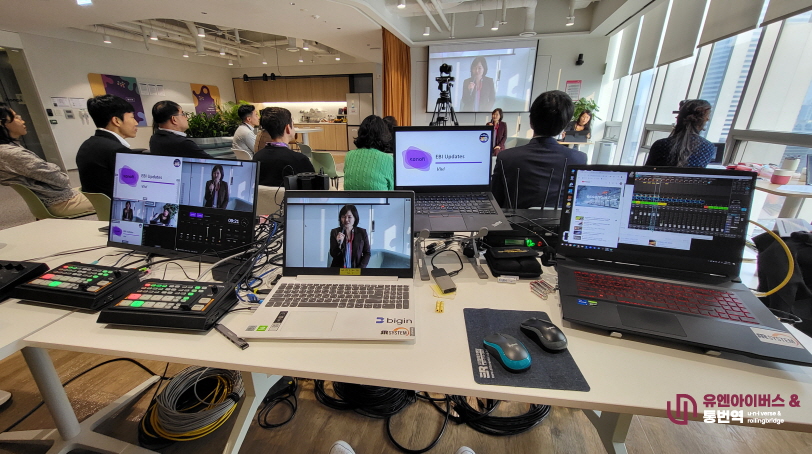
Executive Summary
The Ethical Day Conference is a high-level international forum integrating ethics, ESG, AI governance, data protection, and public policy discourse.
The conference positions ethical decision-making and responsible innovation at the center of technology, corporate governance, and sustainability strategy.
Simultaneous interpretation requires conceptual precision, strict neutrality, and institutional tone management under UNIVERSE RB’s QMS-based ethics communication architecture.
1. Overview
The Ethical Day Conference is an international forum where governments, corporations, academia, and international organizations convene to address key issues including ethics, responsible innovation, ESG, AI ethics, data protection, corporate governance, human rights, and sustainability.
The conference places ethical decision-making and social responsibility at the core of technological advancement, business strategy, and public policy, aiming to share global standards, best practices, and implementation models while exploring future directions.
Simultaneous interpreters are required to deliver highly complex discourse that integrates abstract ethical theory, regulatory policy, technological frameworks, and ESG strategy with accuracy and a neutral, professional, and credible tone.
2. Key Topics
Ethics and Governance
Ethical governance and institutional accountability
Standards for ethical decision-making in public and corporate sectors
Transparency, compliance, and trust-building mechanisms
AI and Technology Ethics
Responsible AI frameworks and AI governance models
Algorithmic bias, fairness, and explainability (XAI)
Data ethics, privacy protection, and digital rights
ESG and Sustainability
ESG integration and ethical management structures
Human rights, labor standards, and supply chain responsibility
Climate ethics and sustainable innovation
Corporate and Organizational Culture
Ethical leadership and tone at the top
Internal ethics systems and compliance training
Risk management and response to ethical violations
International Norms and Global Cooperation
Ethical guidelines of international organizations
Comparative analysis of national and industry standards
Harmonization of global ethical norms and frameworks
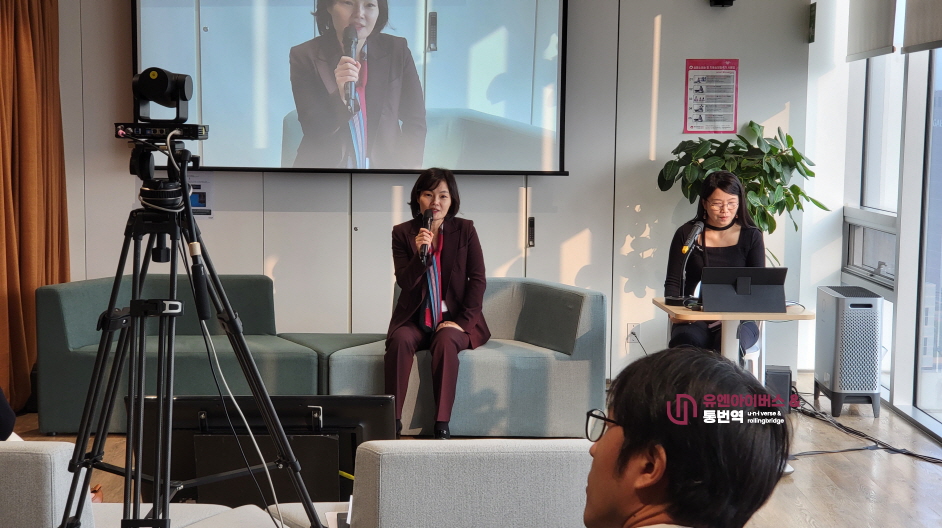
3. Interpretation Format
| Session Type | Content | Interpretation Mode |
|---|---|---|
| Keynote Speeches | Ethical values and global standards | Simultaneous |
| Policy Sessions | Governance, regulation, and compliance | Simultaneous |
| Technical Sessions | AI, data protection, digital ethics | Simultaneous |
| Case Presentations | Corporate and institutional ethics practices | Simultaneous |
| Panel Discussions | Government, corporate, and expert dialogue | Simultaneous |
| Q&A Sessions | Audience interaction | Consecutive / Simultaneous |
4. Required Competencies
Strong conceptual understanding of ethics, ESG, AI governance, and data protection
Ability to distinguish between normative principles and regulatory requirements
Strict neutrality without evaluative commentary or interpretive bias
Formal register suitable for international organizations and policy forums
Capability to structure and clearly convey abstract ethical concepts
Awareness of reputational and policy sensitivity
5. Interpretation Notes
Conceptual Accuracy
Ethical terminology such as accountability, integrity, transparency, fairness, compliance, and human rights must be rendered precisely without reinterpretation.
Distinguishing Normative Force
Clear differentiation between principles, guidelines, recommendations, and legally binding regulations is essential to preserve institutional meaning.
Neutral Tone in AI and ESG Discussions
Avoid emotive or persuasive phrasing. Ethical and sustainability discourse must remain analytical and objective.
Balancing Corporate and Policy Registers
Corporate presentations may use strategic language, while policy sessions emphasize regulatory and governance structures. Tone must reflect this distinction.
6. Practical Case Analysis
Case 1 – Responsible AI Framework Presentation
When discussing fairness, bias mitigation, and explainability, interpreters must differentiate between ethical principles and enforceable compliance standards.
Case 2 – ESG Disclosure Strategy Session
Sessions addressing ESG metrics and sustainability reporting require careful handling of performance indicators and governance terminology.
Case 3 – Human Rights and Supply Chain Ethics Dialogue
Sensitive discussions involving labor standards and compliance risks require strict neutrality and careful lexical choice.
7. Pricing Determination Conditions
Interpretation fees for the Ethical Day Conference are determined by:
Language combination (bilingual or multilingual configuration)
Number of interpreters required (team simultaneous recommended)
Event duration and thematic complexity
Level of conceptual and regulatory density
Availability of preparatory frameworks and policy documentation
Degree of institutional and reputational sensitivity
On-site, hybrid, or live-streamed format
Equipment configuration (booth system, IR/FM receivers, multi-channel interpretation systems)
Ethics and governance forums integrating AI, ESG, and public policy are classified as upper-tier complexity events due to conceptual abstraction and regulatory nuance.
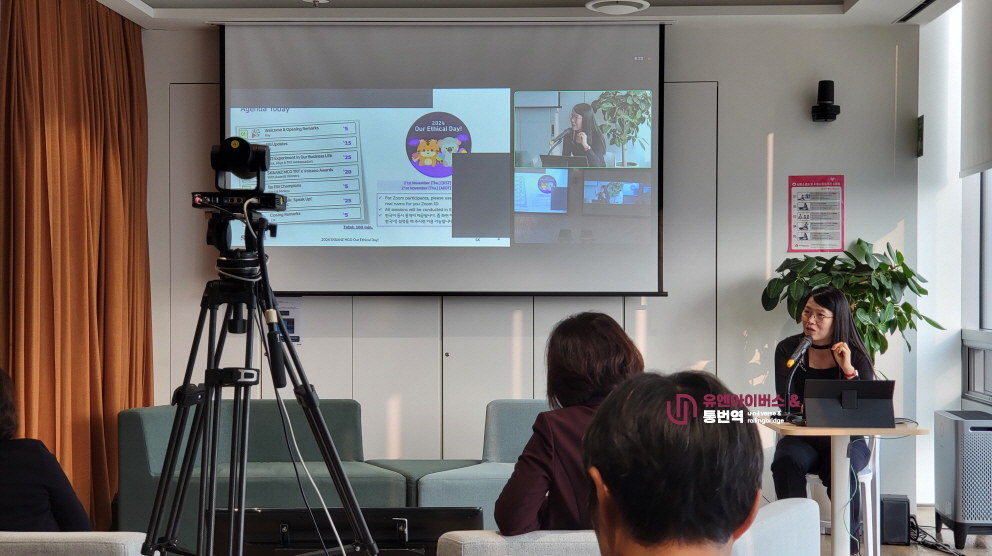
8. FAQ
Q1. Why is ethics-focused interpretation highly specialized?
Because it combines abstract philosophical principles, regulatory policy, technological governance, and ESG frameworks within high-stakes institutional dialogue.
Q2. How is neutrality ensured?
Interpreters render statements exactly as delivered, without emphasis, reinterpretation, or value judgment.
Q3. Is preparation essential?
Yes. Reviewing ethical frameworks, AI governance standards, and ESG guidelines ensures conceptual consistency and terminological accuracy.
Q4. Is simultaneous interpretation recommended?
Yes. High-density policy and conceptual sessions require structured simultaneous interpretation to preserve logical coherence.
Q5. How are abstract ethical concepts managed?
By clearly structuring arguments and maintaining consistent terminology to avoid conceptual distortion.
9. Summary
Simultaneous interpretation for the Ethical Day Conference represents a high-level specialization integrating ethics, technology governance, ESG strategy, and international policy discourse.
It requires:
Precise conceptual and regulatory terminology
Strict neutrality and credibility
Clear structural delivery of abstract ideas
Strong awareness of global ethical standards
Interpreters serve as ethics communication architects, ensuring that discussions on responsibility, sustainability, and governance are conveyed professionally, accurately, and with institutional dignity under the UNIVERSE RB QMS framework.
This case represents one of the sessions conducted as part of international policy cooperation and global governance discussions.
Policy environments and international cooperation frameworks continue to evolve in response to economic, environmental, and development policy changes.
→ View Public Policy & Global Governance Cases
https://universerb.com/en/11_en/366?page=39

About Our Case Archive
The case studies and project insights presented on this website are based on experience supporting international conferences, investor presentations, government forums, executive meetings, technical seminars, and multilingual corporate events.
To protect client confidentiality and comply with the Code of Professional Conduct followed by professional interpreters worldwide, certain project details have been generalized, anonymized, or adapted for educational purposes.
The purpose of these materials is to share practical insights into multilingual communication planning while respecting the confidentiality of every client and every project.
UNIVERSE RB
Designing Communication. Managing Risk. Delivering Understanding.