
Quotation


Performance
Cancer Treatment Academic Seminar Simultaneous Interpretation | Oncology · Clinical Research · Medical Innovation Conference – UNIVERSE RB
- 2025.12.18
This international oncology conference explores precision medicine, immuno-oncology, advanced cancer therapies, drug development, and AI-driven innovations in cancer care.
Key interpretation topics include cancer biology, biomarkers and companion diagnostics, genomics-based precision oncology, chemotherapy, targeted therapies (TKIs and monoclonal antibodies), immune checkpoint inhibitors, CAR-T cell therapy, the tumor microenvironment (TME), PD-1/PD-L1 and CTLA-4 pathways, Phase I–III clinical trials, overall survival (OS), progression-free survival (PFS), objective response rate (ORR), real-world evidence (RWE), AI-assisted cancer diagnostics, personalized cancer vaccines, and combination therapies.
Because oncology integrates molecular biology, immunology, clinical research, biopharmaceutical innovation, and artificial intelligence, professional interpretation is essential to accurately communicate medical terminology, clinical evidence, therapeutic strategies, and emerging advances in cancer treatment.
Healthcare & Medical Innovation
Category Description
This category covers interpretation cases related to clinical trials, medical
devices, digital health technologies, and global healthcare cooperation.
UNIVERSE RB provides integrated services including:
Simultaneous interpretation Consecutive interpretation Medical seminar interpretation Medical document translation QMS-based quality management operations
We support medical seminars, clinical research forums, and global healthcare cooperation conferences with professional interpretation services.
Executive Summary
The Cancer Treatment Academic Seminar is a high-level scientific forum addressing advances in oncology, precision medicine, immunotherapy, and multidisciplinary cancer treatment.
The seminar integrates molecular biology, clinical trial evidence, pharmaceutical development, and regulatory science within a rigorous academic framework.
Simultaneous interpretation requires absolute precision in oncological terminology, accurate handling of survival data and statistical indicators, and strict scientific neutrality under UNIVERSE RB’s QMS-based oncology communication architecture.
1. Overview
The Cancer Treatment Academic Seminar is a specialized scientific and clinical forum focused on cutting-edge developments in oncology, including cancer biology, precision medicine, immuno-oncology, targeted therapies, radiotherapy, and multidisciplinary treatment strategies.
Participants include medical oncologists, surgical oncologists, radiation oncologists, pathologists, molecular biologists, clinical investigators, pharmaceutical and biotech representatives, regulatory authorities, academic societies, and international health organizations.
Simultaneous interpreters are required to deliver highly specialized oncology terminology, clinical trial data, and evidence-based medical discourse with complete accuracy, maintaining a neutral, scientific, and professional tone suitable for academic exchange.
2. Key Topics
Cancer Biology & Precision Medicine
-
Molecular mechanisms of tumorigenesis
-
Biomarkers and companion diagnostics
-
Genomic profiling and precision oncology
Cancer Treatment Modalities
-
Chemotherapy and combination regimens
-
Targeted therapies (TKIs, monoclonal antibodies)
-
Immunotherapy (immune checkpoint inhibitors, CAR-T cell therapy)
-
Advanced radiation therapy techniques
-
Surgical oncology and multidisciplinary care models
Immuno-Oncology
-
Tumor microenvironment (TME)
-
Immune checkpoint pathways (PD-1/PD-L1, CTLA-4)
-
Resistance mechanisms and therapeutic optimization
Clinical Trials & Drug Development
-
Phase I–III trial design
-
Primary and secondary endpoints
-
Real-world evidence (RWE) and post-marketing surveillance
Cancer Types & Specialized Sessions
-
Solid tumors (lung, breast, colorectal, gastric, etc.)
-
Hematologic malignancies (leukemia, lymphoma, multiple myeloma)
-
Rare cancers and unmet medical needs
Future Directions in Oncology
-
AI-assisted diagnostics and treatment planning
-
Personalized cancer vaccines
-
Next-generation combination therapies

3. Interpretation Format
| Session Type | Content | Interpretation Mode |
|---|---|---|
| Keynote Lectures | Advances in oncology research | Simultaneous |
| Scientific Sessions | Basic and translational research | Simultaneous |
| Clinical Sessions | Treatment outcomes and guidelines | Simultaneous |
| Industry Sessions | Drug pipelines and development | Simultaneous |
| Panel Discussions | Multidisciplinary expert exchange | Simultaneous |
| Q&A Sessions | Academic and clinical interaction | Simultaneous / Consecutive |
4. Required Competencies
-
In-depth knowledge of oncology, cancer biology, and clinical medicine
-
Proficiency in medical and pharmaceutical terminology
-
Ability to interpret statistical outcomes, survival curves, and endpoint data
-
Familiarity with expressions of scientific uncertainty and evidence hierarchy
-
Clear distinction between research findings, clinical practice guidelines, and regulatory statements
-
Strict neutrality and evidence-based tone discipline
5. Sample Interpretation Contexts
-
International oncology congresses
-
Translational cancer research symposiums
-
Pharmaceutical oncology advisory boards
-
Investigator meetings for clinical trials
-
Immuno-oncology and precision medicine conferences

6. Interpretation Notes
Accuracy in Oncology Terminology
Key terms must be delivered precisely and consistently:
-
Overall Survival (OS)
-
Progression-Free Survival (PFS)
-
Objective Response Rate (ORR)
-
Adverse Events (AEs)
-
Hazard Ratio (HR)
-
Confidence Interval (CI)
Scientific and Clinical Precision
Modal qualifiers such as “may improve,” “suggests,” “was associated with,” and “demonstrated a trend toward” must be interpreted exactly to preserve evidentiary weight.
Data-Driven Presentation Handling
Kaplan–Meier curves, subgroup analyses, statistical significance (p-values), and endpoint definitions must be conveyed without distortion. Misinterpretation can affect clinical decision-making.
Ethical and Clinical Sensitivity
Patient data, adverse event reporting, and survival outcomes must be delivered objectively, without emotive emphasis.
7. Practical Case Analysis
Case 1 – Immunotherapy Clinical Trial Session
Interpretation required accurate differentiation between OS and PFS improvements, including hazard ratio explanation and subgroup outcomes.
Case 2 – Precision Oncology Biomarker Study
Genomic mutation pathways and companion diagnostic criteria required precise molecular terminology alignment.
Case 3 – Regulatory and Post-Marketing Safety Discussion
Distinction between observed adverse events and causally established treatment-related events required careful clinical phrasing.

8. Pricing Determination Conditions
Interpretation fees for a Cancer Treatment Academic Seminar are determined by:
-
Language combination (bilingual or multilingual configuration)
-
Number of interpreters required (team simultaneous strongly recommended)
-
Duration and scientific density
-
Level of clinical trial and statistical complexity
-
Availability of abstracts, slide decks, and clinical data in advance
-
Participation of pharmaceutical and regulatory stakeholders
-
On-site, hybrid, or live-streamed format
-
Equipment configuration (booth, IR receivers, multi-channel medical conference setup)
Oncology academic seminars are categorized as top-tier complexity events due to scientific precision requirements and clinical impact.
9. FAQ
Q1. Why is oncology interpretation one of the most demanding fields?
Because it integrates molecular biology, clinical evidence, statistical analysis, and pharmaceutical development within high-stakes medical contexts.
Q2. How is neutrality maintained?
By rendering research findings and clinical outcomes exactly as presented without amplification or evaluative commentary.
Q3. Is preparation essential?
Yes. Reviewing abstracts, trial designs, biomarker data, and endpoint definitions ensures consistency and scientific accuracy.
Q4. Is simultaneous interpretation recommended?
Yes. High-density scientific sessions require structured, continuous real-time interpretation.
Q5. How are survival and statistical indicators handled?
Through precise differentiation of OS, PFS, HR, CI, and statistical significance to avoid clinical misinterpretation.

10. Summary
Simultaneous interpretation for a Cancer Treatment Academic Seminar represents one of the most advanced domains of medical interpretation, integrating oncology research, clinical practice, pharmaceutical development, and regulatory science.
It requires:
-
Precise oncological terminology
-
Rigorous scientific accuracy
-
Accurate statistical interpretation
-
Neutral, evidence-based academic tone
Interpreters function as oncology communication architects, ensuring that cutting-edge cancer research and therapeutic strategies are conveyed clearly, accurately, and professionally across languages, supporting global collaboration in cancer care under the UNIVERSE RB QMS framework.
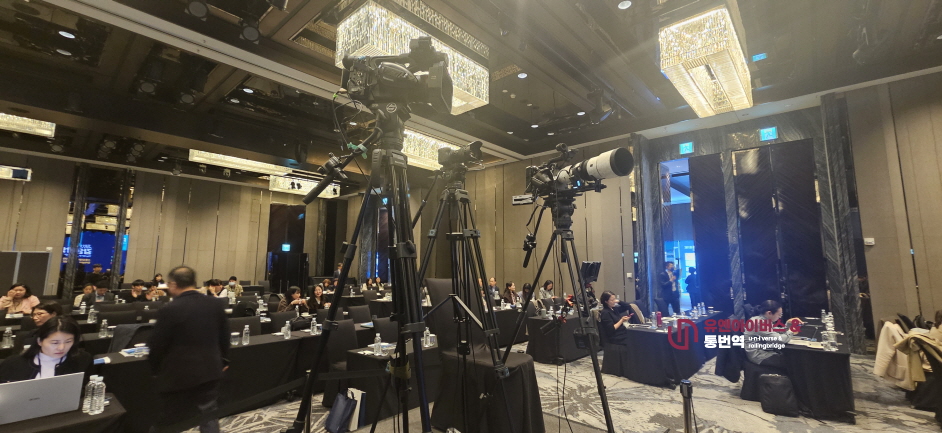
This
seminar represents a professional session discussing medical innovation and
global healthcare collaboration.
Healthcare technologies and regulatory environments continue to evolve through
clinical research, medical device innovation, and digital health development.
→ View Healthcare & Medical Innovation Cases
https://universerb.com/en/11_en/231?page=39

About Our Case Archive
The case studies and project insights presented on this website are based on experience supporting international conferences, investor presentations, government forums, executive meetings, technical seminars, and multilingual corporate events.
To protect client confidentiality and comply with the Code of Professional Conduct followed by professional interpreters worldwide, certain project details have been generalized, anonymized, or adapted for educational purposes.
The purpose of these materials is to share practical insights into multilingual communication planning while respecting the confidentiality of every client and every project.
UNIVERSE RB
Designing Communication. Managing Risk. Delivering Understanding.