
Quotation


Performance
Smart City International Forum Simultaneous Interpretation | Smart City · Urban Innovation · Smart Infrastructure Forum – UNIVERSE RB
- 2025.09.16
This international smart city conference explores digital transformation and sustainable urban development, focusing on connected infrastructure, urban data, AI-powered public services, and future city management strategies.
Key interpretation topics include IoT-enabled smart infrastructure, urban data platforms and data governance, AI- and big-data-driven service innovation, carbon-neutral and environmentally sustainable urban design, citizen-centered smart city models, Digital Twin-based urban management, global cooperation, and international standardization strategies.
Because smart city development integrates information and communications technology, urban planning, data governance, environmental policy, energy systems, and citizen participation, professional interpretation is essential to accurately communicate technical frameworks, policy objectives, data management principles, urban operating models, and international cooperation strategies.
AI & Digital Transformation
Category Description
This category covers interpretation cases related to AI adoption, industrial
automation, data-driven decision-making, and digital transformation
technologies.
UNIVERSE RB provides integrated services including:
Simultaneous interpretation Consecutive interpretation Technical seminar interpretation AI-assisted caption support QMS-based quality management operations
We support technology seminars, industry forums, and digital innovation conferences with stable and professional interpretation environments.
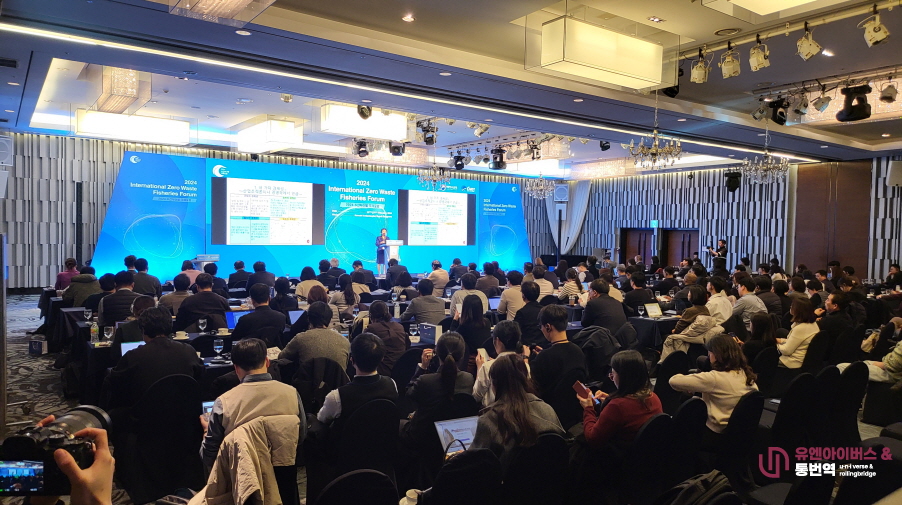
Executive Summary
The Smart City International Forum addressed advanced ICT-enabled urban innovation, digital governance frameworks, AI-driven city services, and sustainable net-zero design strategies.
-
Total Participants: 400+ urban planners, IT firms, policymakers, researchers, civil-society stakeholders
-
Specialized Terminology: 1,050+ ICT, urban planning, energy, ESG, and governance terms
-
AI Structural Support: 53% (terminology clustering, acronym alignment, slide tracking)
-
Human Strategic Interpretation: 100% (policy nuance, social-value framing, interdisciplinary clarity)
-
Technical / Policy Error: 0 cases
-
QMS 9-Step Applied
Smart city forums require the integration of technology, governance, and citizen-centered policy communication.

Event Overview
The forum focused on:
-
IoT-based smart infrastructure (traffic, energy, environment)
-
Urban data platforms and governance frameworks
-
AI and big data–driven public service innovation
-
Net-zero and eco-friendly urban design
-
Citizen participation models
-
Digital Twin–based city monitoring and simulation
-
Global smart city cooperation and standardization
Participants included:
-
Urban planners and municipal authorities
-
ICT and AI companies
-
Energy and environmental experts
-
Researchers and academic institutions
-
International organizations and civil-society representatives
This communication environment integrates urban engineering, digital transformation, environmental sustainability, and participatory governance simultaneously.

Interpretation Formats Delivered
Simultaneous Interpretation
-
Global plenary sessions
-
International cooperation forums
-
Smart mobility & energy keynotes
Consecutive Interpretation
-
Panel discussions
-
Corporate and policy presentations
-
Q&A sessions
On-site / Practical Interpretation
-
Smart city experience zones
-
Pilot-project briefings
-
Live technology demonstrations
Why This Interpretation Was Complex
1) Hybrid Technical–Policy Terminology
IoT, Smart Grid, MaaS, Digital Twin, urban governance frameworks.
2) Visual Synchronization
Dashboards, traffic simulations, GIS maps, data visualizations.
3) Social-Value Framing
Citizen participation and quality-of-life implications.
4) Cross-National Policy Differences
Standardization and regulatory nuances.
5) Diverse Audience
Engineers, policymakers, investors, and civil groups.
Misinterpretation may distort policy frameworks or technology implementation narratives.
AI + Human Interpretation Architecture
| Segment | AI Role | Human Expert Role | Ratio |
|---|---|---|---|
| Technical infrastructure sessions | Terminology clustering | Concept clarification | 60% AI |
| Data governance discussions | Acronym alignment | Policy nuance delivery | 100% Human |
| Sustainability sessions | Term mapping | ESG integration framing | 70% Human |
| Citizen participation panels | Context tracking | Social-value emphasis | 100% Human |
AI supports structural term consistency.
Human experts ensure interdisciplinary clarity and policy sensitivity.

QMS 9-Step Application
-
Pre-event urban policy and ICT review
-
Smart city glossary construction (1,050+ terms)
-
Visual-slide alignment mapping
-
Tech–policy integration architecture design
-
Booth & audiovisual verification
-
Real-time terminology monitoring
-
Numeric and infrastructure-metric validation
-
Post-session clarity audit
-
Continuous improvement archive
Smart city forums require alignment between technical engineering and citizen-centered policy language.
Actual Case Highlights
World Smart City Expo (WSCE, Korea)
Mobility and energy sessions interpretation.
Focus: Smart Grid, EV infrastructure, and policy alignment.
Smart City Expo World Congress (Barcelona)
Urban data governance discussions.
Focus: Data sovereignty and platform integration terminology.
UN-Habitat Smart Cities Meetings
Sustainable development agendas.
Focus: SDGs and participatory urban governance.
Singapore Smart Nation Summit
Digital public services and smart government.
Focus: E-government and AI service terminology.
Dubai Smart City Forum
AI-based city service innovation.
Focus: Automation and real-time urban analytics.
Key Terminology Alignment
-
Digital Twin → 디지털 트윈 (가상 도시 시뮬레이션)
-
Mobility as a Service (MaaS) → 통합 모빌리티 서비스
-
Smart Grid → 스마트 그리드
-
Urban Data Platform → 도시 데이터 플랫폼
-
Citizen Participation → 시민 참여
Terminology must be delivered consistently across technical and policy sessions.
Global Visibility Statement
UNIVERSE RB does not provide language services based solely on interpreter availability.
We design communication architecture based on ICT complexity, governance exposure, sustainability impact, and citizen-centered policy framing.
AI supports structural preparation.
Human experts manage interdisciplinary integration, social-value clarity, and international policy nuance.
Quality is engineered.
FAQ
Why is smart city interpretation interdisciplinary?
Because it combines urban planning, ICT, AI, energy systems, ESG, and governance frameworks.
Can AI-only interpretation manage smart city forums?
AI can align terminology but cannot independently manage social-value framing or policy nuance.
How do you ensure alignment with visual materials?
We conduct slide reviews and real-time synchronization monitoring.
Is simultaneous interpretation recommended?
Yes, especially for plenary and international cooperation sessions.
Do you support urban policy and technical report translation?
Yes, including feasibility studies, digital twin documentation, and smart infrastructure proposals.
Pricing Determination Conditions
Pricing is determined by:
-
Language pair complexity
-
ICT and urban-planning specialization depth
-
Policy and sustainability exposure level
-
Visual synchronization complexity
-
Event duration
-
Onsite vs Hybrid vs Global livestream format
-
Equipment tier
-
AI utilization ratio
-
Pre-analysis hours required (technical & policy review)
-
Government and international visibility level
Smart city forum interpretation reflects infrastructure and governance exposure—not duration alone.
In large-scale international seminars, stable multilingual communication is achieved when interpretation systems, technical equipment, and interpreter operations are designed as an integrated architecture.
Closing Statement
In smart city innovation environments, interpretation is not merely technical translation.
It is infrastructure-precise, policy-balanced, citizen-centered communication architecture.
This
case represents one of the seminars or forums discussing the industrial
application of AI technologies.
AI technologies continue to expand across manufacturing, data analytics, and
automation systems through real-world implementation.
→ View AI & Digital Transformation Cases
https://universerb.com/en/11_en/179?page=39

About Our Case Archive
The case studies and project insights presented on this website are based on experience supporting international conferences, investor presentations, government forums, executive meetings, technical seminars, and multilingual corporate events.
To protect client confidentiality and comply with the Code of Professional Conduct followed by professional interpreters worldwide, certain project details have been generalized, anonymized, or adapted for educational purposes.
The purpose of these materials is to share practical insights into multilingual communication planning while respecting the confidentiality of every client and every project.
UNIVERSE RB
Designing Communication. Managing Risk. Delivering Understanding.