
Quotation


Performance
Export Consultation Meetings Consecutive Interpretation | Business Negotiation Communication Forum – UNIVERSE RB
- 2025.07.31
Investment, IR & Global Business
Category Description
This category covers interpretation cases related to investment communication, including investor relations presentations, investment briefings, and global market expansion strategies.
UNIVERSE RB provides integrated services including:
Simultaneous interpretationConsecutive interpretationIR document translationInvestment presentation interpretationQMS-based quality management operationsWe support investment briefings, IR presentations, and global business collaboration sessions with professional interpretation services.
1. Event Overview
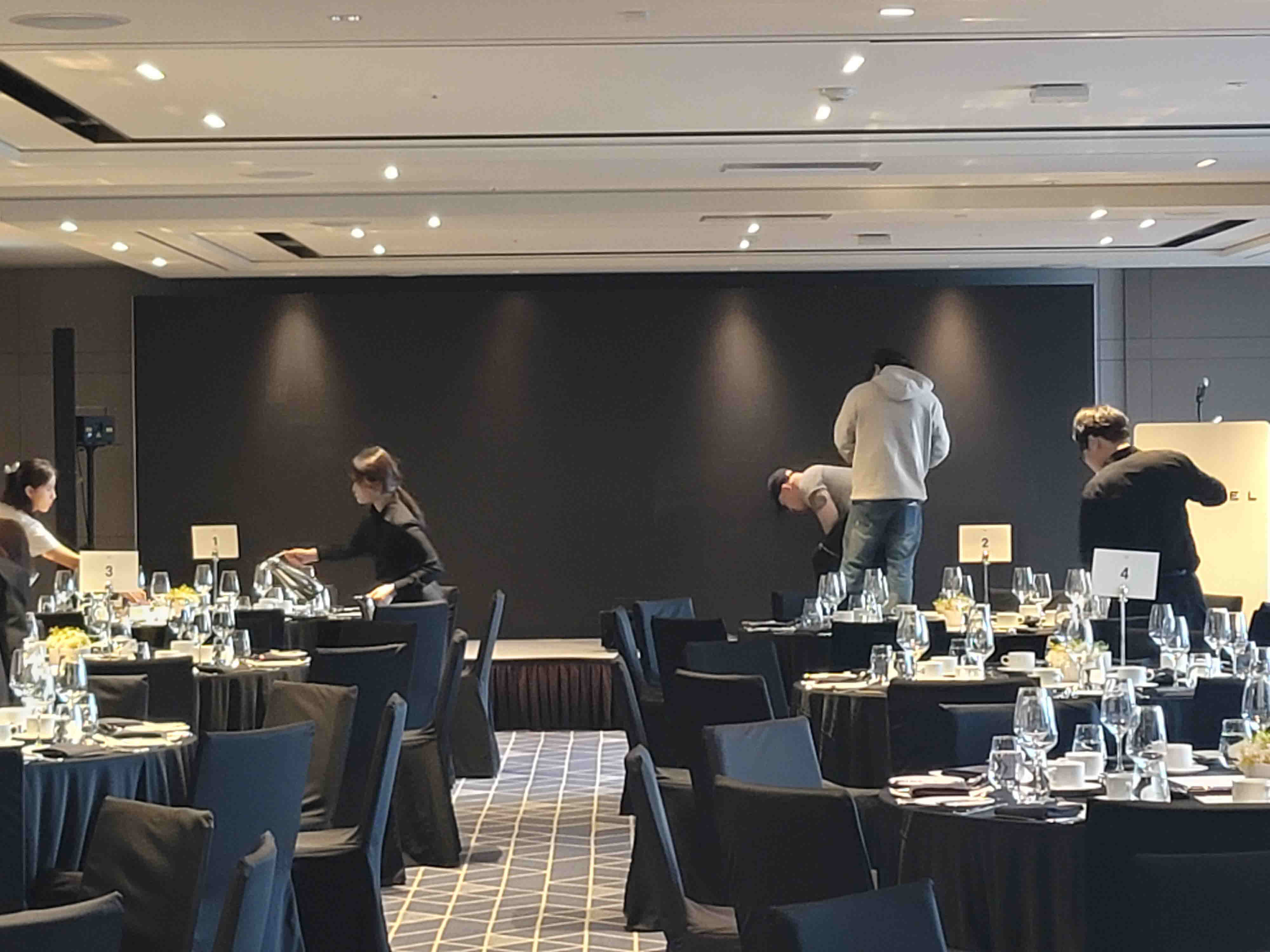
Export consultation meetings are business matchmaking events where domestic companies meet overseas buyers to introduce products or services and discuss potential contracts and partnerships.
Interpretation in this setting is not simple dialogue transfer.
It directly influences:
Pricing
Delivery timelines
Commercial terms
Contract feasibility
In 1:1 meeting structures, the interpreter’s phrasing can immediately affect negotiation atmosphere and trust formation.
2. Why Does Consecutive Interpretation in Consultation Meetings Require Strategic Design?
“How is this different from general event interpretation?”
Export consultation meetings have distinct characteristics:
One-on-one or small-scale negotiation format
High volume of numerical information (price, quantity, lead time)
Appearance of contractual and legal terminology
Cultural differences in negotiation style
More than 40% of consultation sessions typically focus on price, quantity, and condition discussions. Errors in numerical delivery or condition interpretation can result in direct transactional risk.
3. Core Responsibilities
Consecutive interpretation in export consultations includes:
Presenting company profiles and product specifications
Conveying pricing structures, MOQ, and delivery terms
Explaining export procedures and payment conditions
Delivering contractual clauses, IP issues, and exclusivity discussions
Adjusting tone to reflect cultural negotiation nuance
In negotiation settings, intent-based delivery is often more critical than literal translation.
4. Interpretation Formats
▸ One-on-One Business Meeting Interpretation
Most common structure
Focused negotiation between buyer and supplier
▸ Consecutive Interpretation
Suitable for presentations and product demonstrations
Ensures controlled delivery of key messages
▸ Simultaneous Interpretation
Used in large-scale briefing or workshop sessions
Consultation events typically consist of repeated 1:1 sessions throughout the day.
5. Required Competencies
Export consultation interpreters must possess:
Understanding of trade terms (Incoterms such as FOB, CIF, etc.)
Industry-specific terminology knowledge
High numerical precision (price, quantity, delivery schedule)
Accurate unit conversion (kg ↔ lb, cm ↔ inch, etc.)
Cultural awareness of buyer negotiation styles
Numerical errors can directly undermine credibility.
6. Cost Structure Determinants
Costs are influenced by:
Total event duration
Number of meetings per day
Industry complexity
Language combination
Availability of advance materials
Interpreter specialization level
In consultation events, pricing is affected not only by hourly rate but also by consecutive session continuity and intensity.
7. Key Risks
Numerical misinterpretation (price or quantity errors)
Misunderstanding of contractual conditions
Distortion of exclusivity or IP terms
Literal translation causing negotiation tension
Miscommunication of payment conditions
Consultation interpretation is directly tied to transaction risk management.

8. Application of a 9-Step QMS
Consecutive interpretation for export consultations is managed through:
Analysis of event objectives and industry sector
Pre-review of product catalogs and price lists
Consolidation of trade and contract terminology
Matching interpreter specialization
Review of meeting structure and timetable
Preparation of numerical and unit conversion checklists
Session-by-session quality monitoring
Support for unexpected negotiation developments
Post-event feedback and improvement integration
This structured approach minimizes transaction-related risk.
9. Practical Applications
KOTRA-hosted overseas buyer invitation export consultations
Food, cosmetics, machinery, and IT product export promotion meetings
Trade fair side-event consultation interpretation
FTA utilization and tariff reduction advisory sessions

Operational Tips
Secure advance materials (catalogs, pricing sheets, samples)
Prepare contract, tax, and logistics information beforehand
Double-check numerical and unit conversions
Adjust emphasis or mitigation strategically to maintain negotiation tone
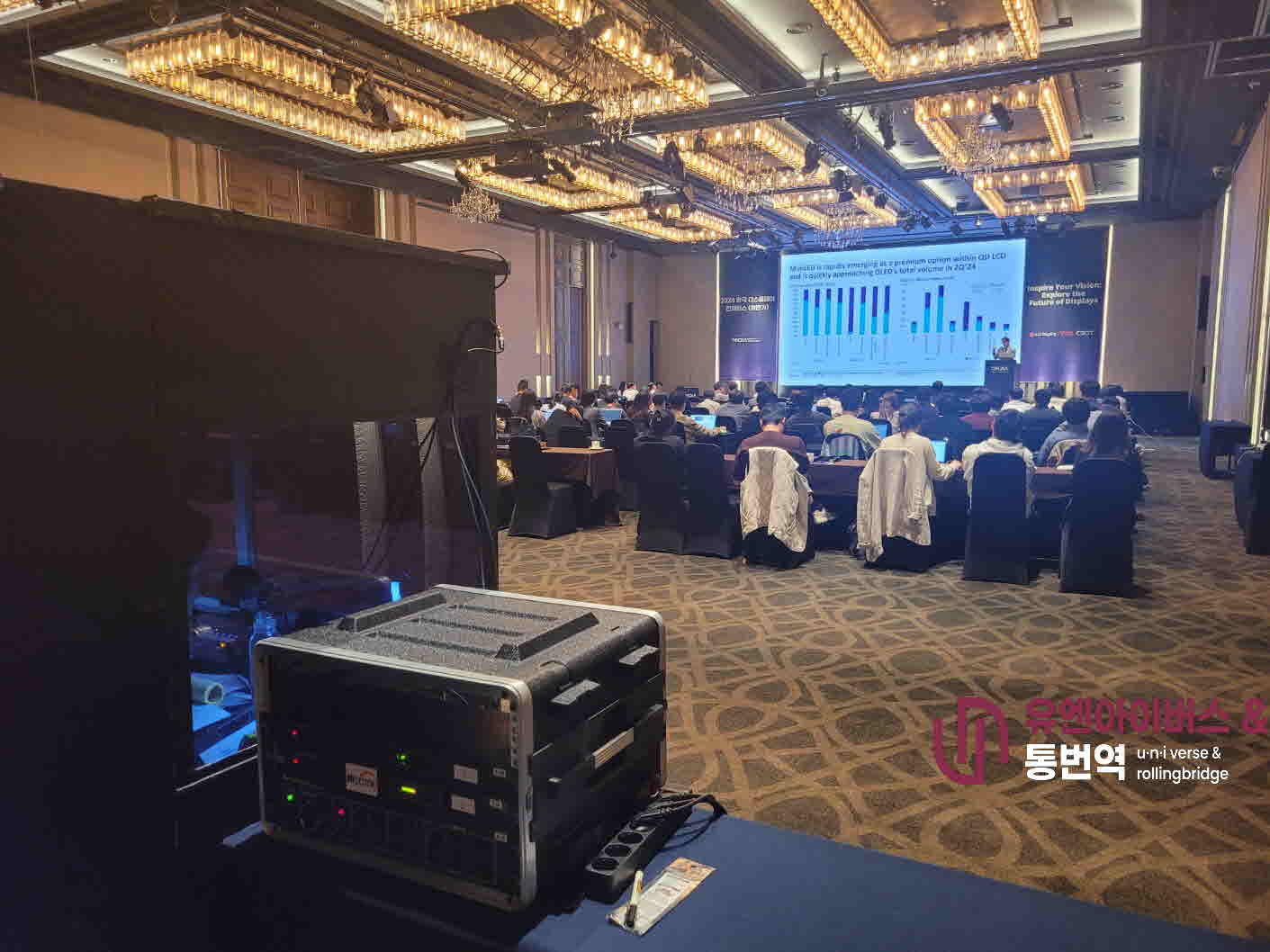
In large-scale international seminars, stable multilingual communication is achieved when interpretation systems, technical equipment, and interpreter operations are designed as an integrated architecture.
Conclusion
Consecutive interpretation for export consultation meetings is not mere conversation transfer.
It is negotiation-support interpretation that directly influences export contract feasibility.
When trade terms, pricing structures, and cultural negotiation contexts are accurately understood and conveyed, both efficiency and trust in negotiations can be secured.
Through a QMS-based quality management framework, numerical, contractual, and transactional risks are structurally managed and minimized.
This session represents one of the cases conducted as part of corporate investment communication and global market strategy discussions.
Investment strategies and market approaches continue to evolve according to global economic conditions and industry developments.
→ Explore Investor Relations & Pitching Cases
https://universerb.com/en/11_en/340?page=39
The case archive on this website is based on interpretation and global communication experiences conducted in international seminars, policy forums, corporate presentations, and industry conferences.
To comply with client confidentiality and the Code of Professional Conduct, some event details are described in a generalized manner.