
Quotation


Performance
Smart Grid and Energy Management International Seminar Simultaneous Interpretation | Power IT · Renewable Energy · Energy Transition Forum – UNIVERSE RB
- 2025.07.31
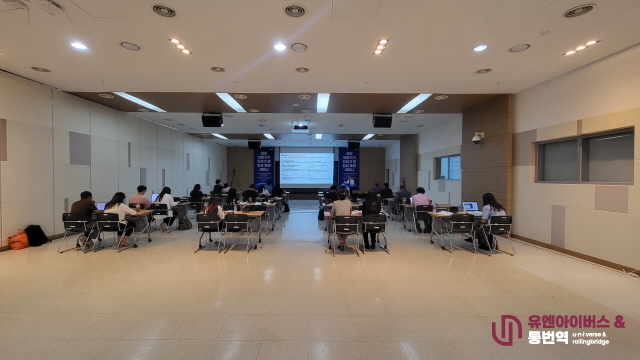
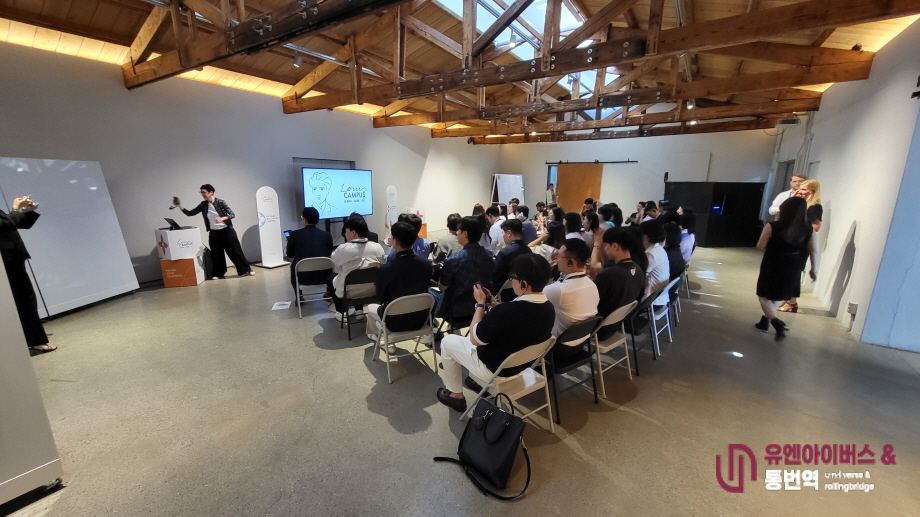
This seminar provided integrated interpretation support to ensure that complex discussions on power, energy, technology, and policy were communicated clearly throughout presentations, panel discussions, and Q&A sessions.
Support included advance analysis of presentation materials and technical documents, standardized terminology for the power and energy sector, prior review of policy and regulatory language, structured explanation of system architecture, and real-time Q&A assistance.
In highly technical seminars, effective interpretation goes beyond literal translation by connecting technical concepts with policy context to ensure accurate and well-structured communication.
AI & Digital Transformation
Category Description
This category covers interpretation cases related to AI adoption, industrial automation, data-driven decision-making, and digital transformation technologies.
UNIVERSE RB provides integrated services including:
Simultaneous interpretationConsecutive interpretationTechnical seminar interpretationAI-assisted caption supportQMS-based quality management operationsWe support technology seminars, industry forums, and digital innovation conferences with stable and professional interpretation environments.

1. Event Overview
This international seminar focused on smart grid technologies and energy management innovation, covering next-generation energy infrastructure including:
Power IT systems
Renewable energy integration
Energy Storage Systems (ESS)
Smart metering
Grid optimization
Participants included government agencies, energy companies, and research institutions. Discussions centered on technological trends, policy directions, and industrial implementation cases.
Because both technical concepts and policy issues were addressed simultaneously, accurate terminology comprehension and structured system-level interpretation were essential.
2. Why Was a Structural Approach Necessary?
“How was this different from ordinary technical interpretation?”
The smart grid and energy sector has distinctive characteristics:
Requires understanding of power system architecture
Integrates IT, data, and AI terminology
Combines policy and regulatory language
Engages industry, public institutions, and research stakeholders simultaneously
In international energy seminars, Q&A sessions account for approximately 20–30% of total time, and interpretation accuracy becomes most critical when technical explanations intersect with policy interpretation.
Terms such as:
“Grid stability”
“Output variability”
“Carbon neutrality targets”
must be delivered with clear distinction between technical meaning and policy context.
3. Scope of Service & Methodology
To ensure coherent technical discussions throughout presentations, panels, and Q&A sessions, the following approach was applied:
Pre-analysis of presentation materials and technical documentation
Consolidation of core power and energy terminology
Pre-review of policy and regulatory expressions
Structured mapping of system architecture
Real-time organization of Q&A flow
This enabled systematic communication of complex technical-policy discussions.
4. Key Discussion Topics
4-1. Smart Grid Architecture & Operational Principles
Digitalization across generation, transmission, distribution, and consumption
Real-time data-driven power management
Comparison between legacy grids and next-generation systems
Interpretation focused on step-by-step structural explanation.
4-2. Renewable Energy & Grid Integration Strategies
Grid interconnection of solar and wind energy
Output stabilization technologies
Distributed generation operation models
Discussions emphasized the role of the grid within the broader energy transition framework.
4-3. Energy Storage Systems (ESS) Technology Trends
Battery technology advancements
Grid stabilization and peak shaving applications
Industrial and public-sector use cases
Technical explanations were paired with practical implementation examples.
4-4. Power IT & Data Utilization
Smart metering systems
Big data-based demand forecasting
AI-driven grid optimization
The focus was on how Power IT enhances energy management efficiency.
4-5. Policy, Regulation & Sustainability
Energy policy and regulatory developments
Carbon neutrality objectives
Energy efficiency strategies
Debate centered on alignment between technological innovation and policy direction.

5. Cost Structure & Design Factors
Interpretation costs for international smart grid and energy seminars depend on:
Technical complexity
Inclusion of policy and regulatory components
Language combinations
Event scale and number of sessions
Timing of advance material provision
Simultaneous equipment and technical staffing requirements
Rehearsal inclusion
For technology-policy hybrid seminars, pre-event document analysis directly affects quality stability.
6. Key Risks
Misinterpretation of technical terminology
Distortion of policy language
Incorrect explanation of system structures
Confusion between ESS and renewable integration terms
Loss of technical context during Q&A
Energy sector interpretation is not mere information transfer;
it is closer to system-structure interpretation.
7. Application of a 9-Step QMS
The seminar was managed through:
Analysis of event objectives and technical scope
Collection of technical and policy documentation
Consolidation of power and energy terminology
Matching interpreters with technical expertise
Rehearsal and presentation flow review
Differentiation between policy language and technical context
On-site quality monitoring
Structured Q&A response support
Post-event feedback and improvement integration
This ensured stable delivery of complex technical-policy discussions.

8. Project Outcome
Through this seminar:
Multifaceted discussions on smart grid and energy management were systematically conveyed.
Technical presentations, policy debates, and Q&A sessions flowed coherently.
Participant understanding deepened across technical and institutional dimensions.
9. Related Applications
2024 Smart Grid Innovation Seminar
International Energy Efficiency Forum – Smart Grid Session
Renewable Energy Integration Technology Workshop
10. Characteristics of Smart Grid & Energy Communication
Energy and power sector discussions are characterized by:
Structural technical complexity
Close linkage between policy and regulation
Simultaneous participation of industry, public institutions, and research bodies
Therefore, interpretation must extend beyond technical description to deliver holistic system-level and policy-industry context.
In large-scale international seminars, stable multilingual communication is achieved when interpretation systems, technical equipment, and interpreter operations are designed as an integrated architecture.
Conclusion
Interpretation for smart grid and energy management international seminars is a strategic domain requiring integrated understanding of technology, policy, and industry structures.
When power system architecture comprehension is combined with precise policy differentiation, both technical accuracy and policy discussion stability can be secured.
By applying a QMS-based quality management framework, the risk of distortion in complex energy technology discussions was systematically minimized.
This case represents one of the seminars or forums discussing the industrial application of AI technologies.
AI technologies continue to expand across manufacturing, data analytics, and automation systems through real-world implementation.
→ Browse Industry AI Application Cases
https://universerb.com/en/11_en/169?page=39
The case archive on this website is based on interpretation and global communication experiences conducted in international seminars, policy forums, corporate presentations, and industry conferences.
To comply with client confidentiality and the Code of Professional Conduct, some event details are described in a generalized manner.