
Interpretation


System Configuration
System Design That Drives
Interpretation Quality and Cost Efficiency
We design interpretation systems tailored to each event’s objectives and budget, based on an analysis of operational structure and technical infrastructure.
Overall Equipment Configuration
Interpretation quality and cost are driven by operational structure and system design—not the platform itself
Three-Tier Interpretation System Comparison
Interpretation systems are structured into Basic · Standard · Advanced levels, with the optimal configuration determined by event purpose, scale, and operational requirements.
| Category | Basic | Standard | Advanced |
|---|---|---|---|
| Interpretation & Audio Structure | Single-channel setup | Two-way interpretation | Multi-track, dedicated language channels |
| Video Quality | Standard | HD | Full HD / 4K |
| Audio System | USB audio | Audio interface | Professional mixer & audio system |
| Streaming | Not supported | Limited support | Zoom + YouTube integration, etc. |
| Recommended Events | Internal meetings & small meetings | Corporate meetings & seminars | International conferences & large-scale events |
※ System configurations may vary depending on event scale, number of languages, operational environment, and quality requirements. Equipment, operational scope, and costs may be adjusted accordingly.
Basic
- Single-direction audio delivery
- Standard video and audio setup
- Cost-efficient basic configuration
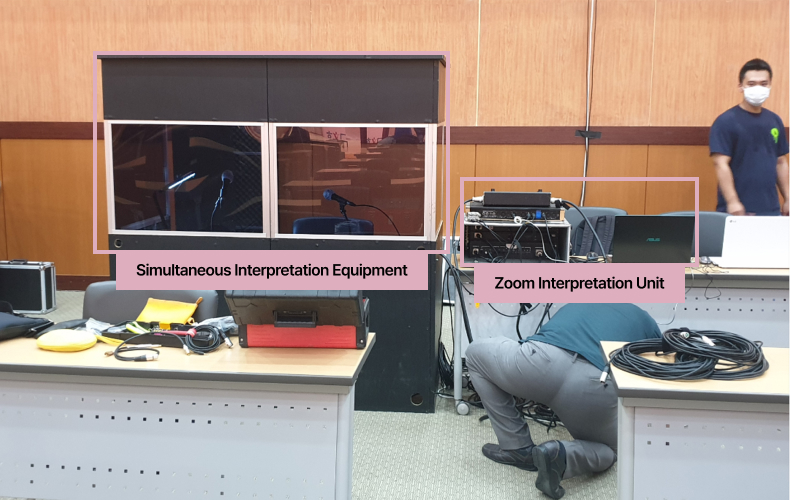
- Simultaneous Interpretation
Equipment - Zoom Interpretation Unit
Laptop-Based Interpretation System for Small Meetings
Standard
- Two-way interpretation setup
- HD video with a professional audio interface
- Standard configuration for corporate meetings and seminars
- Simultaneous Interpretation
Equipment - Zoom Interpretation Unit
- Scalable Professional Audio &
Video Infrastructure
Stable Two-Way Interpretation System for Corporate Meetings and Seminars
(Real-Time Consecutive & Simultaneous Interpretation)
Advanced
- Multilingual (multi-track) simultaneous interpretation
- Dedicated interpretation channels for each language
- High-quality video and professional audio systems
- Advanced configuration for international conferences and large-scale events
- Simultaneous Interpretation
Equipment - Zoom Interpretation Unit
- Scalable Professional Audio &
Video Infrastructure - Scalable Streaming
Infrastructure
Professional Multi-Track Interpretation System for International Conferences and Large-Scale Events
(Dedicated Language Channels · Multilingual Simultaneous Interpretation)
※ Selecting the right interpretation structure based on the event’s scale and objectives can improve both quality and operational efficiency
Connection Between Simultaneous Interpretation Equipment and Zoom
-
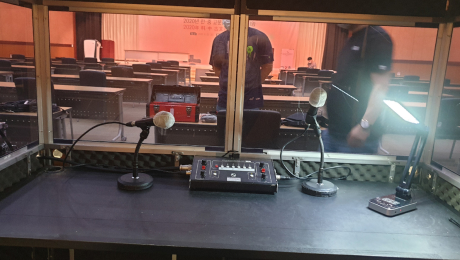
Inside the interpretation booth: 1 interpretation unit
-
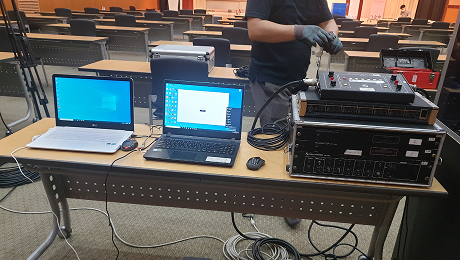
-

1 audio distributor, 1 interpretation unit, and 1 console
Zoom Equipment Configuration

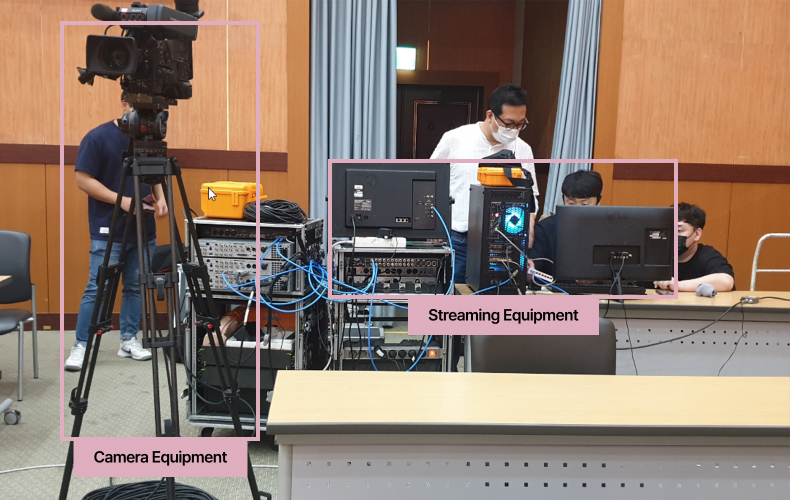
Connection Between ENG Camera and Streaming Service
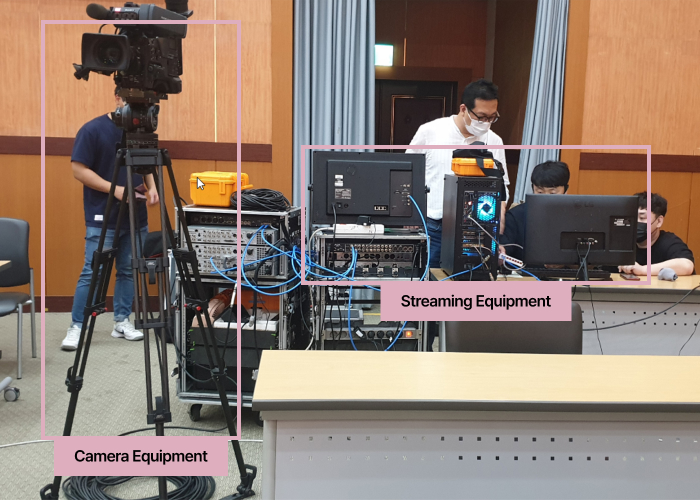
Interpretation Audio & Video System Design
Interpretation systems are classified into Basic · Standard · Advanced according to their configuration, and interpretation quality and operational stability vary depending on the system setup.
| Component | Recommended Specification | Purpose |
|---|---|---|
| Condenser Microphone (XLR) | 20 Hz–20 kHz frequency response | Clear voice capture and noise reduction |
| Audio Interface | 24-bit / 48 kHz or higher | High-quality digital audio input and output |
| Digital Audio Mixer | 4 channels or more | Separation and control of source and interpreted audio channels |
| Professional Camera | Full HD / 4K | High-resolution real-time video delivery |
| Hardware Encoder / OBS | Multi-track and multi-source support | Integration of video and audio sources for real-time streaming |
| Dedicated Wired Network | 50 Mbps+ upload recommended | Stable streaming with reduced latency and packet loss |
| Backup Connection | Secondary wired network or 5G | Network redundancy in case of connection failure |
Real-Time Multilingual Streaming System Design
Even within the same interpretation environment, interpretation quality and operational stability vary depending on the system configuration. The appropriate Basic, Standard, or Advanced setup is selected based on event scale, number of languages, and streaming requirements.
| Category | Basic | Standard | Advanced |
|---|---|---|---|
| Encoding | Software encoding (laptop-based) | Real-time OBS encoding | Hardware encoder + multi-track setup |
| Audio Processing | Direct USB microphone input | Audio interface integration | Digital audio mixer + channel separation |
| Video Input | Webcam (1080p) | HD camera | Full HD / 4K camera |
| Platform Streaming | Zoom only | Zoom + additional streaming integration | Zoom + YouTube and multi-platform streaming |
| Channel Structure | Single audio channel | Separate source & interpretation channels | Multi-track + dedicated language channels |
| Network Requirements | 20 Mbps+ upload | 30 Mbps+ upload | 50 Mbps+ upload + backup connection |
| Recommended Events | Internal meetings & small seminars | Corporate meetings & online seminars | International conferences, multilingual & large-scale online events |
※ Actual system configuration and network requirements may vary depending on event scale, number of languages, platform, number of concurrent participants, and streaming method.
※ Remote interpretation is an integrated system architecture combining audio signals, dedicated language channels, and streaming infrastructure.
Interpretation quality and operational stability depend on the audio equipment and network environment, making structured system design essential for international and multilateral conferences.