
Quotation


Performance
Why International Conference Interpretation Depends on More Than the Interpreter?
- 2026.08.30
7 Reasons Event Preparation, Interpreter Assignment, Equipment, Rehearsal, and On-Site Operations Matter
Why do some international events run smoothly while others encounter communication or technical problems during the program?
The difference is often not simply the skill of one interpreter.
It is the preparation and operating experience of the interpretation company supporting the event.
From reviewing presentation materials and assigning the right interpreters to managing equipment, rehearsal, technical support, and last-minute schedule changes, professional interpretation depends on a complete operating system.
Successful international interpretation is created when professional interpreters are supported by structured preparation and reliable event operations.
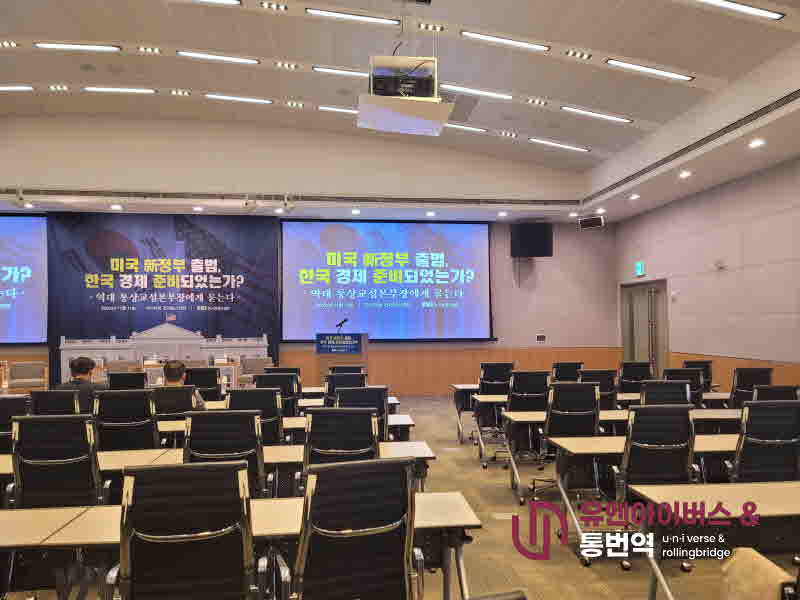
1️. Is a Good Interpreter Alone Enough for an International Event?
When planning an international conference or global business event, interpreter quality is essential.
But interpreter skill alone does not guarantee a successful event.
International interpretation often requires several interconnected processes:
- Event analysis
- Interpreter assignment
- Presentation review
- Terminology preparation
- Equipment installation
- Audio testing
- Rehearsal
- Live event operations
- Technical troubleshooting
- Post-event support
If these elements are not coordinated properly, even an experienced interpreter may have difficulty performing under the best conditions.
For example:
- Presentation materials may arrive too late
- The wrong interpreter may be assigned
- The booth may receive poor audio
- Interpretation channels may not be tested
- A speaker may change at the last minute
- Q&A may run longer than expected
- Hybrid participants may experience audio-routing problems
Successful international interpretation therefore depends on both interpreter expertise and a professional operating structure.
2️. One-Sentence Answer
International interpretation becomes more stable and reliable when professional interpreter expertise is supported by experienced event operations, preparation, equipment management, rehearsal, and on-site response.
3️. When Does Interpretation Operations Experience Matter Most?
Operational experience becomes particularly important for:
- International conferences and forums
- Government and public-sector events
- Investor Relations (IR) presentations
- Medical and pharmaceutical symposiums
- Technical conferences
- Multilingual simultaneous interpretation events
- Hybrid conferences
- Large corporate events
- Events with complex Q&A or panel discussions
As event scale increases, interpretation becomes less like a simple language service and more like an integrated communication operation.
Greater Event Complexity Usually Means Greater Operational Risk
**More Participants
- More Speakers
- More Languages
- More Equipment
- More Q&A
- More Technical Systems
= Greater Need for Professional Operations**
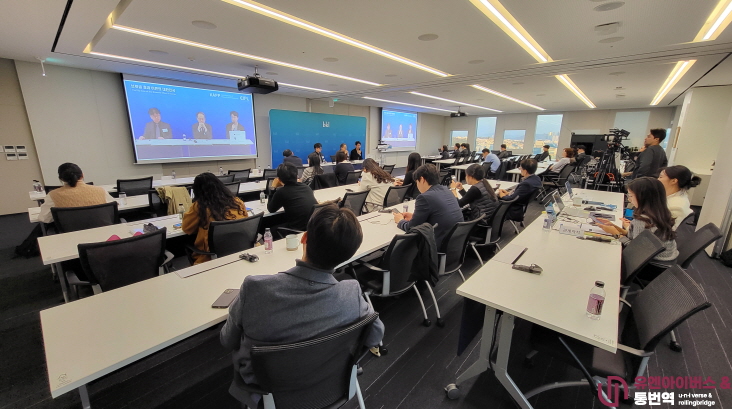
4️. Seven Reasons Interpretation Company Operating Experience Matters
Area | Why It Matters |
① Event Purpose | The interpretation structure should reflect whether the event focuses on presentations, discussion, negotiation, or decision-making |
② Interpreter Assignment | Interpreters should be selected according to subject expertise, language pair, format, and event difficulty |
③ Advance Preparation | Presentation materials and terminology should be reviewed before the event |
④ Equipment Operations | Booths, receivers, consoles, and audio systems must operate reliably |
⑤ Rehearsal | Presentation order, audio, interpretation channels, and technical systems should be tested in advance |
⑥ On-Site Response | Schedule changes, speaker changes, and technical issues must be handled quickly |
⑦ Event Completion | Equipment removal, recordings where permitted, and follow-up support should be managed systematically |
Operational experience provides the structure that supports interpretation quality and helps the event continue smoothly even when unexpected changes occur.
5️. Event Purpose Comes Before Interpreter Assignment
A professional interpretation company should first understand the purpose and communication structure of the event.
Important questions include:
- Is the event presentation-heavy?
- Is there extensive Q&A?
- Will executives negotiate directly?
- Are there multiple languages?
- Are remote participants involved?
- Is confidential information being discussed?
- Is simultaneous interpretation equipment required?
The answer affects the entire interpretation design.
Example
A large international forum may require:
Simultaneous Interpreters + Booths + Receivers + Technical Engineers
A small executive meeting may require:
Consecutive Interpreter + Advance Briefing
A hybrid seminar may require:
Simultaneous Interpretation + On-Site Audio + Remote Platform Integration
Interpreter assignment should therefore follow the event structure—not simply interpreter availability.
6️. Why Interpreter Assignment Requires Operating Experience
Selecting the right interpreter involves more than matching two languages.
The interpretation company may need to consider:
- Subject-matter expertise
- Similar project experience
- Interpretation method
- Event duration
- Q&A complexity
- Speaker style
- Industry terminology
- Confidentiality requirements
Examples
For an IR event, the interpreter may need experience with:
- Financial results
- Valuation
- Investment terminology
- Corporate strategy
- Investor Q&A
For a medical symposium, the interpreter may need familiarity with:
- Clinical terminology
- Pharmaceuticals
- Medical devices
- Regulatory information
- Scientific presentations
For a technology conference, relevant expertise may include:
- AI
- Semiconductors
- Manufacturing
- Cloud
- Cybersecurity
- Engineering
A strong operations team helps match interpreter expertise to the actual communication requirements of the event.
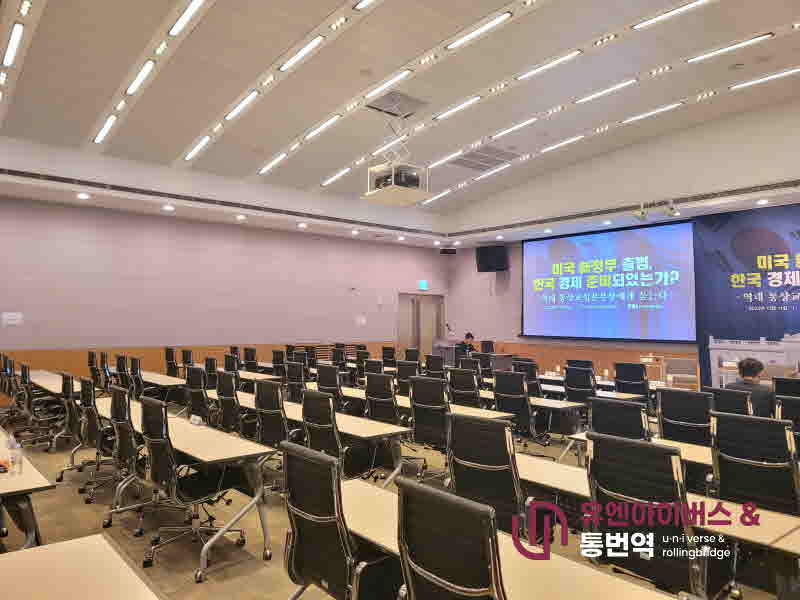
7️. Why Advance Preparation Matters
Professional interpretation begins before the event day.
Advance preparation may include:
- Presentation review
- Agenda analysis
- Speaker information
- Company information
- Technical documents
- Financial materials
- Specialized terminology
- Acronyms
- Product names
- Glossary development
Preparation Process
Event Brief
→ Material Review
→ Terminology Analysis
→ Interpreter Briefing
→ Rehearsal
→ Live Interpretation
This process helps interpreters understand:
- Speaker intent
- Key messages
- Terminology
- Presentation flow
- Numbers
- Names
- Likely Q&A topics
The more specialized the event, the more important advance preparation becomes.
8️. Why Equipment Operations Matter
For simultaneous and hybrid interpretation, technical infrastructure becomes part of interpretation quality.
The system may include:
- Interpretation booths
- Interpreter consoles
- Receivers
- Transmitters
- Headsets
- Microphones
- Audio mixers
- Language channels
- Video conferencing platforms
- Network connections
Technical operations may include:
- Installation
- Sound checks
- Audio routing
- Channel testing
- Receiver distribution
- Remote connection tests
- Live monitoring
- Troubleshooting
A highly experienced interpreter cannot perform properly if the source audio is unclear.
Likewise, accurate interpretation has little value if the audience cannot hear the interpreted channel reliably.
Operational Principle
Professional Interpreter + Clear Source Audio + Stable Technical System = Reliable Interpretation
9️. Why Rehearsal Is Important
Rehearsal allows the interpretation, event, and technical teams to identify problems before the event begins.
A professional rehearsal may check:
- Microphones
- Booth audio
- Interpretation channels
- Presentation videos
- Remote speakers
- Language routing
- Speaker order
- Q&A procedures
- Hybrid connections
It may also reveal:
- Last-minute presentation changes
- Difficult terminology
- Unusual names
- Incorrect audio feeds
- Missing files
- Technical connection issues
A problem discovered during rehearsal is easier to solve than the same problem discovered during a live keynote presentation.

10. Why On-Site Response Capability Matters
International events rarely follow the original schedule perfectly.
Common changes include:
- Speaker replacements
- Presentation order changes
- Session extensions
- Additional Q&A
- Room changes
- Last-minute files
- Remote speaker connection problems
- Audio failures
When these situations occur, the interpretation company may need to coordinate:
- Interpreters
- Technical engineers
- Event organizers
- Speakers
- Venue staff
The Real Value of Operations
The value of an experienced operating team becomes most visible when something changes.
Professional operations help the event adapt without creating unnecessary communication delays.
1️1. Real-World Application Examples
Case 1. International Forum
Shortly before an international forum began, the presentation order changed.
The operations team immediately shared the revised schedule with the interpreters and technical staff.
The interpretation team adjusted preparation, and the technical team updated the event flow accordingly.
Result
The event could continue without significant schedule disruption.
Key Lesson
Fast information sharing between operations, interpreters, and technical teams is critical when event conditions change.
Case 2. Medical Symposium
A medical symposium included presentations with extensive specialized terminology.
Presentation materials were reviewed in advance, and key terminology was organized before the event.
The interpreters used this preparation during both presentations and Q&A.
Result
Specialized terminology could be handled more consistently throughout the program.
Key Lesson
Advance preparation supports interpreter expertise, especially in highly specialized fields.
Case 3. Hybrid International Conference
The event involved both on-site and remote participants.
The interpretation team needed to work with:
- On-site interpretation equipment
- Conference audio
- Video conferencing
- Remote speakers
- Language channels
Technical support was available during the event to monitor both environments.
Result
A stable interpretation environment could be maintained for on-site and remote participants.
Key Lesson
Hybrid interpretation requires coordination between language operations and technical systems.
1️2. Interpretation Operations Workflow
Professional international interpretation can be viewed as a complete operational process.
Before the Event
Event Analysis
→ Interpreter Selection
→ Material Review
→ Terminology Preparation
→ Equipment Planning
Before Going Live
Installation
→ Technical Test
→ Rehearsal
→ Final Interpreter Briefing
During the Event
Live Interpretation
→ Audio Monitoring
→ Schedule Coordination
→ Technical Response
After the Event
Equipment Removal
→ Recording Handling Where Permitted
→ Operational Review
→ Follow-Up Support
International interpretation is therefore not a single moment of live language delivery. It is a complete event workflow.

1️3. Checklist for Choosing an Interpretation Company With Strong Operations
Before selecting a provider, ask:
- □ Does the company have international conference operating experience?
- □ Does it assign interpreters based on subject expertise?
- □ Does it review presentations and terminology in advance?
- □ Can it provide interpretation equipment?
- □ Is technical support available?
- □ Does it support rehearsal?
- □ Are on-site operations staff assigned when needed?
- □ Can it respond to schedule changes?
- □ Is there a backup plan for technical problems?
- □ Are interpreter and equipment responsibilities clearly defined?
An experienced interpretation company provides more than interpreters—it helps coordinate the communication system supporting the entire event.
1️4. What Happens When Operations Are Weak?
Many interpretation problems are not caused by interpreter ability alone.
Late Materials
Interpreters may have insufficient time to prepare terminology.
Poor Interpreter Assignment
The interpreter may not have relevant subject experience.
No Technical Test
Audio-routing or language-channel problems may appear during the event.
No Rehearsal
Presentation and remote-system problems may remain undiscovered until the live session.
No Operations Team
Schedule changes may not reach interpreters or engineers quickly.
Unclear Responsibility
It may be unclear who is responsible for equipment, troubleshooting, or last-minute changes.
Key Principle
Interpretation quality can fail even when the interpreter is highly qualified if the operating system around the interpreter is weak.
1️5. Interpretation Operations as Communication Risk Management
For high-stakes international events, interpretation operations should be considered part of communication risk management.
Potential communication risks include:
- Incorrect financial figures
- Misunderstood contract terms
- Inconsistent medical terminology
- Technical information loss
- Policy misunderstanding
- Investor confusion
- Event delays
A structured operations system helps reduce these risks by supporting the interpreter before and during the event.
Risk Management Structure
**Right Interpreter
- Advance Preparation
- Terminology Management
- Technical Infrastructure
- Rehearsal
- On-Site Operations
= More Reliable International Communication**
1️6. FAQ
Q1. Is interpreter quality still the most important factor?
Interpreter expertise is one of the most important foundations of professional interpretation.
However, even an excellent interpreter needs proper preparation, clear audio, correct equipment, and accurate event information.
Q2. Why does interpretation company experience matter?
Experienced providers understand how interpreter assignment, preparation, equipment, rehearsal, and live event operations interact.
This becomes especially important in complex international events.
Q3. Do small meetings need an operations team?
Not always.
A simple business meeting may require only a professional interpreter.
Operational requirements should match the size and complexity of the event.
Q4. When is on-site technical support important?
It becomes more important when the event involves:
- Simultaneous interpretation
- Multiple languages
- Large audiences
- Hybrid participation
- Complex audio systems
- Remote speakers
Q5. Why should presentation materials be shared before the event?
Advance materials allow interpreters to review terminology, numbers, speaker messages, and event context.
Q6. Is rehearsal necessary for every event?
No.
But it becomes increasingly valuable as technical and operational complexity increases.
Q7. What should clients ask an interpretation company before confirming?
Ask:
“How will you prepare and operate the interpretation service before and during our event?”
The answer reveals whether the company is providing simple interpreter staffing or a complete event communication structure.

1️8. Key Takeaway
Professional international interpretation requires two essential components.
Interpreter Capability
Language Skills + Subject Expertise + Interpretation Experience
Operating Capability
Event Analysis + Interpreter Assignment + Preparation + Equipment + Rehearsal + On-Site Support + Quality Management
Both are important.
Interpreter expertise creates professional capability.
Operations help that capability perform reliably throughout the event.
Conclusion
Successful international interpretation is not created by one excellent interpreter working alone.
It is built through a complete system that connects:
**Event Purpose
- Professional Interpreter Selection
- Advance Preparation
- Terminology Management
- Equipment
- Technical Support
- Rehearsal
- On-Site Operations**
As international events become larger, more specialized, multilingual, and technically complex, the operating capability of the interpretation company becomes increasingly important.
The question should therefore not be:
“How good is the interpreter?”
It should be:
“How will the interpreter be selected, prepared, supported, and managed throughout the event?”
Professional interpreters create the language quality. Professional operations create the environment that allows that quality to remain stable from preparation through the end of the event.
Related Information
- How to Choose International Conference Interpretation
- How Does International Conference Interpretation Work?
- How to Choose the Right Interpretation Company
- Simultaneous vs. Consecutive Interpretation
- Why Interpretation Is Communication Risk Management
- Why Simultaneous Interpretation Fails—and How to Prevent It
- Why Interpretation Quality Matters in International Events
About Our Case Archive

The case studies and project insights presented on this website are based on experience supporting international conferences, investor presentations, government forums, executive meetings, technical seminars, and multilingual corporate events.
To protect client confidentiality and comply with the Code of Professional Conduct followed by professional interpreters worldwide, certain project details have been generalized, anonymized, or adapted for educational purposes.
The purpose of these materials is to share practical insights into multilingual communication planning while respecting the confidentiality of every client and every project.
UNIVERSE RB
Designing Communication. Managing Risk. Delivering Understanding.