
Quotation


Performance
International Conference Interpretation: 7 Criteria for Choosing the Right Interpretation Structure
- 2026.08.30
Why Event Purpose, Interpretation Method, Interpreter Expertise, Preparation, Equipment, and Operations Matter More Than Price Alone?
Why do international conferences with similar schedules and formats sometimes produce very different communication outcomes?
The difference is often not the interpretation fee itself.
It is the combination of the right interpretation method, qualified interpreters, advance preparation, technical support, and a professional operating system designed around the purpose of the event.
International conferences involve more than presentations. They often include panel discussions, Q&A sessions, networking, hybrid participation, technical systems, and schedule changes.
For this reason, successful conference interpretation depends not only on selecting skilled interpreters, but also on designing the right interpretation structure from preparation through on-site operations.
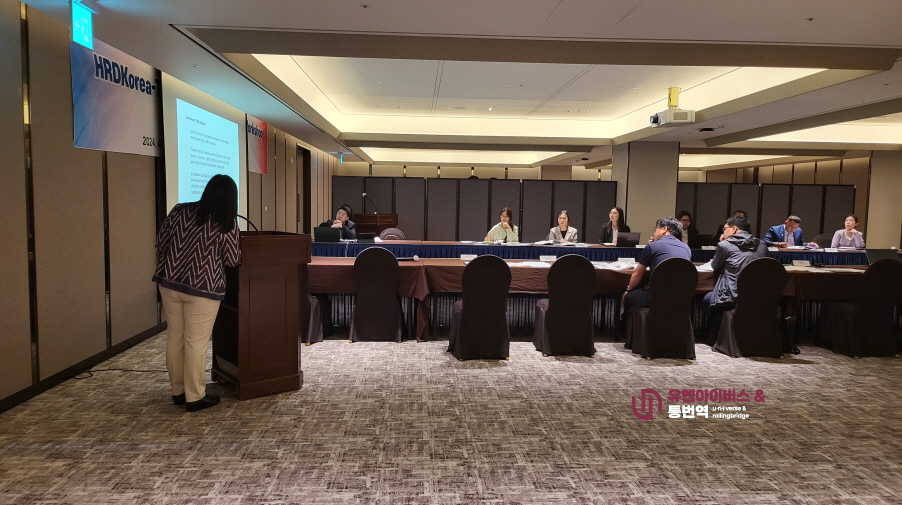
1️. What Should You Consider When Choosing International Conference Interpretation?
When preparing an international conference, organizers often need to decide:
- Should we use simultaneous or consecutive interpretation?
- How many interpreters are required?
- What type of interpreter experience is needed?
- Do we need interpretation booths and receivers?
- Should rehearsal and technical support be included?
- How should Q&A and panel discussions be handled?
- What exactly should be included in the quotation?
Making these decisions based only on price or audience size can create unexpected problems during presentations, discussions, and Q&A sessions.
International conference interpretation should be selected based on event purpose, communication format, subject expertise, technical requirements, and operational structure.
2️. One-Sentence Answer
Successful international conference interpretation begins by choosing the right interpretation method, professional interpreters, preparation process, and operating system for the event—not simply the lowest price.
3️. When Is More Careful Interpretation Planning Required?
Structured interpretation planning becomes particularly important for:
- International conferences and forums
- Government and public-sector events
- Investor Relations (IR) presentations
- International academic conferences
- Medical and pharmaceutical symposiums
- Technical conferences
- Global corporate strategy meetings
- Multilingual conferences
- Hybrid events
- High-stakes panel discussions and Q&A sessions
The larger and more complex the event becomes, the more important coordination between interpreters, technical teams, speakers, and event organizers becomes.
Higher Complexity Usually Means More Operational Requirements
**More Participants
- More Speakers
- More Languages
- More Specialized Content
- More Q&A
- More Technology
= Greater Need for Structured Interpretation Operations**
4️. Seven Criteria for Successful International Conference Interpretation
Selection Criterion | What to Check |
① Event Purpose | Is the event primarily for presentations, information sharing, discussion, negotiation, or decision-making? |
② Interpretation Method | Should the event use simultaneous, consecutive, whispered, remote, or a combination of methods? |
③ Subject-Matter Expertise | Do the interpreters have experience in the relevant industry and conference topic? |
④ Advance Preparation | Are presentations, agendas, terminology, and speaker information reviewed before the event? |
⑤ Equipment & Technical Support | Are booths, receivers, audio systems, and remote-conference systems properly supported? |
⑥ Rehearsal & Operations | Are presentation order, audio, interpretation channels, and on-site procedures tested in advance? |
⑦ Quotation Scope | Are interpreter fees, preparation, equipment, technical support, rehearsal, and operations clearly defined? |
Successful international conference interpretation requires more than interpreter skill. It requires preparation, technology, and operations to work together as one system.
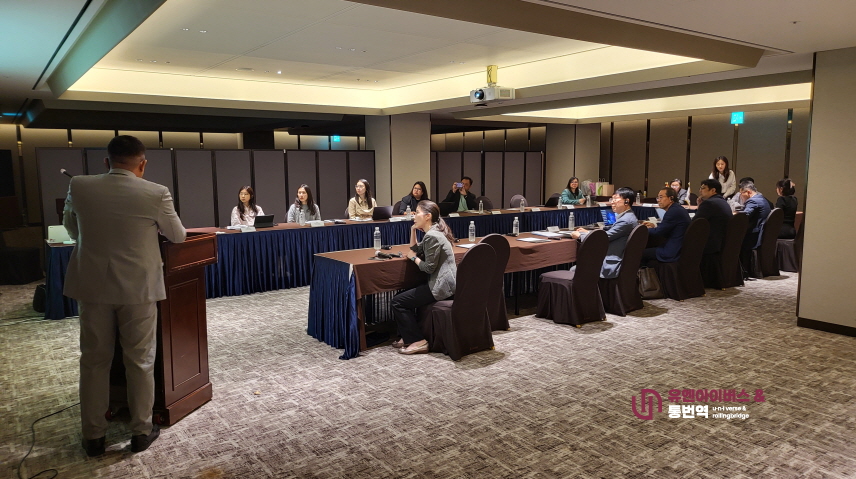
5️. Start With the Purpose of the Conference
The first question should not be:
“How much does interpretation cost?”
It should be:
“How will participants communicate during this event?”
Different communication objectives require different interpretation structures.
Presentation-Heavy Conference
When speakers deliver long presentations to a large audience, simultaneous interpretation is usually the most efficient option.
Discussion-Heavy Conference
If the event focuses on small-group discussions, negotiation, or detailed exchanges, consecutive interpretation may be more appropriate.
Mixed-Format Conference
Many international conferences combine:
- Presentations
- Panels
- Q&A
- Executive meetings
- Site visits
- Networking sessions
In these cases, different interpretation methods can be used for different sessions.
Example
Keynote Presentation → Simultaneous Interpretation
Panel Discussion → Simultaneous Interpretation
Small Executive Meeting → Consecutive Interpretation
Factory or Site Visit → Whispered or Consecutive Interpretation
The interpretation method should follow the communication format—not the other way around.
6️. Simultaneous or Consecutive Interpretation?
This is one of the most important decisions when designing conference interpretation.
Category | Simultaneous Interpretation | Consecutive Interpretation |
Speaker Flow | Speaker continues without regular pauses | Speaker pauses for interpretation |
Event Speed | Faster | Slower |
Audience Size | Well suited to medium and large audiences | Better suited to smaller groups |
Equipment | Usually required | Usually minimal |
Presentations | Highly suitable | Suitable for shorter presentations |
Q&A | Effective for formal conference Q&A | Excellent for detailed dialogue |
Negotiation | Possible | Often preferred |
Typical Use | Conferences, forums, seminars | Meetings, negotiations, interviews |
Practical Rule
Large Audience + Tight Schedule + Presentations → Simultaneous Interpretation
Small Group + Dialogue + Negotiation → Consecutive Interpretation
However, event structure should always determine the final decision.
7️. Why Interpreter Subject Expertise Matters
International conferences often involve specialized terminology and context.
A highly experienced general interpreter may still require additional preparation if the event involves complex subject matter.
Relevant fields may include:
- Finance and IR
- Medicine and pharmaceuticals
- Clinical research
- Artificial intelligence
- Semiconductors
- Engineering
- Manufacturing
- Cybersecurity
- Government policy
- International development
- Legal and regulatory topics
For example, an IR interpreter may need to understand:
- Revenue
- EBITDA
- Market share
- Valuation
- Guidance
- Capital expenditure
- Investor questions
A medical conference interpreter may need familiarity with:
- Clinical trials
- Drug names
- Medical devices
- Regulatory terminology
- Treatment protocols
- Scientific abbreviations
Interpreter selection should therefore be based on subject expertise and conference requirements—not language pair alone.
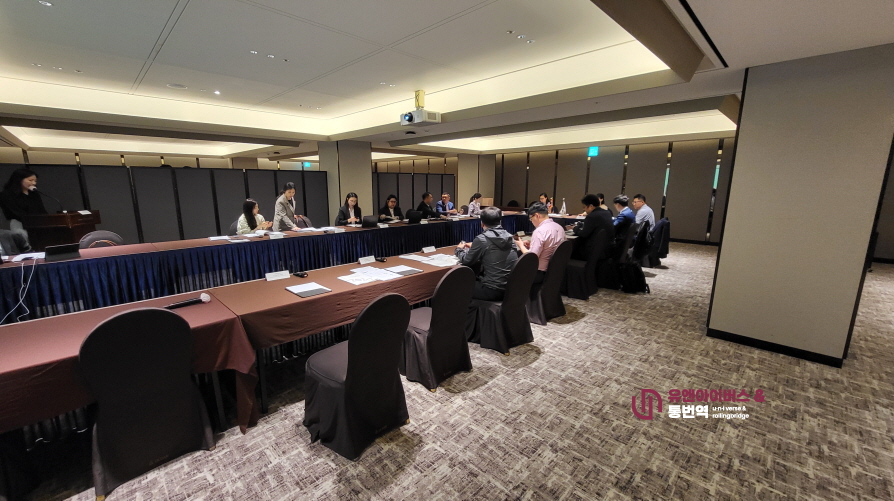
8️. Why Advance Preparation Is Essential
Professional conference interpretation begins before the event.
Preparation may include:
- Presentation review
- Program and agenda analysis
- Speaker information
- Company background
- Research materials
- Financial information
- Technical documents
- Specialized terminology
- Acronyms
- Product names
- Glossary development
Preparation Workflow
Event Analysis
→ Material Review
→ Terminology Management
→ Interpreter Briefing
→ Rehearsal
→ Live Interpretation
This preparation helps interpreters understand:
- Speaker intent
- Presentation structure
- Terminology
- Numbers
- Institutional names
- Product names
- Likely Q&A topics
High-quality conference interpretation is created before the interpreter enters the booth.
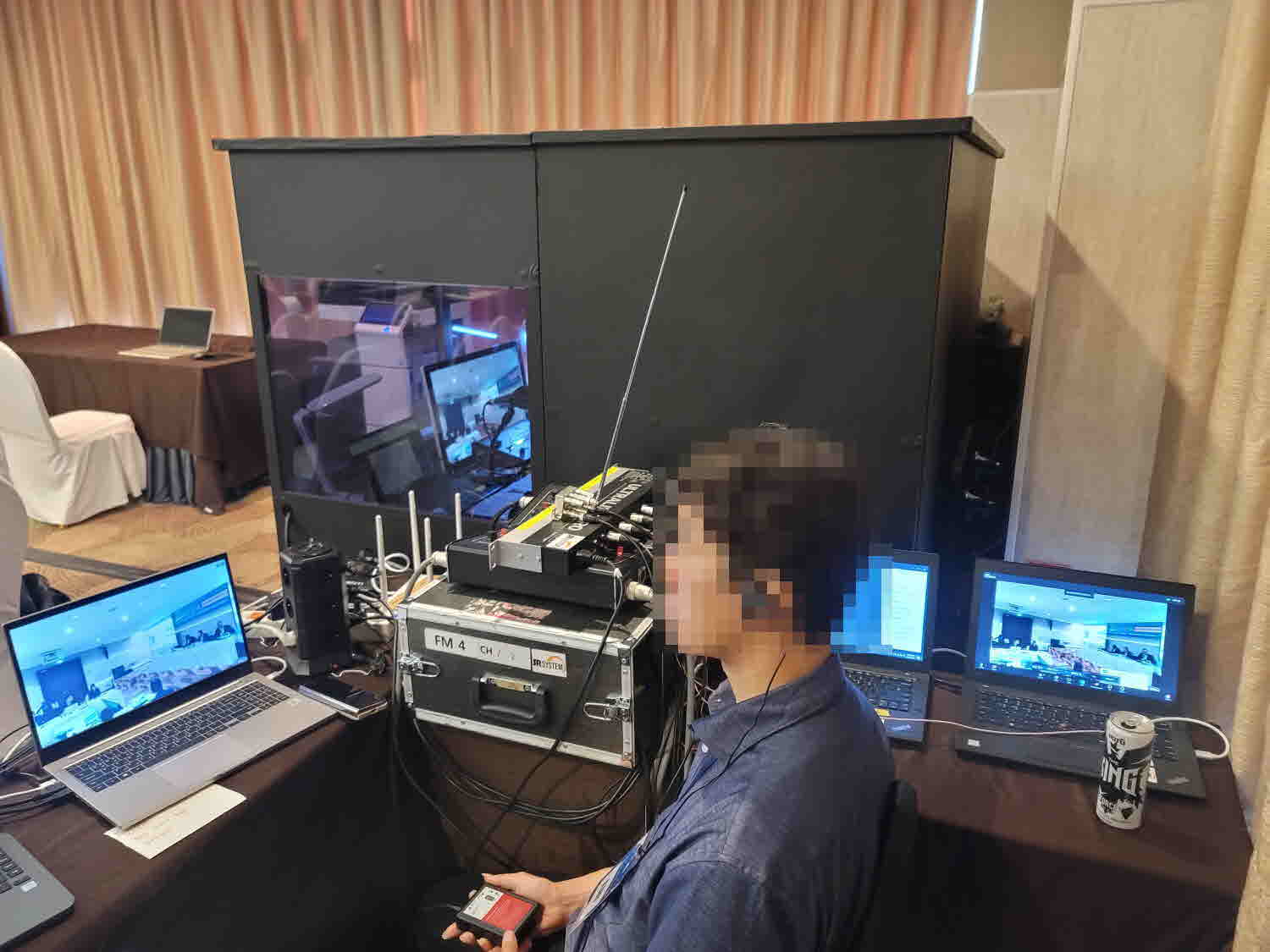
9️. Why Equipment and Audio Systems Matter
Simultaneous interpretation depends heavily on technical infrastructure.
Professional conference interpretation may require:
- Interpretation booths
- Interpreter consoles
- Receivers
- Transmitters
- Headsets
- Microphones
- Audio mixers
- Language channels
- Audio routing
- Remote interpretation systems
- Network infrastructure
Technical personnel may also manage:
- Installation
- Sound checks
- Channel testing
- Receiver distribution
- Audio monitoring
- Troubleshooting
- Backup systems
Even highly experienced interpreters cannot perform effectively if they cannot hear the speaker clearly.
Likewise, participants cannot benefit from accurate interpretation if the interpreted audio is unstable.
Technical Principle
Interpreter Quality + Clear Source Audio + Stable Distribution = Reliable Simultaneous Interpretation
10. Why Rehearsal Matters
Conference rehearsal is not simply a formality.
It helps identify problems before participants arrive.
A rehearsal may check:
- Speaker microphones
- Presentation audio
- Interpretation channels
- Booth audio
- Remote presenters
- Video playback
- Language routing
- Speaker order
- Q&A procedures
- Hybrid conference systems
It also gives interpreters an opportunity to understand the actual event flow.
Rehearsal Can Reveal
- Incorrect audio routing
- Missing presentation files
- Unexpected video content
- Speaker changes
- Pronunciation issues
- Last-minute terminology
- Remote connection problems
Problems identified during rehearsal are easier to solve than problems discovered during a live keynote speech.
11. Real-World Application Examples
Case 1. International Forum
An international forum included keynote presentations, panel discussions, and audience Q&A.
Simultaneous interpretation was selected because the event involved a large audience and a tightly scheduled program.
The interpretation team reviewed presentation materials in advance and participated in rehearsal with the event operations team.
Why the Structure Worked
- Simultaneous interpretation preserved event flow
- Advance preparation improved terminology consistency
- Rehearsal confirmed audio and presentation procedures
- Operations staff coordinated changes during the event
Result: Presentations, panel discussions, and Q&A could proceed within a stable multilingual communication structure.
Case 2. International Investor Relations Event
An overseas IR event contained extensive financial and investment terminology.
Interpreters with relevant experience were assigned and presentation materials were reviewed before the event.
A project-specific terminology list was prepared for:
- Financial figures
- Industry terms
- Management terminology
- Business strategy
- Investor questions
Why Preparation Mattered
IR events often shift rapidly from prepared presentations to unscripted Q&A.
Consistent terminology and contextual understanding helped support more stable investor communication throughout the event.
Case 3. Hybrid International Technology Seminar
An international technology seminar included both on-site and remote participants.
The event required integration of:
- Interpretation equipment
- Conference audio
- Video conferencing
- Remote participants
- Language channels
The interpretation and technical teams tested the full workflow before the event.
Why Technical Coordination Mattered
Hybrid conferences create two communication environments at the same time:
On-Site Audio + Remote Audio
Both must be integrated correctly for the interpreter and participants.
Result: On-site and remote participants could access the interpreted communication through a coordinated technical structure.
1️1. International Conference Interpretation Checklist
Before the event, confirm:
- □ Has the correct interpretation method been selected?
- □ Have interpreters with relevant subject expertise been assigned?
- □ Have presentation materials been shared in advance?
- □ Has specialized terminology been reviewed?
- □ Are interpretation booths and receivers prepared if required?
- □ Has the audio system been tested?
- □ Has the remote or hybrid system been tested?
- □ Has sufficient rehearsal time been secured?
- □ Is there an on-site operations team?
- □ Is there a response plan for unexpected changes?
- □ Are quotation inclusions and exclusions clear?
This checklist can help reduce operational risk and ensure that the interpretation structure matches the actual conference requirements.

1️⃣3. What Can Go Wrong Without Proper Planning?
International conference interpretation problems are rarely caused by one factor alone.
Typical risks include:
Wrong Interpretation Method
Using consecutive interpretation for a large presentation can significantly extend the schedule.
Wrong Interpreter Assignment
An interpreter without sufficient subject knowledge may struggle with technical terminology and Q&A.
Late Presentation Materials
Without advance materials, interpreters may have less time to prepare terminology and context.
Poor Audio
If interpreters cannot hear speakers clearly, interpretation accuracy may be affected.
No Rehearsal
Technical and operational issues may not be discovered until the live event.
Unclear Service Scope
Equipment, rehearsal, technical staff, or overtime may not be included in the original quotation.
No On-Site Response Structure
Unexpected schedule or speaker changes may create confusion.
Most interpretation failures are not simply interpreter failures. They are system-design failures.
1️4. International Conference Interpretation as Risk Management
For high-stakes international events, interpretation should be considered part of communication risk management.
Communication errors can affect:
- Financial figures
- Contract conditions
- Technical specifications
- Medical information
- Policy meaning
- Investor understanding
- Audience confidence
- Event schedules
The higher the communication risk, the more important structured preparation and operations become.
Communication Risk Framework
**Interpreter Expertise
- Advance Preparation
- Terminology Management
- Technical Infrastructure
- Rehearsal
- On-Site Operations
= Lower Communication Risk**
1️3. FAQ
Q1. Is simultaneous interpretation always necessary for an international conference?
No.
It depends on audience size, event format, timing, and communication goals.
Large presentation-heavy conferences often benefit from simultaneous interpretation, while smaller meetings may be better suited to consecutive interpretation.
Q2. How many interpreters are required?
The number depends on:
- Interpretation method
- Session duration
- Language pairs
- Subject complexity
- Event schedule
Professional simultaneous interpretation often uses a team structure because interpreters must maintain concentration during continuous real-time communication.
Q3. When should presentation materials be provided?
As early as reasonably possible.
More preparation time allows interpreters to review terminology, presentation structure, speaker intent, and specialized content.
Q4. Is rehearsal always necessary?
It becomes increasingly important as event complexity increases.
Large conferences, hybrid events, multilingual programs, and technically complex sessions benefit significantly from rehearsal.
Q5. Do we need interpretation equipment?
For formal simultaneous interpretation, booths, consoles, receivers, and audio systems are commonly used.
Requirements depend on venue, event size, language structure, and technical environment.
Q6. Can simultaneous and consecutive interpretation be used together?
Yes.
Many international conferences use both.
For example:
Conference Presentation → Simultaneous
Executive Meeting → Consecutive
Site Visit → Whispered or Consecutive
Q7. What should we compare when reviewing interpretation quotations?
Compare:
- Interpreter staffing
- Subject expertise
- Preparation
- Equipment
- Technical staff
- Rehearsal
- On-site support
- Travel
- Overtime
- Project management
- Included and excluded services
Compare service scope before comparing price.
1️4. Key Takeaway
Successful international conference interpretation is created through a complete operating structure.
The Full Process
Event Purpose
→ Interpretation Method
→ Interpreter Selection
→ Material Preparation
→ Terminology Management
→ Equipment Setup
→ Rehearsal
→ Live Interpretation
→ On-Site Operations
→ Quality Management
The interpreter is a critical part of the system.
But the interpreter alone is not the system.
Conclusion
International conference interpretation begins with selecting the right interpretation method and the right professional interpreters for the event.
But successful communication also depends on:
Advance Preparation + Terminology Management + Equipment + Technical Support + Rehearsal + On-Site Operations
The objective should not be to find the cheapest interpretation service.
It should be to design the interpretation structure that best matches the purpose, format, audience, complexity, and communication risk of the conference.
Successful international conferences are not created by interpreter skill alone. They are built through the right interpretation method, professional expertise, preparation, technology, and event operations.
Related Information
- How Does International Conference Interpretation Work?
- Simultaneous vs. Consecutive Interpretation
- How to Choose the Right Interpretation Company
- How Is Simultaneous Interpretation Pricing Determined?
- Why Interpretation Is Communication Risk Management
- Why Simultaneous Interpretation Fails—and How to Prevent It
- Why Interpretation Quality Matters in International Events
About Our Case Archive

The case studies and project insights presented on this website are based on experience supporting international conferences, investor presentations, government forums, executive meetings, technical seminars, and multilingual corporate events.
To protect client confidentiality and comply with the Code of Professional Conduct followed by professional interpreters worldwide, certain project details have been generalized, anonymized, or adapted for educational purposes.
The purpose of these materials is to share practical insights into multilingual communication planning while respecting the confidentiality of every client and every project.
UNIVERSE RB
Designing Communication. Managing Risk. Delivering Understanding.