
Quotation


Performance
How to Choose the Right Interpretation Company for an International Event?
- 2026.08.26
7 Criteria for Comparing Interpreter Expertise, Event Operations, Equipment, Preparation, Security, and Service Scope
An interpretation company is not simply a staffing provider.
For international conferences, investor relations (IR), contract negotiations, government events, medical seminars, and technical conferences, the right provider should function as an event communication partner capable of coordinating professional interpreters, preparation, equipment, technical operations, and quality management.
Comparing providers only by price can overlook important differences in interpreter expertise, event experience, preparation procedures, equipment support, and operational responsibility.
UNIVERSE RB provides professional interpretation and translation services based on experience supporting international conferences, corporate events, forums, and other high-stakes multilingual communication projects.
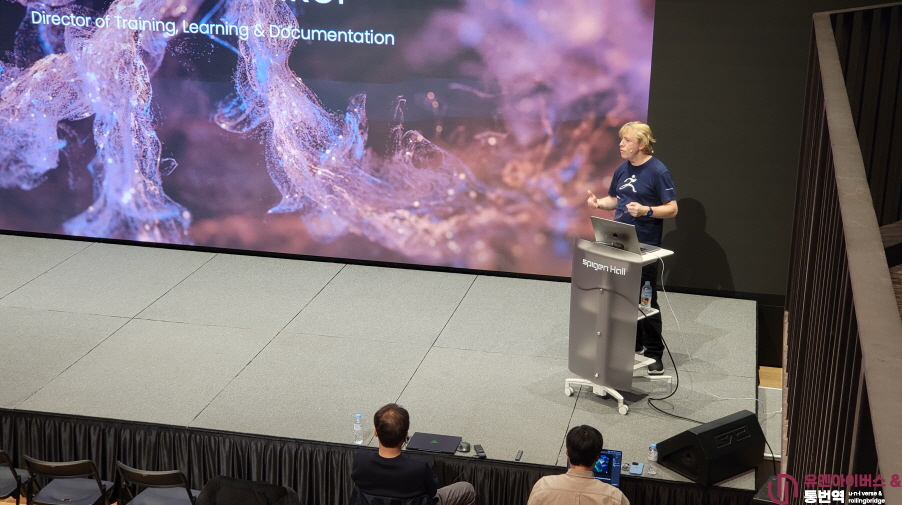
1️⃣ What Should You Look for When Choosing an Interpretation Company?
When organizing an international conference, IR presentation, overseas buyer meeting, medical seminar, or technical event, buyers may receive very different quotations from different interpretation companies.
The lowest quotation does not always represent the same service structure.
One provider may quote only for interpreter assignment, while another may include:
Professional interpreter selection
Advance material review
Terminology preparation
Interpretation equipment
Technical support
Rehearsal
On-site operations
Quality management
Confidentiality procedures
For this reason, interpretation companies should be compared not only by price, but by professional expertise, operating structure, and service scope.
The right interpretation company should be able to explain how it will support the entire communication process—not simply who will interpret.
2️⃣ One-Sentence Answer
Choose an interpretation company based on relevant expertise, interpreter quality, preparation, equipment capability, event operations, security, and service scope—not price alone.
3️⃣ When Does Interpretation Company Selection Matter Most?
The interpretation provider becomes particularly important for:
International conferences and forums
Government and public-sector events
Investor relations (IR) presentations
Contract and negotiation meetings
Medical and pharmaceutical symposiums
Technical conferences
Global corporate events
Multilingual simultaneous interpretation events
As event complexity increases, interpreter expertise alone is not enough.
The provider may also need to coordinate:
Equipment
Audio systems
Technical personnel
Rehearsals
Multiple language channels
Schedule changes
Q&A
On-site operations
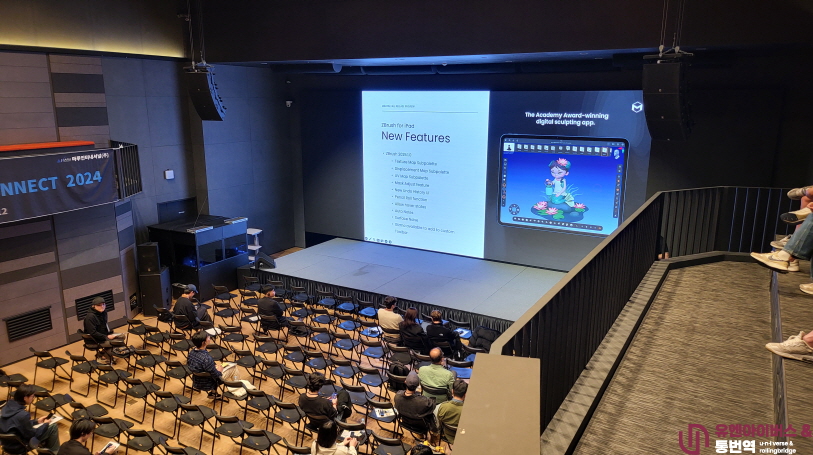
4️⃣ Interpretation Company Operating Levels: A Practical Tier Framework
The following framework is not an absolute industry ranking.
It is a practical way to understand differences in operational capability, complexity, and service scope.
UNIVERSE RB is positioned in the upper range of Tier 2, with a focus on specialized interpretation, complex international events, and integrated communication operations.
| Tier | Typical Characteristics | Best Suited For |
|---|---|---|
| Tier 1 | Extensive international conference experience, large professional interpreter network, advanced equipment and event operations capability | Summits, international organizations, large-scale government and diplomatic events |
| Tier 2 | Strong expertise in specialized sectors and complex event operations | IR, medical and technical seminars, global corporate events, professional conferences |
| Tier 3 | Stable professional interpretation for general corporate events | Corporate seminars, training, buyer meetings |
| Tier 4 | Primarily focused on simpler assignments | Small meetings, basic consecutive interpretation |
| Tier 5 | Price-driven matching or limited-service structure | Routine interpretation and low-budget assignments |
The tier framework should not be treated as an absolute quality ranking.
The more useful question is whether the provider's operating capability matches the purpose, complexity, and communication risk of the event.
5️⃣ Why Tier Alone Is Not Enough
A Tier 1 provider is not automatically necessary for every event.
Likewise, a lower-cost provider may be fully appropriate for a simple, low-risk meeting.
The correct choice depends on:
Event scale
Number of languages
Subject complexity
Interpretation method
Q&A
Equipment requirements
Confidentiality
Decision-making risk
Budget
For example:
Simple Buyer Meeting → A streamlined structure may be sufficient
Technical Seminar → Industry expertise and preparation become more important
IR Presentation → Financial expertise and Q&A capability become critical
Multilingual Government Conference → Full operational and technical coordination may be required
The objective is therefore not to choose the highest tier.
The objective is to choose the provider with the right capability for the event.
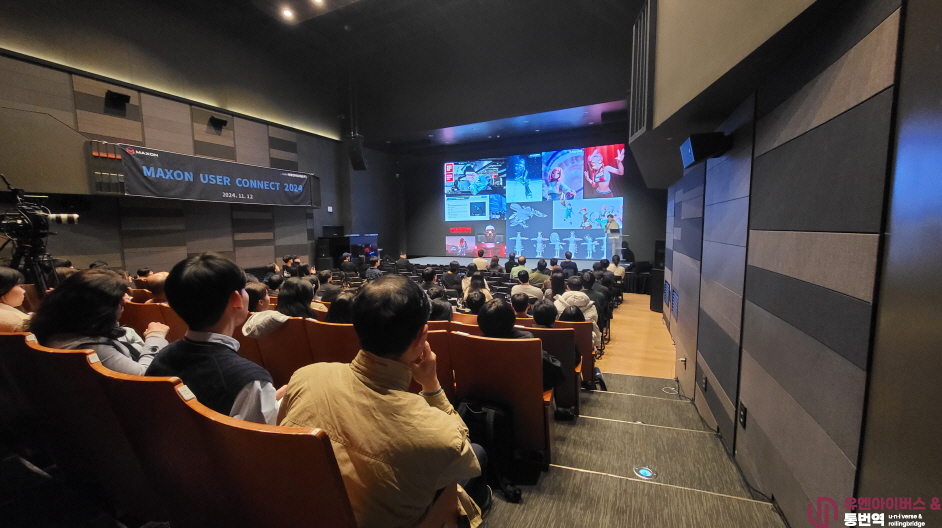
6️⃣ Real-World Application Examples
Case 1. International Forum
A large international forum involved several hundred participants.
The event required not only interpreters but also:
Interpretation booths
Receivers
Audio integration
Technical personnel
Event coordination
Because multiple components needed to work together, the interpretation provider's operational experience was as important as interpreter quality.
Result: Interpretation and technical operations were coordinated through one integrated workflow, supporting stable event delivery.
Case 2. International Investor Relations Event
An IR presentation involved financial performance, corporate strategy, investment information, and investor Q&A.
The interpretation provider assigned an interpreter with relevant financial experience and reviewed presentation materials in advance.
A project-specific terminology glossary was also prepared.
Result: Key figures, financial terminology, and management messages could be communicated more consistently throughout the presentation and Q&A.
Case 3. Global Corporate Seminar
A corporate event included:
New product presentations
Overseas buyer meetings
Formal presentation sessions
Individual consultations
Simultaneous interpretation was used for formal presentations, while consecutive interpretation was used for smaller business discussions.
The interpretation provider also managed equipment and on-site technical support.
Result: Interpretation methods and technical operations were integrated according to each part of the program.
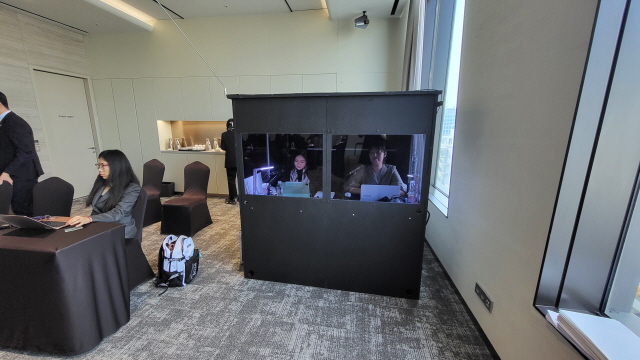
7️⃣ Seven Criteria to Check Before Choosing an Interpretation Company
① Does the Company Have Relevant Industry Experience?
Ask whether the provider has handled events in your field.
Examples include:
Finance and IR
Medical and pharmaceutical
Technology
Semiconductors
Manufacturing
Government policy
Legal and contract negotiations
Academic conferences
Relevant experience can improve interpreter selection and preparation.
② Can the Company Reliably Assign Professional Interpreters?
A professional provider should not simply assign whoever is available.
Interpreter selection should consider:
Language pair
Subject-matter expertise
Event format
Presentation experience
Negotiation experience
Q&A capability
Similar project history
Interpreter selection should be based on event fit—not availability alone.
③ Does the Company Review Materials and Prepare Terminology?
Professional preparation may include:
Presentation review
Agenda review
Speaker information
Company materials
Technical documents
Financial terminology
Contract terminology
Glossary preparation
The more specialized the event, the more important this process becomes.
④ Can the Company Provide Interpretation Equipment and Technical Support?
For simultaneous interpretation, the provider may need to manage:
Interpretation booths
Interpreter consoles
Receivers
Transmitters
Audio routing
Microphones
Remote interpretation platforms
Technical engineers
Equipment should not be treated separately from interpretation quality.
The interpreter must be able to hear the speaker clearly, and participants must receive the interpreted audio reliably.
⑤ Does the Company Support Rehearsals and On-Site Operations?
International events frequently involve:
Speaker changes
Schedule changes
Additional Q&A
Remote presenters
Room changes
Audio issues
Presentation changes
A strong provider should be able to respond to these situations during the event.
⑥ Does the Company Have Security and Confidentiality Procedures?
International business events may involve:
Financial information
Investment information
Contracts
Corporate strategy
Technical data
Medical information
Unreleased products
The provider should therefore have clear confidentiality procedures and, where appropriate, NDA processes.
⑦ Is the Quotation Clear About Service Scope?
A professional quotation should clearly explain what is included.
Check:
Number of interpreters
Interpretation hours
Preparation
Equipment
Technical personnel
Rehearsal
Travel
Overtime
On-site support
Cancellation conditions
A lower quotation may not actually be lower if important services are excluded.
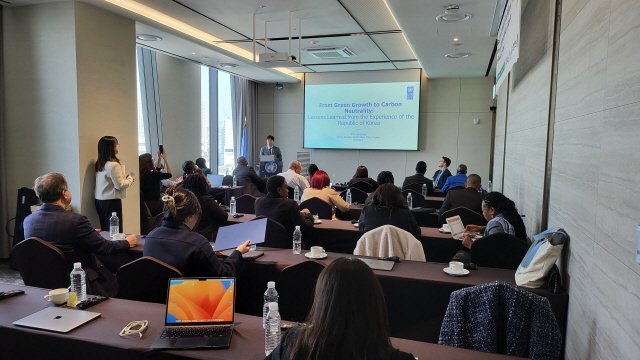
8️⃣ What Should Buyers Compare Beyond Price?
| Evaluation Area | What to Check |
|---|---|
| Interpreter Expertise | Relevant industry and event experience |
| Preparation | Material review and terminology management |
| Interpretation Method | Simultaneous, consecutive, remote, or hybrid |
| Equipment | Booths, consoles, receivers, audio systems |
| Technical Support | Installation, testing, monitoring, troubleshooting |
| Event Operations | Schedule management and on-site response |
| Security | NDA and confidentiality procedures |
| Quality Management | Structured preparation and operational monitoring |
| Service Scope | Clearly defined responsibilities and exclusions |
| Pricing | Total service value rather than interpreter fee alone |
Buyer Principle
Compare the complete interpretation system—not just the interpreter rate.
9️⃣ Interpretation Company vs. Interpreter Matching Service
There is an important difference between a professional interpretation company and a simple interpreter-matching service.
| Category | Professional Interpretation Company | Matching-Based Service |
|---|---|---|
| Interpreter Selection | Based on event complexity and expertise | Often based on availability |
| Preparation | Structured | Varies |
| Terminology Management | Can be centrally managed | Usually individual |
| Equipment | Can be integrated | Often separate |
| Technical Support | Available for complex events | Limited |
| On-Site Operations | Coordinated | Often limited |
| Quality Management | System-based | Depends heavily on individual interpreter |
| Risk Management | Event-level | Interpreter-level |
A matching service may be perfectly suitable for simple communication.
However, as event complexity increases, the value of a professional operating structure becomes more important.
FAQ
Q1. Should we always choose the largest interpretation company?
No.
The company should match the scale and complexity of the event.
A very large provider may be unnecessary for a simple meeting, while a small matching service may not be sufficient for a multilingual international conference.
Q2. Is the most expensive interpretation company always the best?
No.
Price alone does not determine quality.
Relevant expertise, preparation, interpreter selection, equipment, technical capability, and operational experience are more useful comparison criteria.
Q3. Why do interpretation company quotations vary so much?
Different providers may include different levels of:
Interpreter expertise
Preparation
Equipment
Technical support
Rehearsal
Project management
Quality management
Compare the scope before comparing the final amount.
Q4. Should the interpretation company provide equipment?
For simultaneous interpretation and complex international events, integrated equipment capability can simplify project management and reduce coordination risk.
Q5. Why is advance preparation important?
Interpreters may need to understand specialized terminology, presentation content, financial information, technical concepts, and event structure before working in real time.
Q6. Why does confidentiality matter?
Interpretation projects may involve sensitive business, financial, technical, legal, medical, or institutional information.
Q7. What is the most important question to ask an interpretation provider?
Ask:
“How will you select, prepare, and support the interpreters for our specific event?”
The answer usually reveals more about service quality than the price alone.
Key Takeaway
A professional interpretation company should provide more than:
Interpreter Assignment
The complete structure may include:
**Event Analysis
Professional Interpreter Selection
Advance Preparation
Terminology Management
Equipment
Technical Support
Rehearsal
On-Site Operations
Security
Quality Management**
The more complex the event, the more important this operating structure becomes.
Conclusion
Choosing an interpretation company is not simply a purchasing decision based on price.
For international conferences, government events, IR presentations, technical seminars, contract negotiations, and global corporate events, the provider becomes part of the event's communication infrastructure.
A strong interpretation company should be able to combine:
Professional Interpreters + Industry Expertise + Advance Preparation + Equipment + Technical Operations + Security + Quality Management
The objective is not to choose the highest-priced company or the highest tier.
It is to choose the provider whose expertise and operating system best match the event.
The right interpretation company is not simply a supplier of interpreters—it is a communication and event operations partner.
Related Information
Why Interpretation Quality Matters in International Events
How Is Simultaneous Interpretation Pricing Determined?
Simultaneous vs. Consecutive Interpretation
Why Simultaneous Interpretation Fails—and How to Prevent It
Why Interpretation Is Communication Risk Management
AI Interpretation vs. Professional Interpretation
About Our Case Archive

The case studies and project insights presented on this website are based on experience supporting international conferences, investor presentations, government forums, executive meetings, technical seminars, and multilingual corporate events.
To protect client confidentiality and comply with the Code of Professional Conduct followed by professional interpreters worldwide, certain project details have been generalized, anonymized, or adapted for educational purposes.
The purpose of these materials is to share practical insights into multilingual communication planning while respecting the confidentiality of every client and every project.
UNIVERSE RB
Designing Communication. Managing Risk. Delivering Understanding.