
Quotation


Performance
Simultaneous Interpretation Cost Guide 2026 | Why Prices Range from USD 1,500 to USD 5,000+
- 2026.08.08
Understanding the Cost Structure Behind Successful International Conferences
Simultaneous interpretation may cost approximately USD 1,500 for one event and USD 5,000 or more for another.
Why is there such a significant difference?
Many organizations compare interpretation services primarily based on price. However, the difference is rarely explained by interpreter fees alone.
For international conferences, investor presentations, corporate events, technical seminars, and policy forums, interpretation quality depends on the entire communication structure—including interpreter expertise, team composition, preparation, equipment, technical support, and event complexity.
When interpretation fails, the impact can extend far beyond language accuracy.
It can affect presentations, negotiations, contracts, investment discussions, and the overall success of an international event.
Simultaneous interpretation is therefore not simply translation. It is a real-time communication system designed to keep multilingual events moving accurately and efficiently.

1. What Is Simultaneous Interpretation?
Simultaneous interpretation is a professional interpretation method in which interpreters listen to a speaker and deliver the message in another language almost simultaneously.
Unlike consecutive interpretation, where the speaker pauses while the interpreter delivers each segment, simultaneous interpretation allows the presentation and interpretation to continue at the same time.
This makes it particularly suitable for large-scale events where maintaining presentation flow, audience engagement, and schedule efficiency is essential.
2. When Is Simultaneous Interpretation Used?
Simultaneous interpretation is commonly used for:
- International conferences
- Global seminars
- Policy forums
- Industry conferences
- Corporate presentations
- Investor Relations (IR) events
- Technical seminars
- Multilingual events
- International negotiations
- Government and policy meetings
The more participants, languages, presentations, and Q&A sessions involved, the more important the interpretation structure becomes.
3. Key Characteristics of Simultaneous Interpretation
Category | Simultaneous Interpretation |
Delivery Method | Real-time interpretation while the speaker is presenting |
Speed | Very fast; maintains the original event flow |
Quality Requirements | Professional interpreters + advance preparation |
Interpreter Team | Typically two interpreters working as a team |
Equipment | Interpretation booths, receivers, consoles, audio and transmission systems |
Cost Structure | Generally higher than consecutive interpretation |
Best Suited For | International conferences, seminars, forums, and large-scale presentations |
Simultaneous interpretation requires interpreters to listen, understand, process, and deliver information almost at the same time.
For this reason, professional simultaneous interpretation requires more than bilingual ability.
It requires:
- Real-time processing
- Subject-matter knowledge
- High concentration
- Contextual understanding
- Terminology management
- Rapid judgment
- Extensive preparation
The interpreter is not simply translating words. The interpreter is maintaining communication flow in real time.
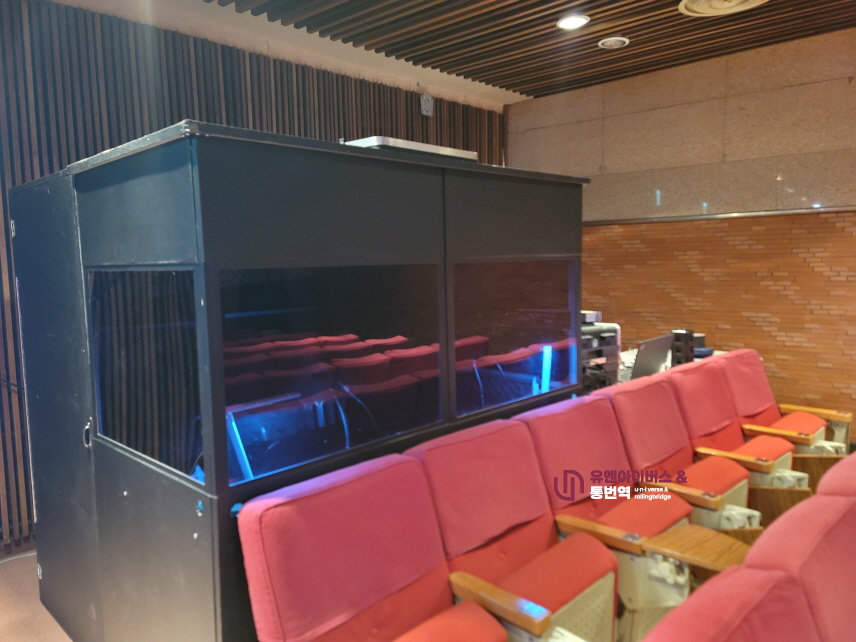
4. Why Can Simultaneous Interpretation Cost USD 1,500 vs. USD 5,000+?
Two events may both require "simultaneous interpretation," yet their actual communication requirements can be completely different.
The final cost is influenced by the complexity of the entire event.
Cost Factor | Standard Event Structure | Complex / High-Risk Event Structure |
Typical Total Cost | Approx. USD 1,500–2,500 | Approx. USD 3,500–5,000+ |
Interpreter Team | Standard two-interpreter team | Specialized or multilingual interpreter teams |
Subject Complexity | General business or seminar content | IR, policy, medical, legal, AI, engineering, or technical content |
Language Structure | One language pair | Multiple languages or relay interpretation |
Q&A | Limited | Extensive and unpredictable |
Equipment | Basic interpretation system | Booths, receivers, consoles, multi-channel audio systems |
Preparation | Standard document review | Presentation analysis, terminology preparation, Q&A preparation |
Technical Support | Basic | Dedicated interpretation and audio engineering support |
Communication Risk | Relatively low | Investment, contract, policy, technical, or executive decision-making |
5. What Creates the USD 1,500 vs. USD 5,000+ Difference?
A USD 1,500–2,500 simultaneous interpretation project may be possible when the event has:
- One language pair
- Standard subject matter
- Limited Q&A
- Basic interpretation equipment
- A straightforward presentation structure
- Standard preparation requirements
- Relatively low communication risk
By comparison, a USD 3,500–5,000+ project may involve:
- Multiple professional interpreters
- Specialized subject-matter expertise
- Multiple languages
- Relay interpretation
- Interpretation booths and receivers
- Multi-channel audio systems
- Extensive Q&A
- Advance terminology preparation
- Technical engineering support
- High-risk communication
The higher cost therefore does not necessarily mean that the interpreter is simply "more expensive."
It usually means that the communication system is more complex.
6. Simultaneous Interpretation Cost Structure
A professional simultaneous interpretation quotation may include several different components.
Cost Component | What It Covers |
Professional Interpreters | Interpreter fees based on language, expertise, duration, and complexity |
Interpretation Equipment | Booths, consoles, receivers, transmitters, and related systems |
Audio System | Microphones, mixers, audio routing, and signal management |
Technical Staff | Equipment installation, testing, monitoring, and troubleshooting |
Preparation | Presentation review, terminology research, glossary preparation |
Project Management | Interpreter coordination, scheduling, and communication planning |
Quality Management | Preparation procedures, operational checks, and risk management |
Multilingual Configuration | Additional interpreters, channels, equipment, and relay interpretation |
This is why comparing quotations based only on the interpreter's daily rate can be misleading.
Two quotations may appear to describe the same service while actually providing very different levels of operational support.
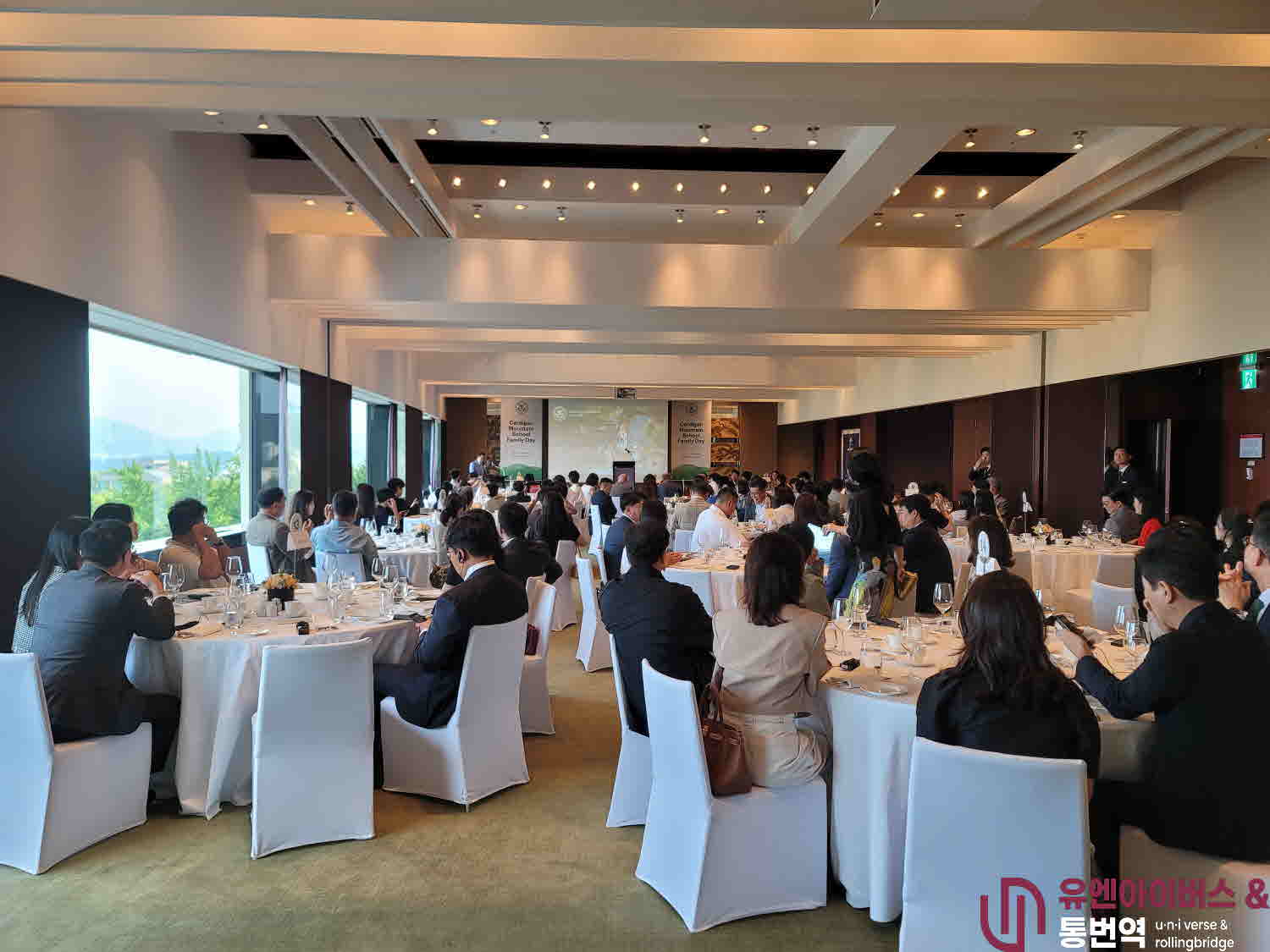
7. Why Organizations Search for Simultaneous Interpretation Services
Organizations typically evaluate simultaneous interpretation for three primary reasons.
1. Understanding Interpretation Costs
Buyers want to understand why quotations can range from approximately USD 1,500 to USD 5,000 or more.
The difference often comes from the overall communication structure rather than interpreter fees alone.
2. Determining Whether Simultaneous Interpretation Is Necessary
Not every event requires simultaneous interpretation.
Small meetings and negotiations may be better suited to consecutive interpretation, while conferences and presentation-heavy events often benefit from simultaneous interpretation.
3. Selecting the Right Interpretation Company
The lowest quotation does not necessarily provide the best value.
Organizations should evaluate whether the interpretation provider can manage:
- Interpreter selection
- Subject-matter expertise
- Advance preparation
- Q&A requirements
- Interpretation equipment
- Audio systems
- Technical support
- Communication risk
- Quality management
The objective should be to select the appropriate communication structure—not simply the lowest interpreter rate.
8. Simultaneous vs. Consecutive Interpretation
Category | Simultaneous Interpretation | Consecutive Interpretation |
Communication Style | Real-time | Speaker pauses for interpretation |
Event Flow | Maintained | Event duration increases |
Typical Team | Usually two interpreters | Often one interpreter |
Equipment | Usually required | Minimal or none |
Typical Cost Structure | Higher initial cost | Lower initial cost |
Best For | Conferences, seminars, forums, large presentations | Meetings, negotiations, interviews |
Primary Advantage | Speed and event-flow efficiency | Interactive and detailed communication |
The appropriate interpretation method should therefore be determined by the event structure rather than price alone.
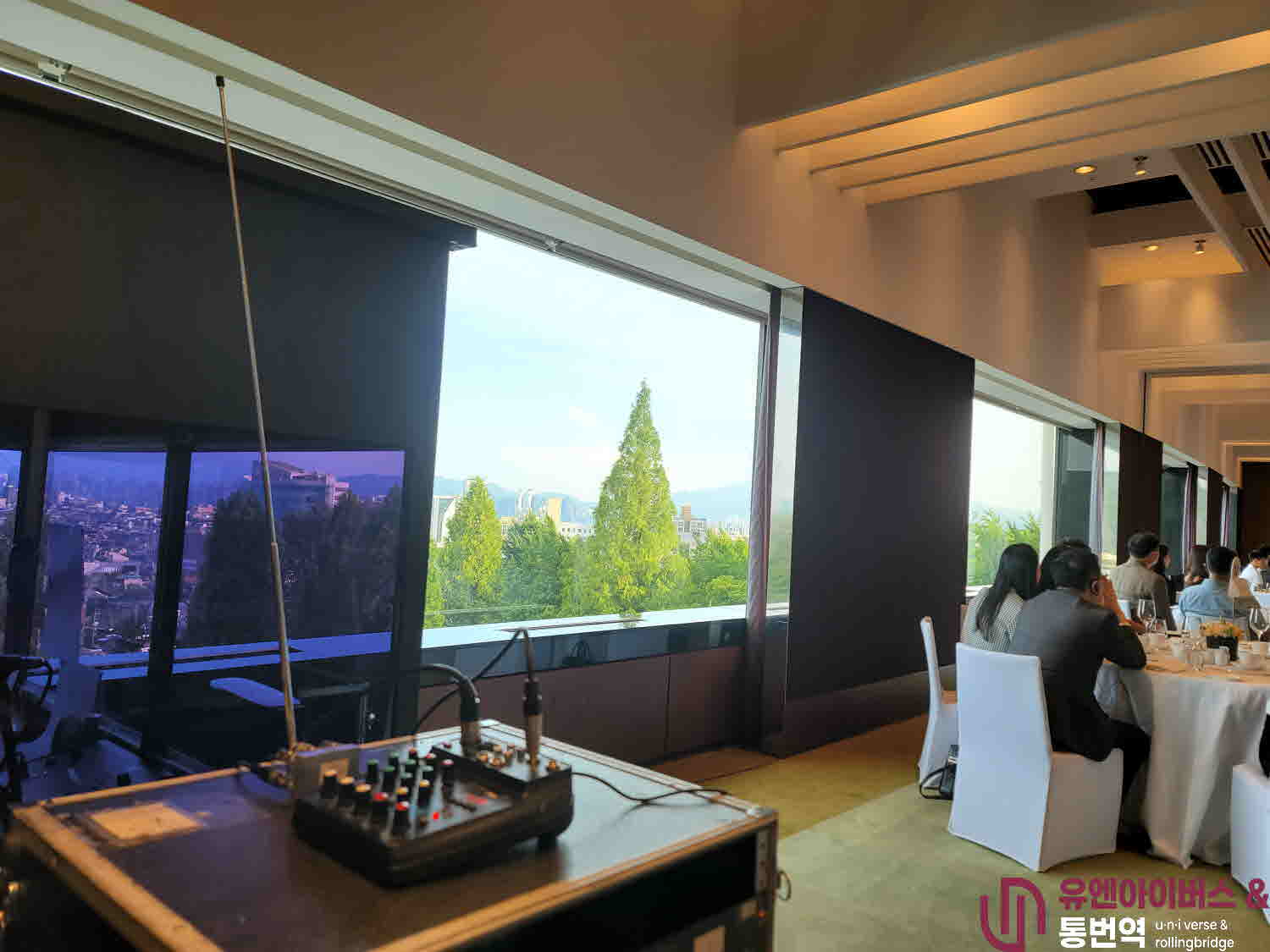
9. When Is the Higher-Cost Structure Necessary?
A higher-cost simultaneous interpretation structure becomes more appropriate when communication errors can directly affect the outcome of the event.
Typical examples include:
Event Type | Why Communication Risk Is Higher |
Investor Relations / Investment Meetings | Financial figures and investment decisions |
Government and Policy Forums | Institutional and policy messaging |
Technical Conferences | Specialized terminology and complex concepts |
Medical Conferences | High terminology accuracy requirements |
Contract Discussions | Commercial conditions and responsibilities |
Executive Meetings | Strategic decision-making |
Multilingual Conferences | Multiple language channels and coordination requirements |
In these environments, interpretation becomes part of the decision-making infrastructure.
The cost should therefore be evaluated against the potential communication risk—not simply against the lowest available quotation.
10. What Should Buyers Check Before Selecting a Simultaneous Interpretation Company?
Before comparing quotations, organizations should confirm:
- What type of event is being organized?
- How many participants will attend?
- How many languages are required?
- How technical is the subject matter?
- How much Q&A is expected?
- Are contracts, investments, policies, or executive decisions involved?
- Will interpretation booths and receivers be required?
- Is remote or hybrid interpretation required?
- How much advance preparation is necessary?
- What level of quality management and technical support is provided?
These factors determine the actual interpretation structure and ultimately influence the final cost.
Frequently Asked Questions
Q1. How much does simultaneous interpretation typically cost?
Depending on event complexity, language requirements, interpreter expertise, equipment, and technical support, a professional simultaneous interpretation project may range from approximately USD 1,500 to USD 5,000+.
Large multilingual or technically complex international conferences may cost more.
Q2. Why are two interpreters usually required?
Simultaneous interpretation requires continuous high-speed listening, processing, and speaking.
For longer sessions, professional interpreters typically work as a team and alternate to maintain concentration and interpretation quality.
Q3. Why can one quotation be USD 1,500 while another is USD 5,000?
The difference may involve:
- Interpreter expertise
- Number of interpreters
- Language combinations
- Event complexity
- Equipment
- Q&A requirements
- Technical staff
- Preparation
- Quality management
The quotations may therefore represent completely different communication structures.
Q4. Is the lowest-priced simultaneous interpretation service always the most cost-effective?
Not necessarily.
For straightforward, low-risk events, a simpler structure may be sufficient and highly cost-effective.
For technical presentations, investment meetings, policy discussions, or complex international conferences, reducing the interpretation structure too aggressively can increase communication risk.
Q5. Does every international event require simultaneous interpretation?
No.
Consecutive interpretation may be more appropriate for:
- Small business meetings
- Interviews
- Negotiations
- Site visits
- Small-group discussions
Simultaneous interpretation is generally more appropriate when presentation flow, audience size, time efficiency, or multilingual communication is important.
Q6. What is the most important factor when comparing interpretation quotations?
Do not compare only the total price.
Compare what communication structure is included in that price.
Interpreter qualifications, preparation, equipment, technical support, Q&A management, and quality management can significantly affect the final outcome.
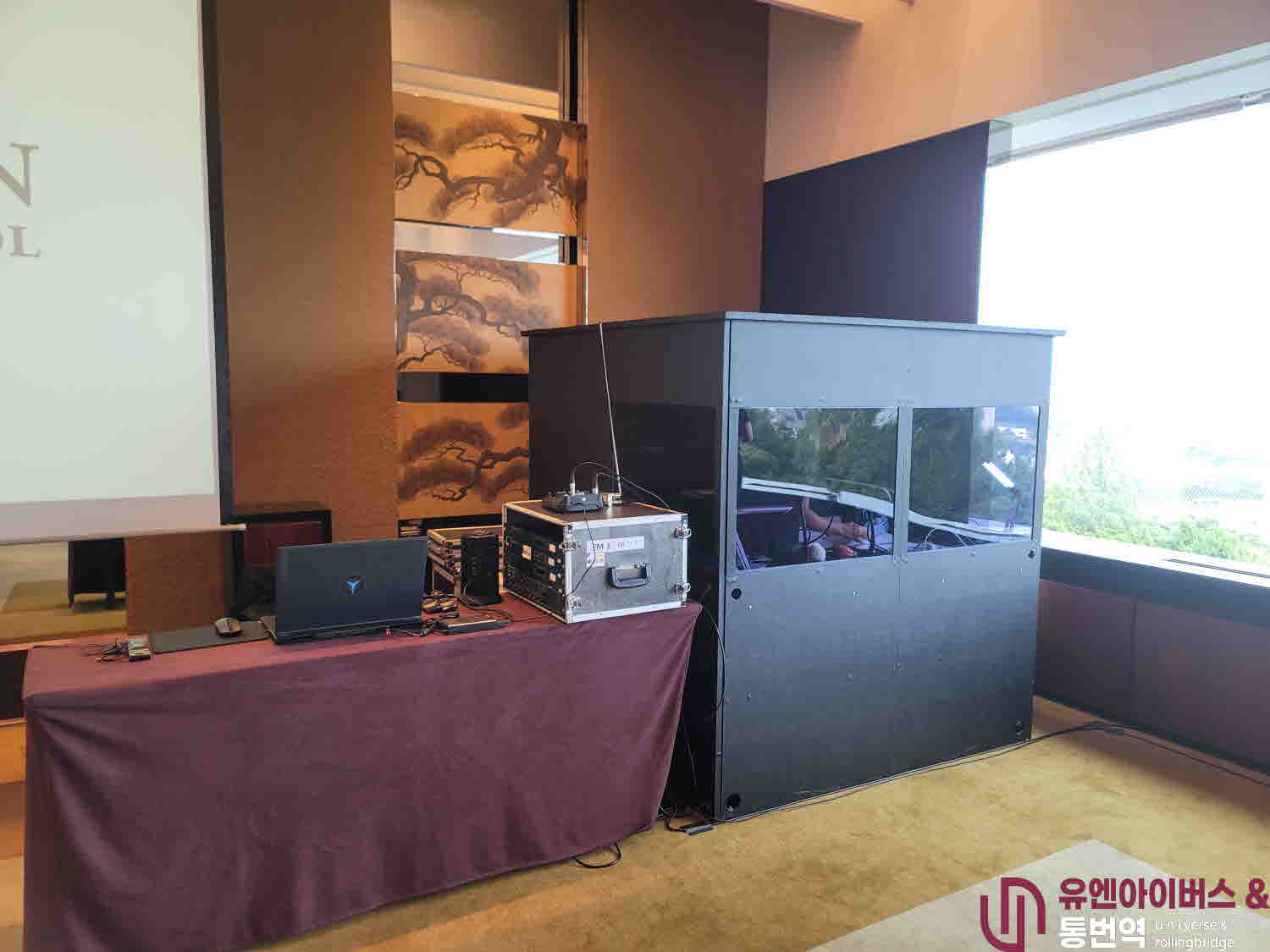
Key Takeaway
Simultaneous interpretation costs are determined not simply by the number of hours worked, but by the communication structure required to operate the event successfully.
A smaller, straightforward seminar may require a relatively simple interpretation setup.
A multilingual international conference involving technical presentations, executive discussions, and extensive Q&A requires a significantly more sophisticated interpretation system.
This is why simultaneous interpretation costs can range from approximately USD 1,500 to USD 5,000 or more.
Final Conclusion
Simultaneous interpretation is not simply the real-time translation of spoken words.
For international conferences and business-critical events, it is a communication system combining:
Professional Interpreters + Preparation + Equipment + Technical Support + Quality Management
The question is therefore not simply:
"How much does simultaneous interpretation cost?"
A more useful question is:
"What interpretation structure does this event require to communicate successfully?"
Choosing the right structure can reduce unnecessary costs while maintaining the communication quality required for the event.
The lowest cost is not always the most efficient structure—and the highest cost is not always necessary. The right cost is the cost of the structure your event actually requires.
Related Information
- Simultaneous Interpretation Cost Structure Explained
- Simultaneous vs. Consecutive Interpretation: Which Is Right for Your Event?
- How to Select a Professional Interpretation Company
- Understanding Interpretation Equipment and Technical Systems
- Why the Same Interpreter Can Deliver Different Results
About Our Case Archive
The case studies and project insights presented on this website are based on experience supporting international conferences, investor presentations, government forums, executive meetings, technical seminars and multilingual corporate events.

About Our Case Archive
The case studies and project insights presented on this website are based on experience supporting international conferences, investor presentations, government forums, executive meetings, technical seminars, and multilingual corporate events.
To protect client confidentiality and comply with the Code of Professional Conduct followed by professional interpreters worldwide, certain project details have been generalized, anonymized, or adapted for educational purposes.
The purpose of these materials is to share practical insights into multilingual communication planning while respecting the confidentiality of every client and every project.
UNIVERSE RB
Designing Communication. Managing Risk. Delivering Understanding.