
Quotation


Performance
Part 6 — Why Interpretation Fails at International Events | 5 Structural Causes and Risk Controls
- 2026.08.04
Why Preparation, Terminology, Technology, and Quality Management Matter
Interpretation
failures, why do outcomes differ even when equally experienced interpreters are
assigned?
The difference is often not language ability—it is preparation, terminology
management, technical design, and quality control.
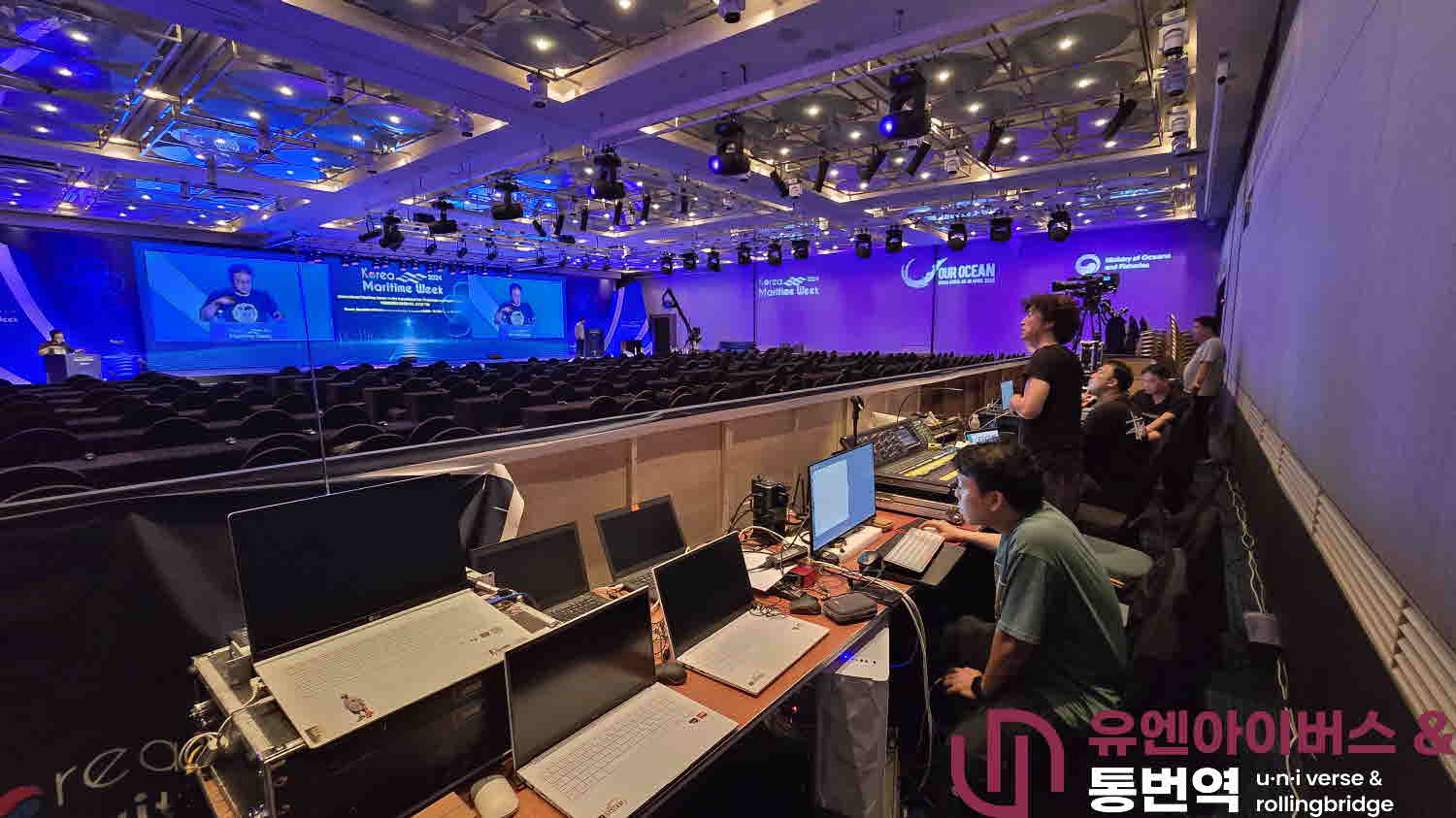
From presentation materials and live Q&A to audio systems and interpreter
staffing, without the right structure, communication outcomes can change.
Executive Summary
Interpretation failure is often attributed to individual interpreter performance. In practice, multilingual communication usually breaks down because several structural weaknesses develop before the event begins.
Even
highly experienced interpreters may struggle when:
- Presentation materials arrive too late
- Technical terminology remains unverified
- The interpretation method does not match the event
- Audio quality is unstable
- Speakers interrupt one another
- Q&A topics change unexpectedly
- Interpreter workload is poorly managed
- No quality-control or backup system exists
Professional interpretation is therefore more than assigning a qualified interpreter. It is the process of designing an environment in which interpreters can perform reliably.
The most effective way to prevent interpretation failure is to manage preparation, terminology, people, technology, workflow, and communication risk as one integrated system.
What Is Interpretation Failure?
Interpretation failure occurs when multilingual communication does not accurately support the purpose, decisions, or expected outcomes of an event.
It may involve more than incorrect words. Failure can also include:
- Inconsistent terminology
- Distorted numerical information
- Lost strategic intent
- Delayed communication
- Unclear Q&A responses
- Technical transmission problems
- Misaligned tone or institutional language
The decisive question is not simply whether every sentence was translated. It is whether participants received the information required to understand, respond, and make decisions correctly.
Five Structural Causes of Interpretation Failure
|
Structural Cause
|
Typical Problem
|
Communication Impact
|
Professional Control
|
|
Insufficient preparation |
Materials arrive late or are unavailable |
Unfamiliar concepts must be processed live |
Advance document review and briefing |
|
Weak terminology management |
Technical terms and abbreviations are inconsistent |
Confusion, correction and credibility loss |
Verified glossary and terminology database |
|
Incorrect communication design |
The interpretation method does not match the event |
Delays, interruptions and inefficient discussion |
Format, staffing and workflow planning |
|
Unstable technical environment |
Poor microphones, noise or network failure |
Interpreter cannot hear or transmit accurately |
Audio testing, monitoring and backup systems |
|
Missing quality management |
No briefing, monitoring or post-event review |
The same problems recur across events |
QMS-based preparation and quality control |
These causes are interconnected. A late presentation file may prevent terminology review, which then increases pressure during Q&A and raises the probability of inconsistent delivery.
1. Insufficient Preparation
Preparation is one of the strongest predictors of interpretation quality.
Professional interpreters may need to review:
- Presentation slides
- Company and speaker information
- Industry terminology
- Product documentation
- Financial or statistical data
- Previous meeting materials
- Event objectives
- Expected Q&A topics
Without adequate preparation, interpreters must understand unfamiliar concepts, identify terminology, organize logic, and deliver the message simultaneously.
As subject complexity increases, this becomes a significant communication risk.
2. Terminology Management
Technical terminology cannot always be interpreted through direct word substitution.
High-risk terminology commonly appears in:
- Finance and Investor Relations
- Medicine and pharmaceuticals
- Engineering and manufacturing
- Government and public policy
- Law and regulatory compliance
- Artificial intelligence
- Semiconductor manufacturing
- Biotechnology and energy
These fields often use abbreviations, proprietary product names, institutional expressions, and specialized concepts.
A verified glossary improves consistency across interpreters, speakers, presentations, Q&A sessions, and related documents.
3. Communication Structure
Different events require different interpretation strategies.
|
Event Structure |
Main Challenge |
Recommended Control |
|
Keynote presentation |
Dense prepared information |
Advance slide and terminology review |
|
Executive meeting |
Rapid decisions and confidentiality |
Senior interpreter and secure briefing |
|
Business negotiation |
Changing proposals and nuanced language |
Negotiation-specialized interpreter |
|
Technical workshop |
Specialized explanations and interaction |
Subject-matter matching |
|
Panel discussion |
Multiple speakers and interruptions |
Moderator coordination and audio control |
|
Live Q&A |
Unpredictable topics and rapid responses |
Risk mapping and experienced interpreters |
|
Multilingual conference |
Multiple channels and relay requirements |
Integrated system and technical management |
Using the wrong interpretation method may create problems even when the interpreter performs well.

4. Technical Environment
Interpretation quality depends directly on whether interpreters can hear and transmit speech accurately.
Common technical risks include:
- Poor microphone placement
- Background noise
- Echo and audio feedback
- Low speaker volume
- Unstable internet connections
- Remote transmission delays
- Incorrect audio routing
- Multiple people speaking simultaneously
Professional technical preparation may include microphone testing, language-channel configuration, interpreter monitoring, network checks, equipment redundancy, and contingency planning.
Technical stability is part of interpretation quality—not a separate issue.
5. Quality Management
Quality management reduces variability before, during, and after an event.
QMS-Based Interpretation Control
|
Stage |
Quality-Control Function |
|
1 |
Analyze event objectives and communication risk |
|
2 |
Match interpreters by language, field and event type |
|
3 |
Review presentation and background materials |
|
4 |
Develop and verify terminology |
|
5 |
Design interpretation method, staffing and workflow |
|
6 |
Test audio, equipment and online connections |
|
7 |
Monitor terminology and communication during the event |
|
8 |
Conduct a post-event quality review |
|
9 |
Archive terminology and feedback for continuous improvement |
This structure prevents communication problems rather than reacting after they become visible.
Why Live Q&A Creates Additional Risk
Q&A sessions are more difficult than prepared presentations because participants may:
- Interrupt one another
- Speak rapidly
- Use incomplete sentences
- Change subjects without warning
- Refer to earlier discussions
- Introduce new technical information
- Use informal or culturally specific expressions
The interpreter must identify the question’s intent, understand the terminology, preserve its tone, and produce an immediate response.
For IR, medical, technical, government, and executive events, Q&A preparation should be treated as a separate risk-control process.
Human Factors and Interpreter Workload
Interpretation is an intensive cognitive activity.
Interpreters must simultaneously:
- Listen
- Understand
- Analyze
- Predict
- Interpret
- Speak
- Monitor terminology
- Preserve logical consistency
- Observe audience reactions
- Prepare the next sentence
Fatigue can reduce concentration during extended or speech-dense sessions. This is why professional simultaneous interpretation commonly uses interpreter teams that rotate at regular intervals.
Proper staffing is a quality-control requirement, not simply a personnel cost.
Why Project Matching Matters
Not every experienced interpreter is suitable for every assignment.
|
Interpreter Background |
Suitable Environment |
Potential Mismatch |
|
Medical and pharmaceutical |
Clinical meetings and healthcare forums |
Investment banking |
|
Finance and IR |
Investor presentations and financial Q&A |
Semiconductor engineering |
|
Technical and engineering |
Factory audits and technical conferences |
Diplomatic policy dialogue |
|
Government and policy |
Public forums and institutional meetings |
Clinical consultation |
|
Conference interpretation |
Multilingual forums and simultaneous sessions |
Specialized negotiation without relevant experience |
Professional matching considers language pair, industry knowledge, communication format, stakeholder level, Q&A intensity, confidentiality, and event objectives.
The Cost of Communication Failure
Interpretation failure can create costs far greater than the original interpretation budget.
|
Failure |
Possible Consequence |
|
Incorrect figures |
Investment or pricing error |
|
Inconsistent terminology |
Technical confusion and credibility loss |
|
Unclear contract language |
Revision, delay or dispute |
|
Failed audio transmission |
Interrupted session or repeated presentation |
|
Mismanaged Q&A |
Reduced stakeholder confidence |
|
Incorrect regulatory language |
Compliance or approval risk |
|
Poor diplomatic framing |
Institutional or reputational damage |
|
Repeated structural problems |
Additional meetings and project delays |
Professional interpretation functions as preventive communication risk management.
How Professional Interpretation Companies Reduce Risk
Professional providers manage the complete communication environment through:
- Project and risk analysis
- Subject-matter interpreter selection
- Advance briefing and material review
- Glossary development
- Interpretation method selection
- Interpreter team configuration
- Equipment and audio testing
- Q&A preparation
- Live operational monitoring
- Backup planning
- Post-event review
The interpreter remains central, but successful communication depends on the system supporting that interpreter.
Buyer Evaluation Checklist
Before selecting an interpretation service, organizations should ask:
|
Evaluation Question |
Why It Matters |
|
How are interpreters selected? |
Confirms subject and event suitability |
|
What preparation is included? |
Identifies whether materials will be reviewed |
|
Who manages terminology? |
Prevents inconsistent technical language |
|
How is communication risk assessed? |
Aligns service level with potential consequences |
|
What happens if the schedule changes? |
Verifies operational flexibility |
|
Who manages equipment and audio? |
Clarifies technical responsibility |
|
Is Q&A included in the preparation? |
Reduces risk during unpredictable discussion |
|
What backup resources are available? |
Protects event continuity |
|
How is quality monitored? |
Confirms accountability throughout the project |
These questions provide more useful information than interpreter fees alone.
Frequently Asked Questions
Q1. What causes most interpretation failures?
Most failures result from several combined factors, including insufficient preparation, inconsistent terminology, unsuitable interpreter matching, poor audio, incorrect event design, and missing quality control.
Q2. Can an experienced interpreter succeed without preparation materials?
An experienced interpreter may manage general communication, but technical, financial, medical, legal, or policy discussions require advance materials to ensure terminology and contextual accuracy.
Q3. Why is terminology management important?
Terminology management keeps specialized expressions, abbreviations, company names, and institutional language consistent across speakers, interpreters, sessions, and documents.
Q4. Why are two simultaneous interpreters often required?
Simultaneous interpretation demands continuous listening, analysis, and speaking. Interpreter rotation helps maintain concentration and stable quality during long or speech-dense sessions.
Q5. Why are Q&A sessions considered high risk?
Q&A sessions involve unpredictable subjects, rapid speech, interruptions, incomplete sentences, and spontaneous technical questions that cannot be fully reviewed in advance.
Q6. How can organizations prevent repeated interpretation problems?
Organizations should review the complete system—including preparation, terminology, staffing, audio, workflow, technical support, backup planning, and post-event evaluation—not only the individual interpreter.
Key Takeaway
Interpretation failures are rarely caused by language ability alone.
Most communication breakdowns originate from structural weaknesses involving preparation, terminology, interpreter matching, event design, technical coordination, workload management, and quality control.
Successful multilingual communication is designed before the event begins.
UNIVERSE RB integrates professional interpreters, terminology governance, technical operations, and QMS-based quality management to reduce communication risk across international conferences, investor presentations, government forums, executive meetings, medical events, and technical seminars.
Design the communication system before communication risk becomes visible.
Request an Interpretation Risk Assessment
About Our Case Archive
The case studies and project insights presented on this website are based on experience supporting international conferences, investor presentations, government forums, executive meetings, technical seminars, and multilingual corporate events.

About Our Case Archive
The case studies and project insights presented on this website are based on experience supporting international conferences, investor presentations, government forums, executive meetings, technical seminars, and multilingual corporate events.
To protect client confidentiality and comply with the Code of Professional Conduct followed by professional interpreters worldwide, certain project details have been generalized, anonymized, or adapted for educational purposes.
The purpose of these materials is to share practical insights into multilingual communication planning while respecting the confidentiality of every client and every project.
UNIVERSE RB
Designing Communication. Managing Risk. Delivering Understanding.