
Quotation


Performance
Part 4 — Why Choosing the Cheapest Interpretation Company Can Cost More
- 2026.07.29
Frequently Asked Questions
1. Is a larger interpretation company always the better choice?
Not necessarily.
Large organizations often have broader networks and greater market visibility, but project success depends on much more than organizational size.
For many international conferences, executive meetings, and investor presentations, factors such as preparation, subject-matter expertise, communication planning, and operational coordination have a greater impact on the outcome than the size of the provider.
The most suitable partner is the one whose capabilities match the communication objectives of your event.

2. Why is communication planning so important?
Interpretation begins long before interpreters enter the meeting room.
Successful multilingual communication requires preparation, including:
- Understanding the event objectives
- Reviewing presentation materials
- Building terminology databases
- Coordinating speakers
- Planning technical workflows
- Preparing contingency procedures
Careful planning helps reduce misunderstandings and supports smooth event execution.
3. Is simultaneous interpretation always the right solution?
No.
Different communication environments require different interpretation methods.
Generally:
- Simultaneous Interpretation is ideal for conferences, forums, keynote presentations, and multilingual audiences.
- Consecutive Interpretation is often more effective for negotiations, executive meetings, factory visits, interviews, and detailed discussions.
- Hybrid Interpretation combines both methods and is increasingly common for investor relations events, government delegations, and executive programs.
The interpretation method should support the communication objectives—not simply the available budget.
4. How important is industry specialization?
Industry knowledge significantly improves communication quality.
A medical conference, a government policy forum, an engineering seminar, and an investor presentation all require different terminology, communication styles, and preparation.
Selecting interpreters with relevant subject expertise reduces ambiguity and improves communication accuracy.
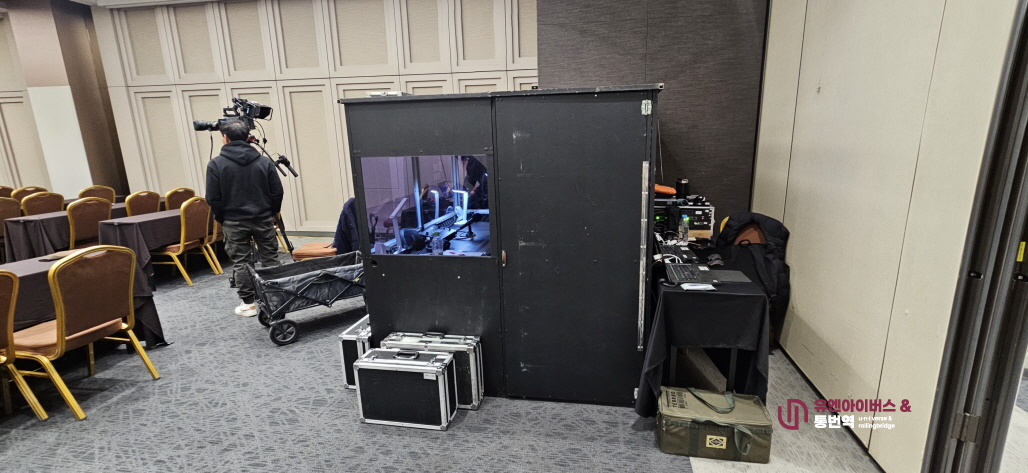
5. What creates communication risk?
Communication risk rarely comes from language ability alone.
It often results from:
- Insufficient preparation
- Incorrect terminology
- Poor event coordination
- Last-minute schedule changes
- Technical failures
- Inadequate interpreter selection
- Lack of communication planning
Managing these risks before the event is often more valuable than resolving them during the event.
6. Why do some projects require a communication system instead of interpreter matching?
As event complexity increases, interpretation becomes only one component of a much larger communication process.
Large international events often require coordination between:
- Interpreters
- Speakers
- Technical engineers
- Event organizers
- Production teams
- Presentation managers
Without structured coordination, communication quality may decline even when excellent interpreters are involved.
7. How should buyers compare interpretation providers?
Rather than comparing quotations alone, organizations should evaluate:
- Relevant project experience
- Subject-matter expertise
- Preparation methodology
- Technical capability
- Communication planning
- Quality management
- Operational support
- Risk management
These factors provide a more accurate indication of project success than company size or marketing statistics.
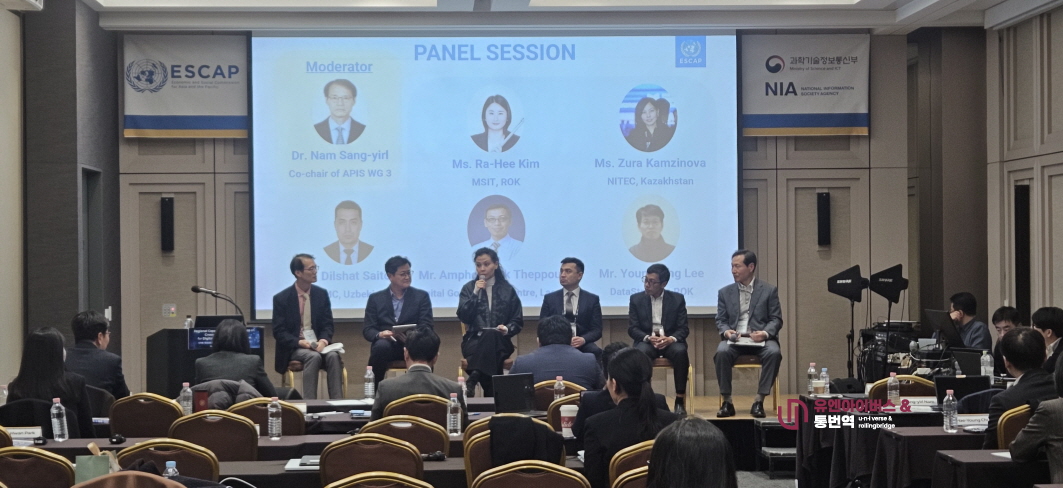
8. What distinguishes UNIVERSE RB?
At UNIVERSE RB, we believe interpretation is part of a broader communication strategy.
Our work focuses on helping organizations communicate clearly across languages by integrating:
- Communication analysis
- Interpretation system design
- Subject-matter expertise
- Technical coordination
- Quality management
- Communication risk management
Our objective is not simply to provide interpreters.
Our objective is to help clients achieve successful multilingual communication.
Our Commitment
Every international event has unique communication requirements.
Rather than applying a standard solution, we begin by understanding:
- What decisions will be made?
- Who are the key participants?
- What communication risks exist?
- Which interpretation method best supports the event?
- How should the project be prepared?
The answers to these questions shape the communication strategy for each assignment.
Looking Ahead
International business communication continues to evolve.
Artificial intelligence, hybrid meetings, multilingual collaboration, and global investment have increased the importance of accurate and well-managed interpretation.
As these environments become more complex, successful interpretation will depend increasingly on:
- Strategic planning
- Subject expertise
- Communication design
- Technology integration
- Operational excellence
- Continuous quality improvement
Interpretation is becoming an integral part of international communication management rather than a standalone language service.
Final Conclusion
Choosing an interpretation company is ultimately about choosing a communication partner.
While company size, revenue, certifications, and market visibility provide useful context, they do not by themselves determine the success of multilingual communication.
Successful outcomes are achieved through careful preparation, experienced professionals, effective project management, and a communication strategy aligned with the objectives of the event.
At UNIVERSE RB, we believe that the best interpretation projects are built on preparation rather than improvisation, systems rather than assumptions, and communication outcomes rather than marketing claims.
Our role is not simply to translate words.
Our role is to help organizations communicate with confidence across languages, cultures, and industries.

About Our Case Archive
The case studies and project insights presented on this website are based on experience supporting international conferences, investor presentations, government forums, executive meetings, technical seminars, and multilingual corporate events.
To protect client confidentiality and comply with the Code of Professional Conduct followed by professional interpreters worldwide, certain project details have been generalized, anonymized, or adapted for educational purposes.
The purpose of these materials is to share practical insights into multilingual communication planning while respecting the confidentiality of every client and every project.
UNIVERSE RB
Designing Communication. Managing Risk. Delivering Understanding.