
Quotation


Performance
Part 2 — Beyond Interpreter Placement: How Communication System Design Improves Interpretation Outcomes
- 2026.07.29
Moving Beyond Interpreter Placement
Many interpretation providers begin with a simple question:
"Which interpreter is available?"
At UNIVERSE RB, we begin with a different question:
"What communication outcome must this event achieve?"
Although both approaches result in interpretation services, they represent fundamentally different project philosophies.
Interpreter availability is important, but successful multilingual communication depends on much more than assigning qualified linguists.
It requires a carefully designed communication system that aligns people, technology, terminology, workflows, and decision-making objectives.
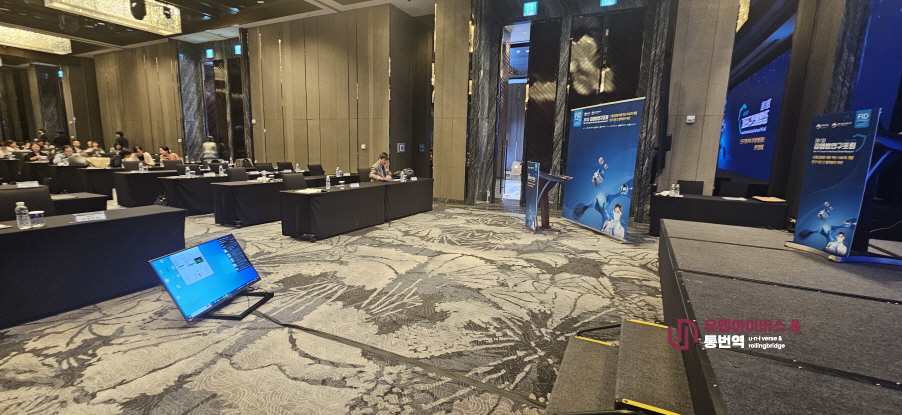
Professional conference interpretation services require more than qualified interpreters.
They also require interpretation equipment, technical coordination, terminology management, and structured project management.
Interpretation Is a Communication System
Professional interpretation should not be viewed as an isolated language service.
Instead, it functions as one component within a broader communication ecosystem.
Successful international events require the coordination of multiple elements working together.
These typically include:
- Communication objectives
- Audience profiles
- Meeting format
- Interpretation methodology
- Technical infrastructure
- Subject-matter expertise
- Presentation materials
- Terminology preparation
- Speaker coordination
- Operational contingency planning
Weakness in any one of these areas can reduce the overall effectiveness of multilingual communication, regardless of interpreter quality.
The Difference Between Interpreter Matching and Communication Design
|
Conventional Approach
|
Communication System Approach
|
|
Assign available interpreters |
Design the communication strategy first |
|
Focus on language coverage |
Focus on communication outcomes |
|
Preparation varies by project |
Structured preparation for every assignment |
|
Interpreter works independently |
Integrated project management and technical coordination |
|
Success depends on individual performance |
Success depends on the entire communication system |
- The difference is subtle, but significant.
- One approach provides language support.
- The other supports business communication.
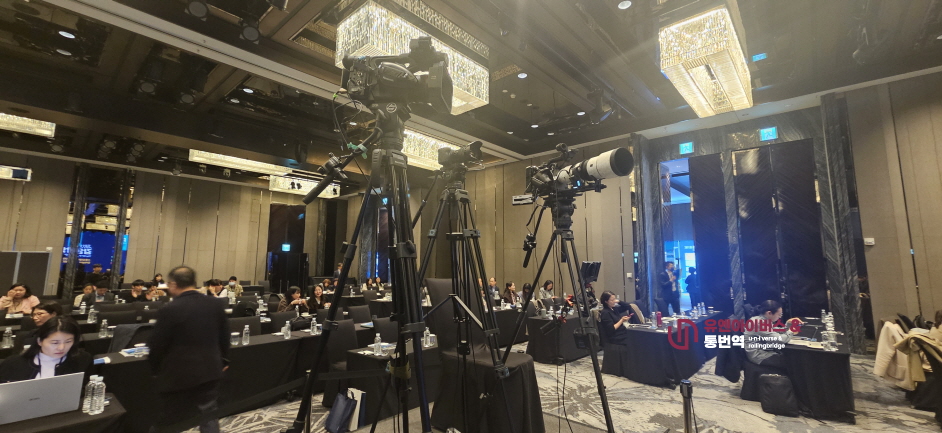
Every Event Has a Different Communication Structure
No two multilingual events are identical.
An international conference, an investor presentation, a government delegation, and an executive negotiation all require different communication strategies.
For example:
International Conferences
Primary priorities include:
- Continuous presentation flow
- Audience engagement
- Simultaneous multilingual delivery
- Technical synchronization
- Time management
Investor Relations (IR)
Communication priorities shift toward:
- Financial terminology
- Executive credibility
- Investor confidence
- Accurate numerical interpretation
- High-pressure Q&A sessions
Government and Policy Forums
Additional considerations include:
- Diplomatic language
- Official terminology
- Institutional consistency
- Protocol compliance
- Public communication sensitivity
Technical Conferences
Success often depends on:
- Engineering terminology
- Scientific precision
- Industry-specific vocabulary
- Consistency across presentations
- Complex visual materials
Each communication environment requires a different interpretation strategy.
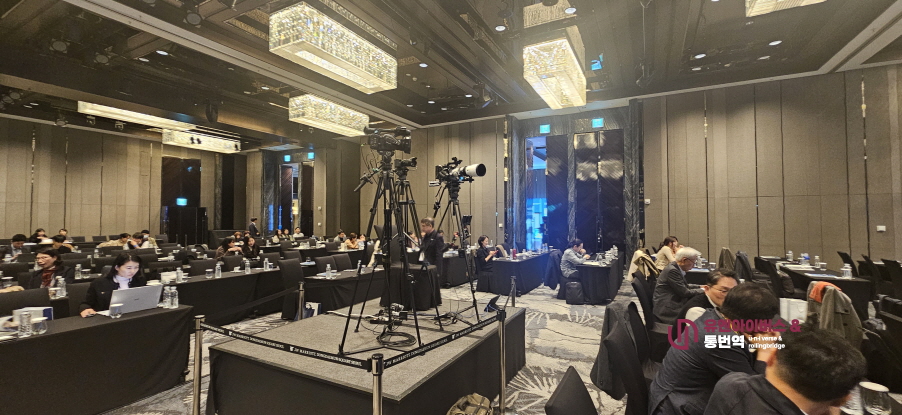
Why Preparation Matters
Interpretation quality is determined long before the event begins.
Preparation often has a greater influence on project success than the interpretation itself.
Typical preparation includes:
- Reviewing presentation materials
- Building terminology databases
- Identifying industry-specific expressions
- Confirming speaker order
- Understanding event objectives
- Coordinating technical teams
- Verifying interpretation equipment
- Planning backup procedures
Effective preparation reduces uncertainty during live events.
Communication Risk Is Often Invisible
Many communication failures are not caused by incorrect translation.
Instead, they arise from operational issues such as:
- Unclear meeting objectives
- Last-minute agenda changes
- Poor terminology preparation
- Inadequate technical coordination
- Incorrect interpretation method
- Lack of speaker briefing
- Insufficient rehearsal
These issues rarely appear in quotations, yet they frequently determine whether an international event succeeds.
A QMS-Based Quality Management Approach
At UNIVERSE RB, quality management extends beyond interpreter selection.
Our workflow is built around structured preparation, communication planning, and operational control.
Although every project is different, our quality process generally includes:
- Project consultation
- Communication objective analysis
- Event structure review
- Interpreter selection
- Terminology preparation
- Technical coordination
- Pre-event rehearsal
- Live operational management
- Post-event review
This systematic approach helps reduce communication risks before they become operational problems.
Selecting the Right Interpretation Method
One of the most important planning decisions is choosing the appropriate interpretation format.
|
Event Characteristics |
Recommended Method |
|
Large conferences |
Simultaneous Interpretation |
|
Executive meetings |
Consecutive Interpretation |
|
Investor presentations |
Hybrid Interpretation |
|
Government forums |
Simultaneous with structured terminology management |
|
Technical workshops |
Depends on audience interaction and session format |
The objective is not to recommend the most expensive solution.
The objective is to recommend the most appropriate communication strategy.
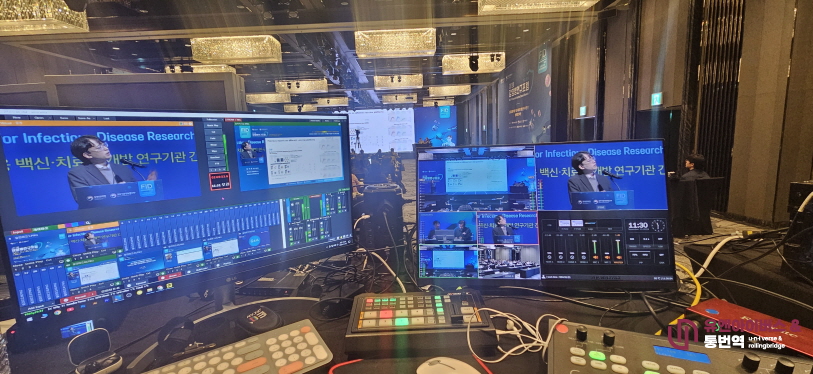
Why Communication Design Creates Better Outcomes
Professional interpretation supports more than language.
It supports decision-making.
During international meetings, participants are often making decisions involving:
- Investments
- Government policy
- Commercial contracts
- Strategic partnerships
- Technical cooperation
- Regulatory compliance
In these situations, communication quality directly influences business outcomes.
A well-designed interpretation system allows participants to focus on the discussion instead of the language barrier.
Measuring Success
The success of an interpretation project should not be measured solely by whether every sentence was translated.
A more meaningful evaluation considers questions such as:
- Did participants understand each other clearly?
- Were important decisions communicated accurately?
- Did the event remain on schedule?
- Was audience engagement maintained?
- Were technical issues minimized?
- Did communication support the objectives of the meeting?
When these objectives are achieved, interpretation becomes an invisible but essential part of the event's success.
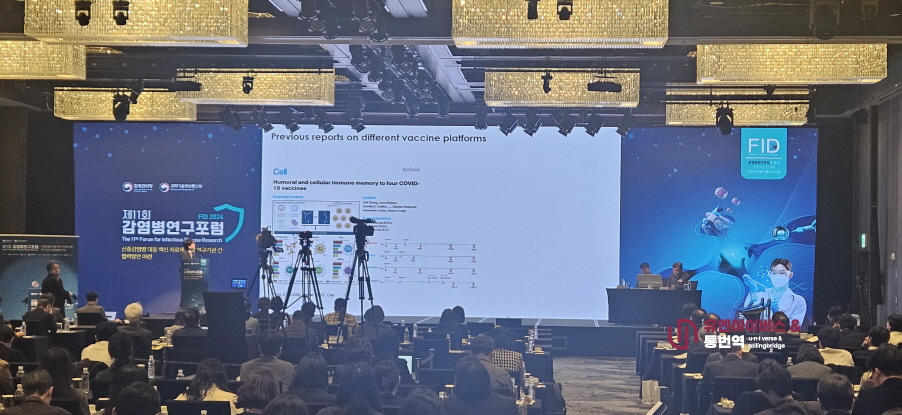
Key Takeaway
The most valuable interpretation providers do more than supply interpreters.
They design communication systems.
By integrating project planning, terminology management, technical coordination, quality assurance, and operational support, interpretation becomes a strategic communication tool rather than a standalone language service.
For organizations managing international conferences, executive meetings, investor presentations, and government events, this systems-based approach can significantly reduce communication risk while improving operational efficiency and overall event outcomes.

About Our Case Archive
The case studies and project insights presented on this website are based on experience supporting international conferences, investor presentations, government forums, executive meetings, technical seminars, and multilingual corporate events.
To protect client confidentiality and comply with the Code of Professional Conduct followed by professional interpreters worldwide, certain project details have been generalized, anonymized, or adapted for educational purposes.
The purpose of these materials is to share practical insights into multilingual communication planning while respecting the confidentiality of every client and every project.
UNIVERSE RB
Designing Communication. Managing Risk. Delivering Understanding.