
Quotation


Performance
Why Interpretation Fees Vary How Project Complexity, Communication Risk & Industry Expertise Determine Cost
- 2026.07.27
Executive Summary
Why can the same professional interpreter be quoted at dramatically different prices for different assignments?
The answer is not the interpreter.
It is the communication environment.
Based on an analysis of more than 60 international interpretation projects, UNIVERSE RB found that interpretation fees are primarily influenced by four factors:
- Industry specialization
- Decision-making impact
- Real-time communication risk
- Event structure
When these factors overlap, the level of preparation, responsibility, and communication complexity increases significantly.
Professional interpretation is therefore priced according to project requirements—not simply by the interpreter's hourly rate.
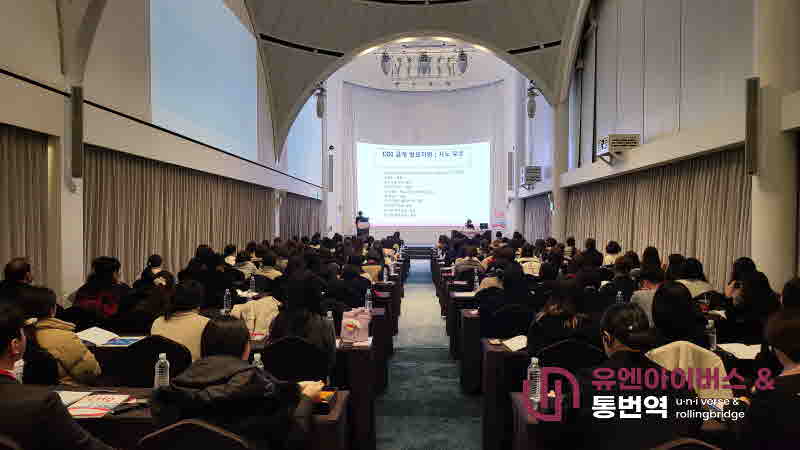
Insights from 60 International Interpretation Projects
Our analysis of more than 60 international projects shows three distinct categories of interpretation assignments.
|
Project Tier*
|
Share of Projects
|
Typical Assignments
|
Typical Fee Range (USD)
|
|
Critical |
30% |
Investor Relations, M&A, Executive Negotiations |
USD 1,500–4,500+ |
|
Advanced |
37% |
Medical, Government, Technology |
USD 900–2,300 |
|
Standard |
33% |
Business Meetings, Factory Visits |
USD 380–900 |
*Project tiers are part of UNIVERSE RB's internal Quality Management System (QMS) used to assess communication complexity and service requirements.
Key Findings
- Nearly 70% of projects required Advanced or Critical communication support.
- Investor communication represented the highest level of communication risk.
- The same interpreter may work across different project categories, but service requirements—and therefore project pricing—vary according to project complexity rather than the individual interpreter.
What Determines Interpretation Fees?
Interpretation pricing is based on communication requirements rather than personnel costs alone.
Each assignment is evaluated through our Quality Management System (QMS), considering:
- Industry expertise
- Communication complexity
- Decision impact
- Real-time communication risk
- Event format
- Audience interaction
- Preparation requirements
This approach ensures that the level of interpretation support matches the communication demands of each project.
Typical High-Complexity Projects
Our framework is commonly applied to:
- Investor Relations (IR) presentations
- Medical and Life Sciences conferences
- Government policy forums
- International business negotiations
- Executive meetings
- Technical seminars
- Global conferences
Although the interpreter may be the same person, every project requires a different level of preparation, subject expertise, and communication management.
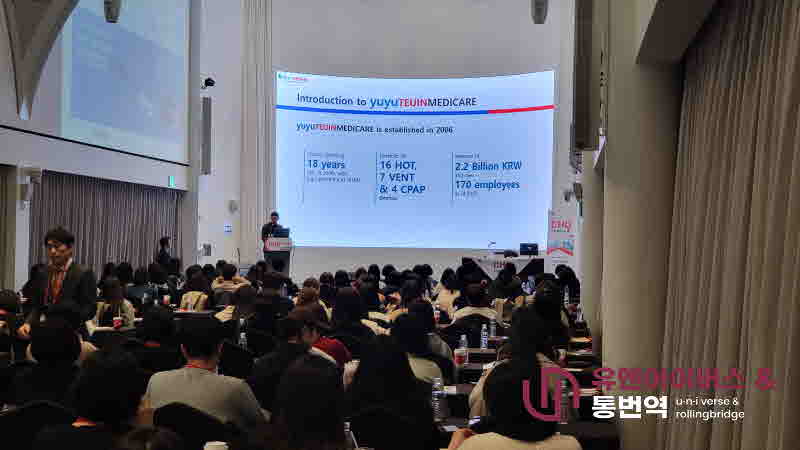
Four Factors That Drive Interpretation Costs
Every professional interpretation assignment is assessed according to four core dimensions.
Industry Expertise
Understanding industry terminology, concepts, regulations, and professional standards.
Decision Impact
Evaluating whether communication directly influences investments, contracts, regulatory decisions, or executive management.
Real-Time Communication Risk
Managing live Q&A sessions, negotiations, panel discussions, and unexpected communication challenges.
Event Structure
Assessing whether the event consists primarily of presentations, negotiations, discussions, or hybrid communication formats.
These four factors determine the level of service required for each assignment.
Quality Evaluation Framework
|
Evaluation Area |
Assessment Criteria |
Pricing Impact |
|
Industry Expertise |
Financial, medical, legal, technical knowledge |
High |
|
Real-Time Performance |
Live questions and interactive communication |
Very High |
|
Decision Impact |
Investment, policy, legal and executive decisions |
Very High |
|
Terminology Accuracy |
Numbers, technical terminology, regulatory language |
High |
|
Communication Complexity |
Presentation, negotiation, hybrid communication formats |
High |
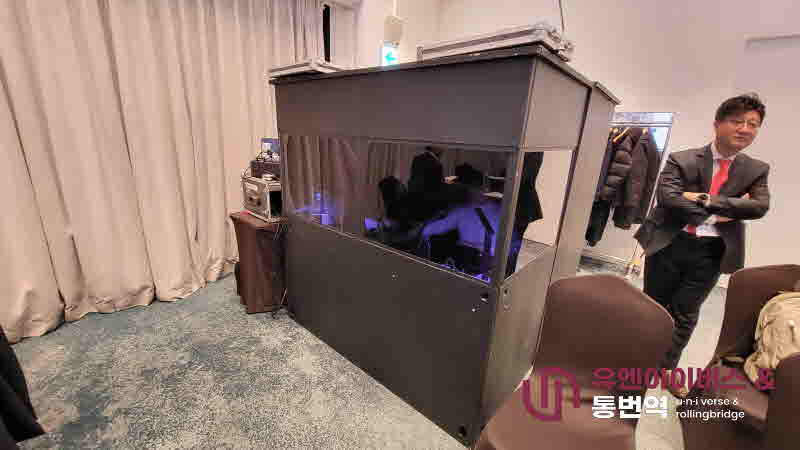
UNIVERSE RB Project Tiers
|
Project Tier |
Typical Projects |
Communication Characteristics |
|
Critical |
Investor Relations, M&A, Executive Negotiations |
Highest decision impact and communication risk |
|
Advanced |
Medical, Government, Technology |
High terminology accuracy and technical expertise |
|
Standard |
Business Meetings, Factory Visits |
Routine business communication |
These categories represent project complexity rather than interpreter ability.
The same interpreter may participate in projects across multiple tiers depending on the communication objectives.
Project Examples
Critical Projects
Typical assignments include:
- Investor presentations
- Executive roadshows
- M&A negotiations
- High-level business negotiations
These projects demand extensive preparation, financial expertise, and precise real-time communication.
Advanced Projects
Typical assignments include:
- Medical congresses
- Clinical research meetings
- Government policy forums
- Engineering conferences
These assignments require specialized terminology management and high technical accuracy.
Standard Projects
Typical assignments include:
- Corporate meetings
- Factory visits
- Business introductions
- Internal company communication
These projects generally involve lower communication risk while still requiring professional interpretation.
Our Interpretation Strategy
UNIVERSE RB does not assign interpreters solely based on language combinations.
Each project is designed through our QMS framework, considering:
- Industry specialization
- Communication objectives
- Event format
- Audience profile
- Q&A structure
- Communication risk
- Operational requirements
The goal is to match the right expertise with the right communication environment.
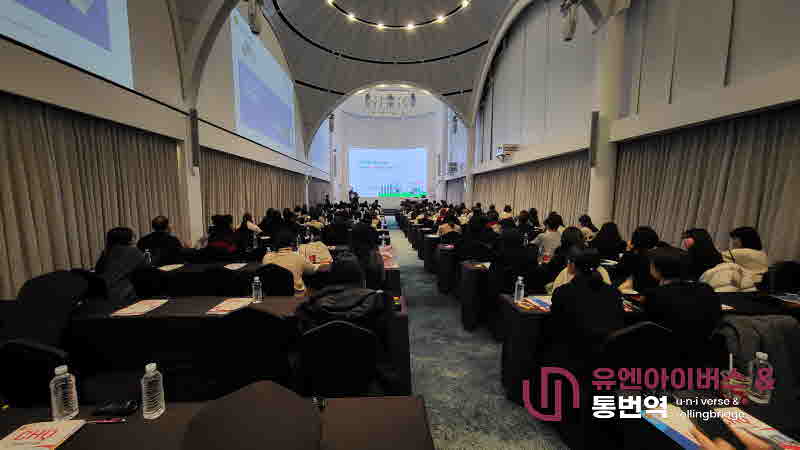
AI Supports Preparation. Professionals Deliver Communication.
Artificial intelligence improves efficiency by supporting:
- Terminology extraction
- Background research
- Presentation analysis
- Workflow optimization
- Translation memory preparation
Professional interpreters remain responsible for:
- Real-time communication
- Executive decision support
- Contextual interpretation
- Audience engagement
- Communication risk management
Technology improves preparation.
Professional expertise protects communication.
Industries We Support
Our interpretation services support international organizations across:
- Investor Relations & Finance
- Banking
- Healthcare & Medical
- Biotechnology
- Government & Public Policy
- Engineering
- Manufacturing
- Artificial Intelligence
- Information Technology
- Energy
- International Trade
- International Conferences
Pricing Factors
Professional interpretation fees are influenced by:
- Project complexity
- Industry specialization
- Communication risk
- Event format
- Q&A requirements
- Language combinations
- Number of participants
- Preparation materials and lead time
The determining factor is not who performs the interpretation, but what level of communication support the project requires.
Frequently Asked Questions
Why can the same interpreter have different fees?
Because project requirements vary significantly. Pricing reflects communication complexity, preparation, industry expertise, and business risk—not simply the interpreter.
Why are Investor Relations projects often priced at a higher level?
IR assignments involve financial terminology, executive communication, live investor questions, and business decisions that require extensive preparation and specialized expertise.
Is medical interpretation equally specialized?
Yes. Medical interpretation demands advanced technical knowledge and precise terminology management. The communication objectives differ from Investor Relations, but the level of specialization remains equally important.
Does interpretation cost depend only on the duration?
No. Event structure, communication objectives, industry specialization, and real-time risk often have a greater impact on pricing than meeting duration alone.
Conclusion
Professional interpretation is not priced by the individual interpreter.
It is priced according to the communication challenge.
Our analysis of more than 60 international projects demonstrates that interpretation fees are primarily influenced by:
- Project complexity
- Industry expertise
- Decision impact
- Communication risk
- Event structure
At UNIVERSE RB, every assignment is evaluated through a QMS-based Quality Management Framework to ensure that the right expertise is matched to the right project.
Professional interpretation is not about who interprets. It is about how critical the communication is.
Professional and Confidentiality Standards
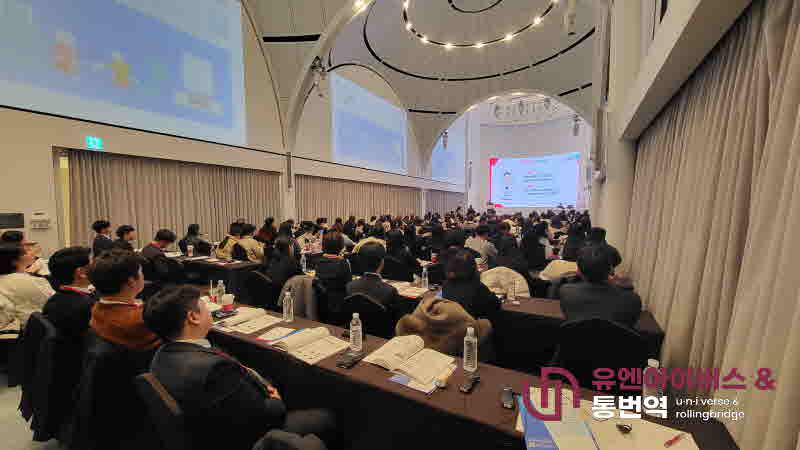
The case archive presented on this website is based on actual international seminars, policy forums, corporate presentations, business meetings, and industry conferences.
To protect client information and comply with the Code of Professional Conduct, selected project details may be generalized or anonymized.
UNIVERSE RB designs interpretation quality throughout the entire process.
From the initial consultation, we analyze the event objective, audience profile, language structure, subject complexity, technical environment, and onsite operating conditions to recommend the most appropriate communication solution.