
Quotation


Performance
AI-Powered Multilingual Translation QMS-Based Quality Management for Global Business Communication
- 2026.07.27
Artificial intelligence is rapidly reshaping the global translation industry.
Routine documents, repetitive content, and internal communications can now be translated efficiently across multiple languages using AI-assisted workflows.
As language technology advances, the competitive advantage is no longer the ability to translate into many languages.
The real challenge is maintaining consistency, accuracy, and business integrity across every language.
At UNIVERSE RB, we combine AI-assisted productivity with a structured Quality Management System (QMS) to deliver multilingual communication that organizations can trust in international business, government, investment, healthcare, and technology.
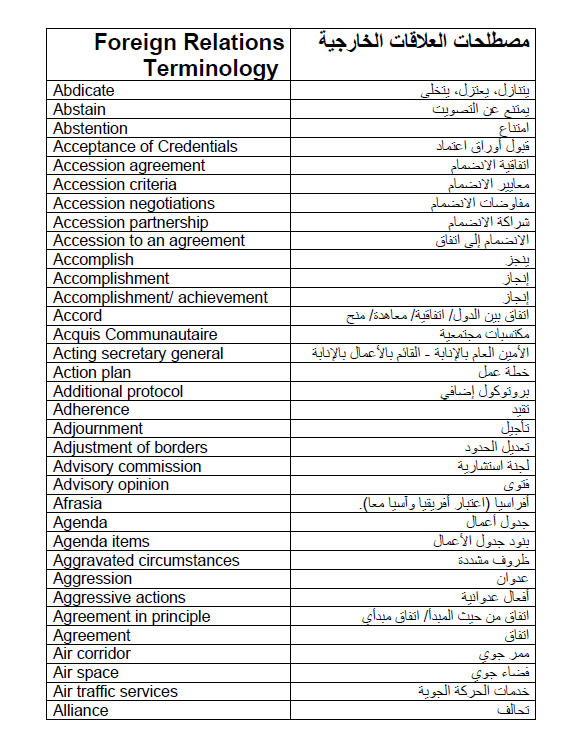
Executive Summary
Successful multilingual communication is not achieved by translating one language at a time.
It requires every language version to communicate the same meaning, support the same decisions, and preserve the same level of accuracy.
While AI significantly improves efficiency for routine translation, multilingual business communication introduces additional challenges:
- Cross-language consistency
- Terminology governance
- Numerical and financial accuracy
- Regulatory compliance
- Communication risk management
UNIVERSE RB integrates AI-assisted translation with QMS-based quality management to ensure every language version performs as one unified communication system.
Why Multilingual Translation Requires More Than AI
AI has lowered the barriers to multilingual translation.
Organizations can now produce English, German, French, Spanish, Italian, Japanese, Korean, and many other language versions faster than ever before.
However, producing multiple translations is not the same as managing multilingual communication.
For business-critical documents, every language must communicate identical intent while remaining culturally and linguistically appropriate.
That requires more than machine translation.
It requires a controlled multilingual quality management framework.
Choosing the Right Translation Approach
AI-Assisted Translation Is Well Suited For
- Internal documentation
- Draft versions
- Standard operating procedures
- Repetitive content
- General information
- Low-risk multilingual communication
QMS-Based Multilingual Translation Is Essential For
- Investor Relations (IR) presentations
- Contracts and legal documentation
- Government and public policy papers
- Technical documentation
- Medical and life sciences content
- Executive communications
- Corporate reports
- Website localization
- Global marketing campaigns
Where multiple languages support the same business decision, consistency becomes as important as linguistic accuracy.
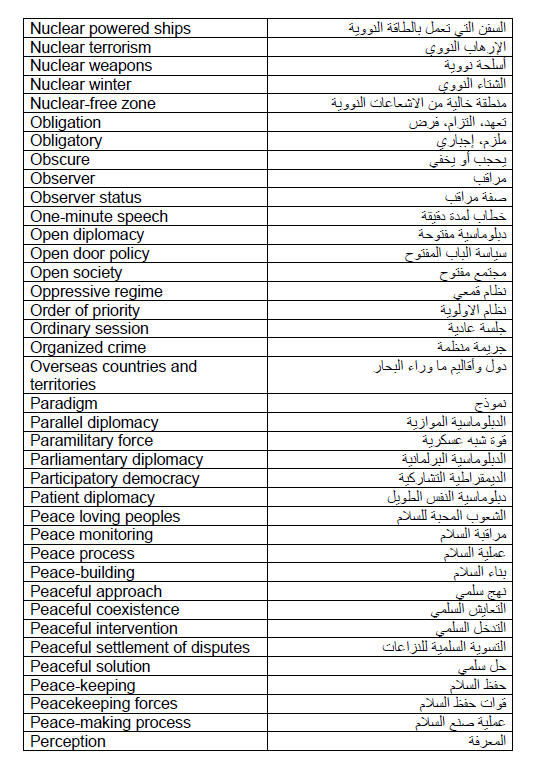
General Translation vs QMS-Based Multilingual Translation
|
General Translation
|
UNIVERSE RB QMS Multilingual Translation
|
|
Languages translated independently |
Integrated multilingual communication management |
|
Individual translator decisions |
Centralized multilingual terminology governance |
|
Sentence-level translation |
Cross-language communication consistency |
|
Limited terminology control |
Unified multilingual termbase management |
|
Separate language reviews |
Cross-language quality assurance |
|
Variable quality between languages |
Consistent communication across every language |
|
Minimal risk control |
Structured multilingual risk management |
The difference is not the number of languages.
The difference is whether every language delivers the same business message.
Our Multilingual Quality Framework
Every multilingual project follows a structured communication management process.
Communication Objective Analysis
We define the purpose of the document and the business outcome it is intended to support.
Audience Analysis
Translation strategies are adapted for investors, regulators, engineers, healthcare professionals, executives, and public audiences.
Multilingual Terminology Governance
Terminology is managed centrally to ensure that every language version communicates the same concepts consistently.
Cross-Language Context Management
Rather than translating each language independently, we verify that meaning, logic, and communication intent remain aligned across all language versions.
Multi-Stage Quality Assurance
Every language undergoes linguistic review, followed by cross-language consistency verification and final quality control.
Business Risk Management
Critical financial data, contractual language, technical terminology, and regulatory information are validated before delivery.
AI Improves Efficiency. QMS Protects Consistency.
Artificial intelligence accelerates multilingual production by supporting:
- Draft translation
- Terminology extraction
- Translation memory optimization
- Workflow automation
- Repetitive language processing
Our QMS framework ensures that every language remains consistent with the original business objective.
By combining AI with structured multilingual quality management, organizations benefit from improved productivity while maintaining professional standards across all target languages.
Industries We Support
Our multilingual solutions support organizations operating internationally across:
- Investor Relations
- Banking & Finance
- Government & Public Policy
- Legal Services
- Healthcare & Medical
- Pharmaceuticals
- Engineering & Manufacturing
- Artificial Intelligence
- Information Technology
- Energy & Infrastructure
- International Trade
- Corporate Communications
- Website Localization
- Global Marketing
Why Organizations Choose UNIVERSE RB
Organizations partner with UNIVERSE RB because they require multilingual communication that performs consistently across every market.
Our strengths include:
- AI-assisted multilingual translation
- QMS-Based Multilingual Quality Management
- Cross-language terminology governance
- Multi-stage linguistic review
- International Code of Professional Conduct
- Business risk management
- Industry-specialized linguists
- Consistent quality across multilingual projects
- Extensive experience supporting international conferences, government initiatives, investor communications, and global business operations
Our Communication Philosophy
Translation is only one part of international communication.
Real success depends on whether every language version conveys the same intent, supports the same decisions, and protects the same level of business confidence.
Our responsibility is to ensure that multilingual communication remains accurate, consistent, and trustworthy—regardless of language, audience, or market.
Conclusion
Artificial intelligence has made multilingual translation faster and more accessible.
What differentiates organizations today is not how many languages they translate, but how consistently those languages communicate.
UNIVERSE RB combines AI-assisted technology with QMS-based multilingual quality management to deliver translation solutions that protect accuracy, strengthen consistency, and reduce communication risk across global markets.
One Message. Every Language. Trusted Worldwide.
Professional and Confidentiality Standards
The case archive presented on this website is based on actual international seminars, policy forums, corporate presentations, business meetings, and industry conferences.
To protect client information and comply with the Code of Professional Conduct, selected project details may be generalized or anonymized.
UNIVERSE RB designs interpretation quality throughout the entire process.
From the initial consultation, we analyze the event objective, audience profile, language structure, subject complexity, technical environment, and onsite operating conditions to recommend the most appropriate communication solution.