
Quotation


Performance
China Market Entry Investment Briefing Simultaneous Interpretation | Investment Policy · Legal Framework · Industry Trends Forum – UNIVERSE RB
- 2025.07.31
This investment forum examines China's investment policies, industrial trends, and business environment, providing practical insights for foreign companies exploring opportunities in the Chinese market.
Key interpretation topics include central and local government investment policies and incentives, industry trends in manufacturing, advanced technology, green energy, and consumer markets, as well as foreign investment regulations, taxation, and labor laws.
Because investment discussions require precise interpretation of policy, legal, and administrative terminology, professional interpretation is essential to ensure accurate communication, regulatory clarity, and informed business decision-making.
Investment, IR & Global Business
Category
Description
This category covers interpretation cases related to investment communication,
including investor relations presentations, investment briefings, and global
market expansion strategies.
UNIVERSE RB provides integrated services including:
Simultaneous interpretation Consecutive interpretation IR document translation Investment presentation interpretation QMS-based quality management operations
We support investment briefings, IR presentations, and global business collaboration sessions with professional interpretation services.
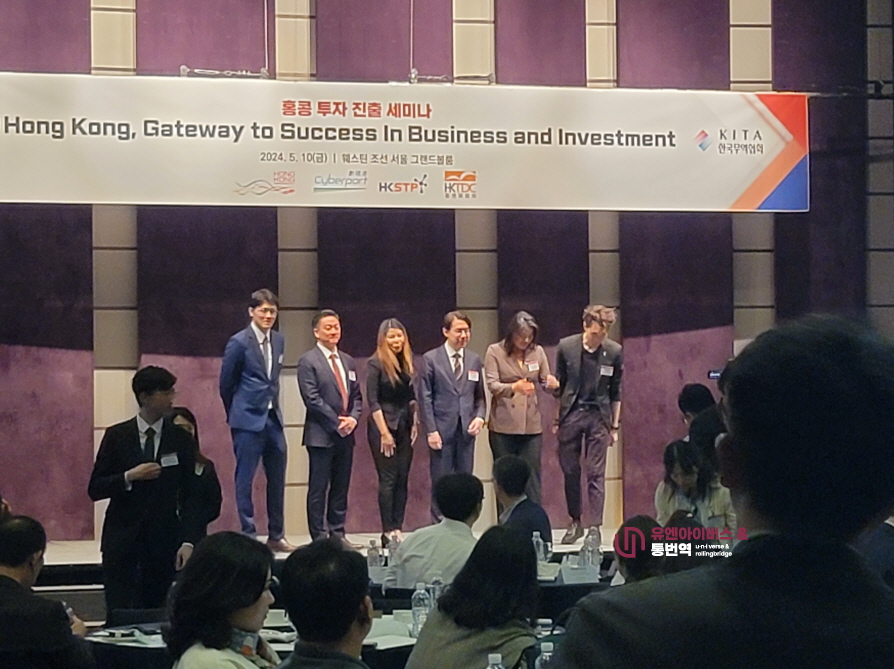
1. Event Overview
This investment briefing targeted domestic and international investors and corporate representatives seeking entry into the Chinese market.
The program focused on Chinese central and local government investment policies, market conditions, major industry trends, and practical entry strategies.
Korean–Chinese simultaneous interpretation was provided to facilitate smooth communication among Chinese economic officials, investment promotion agencies, trade associations, and Korean enterprises.
Interpretation for China-focused investment briefings is a highly specialized field where policy, legal, tax, and labor considerations intersect in real business contexts.
2. Complexity Analysis
China investment briefings typically involve:
Differences between central and local government policies
Simultaneous discussion of foreign investment law, taxation, and labor regulations
Industry-specific incentive structures
Administrative nuances embedded in policy terminology
Practical risk-related questions during Q&A sessions
Particularly, expressions related to investment approval procedures, tax rates, and joint venture (JV) structures require absolute precision.
3. Scope of Interpretation
Simultaneous interpretation of China investment policy and market environment presentations
Industry-specific investment trend briefings
Legal, tax, and labor regulation sessions
Case study and partnership strategy presentations
Real-time Q&A and networking interpretation
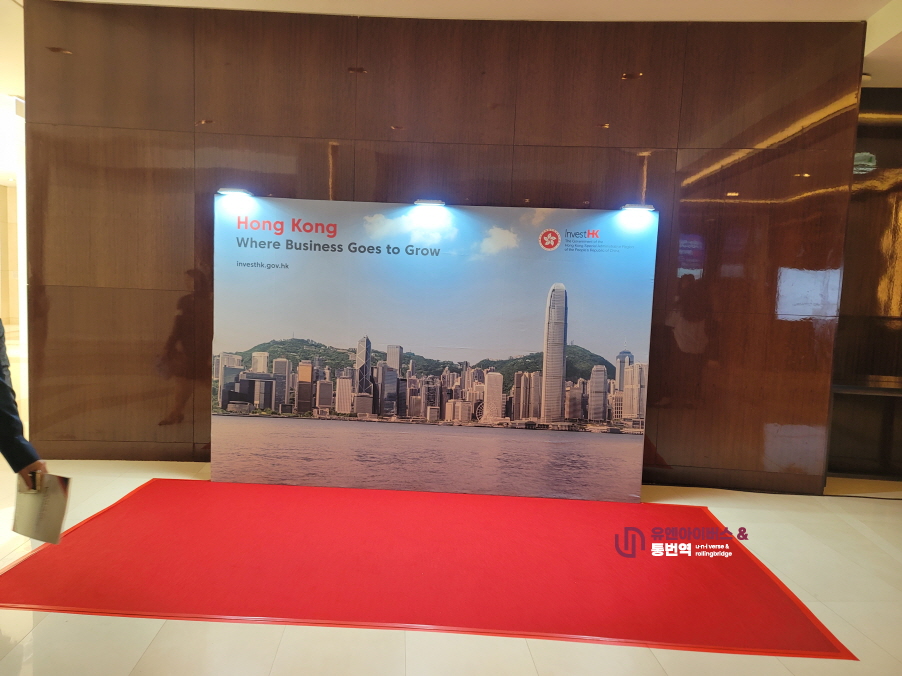
4. Key Interpretation Content
1) Chinese Central & Local Government Investment Policies
Foreign investment attraction policies and incentives
Industry-specific preferential policies
Comparative regional investment environments
Policy and administrative terminology were delivered within accurate contextual frameworks.
2) Core Industry Trend Analysis
Manufacturing
Advanced technology industries
Green and new energy sectors
Consumer goods and distribution
Industry terminology was adapted to the professional level of the audience.
3) Investment Law, Taxation & Labor Regulations
Foreign investment legal framework
Tax structure and fiscal incentives
Labor and employment regulations
To prevent legal misinterpretation, terminology was rendered with a direct and precise approach.
4) Success Cases & Partnership Strategies
Case studies of successful local market entry
JV and cooperative investment structures
Strategies for identifying local partners
Practical business expressions were prioritized.
5) Q&A and Networking Sessions
Investment risk inquiries
Interpretation of policy applicability
Follow-up cooperation discussions
A mediation-oriented interpretation approach was applied to align both parties’ intentions clearly.
5. Core Operational Indicators
| Category | Details |
|---|---|
| Event Type | China Market Entry Investment Briefing |
| Interpretation Mode | Korean–Chinese Simultaneous Interpretation |
| Policy & Legal Content | Approx. 50–60% |
| Industry Analysis Sessions | Approx. 30–40% |
| Q&A & Networking | Approx. 30% |
| Participants | Government Officials · Investment Agencies · Corporations · Trade Associations |

6. Pre-Event Preparation & Strategy
Advance review of Chinese investment policy and legal materials
Development of industry- and policy-specific bilingual glossaries
Analysis of Chinese economic and market trends
Review of presentation materials and anticipated Q&A
Consolidation of key terminology related to JV structures, taxation, and labor compliance
This preparation ensured stable performance even in dynamic, real-time discussion environments.
7. Core Interpretation Competencies
In-depth understanding of China’s economic and industrial structure
Accurate delivery of legal and policy terminology
Clear and rapid Korean–Chinese simultaneous interpretation skills
Agile contextual transition between policy explanations and operational inquiries
Communication coordination between government entities and corporate stakeholders
China investment interpretation requires institutional and regulatory comprehension beyond linguistic ability.
8. Application of the QMS 9-Step Quality Management System
Analysis of event objectives and policy scope
Collection of investment-related legal and industry documentation
Integration of Korean–Chinese specialized terminology
Matching with interpreters specialized in China investment affairs
Rehearsal of presentation structure
Verification checklist for tax rates, numerical values, and regulatory expressions
On-site quality monitoring
Q&A and networking support management
Post-event feedback and continuous improvement
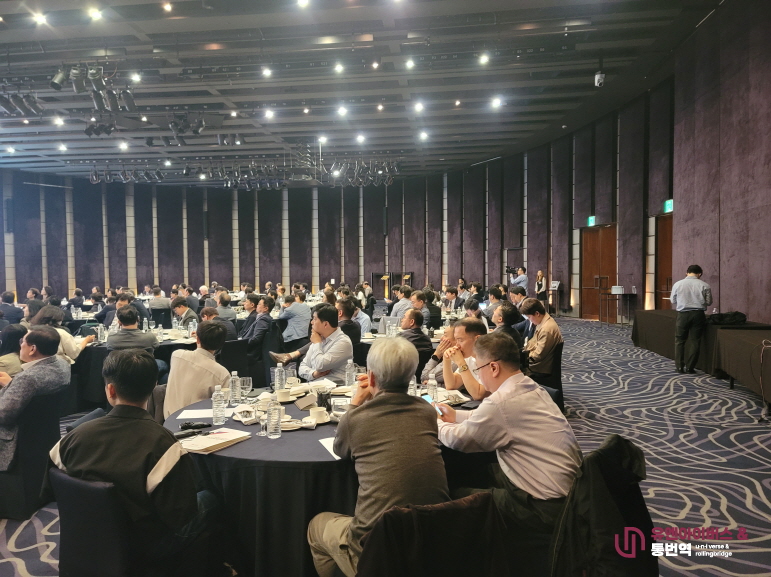
9. Performance Evaluation
Through this China market entry investment briefing, complex investment policies and regulatory environments were delivered in a structured and comprehensible manner.
During Q&A and networking sessions, communication flowed smoothly, leading to follow-up discussions and concrete investment considerations.
10. Representative Engagement Cases
“2024 China Market Entry Investment Briefing” – Simultaneous Interpretation
“Korea–China Economic Cooperation Forum” – Investment Session Interpretation
“China New Economy Investment Strategy Seminar” – Interpretation Support
11. FAQ
China Market Entry Investment Briefing Interpretation
1. Why is interpretation important in China market entry investment briefings?
Investment briefings related to China market entry often involve complex discussions on government policies, legal regulations, tax systems, and industry trends.
Professional simultaneous interpretation ensures that investors, government representatives, and corporate participants clearly understand policy frameworks and market opportunities, enabling effective investment communication.
2. What makes interpretation for China investment briefings complex?
China-focused investment interpretation requires understanding several specialized areas simultaneously, including:
-
Chinese central and local government investment policies
-
Foreign investment law and regulatory structures
-
Taxation systems and fiscal incentives
-
Labor and employment regulations
-
Industry-specific market trends
Accurate interpretation is critical because misinterpretation of legal or policy details could lead to investment misunderstandings or risk.
3. What type of interpretation is typically used in investment briefings?
Most China investment briefings use simultaneous interpretation, especially during:
-
Investment policy presentations
-
Industry trend briefings
-
Government agency presentations
-
Investor relations sessions
-
Panel discussions and Q&A
Simultaneous interpretation enables real-time communication among international participants without interrupting the business discussion flow.
4. How do interpreters prepare for China market entry investment seminars?
Preparation typically includes:
-
Reviewing Chinese investment policy and legal documents
-
Studying industry-specific investment trends
-
Building bilingual glossaries related to taxation, labor law, and joint venture structures
-
Analyzing presentation materials and expected investor questions
-
Reviewing economic indicators and market data
This preparation ensures stable interpretation during high-level investment discussions.
5. What topics are commonly discussed in China investment briefings?
Typical topics include:
-
Foreign investment policies and incentives
-
Regional investment environments in Chinese provinces and cities
-
Industry development trends in manufacturing, technology, and green energy
-
Legal frameworks and regulatory compliance
-
Joint venture (JV) structures and partnership models
-
Investment risk management and market entry strategies
These discussions require precise interpretation to ensure clarity for investors and corporate decision-makers.
6. Why is policy and legal accuracy important in investment interpretation?
Investment briefings often involve sensitive information such as tax rates, regulatory approval procedures, and legal responsibilities.
Accurate interpretation prevents misunderstandings that could affect investment decisions, regulatory compliance, or contractual negotiations.
7. How does UNIVERSE RB ensure interpretation quality in investment seminars?
UNIVERSE RB applies its QMS 9-Step Quality Management System, which includes:
-
Analysis of investment policy scope and business context
-
Integration of Korean–Chinese specialized terminology
-
Matching interpreters with China market expertise
-
Verification of tax rates, regulatory terminology, and financial data
-
Real-time quality monitoring during the event
-
Post-event feedback and improvement
This structured system ensures reliable interpretation in high-level investment environments.
8. Who usually participates in China market entry investment briefings?
Participants commonly include:
-
Government investment promotion agencies
-
Economic development authorities
-
Korean and Chinese corporations
-
International investors and financial institutions
-
Trade associations and industry organizations
Professional interpretation ensures smooth communication between government representatives, investors, and business partners.
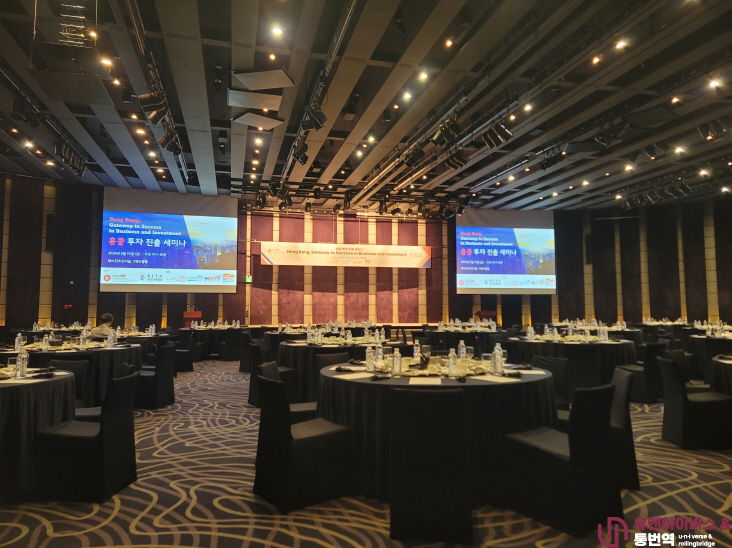
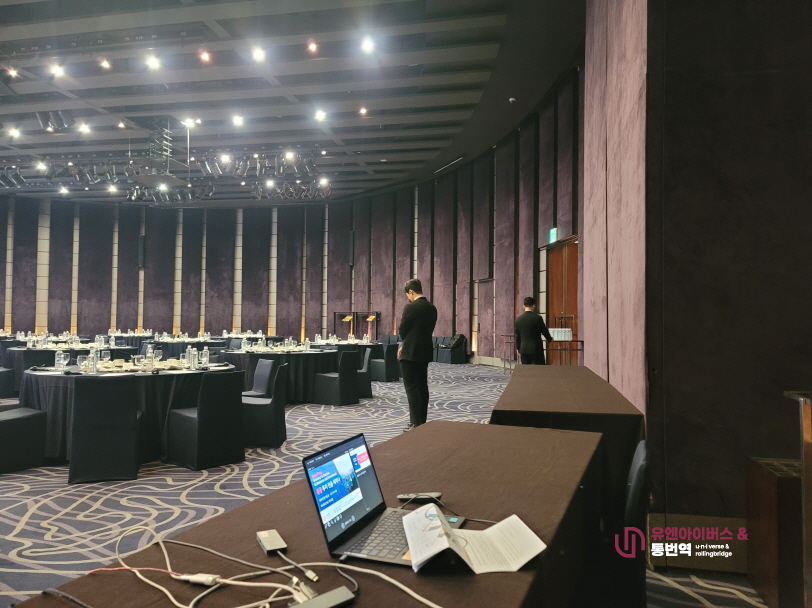
In large-scale international seminars, stable multilingual communication is achieved when interpretation systems, technical equipment, and interpreter operations are designed as an integrated architecture.
Conclusion
Interpretation at China market entry investment briefings is a practice-oriented, high-level professional field integrating policy, law, industry, and cultural context.
Accurate and strategically aligned Korean–Chinese simultaneous interpretation reduces entry risks and enhances cooperation opportunities in the China expansion process.
This
session represents one of the cases conducted as part of corporate investment
communication and global market strategy discussions.
Investment strategies and market approaches continue to evolve according to
global economic conditions and industry developments.
→ Explore Investor Relations & Pitching Cases
https://universerb.com/en/11_en/200?page=39
The case archive on this
website is based on interpretation and global communication experiences
conducted in international seminars, policy forums, corporate presentations,
and industry conferences.
To comply with client confidentiality and the Code of Professional Conduct,
some event details are described in a generalized manner.