
Quotation


Performance
UN Human Rights Tribunal Invited Seminar Simultaneous Interpretation | Human Rights Law · International Justice · Global Governance – UNIVERSE RB
- 2026.02.22
Public Policy & Global Governance
Category
Description
This category covers interpretation cases related to international policy
forums, public cooperation initiatives, ODA programs, and global governance
topics including environmental and climate policy.
UNIVERSE RB provides integrated services including:
Simultaneous interpretation Consecutive interpretation International conference interpretation Policy document translation QMS-based quality management operations
We support international policy forums, government cooperation meetings, and global governance conferences with stable interpretation environments.
1. Overview
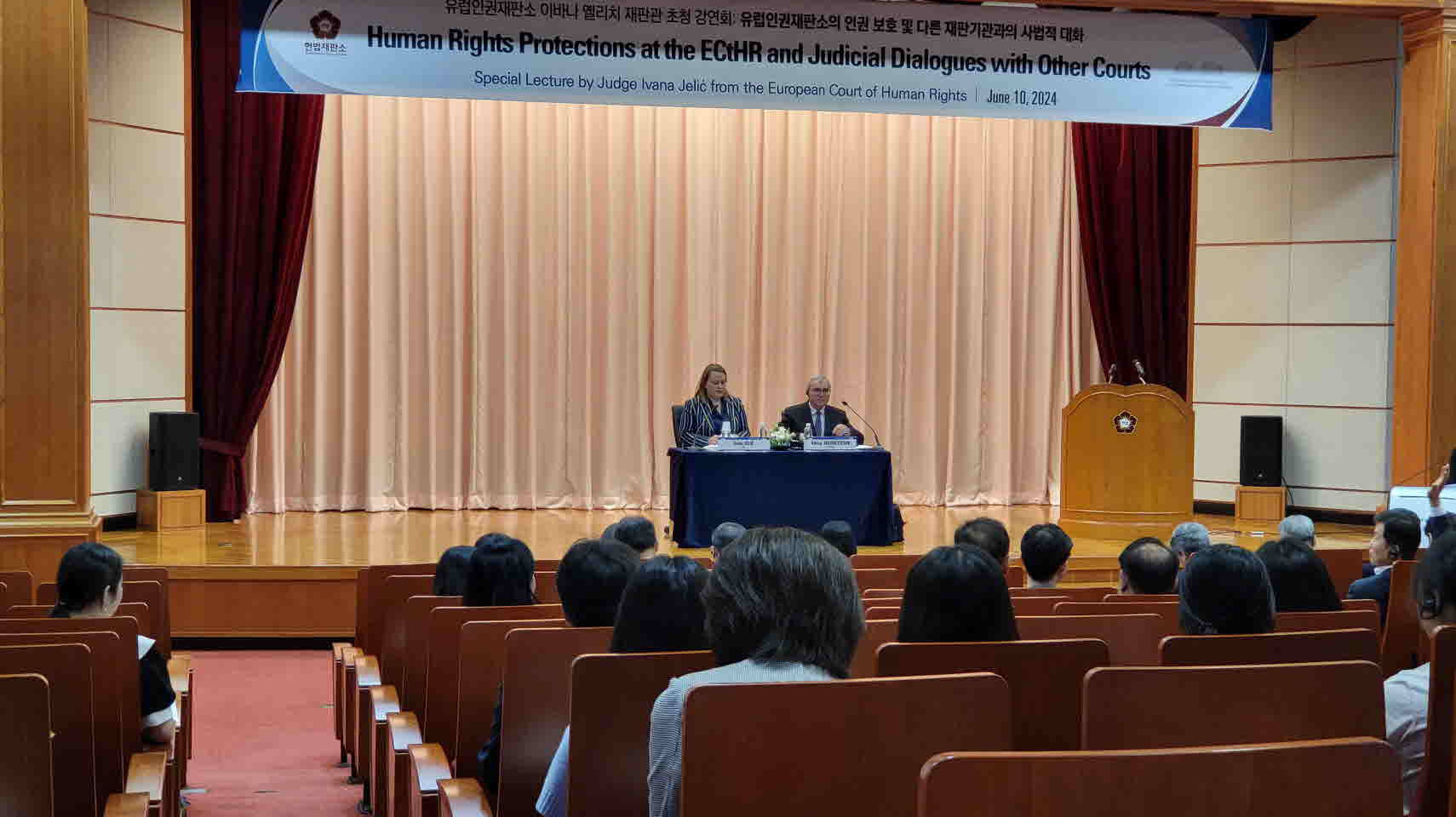
The UN Human Rights Tribunal Invited Seminar was convened as a high-level international legal forum focused on international human rights law, international criminal justice, transitional justice, and the strengthening of global human rights protection systems.
The seminar brought together representatives of international organizations, judges and legal experts, government human rights officials, academic researchers, civil society organizations, and policymakers to discuss the development of international human rights standards and frameworks for intergovernmental cooperation.
For this event, UNIVERSE comprehensively delivered:
-
AI-based interpretation strategy design
-
Simultaneous interpretation services
-
Specialized international law document translation
-
Interpretation system architecture design
-
QMS-based quality management implementation
UNIVERSE does not simply provide interpreters.
We implement an AI-driven interpretation system design model.
2. Key Topics
① International Human Rights Law
-
Interpretation of international human rights conventions
-
UN human rights mechanisms
-
Case analysis of international criminal trials
-
Review of state compliance with human rights obligations
② Transitional Justice & Accountability
-
Transitional justice models
-
Accountability for war crimes and crimes against humanity
-
Truth and reconciliation commission case studies
-
Victim rights protection frameworks
③ Judicial Cooperation & Enforcement
-
International judicial cooperation systems
-
Extradition and jurisdictional issues
-
Judgment enforcement mechanisms
-
Cooperation among regional human rights courts
④ Policy & Global Governance
-
Human rights–based policy design
-
Alignment between international norms and domestic law
-
Human rights and the Sustainable Development Goals (SDGs)
-
Global governance and the rule of law
3. Interpretation Competency Requirements
This seminar required advanced interpretation capabilities integrating legal, diplomatic, and policy language.
■ Legal & Thematic Expertise
-
Proficiency in international human rights law and international criminal law terminology
-
Understanding of treaty, convention, and judgment structures
-
Ability to analyze legal argumentation frameworks
-
Competence in case law and doctrinal interpretation
■ Diplomatic & Formal Register Control
-
Adjustment of diplomatic tone
-
Maintenance of formal register for high-level statements
-
Neutral delivery of sensitive matters
■ Analytical & Procedural Interpretation
-
Structural reconstruction of complex legal sentences
-
Summarization of judicial reasoning and key legal issues
-
Real-time responsiveness during Q&A sessions
UNIVERSE interpreters function not merely as language transmitters,
but as Legal Context Architects.
4. Interpretation Cost Structure Analysis
Interpretation costs for this seminar were determined not by duration alone,
but by the level of legal complexity and formal protocol requirements.
Cost Determination Factors
-
Language combinations (Korean–English, etc.)
-
One vs. two simultaneous interpreters
-
Weighting for international law specialization
-
Scope of pre-event material analysis
-
AI-assisted subtitle system integration
-
Security and confidentiality requirements
-
Rehearsal and quality management planning
UNIVERSE structures cost as the result of interpretation system architecture design.

5. Interpretation System Design
System Architecture
-
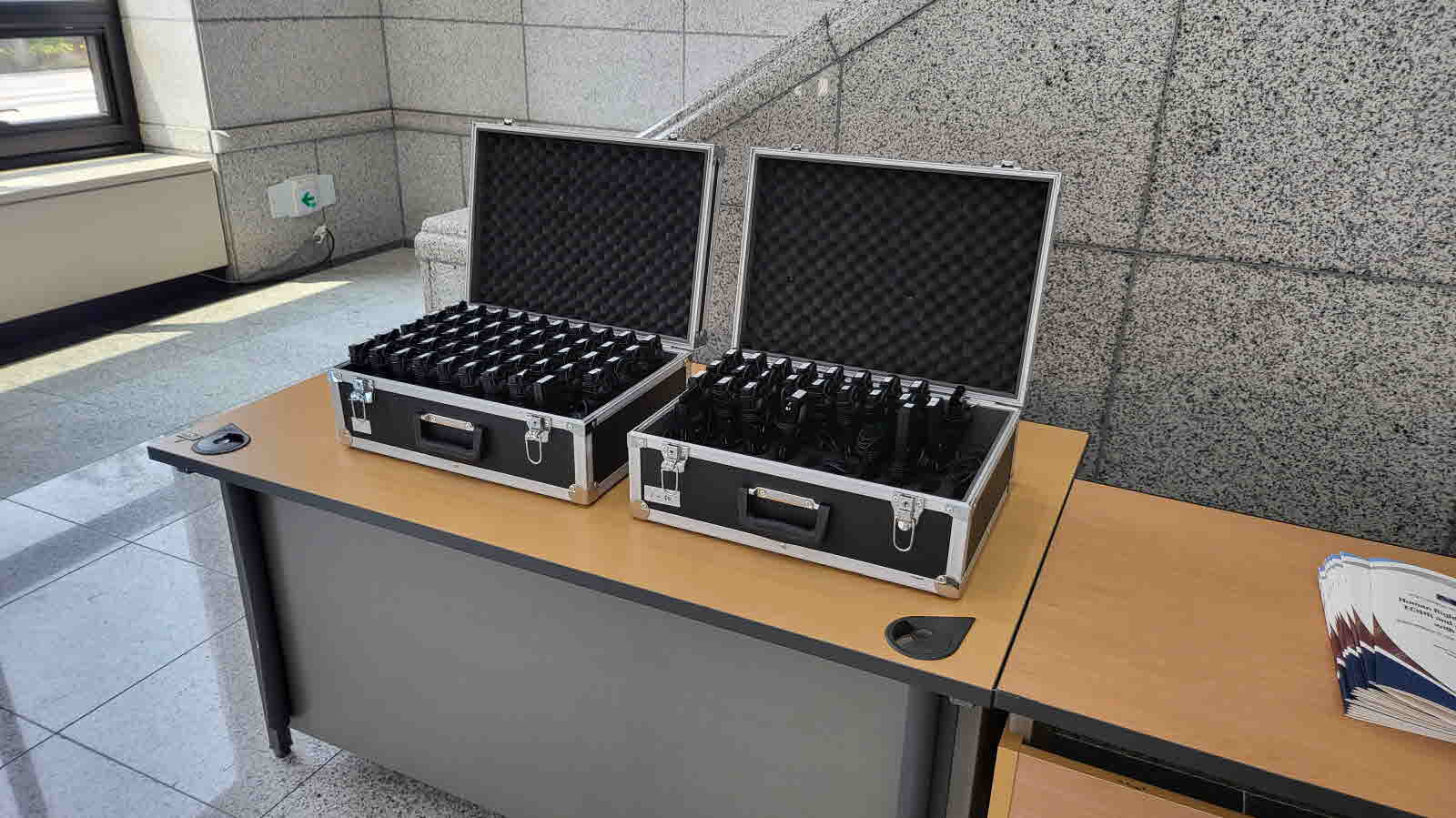
Soundproof booth installation
-
International conference-standard receiver systems
-
Separation of presenter audio channels
-
Hybrid international broadcasting integration
-
AI-assisted subtitle system deployment
-
On-site technical and security supervision
Operational Model
-
Two simultaneous interpreters for high-complexity legal sessions
-
Pre-development of case law and treaty glossaries
-
High-level protocol briefing
-
Dual-stage audio and network testing
Interpretation was executed not as staffing,
but as an integrated AI–space–security–technology system architecture.
6. AI vs Human Strategic Deployment
AI-Suitable Areas
-
Structured report presentations
-
Repetitive explanation of conventions
-
Automated subtitle generation
-
Draft internal document translation
Human-Critical Areas
-
Interpretation of legal argumentation
-
Comparative case law explanations
-
Delivery of diplomatically sensitive statements
-
Live Q&A sessions
AI performs analytical processing.
Human interpreters design legal meaning and diplomatic balance.
UNIVERSE applies an AI + Human integrated system model.
7. QMS (Quality Management System)
QMS Implementation
-
Pre-analysis of international law materials
-
Alignment of treaty and case law terminology
-
Interpreter briefing sessions
-
Audio and security inspection
-
Real-time on-site quality monitoring
-
Post-event feedback review
Quality is not dependent solely on individual skill.
It is engineered through a repeatable management system.
8. Translation Scope
The seminar included translation of:
-
Program booklets
-
Judgment summaries
-
Treaties and convention documents
-
Press releases
-
Post-seminar reports
All translations were delivered with strict legal accuracy and formal register.

8. FAQ
1) What type of interpretation is typically used for international legal and human rights seminars?
International legal and human rights seminars generally use simultaneous interpretation, allowing participants to follow complex legal arguments and policy discussions in real time.
This format is widely used in international tribunals, human rights conferences, and global policy forums.
2) Why is interpretation important in international human rights forums?
Human rights forums involve discussions related to:
international human rights treaties
international criminal law and tribunals
transitional justice mechanisms
global governance and rule of law frameworks
Accurate interpretation ensures that legal experts, policymakers, and international organizations clearly understand legal arguments and policy frameworks.
3) What challenges do interpreters face in international legal seminars?
Interpreters working in international legal forums must handle challenges such as:
complex legal terminology and doctrinal language
long and structured judicial sentences
references to international treaties and case law
real-time interpretation of legal argumentation
Professional interpreters must maintain accuracy and neutrality.
4) What types of events require interpretation services in international law and policy fields?
Professional interpretation services are commonly required for events such as:
international legal conferences
human rights tribunal seminars
transitional justice forums
international organization policy meetings
government and diplomatic consultations
These events require specialized legal and diplomatic terminology.
5) What documents are commonly translated for international legal seminars?
Typical materials requiring translation include:
international treaties and conventions
legal case summaries and judgments
policy reports and briefing papers
conference presentations and official documents
press releases and post-event reports
Legal translations require strict terminology accuracy and formal register.
6) Why is neutrality important when interpreting legal and diplomatic discussions?
International legal discussions often involve sensitive political and diplomatic matters.
Interpreters must faithfully convey statements without adding interpretation or bias, maintaining professional neutrality and legal accuracy.
7) How are AI tools used in interpretation environments for legal forums?
AI-assisted tools may support interpretation environments through:
speech recognition and automated subtitles
draft document translation
terminology analysis for legal materials
data processing for structured presentations
However, interpretation of legal reasoning and diplomatic nuance remains the responsibility of human interpreters.
8) How does UNIVERSE RB ensure interpretation quality for international legal forums?
UNIVERSE RB applies a structured interpretation quality management framework that includes:
pre-event analysis of legal materials and terminology
interpreter briefing and coordination
professional interpretation equipment and system design
real-time monitoring during events
post-event evaluation and feedback
This structured approach supports reliable interpretation services for international legal and policy forums.
10. Conclusion
The UN Human Rights Tribunal Invited Seminar was a high-complexity international legal forum where international law, diplomacy, and policy intersected.
UNIVERSE provided:
✔ Cost structure analysis
✔ Interpretation system design
✔ AI strategy integration
✔ QMS-based quality management
UNIVERSE operates interpretation as a strategic international legal communication system, not merely as a language service.
This
case represents one of the sessions conducted as part of international policy
cooperation and global governance discussions.
Policy environments and international cooperation frameworks continue to evolve
in response to economic, environmental, and development policy changes.
→ View Public Policy & Global Governance Cases
https://universerb.com/en/11_en/116?page=39
https://universerb.com/en/11_en/118?page=39
The case archive on this
website is based on interpretation and global communication experiences
conducted in international seminars, policy forums, corporate presentations,
and industry conferences.
To comply with client confidentiality and the Code of Professional Conduct,
some event details are described in a generalized manner.