
Quotation


Performance
[FAQ] How Is Interpretation Structured for Hybrid Events?
- 2026.02.21
AI Simultaneous Interpretation System Architecture · Operations
Interpretation System Design Structure
Hybrid events may use a dual interpretation structure combining:
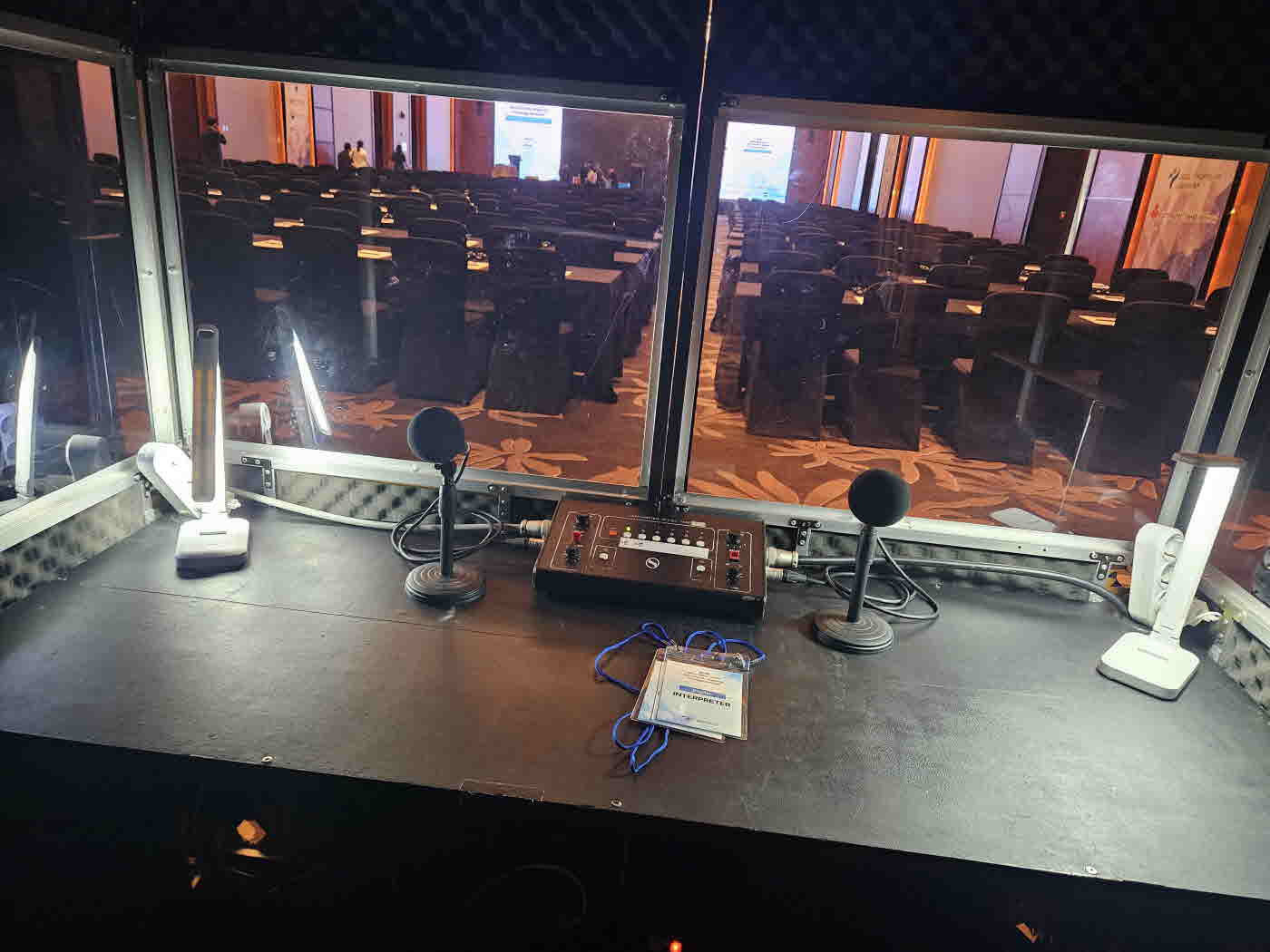
- On-site interpretation booths
- Remote interpretation systems
- Network-based multilingual distribution
- AI-assisted subtitles or translated audio
The basic operational flow is:
Audio Input → Audio Separation → Interpretation Processing → Multilingual Transmission
Depending on the event scale, format, and communication risk, the system may also require:
- Primary and backup networks
- Redundant audio paths
- Interpreter monitoring
- Real-time subtitle monitoring
- Backup computers and AI engines
- On-site and remote technical operators
- Recording and archiving systems
For important international events, network redundancy helps maintain interpretation and audio transmission if the primary connection becomes unstable.
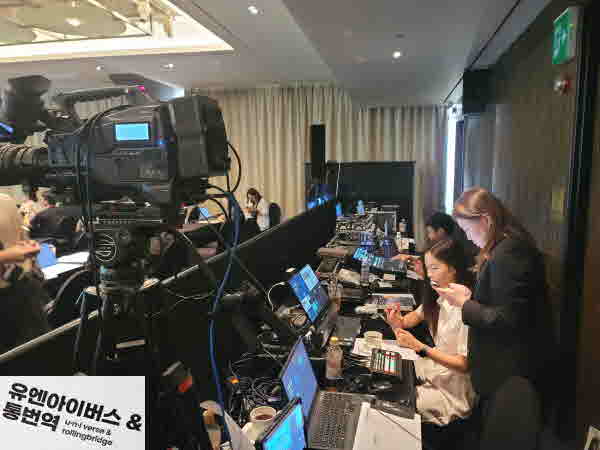
What Differentiates UNIVERSE RB AI Simultaneous Interpretation?
Even when the same AI engine is used, results may differ significantly according to the operational structure.
UNIVERSE RB does not operate AI as an independent, unsupervised system.
The system may integrate:
- Professional audio input
- Noise-controlled channel separation
- Event-specific glossary preparation
- Real-time speech editing
- Professional interpreter review
- AI speech recognition and translation
- Subtitle display or multilingual transmission
- Human monitoring and correction
The core difference is not the AI engine alone.
It is how audio, terminology, people, and technology are coordinated as one multilingual communication system.
The Core Is Not AI Performance · It Is Operational Structure
A basic AI interpretation system generally follows this process:
Direct Speech Recognition → Automated Translation → Immediate Output
This structure is fast and convenient but may be vulnerable to:
- Pronunciation and accent variations
- Rapid or unclear speech
- Overlapping speakers
- Technical terminology
- Proper nouns and institutional names
- Numerical data
- Incomplete sentence recognition
- Accumulation of errors across longer sentences
- Semantic distortion in policy or technical discussions
These risks become more significant during diplomatic forums, medical conferences, legal discussions, investor events, and high-level technical sessions.
UNIVERSE RB therefore applies a human-led hybrid structure when event risk requires greater accuracy and control.
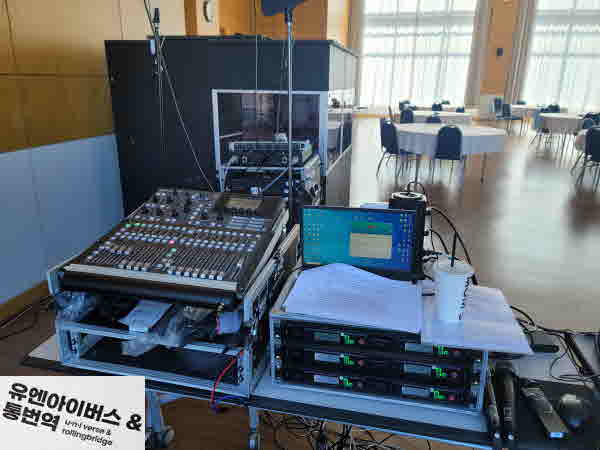
UNIVERSE RB AI Hybrid Interpretation Structure
The advanced configuration combines three coordinated roles:
1. Real-Time Stenographer or Speech Editor
- Captures and organizes spoken content
- Corrects obvious speech-recognition errors
- Removes fillers and unnecessary repetition where appropriate
- Clarifies sentence boundaries
- Produces more structured language input
- Supports accurate subtitle timing
2. Professional Interpreter or Language Specialist
- Manages specialized terminology
- Verifies contextual meaning
- Controls expressions according to event objectives
- Pre-validates technical and policy glossaries
- Reviews proper nouns and institutional names
- Monitors high-risk numerical and semantic content
3. AI Interpretation System
- Processes speech at high speed
- Generates multilingual text or translated audio
- Supports multiple output languages
- Sends subtitles to screens or participant devices
- Provides scalable multilingual distribution
The exact structure varies according to whether the event requires subtitles, translated audio, or both.
System Processing Flow
flowchart TD
A["Speaker Audio"] --> B["Audio Separation"]
B --> C["Speech Editor"]
C --> D["AI Processing"]
D --> E["Interpreter Review"]
E --> F["Multilingual Output"]
F --> G["Screens · Devices · Streaming"]
For speed-focused, low-risk events, some stages may be simplified.
For high-risk events, additional human review improves terminology and contextual control but may introduce a short processing delay. The system must therefore balance speed, accuracy, and operational risk.
Why Can Recognition Accuracy Improve?
AI performance improves when it receives clean, structured, and terminology-aligned input.
When noise is minimized and spoken language is organized before processing:
- Speech recognition becomes more stable
- Sentence-boundary errors decrease
- Technical terminology becomes more consistent
- Error accumulation is reduced
- Multilingual output becomes easier to monitor
- Subtitle readability improves
UNIVERSE RB may target recognition accuracy above 90% in stable, pre-tested environments.
This is an internal operational target rather than a universal guarantee. Actual performance varies according to:
- Language pair
- Speaker accent
- Speech speed
- Microphone quality
- Background noise
- Subject complexity
- Glossary quality
- Speaker overlap
- Network stability
- AI engine performance
The most important principle is that AI output remains under human monitoring when communication risk is high.
FAQ | AI Simultaneous Interpretation System Architecture · Operations
1) How does AI simultaneous interpretation work?
A typical system follows this process:
Audio Input → Audio Separation → Speech Recognition → Translation → Multilingual Output
Depending on the event, the output may be:
- Real-time translated subtitles
- Translated audio
- Individual participant captions
- Large-screen multilingual text
- Online interpretation channels
- Live-streaming language outputs
The system may combine on-site booths, remote interpreters, AI processing, and network-based distribution.
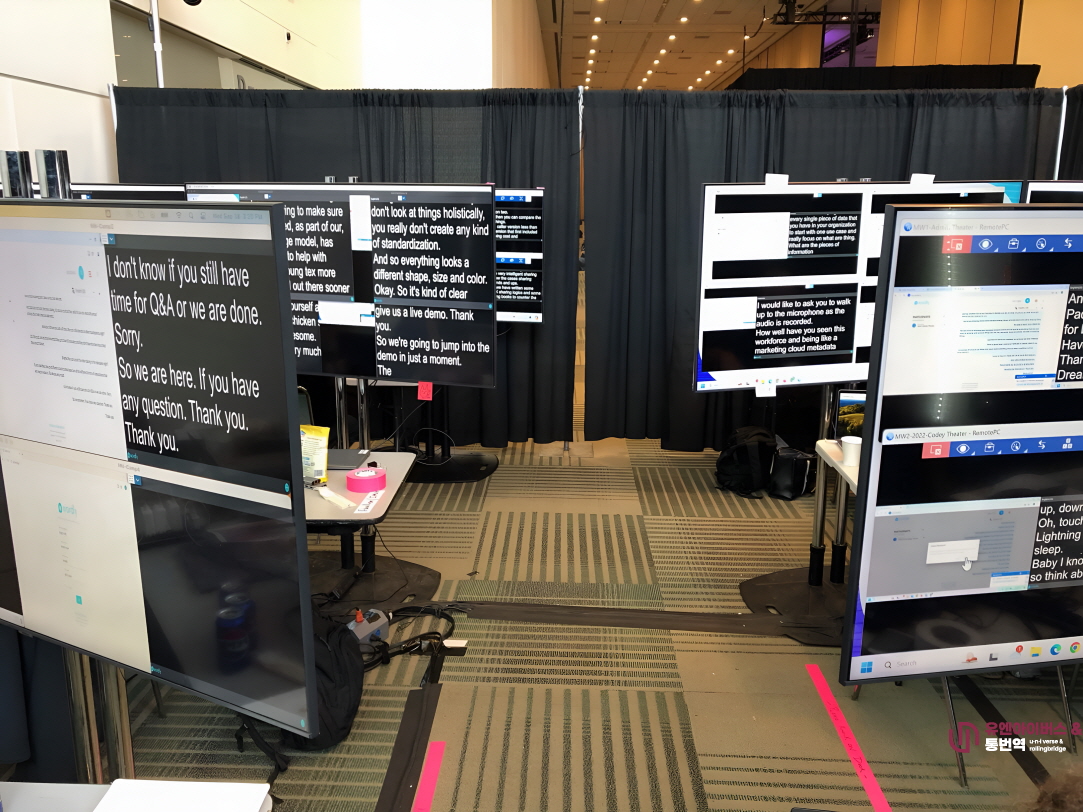
2) Why combine on-site interpretation booths with remote systems?
A hybrid configuration provides greater operational flexibility.
Possible advantages include:
- Access to remote language specialists
- Flexible interpreter deployment
- Separate on-site and online language channels
- Scalable multilingual distribution
- Easier integration with streaming platforms
- Additional backup options
However, hybrid systems are not automatically more stable. They require correct audio routing, network monitoring, synchronization, and backup planning.
3) When is network redundancy necessary?
A primary and backup connection is recommended when interruption would materially affect the event.
Examples include:
- International forums
- Government conferences
- Executive global summits
- Large-scale online conferences
- Multilingual live broadcasts
- Investor events
- Hybrid events with remote speakers or interpreters
The backup connection should use a sufficiently independent network path. Two connections relying on the same internal infrastructure may not provide true redundancy.
4) How accurate is AI simultaneous interpretation?
There is no single accuracy rate that applies to every event.
Performance depends on:
- Source audio quality
- Language pair
- Accent and pronunciation
- Speech speed
- Technical terminology
- Speaker overlap
- Glossary preparation
- Network stability
- Human monitoring
UNIVERSE RB’s architecture may target recognition accuracy above 90% under stable, pre-tested conditions.
However, recognition accuracy and translation accuracy are different. Correct speech recognition does not automatically guarantee correct meaning, terminology, or contextual interpretation.
For this reason, high-risk events require professional human control.
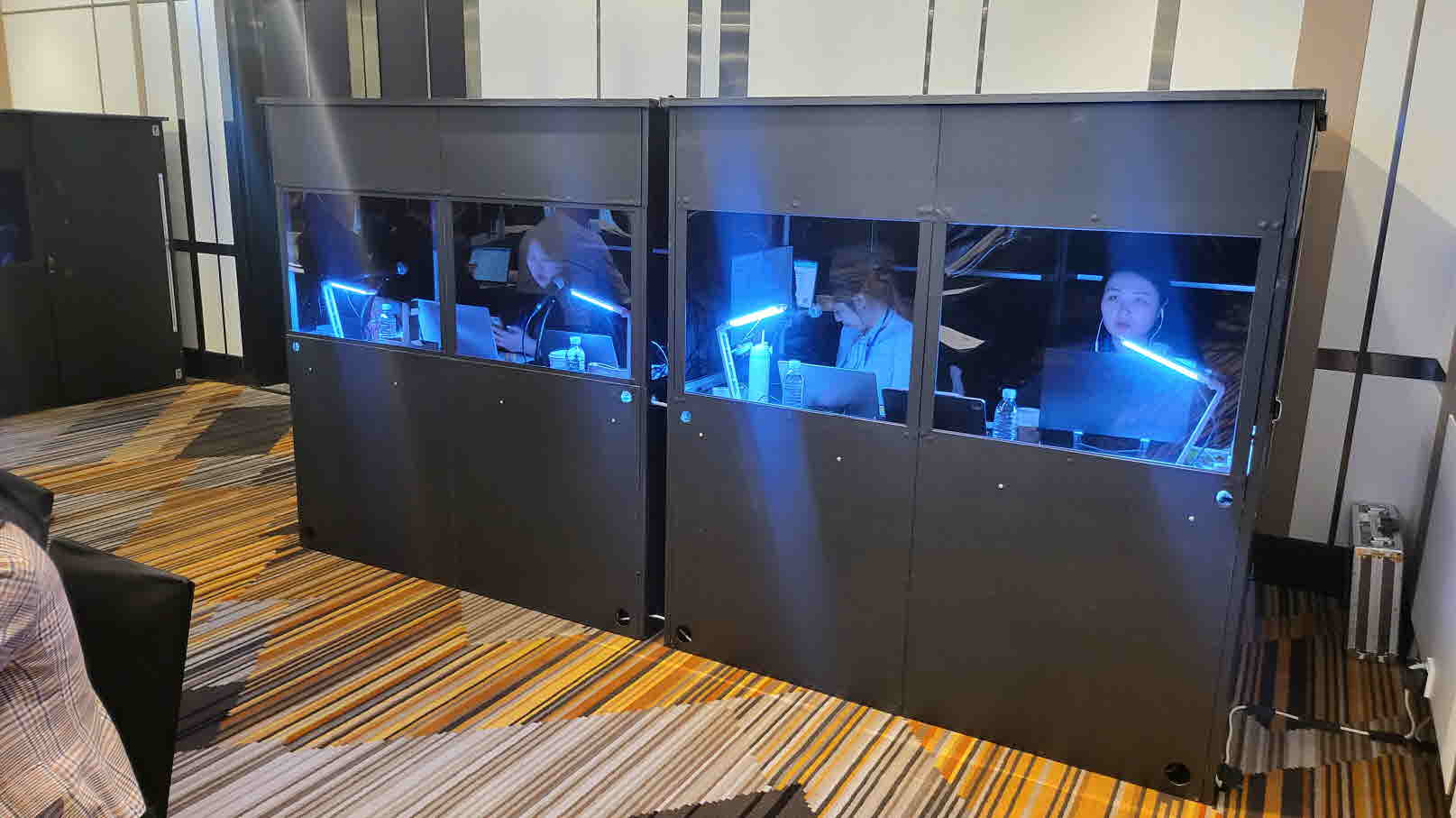
5) What is the most important factor in effective AI interpretation?
The most important factor is the complete operating architecture, not the AI engine alone.
Effective performance requires:
- Clear microphone input
- Proper audio separation
- Event-specific glossary preparation
- Stable network infrastructure
- Appropriate AI processing
- Readable subtitle output
- Real-time human monitoring
- Backup systems
A high-performance AI engine cannot compensate for poor audio, incorrect terminology, or an unstable transmission structure.
6) What are the limitations of conventional AI-only interpretation?
AI-only systems may experience:
- Speech-recognition errors
- Incorrect technical terminology
- Inaccurate proper nouns
- Numerical mistakes
- Awkward sentence structures
- Limited contextual understanding
- Delayed correction
- Error accumulation
- Difficulty with indirect or diplomatic language
These issues are particularly significant in:
- Policy forums
- Medical conferences
- Legal discussions
- Financial presentations
- Executive negotiations
- Advanced technical seminars
AI-only interpretation is more appropriate when the content is low-risk and minor errors do not affect decisions.
7) What is the UNIVERSE RB AI interpretation architecture?
UNIVERSE RB uses a configurable human-led hybrid architecture.
Depending on the event, it may include:
- Real-time stenographers or speech editors
- Professional interpreters
- Technical terminology specialists
- AI speech-recognition engines
- Automated translation systems
- Subtitle and multilingual output systems
- Audio-routing engineers
- Real-time monitoring operators
This structure is designed to balance:
- Speed
- Accuracy
- Terminology consistency
- Contextual clarity
- Operational stability
- Scalability
The final configuration is determined according to the event’s purpose, subject, languages, audience, venue, and communication risk.
AI-Only · Human-Led Hybrid Comparison
Category | AI-Only Structure | UNIVERSE RB Human-Led Hybrid |
Audio input | Direct processing | Separated and monitored input |
Terminology | General engine vocabulary | Event-specific glossary preparation |
Speech structure | Raw speech input | Optional speech editing |
Context control | Limited | Professional human review |
Numerical monitoring | Automated | Human-supervised |
Error correction | Limited or delayed | Real-time monitoring |
Diplomatic nuance | Limited | Human-controlled |
Technical operation | Basic | Integrated system management |
Best use | Low-risk information sharing | Professional and high-risk events |
Closing Statement
The quality of AI simultaneous interpretation is not determined by the AI engine alone.
Audio quality, terminology preparation, speech structure, human expertise, network stability, output design, and technical monitoring must work together.
UNIVERSE RB designs AI-assisted interpretation as an integrated multilingual communication system.
Technology-Enhanced. Expert-Led.
Quality is engineered.
Final Conclusion
Choosing an interpretation company is ultimately about choosing a communication partner.
While company size, revenue, certifications, and market visibility provide useful context, they do not by themselves determine the success of multilingual communication.
Successful outcomes are achieved through careful preparation, experienced professionals, effective project management, and a communication strategy aligned with the objectives of the event.
At UNIVERSE RB, we believe that the best interpretation projects are built on preparation rather than improvisation, systems rather than assumptions, and communication outcomes rather than marketing claims.
Our role is not simply to translate words.
Our role is to help organizations communicate with confidence across languages, cultures, and industries.

About Our Case Archive
The case studies and project insights presented on this website are based on experience supporting international conferences, investor presentations, government forums, executive meetings, technical seminars, and multilingual corporate events.
To protect client confidentiality and comply with the Code of Professional Conduct followed by professional interpreters worldwide, certain project details have been generalized, anonymized, or adapted for educational purposes.
The purpose of these materials is to share practical insights into multilingual communication planning while respecting the confidentiality of every client and every project.
UNIVERSE RB
Designing Communication. Managing Risk. Delivering Understanding.