
Quotation


Performance
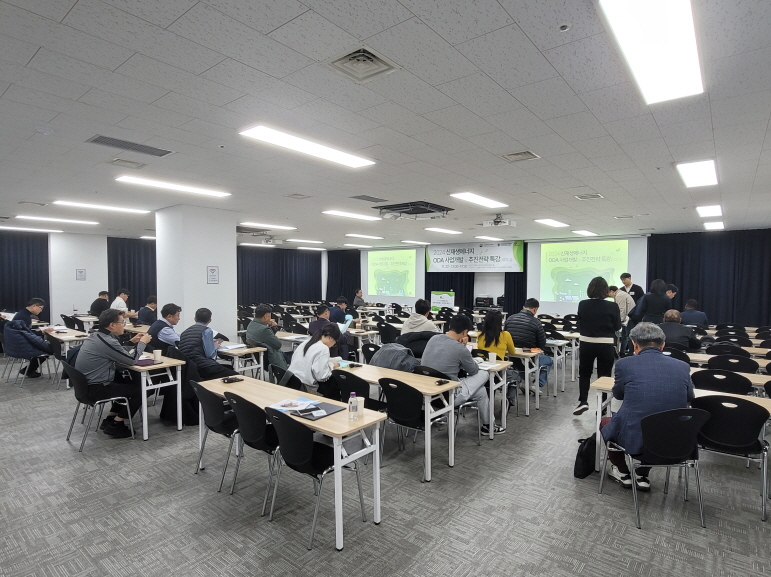
Renewable Energy ODA Program Strategy Seminar Simultaneous Interpretation | Climate Energy · Development Cooperation – UNIVERSE RB
- 2025.12.10
This international energy ODA conference explores sustainable energy transition, development cooperation, climate action, and infrastructure financing for developing countries.
Key interpretation topics include energy access strategies, NDC-aligned energy transition, ODA projects in solar, wind, small hydropower, and bioenergy, microgrids, ESS, smart grids, public–private partnerships (PPP), blended finance, concessional loans and grants, EPC and DBM project models, grid integration, operation and maintenance (O&M), and carbon reduction monitoring through SDG 7, SDG 13, and MRV systems.
Because energy ODA integrates energy engineering, international development, climate policy, development finance, and power systems, professional interpretation is essential to accurately communicate technical concepts, policy objectives, financing mechanisms, and sustainable energy implementation strategies.
Public Policy & Global Governance
Category
Description
This category covers interpretation cases related to international policy
forums, public cooperation initiatives, ODA programs, and global governance
topics including environmental and climate policy.
UNIVERSE RB provides integrated services including:
- Simultaneous interpretation
- Consecutive interpretation
- International conference interpretation
- Policy document translation
- QMS-based quality management operations
We support international policy forums, government cooperation meetings, and global governance conferences with stable interpretation environments.

Executive Summary
The Renewable Energy ODA Program Strategy Seminar is a high-level international forum focused on expanding renewable energy access in developing countries through Official Development Assistance (ODA), climate finance, and Public–Private Partnerships (PPP).
The seminar integrates international development policy, renewable energy engineering, blended finance mechanisms, and SDG-aligned climate strategies.
Simultaneous interpretation requires precise development terminology, engineering accuracy, financial literacy, and diplomatic neutrality under UNIVERSE RB’s QMS-based climate & energy communication architecture.
1. Overview
The Renewable Energy ODA Program Strategy Seminar convenes government ministries, international financial institutions, development agencies, engineering firms, and research organizations to discuss sustainable energy transition strategies in developing economies.
Participants typically include representatives from ministries such as MOFA, KOICA, MOTIE, MOEF, and international organizations including the World Bank, Asian Development Bank, and United Nations Development Programme, along with EPC contractors, consulting firms, and field practitioners.
Interpreters must accurately convey international development frameworks, renewable energy technologies, climate finance mechanisms, and policy dialogue while maintaining a neutral and structured diplomatic tone.
2. Key Topics
Renewable Energy Demand & Policy Trends in Developing Countries
-
Energy-access gaps in Asia, Africa, and Latin America
-
Alignment with Nationally Determined Contributions (NDCs)
-
Reducing energy poverty and improving grid stability
Renewable Energy ODA Project Models
-
Solar PV, wind, small hydropower, bioenergy
-
Battery ESS and distributed generation
-
Community mini-grid systems
Public–Private Partnerships & International Finance
-
Concessional loans and grant structures
-
Blended finance and climate funds
-
DBM (Design–Build–Maintain) & EPC frameworks
-
Private-sector participation in ODA energy projects
Technology Application & O&M
-
Solar efficiency optimization
-
Wind site assessment and turbine placement
-
Grid integration and power quality management
-
Capacity building and workforce development
Climate Action & SDG Alignment
-
SDG 7 (Affordable and Clean Energy)
-
SDG 13 (Climate Action)
-
MRV (Measurement, Reporting, Verification)
-
Carbon monitoring and emission forecasting

3. Interpretation Format
| Session Type | Content | Interpretation Mode |
|---|---|---|
| Keynote Address | Global ODA & climate strategy | Simultaneous |
| Technical Session | Renewable technologies & grid systems | Simultaneous |
| Policy Session | ODA frameworks & PPP models | Simultaneous |
| Case Presentations | Country project cases | Simultaneous / Hybrid |
| Roundtable | IFIs, government, private sector | Simultaneous |
| Expert Workshop | Feasibility studies (F/S) | Consecutive / On-site |
4. Required Competencies
-
Strong understanding of ODA structures and development finance
-
Proficiency in renewable energy terminology (solar PV, wind, ESS, grid systems)
-
Familiarity with concessional loans, blended finance, and PPP frameworks
-
Ability to shift between policy discourse and engineering explanation
-
Accurate interpretation of charts, load curves, and carbon metrics
-
Neutral diplomatic tone in politically sensitive development contexts
5. Practical Interpretation Case Scenarios
Case 1 – Mini-Grid Solar Project Feasibility Study
Precise interpretation of load-demand projections, CAPEX/OPEX estimates, and carbon-reduction forecasts.
Case 2 – Blended Finance Strategy Discussion
Clear differentiation between concessional lending, guarantees, grants, and equity participation mechanisms.
Case 3 – Grid Integration Technical Session
Accurate handling of frequency stability, voltage regulation, and ESS dispatch logic.
6. Interpretation Notes
Accuracy in Development & Policy Terminology
-
ODA → Official Development Assistance
-
PPP → Public–Private Partnership
-
Concessional Loan → Low-interest development loan
-
Grant → Non-repayable assistance
-
Grid Integration → Integration into national grid
Distinguishing financing instruments and institutional mandates is critical.
Accuracy in Technical Terminology
-
Photovoltaic (PV) Module
-
Wind Resource Assessment
-
Microgrid
-
ESS (Energy Storage System)
-
Capacity Factor
Neutral Delivery for Sensitive Issues
References to infrastructure gaps, fiscal constraints, or governance limitations must be delivered factually without evaluative tone.
Data Precision
Power generation (MWh), project cost (USD), efficiency (%), and carbon reduction (tCO₂) must be conveyed with absolute numerical accuracy.

7. Pricing Determination Conditions
Interpretation fees for a Renewable Energy ODA Strategy Seminar are determined by:
-
Language combination and number of interpretation channels
-
Level of technical engineering density
-
Degree of financial structuring complexity
-
Participation of IFIs and diplomatic-level officials
-
Requirement for team simultaneous interpretation
-
On-site vs. hybrid setup
-
Volume of feasibility study materials and technical annexes
Climate–ODA forums are categorized as high-complexity due to integration of finance, engineering, and diplomatic policy dialogue.
8. Summary
Simultaneous interpretation for a Renewable Energy ODA Strategy Seminar represents a highly specialized professional domain integrating:
-
International development policy
-
Renewable energy engineering
-
Climate finance and PPP structures
-
Multilateral cooperation frameworks
Core competencies include precise development and engineering terminology, structured financial interpretation, data accuracy, and disciplined diplomatic neutrality.
Interpreters serve as climate-development communication architects, ensuring that renewable energy cooperation strategies are conveyed clearly, accurately, and professionally under the UNIVERSE RB QMS framework.
This
case represents one of the sessions conducted as part of international policy
cooperation and global governance discussions.
Policy environments and international cooperation frameworks continue to evolve
in response to economic, environmental, and development policy changes.
→ See ODA & Global Cooperation Cases
https://universerb.com/en/11_en/324?page=39

About Our Case Archive
The case studies and project insights presented on this website are based on experience supporting international conferences, investor presentations, government forums, executive meetings, technical seminars, and multilingual corporate events.
To protect client confidentiality and comply with the Code of Professional Conduct followed by professional interpreters worldwide, certain project details have been generalized, anonymized, or adapted for educational purposes.
The purpose of these materials is to share practical insights into multilingual communication planning while respecting the confidentiality of every client and every project.
UNIVERSE RB
Designing Communication. Managing Risk. Delivering Understanding.