
Quotation


Performance
Privacy and Data Protection Seminar Simultaneous Interpretation | Global Data Governance · Privacy Regulation – UNIVERSE RB
- 2025.12.09
This international privacy and data protection conference explores global privacy regulations, AI-driven data governance, cybersecurity, and enterprise data protection strategies in the digital era.
Key interpretation topics include GDPR, PIPA, and CCPA comparisons, cross-border data transfers, pseudonymization and anonymization, PIMS and ISMS certification, Data Loss Prevention (DLP), AI training data governance, automated decision-making and algorithmic transparency, Incident Response (IR), encryption, access control, Privacy Enhancing Technologies (PETs), and federated learning.
Because data protection integrates law, cybersecurity, artificial intelligence, governance, and regulatory compliance, professional interpretation is essential to accurately communicate legal terminology, technical concepts, security strategies, and international regulatory frameworks.
Public Policy & Global Governance
Category
Description
This category covers interpretation cases related to international policy
forums, public cooperation initiatives, ODA programs, and global governance
topics including environmental and climate policy.
UNIVERSE RB provides integrated services including:
- Simultaneous interpretation
- Consecutive interpretation
- International conference interpretation
- Policy document translation
- QMS-based quality management operations
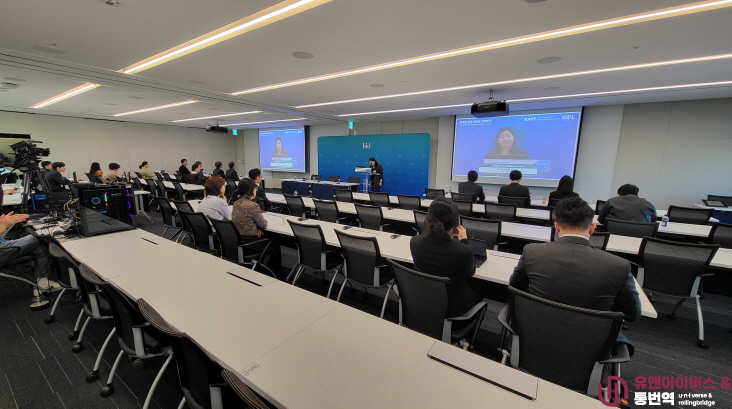
We support international policy forums, government cooperation meetings, and global governance conferences with stable interpretation environments.
Executive Summary
The Privacy & Data Protection Seminar is a high-level international forum addressing global data protection laws, cybersecurity frameworks, AI data ethics, and corporate compliance systems.
The seminar integrates regulatory analysis, technical security infrastructure, cross-border data governance, and AI-related privacy risks.
Simultaneous interpretation requires precision in legal terminology, technical cybersecurity vocabulary, and calibrated neutrality under UNIVERSE RB’s QMS-based global data governance communication architecture.
1. Overview
The Privacy & Data Protection Seminar convenes regulators, legal experts, cybersecurity professionals, AI companies, compliance officers, and international organizations to discuss evolving data protection frameworks and implementation strategies.
Participants may include representatives from the Organisation for Economic Co-operation and Development, Asia-Pacific Economic Cooperation, government regulators, corporate Chief Information Security Officers (CISOs), Data Protection Officers (DPOs), and research institutions.
Interpreters must deliver accurate, balanced, and legally nuanced interpretation of regulatory language and technical security terminology while reflecting differences among global frameworks such as GDPR, PIPA, and CCPA.
2. Key Topics
Global Data Protection Regulations
-
Comparison of GDPR, CCPA, and Korea’s PIPA
-
Cross-border data transfer mechanisms
-
Pseudonymization and anonymization standards
Corporate Data Protection Strategies
-
PIMS and ISMS certification systems
-
Data Loss Prevention (DLP) and insider risk management
-
Data minimization and retention policies
Privacy in the AI & Big Data Era
-
Personal data use in AI model training
-
Automated decision-making and profiling regulation
-
Algorithmic transparency and accountability
Cybersecurity & Incident Response
-
Ransomware and breach case analysis
-
Incident Response (IR) frameworks
-
Organizational security governance models
Privacy-Enhancing Technologies (PETs)
-
Encryption and key management
-
Federated learning
-
Homomorphic encryption
-
Secure access control systems

3. Interpretation Format
| Session Type | Content | Interpretation Mode |
|---|---|---|
| Keynote Address | Global regulatory trends | Simultaneous |
| Legal Session | GDPR, PIPA, compliance requirements | Simultaneous |
| Technical Session | Security technologies & AI governance | Simultaneous |
| Breach Case Session | Legal + technical analysis | Hybrid |
| Corporate Workshop | Compliance operations | Consecutive |
| Panel Discussion | Regulators, experts, academia | Simultaneous |
4. Required Competencies
-
Strong understanding of privacy regulations (GDPR, PIPA, CCPA)
-
Familiarity with cybersecurity and encryption terminology (PKI, access control, log analysis, PETs)
-
Ability to interpret compliance metrics and breach statistics accurately
-
Formal and structured tone for regulator-led sessions
-
Clear and practical delivery for corporate and technical audiences
-
Strict neutrality when discussing breaches, sanctions, or regulatory enforcement
5. Practical Interpretation Case Scenarios
Case 1 – GDPR Cross-Border Transfer Session
Precise differentiation between adequacy decisions, Standard Contractual Clauses (SCCs), and Binding Corporate Rules (BCRs).
Case 2 – Ransomware Incident Review
Accurate delivery of forensic findings and legal obligations without emotional emphasis.
Case 3 – AI Transparency Panel
Clear explanation of explainability requirements and risk-based compliance models.
6. Interpretation Notes
Accuracy in Legal Terminology
-
Data Subject → Data subject
-
Controller / Processor → Data controller / Data processor
-
Lawful Basis → Legal basis for processing
-
Privacy Impact Assessment (PIA) → Data protection impact assessment
-
Consent → Explicit, informed consent
Precision in legal wording directly affects interpretation of compliance obligations.
Handling Sensitive Content
Security breaches, regulatory penalties, or compliance failures must be conveyed factually, without evaluative or critical tone.
Technical Presentation Synchronization
Encryption protocols, network diagrams, and audit logs often appear rapidly in slides.
Recommended sequence:
Technical Concept → Function → Risk → Regulatory Implication
Regulatory Nuance Management
Terms such as “shall,” “must,” “recommendation,” and “guideline” carry different levels of binding authority.
Careful differentiation is essential.
7. Pricing Determination Conditions
Interpretation fees for a Privacy & Data Protection Seminar are determined by:
-
Language combination and number of interpretation channels
-
Legal and technical density of sessions
-
Participation of regulatory authorities
-
Volume of compliance case studies and breach analyses
-
Requirement for team simultaneous interpretation
-
On-site vs. hybrid configuration
-
Availability of regulatory and technical materials in advance
Privacy and cybersecurity seminars are classified as high-complexity events due to integration of legal authority and technical depth.
8. Summary
Simultaneous interpretation for a Privacy and Data Protection Seminar represents a highly specialized field combining:
-
Global privacy law
-
Cybersecurity technologies
-
AI governance
-
International policy frameworks
Core requirements include precise legal vocabulary, strong technical comprehension, neutral and disciplined delivery, and awareness of global regulatory differences.
Interpreters function as data governance communication architects, ensuring that complex and sensitive privacy discussions are conveyed clearly, accurately, and professionally under the UNIVERSE RB QMS framework.
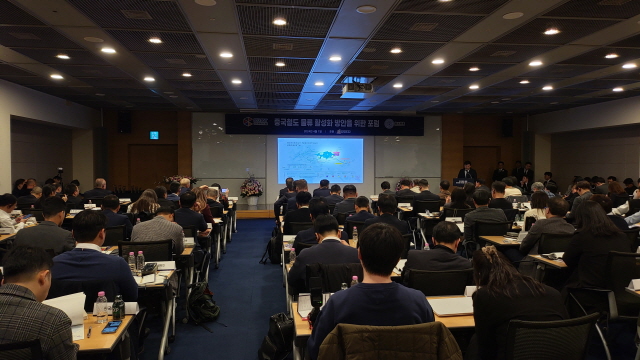
This
case represents one of the sessions conducted as part of international policy
cooperation and global governance discussions.
Policy environments and international cooperation frameworks continue to evolve
in response to economic, environmental, and development policy changes.
→ View Public Policy & Global Governance Cases
https://universerb.com/en/11_en/173?page=39

About Our Case Archive
The case studies and project insights presented on this website are based on experience supporting international conferences, investor presentations, government forums, executive meetings, technical seminars, and multilingual corporate events.
To protect client confidentiality and comply with the Code of Professional Conduct followed by professional interpreters worldwide, certain project details have been generalized, anonymized, or adapted for educational purposes.
The purpose of these materials is to share practical insights into multilingual communication planning while respecting the confidentiality of every client and every project.
UNIVERSE RB
Designing Communication. Managing Risk. Delivering Understanding.