
Quotation


Performance
International Moot Court Simultaneous Interpretation | International Law Advocacy · Judicial Procedure · Human Rights Law – UNIVERSE RB
- 2025.12.09
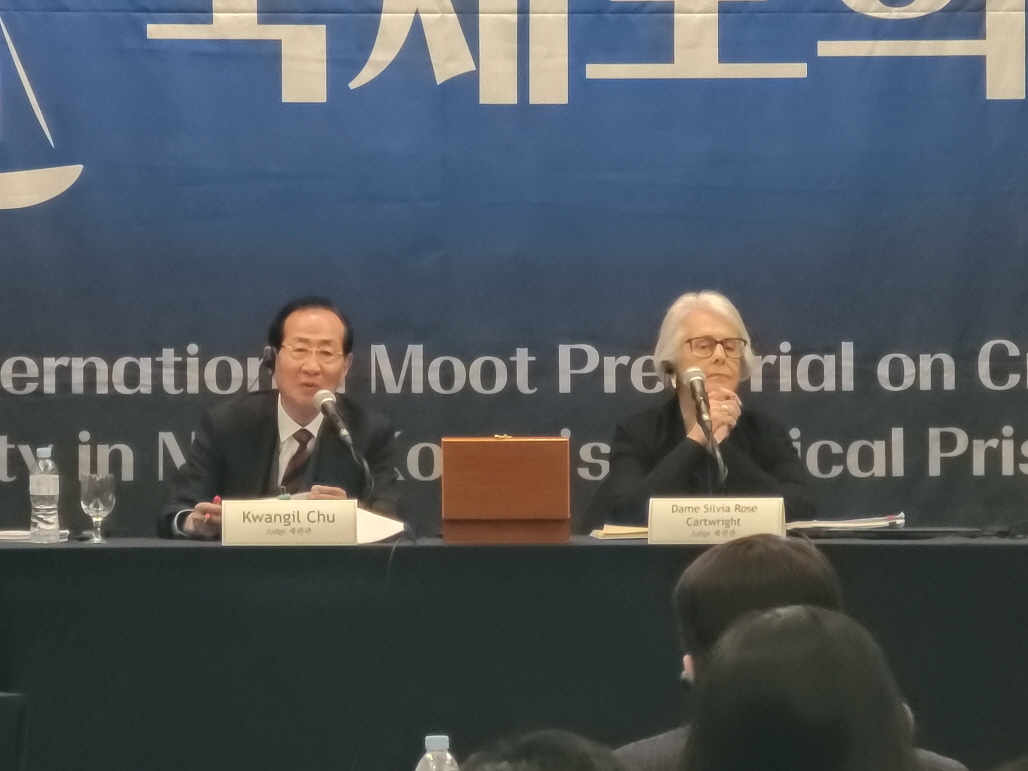
This international law conference and moot court explores international criminal law, international dispute settlement, human rights law, humanitarian law, and courtroom advocacy in global legal practice.
Key interpretation topics include the International Criminal Court (ICC), genocide, war crimes, crimes against humanity, command responsibility, jurisdiction and complementarity, International Court of Justice (ICJ) cases on maritime and territorial disputes, the use of force, the Vienna Convention on the Law of Treaties (VCLT), state responsibility, international human rights and humanitarian law, as well as oral advocacy, evidence examination, cross-examination, and judicial questioning.
Because international law integrates legal doctrine, diplomacy, human rights, and international dispute resolution, professional interpretation is essential to accurately communicate legal terminology, procedural concepts, judicial reasoning, and complex international legal arguments with precision and neutrality.
Public Policy & Global Governance
Category
Description
This category covers interpretation cases related to international policy
forums, public cooperation initiatives, ODA programs, and global governance
topics including environmental and climate policy.
UNIVERSE RB provides integrated services including:
Simultaneous interpretation Consecutive interpretation International conference interpretation Policy document translation QMS-based quality management operations
We support international policy forums, government cooperation meetings, and global governance conferences with stable interpretation environments.

Executive Summary
The International Moot Court is a high-level legal simulation program replicating the procedures and advocacy structure of international courts such as the International Criminal Court and the International Court of Justice.
The event requires simultaneous interpretation across international criminal law, human rights law, treaty interpretation, and judicial advocacy, demanding strict logical reconstruction and terminological precision.
UNIVERSE RB delivered structured and neutral interpretation ensuring accurate rendering of treaty citations, legal reasoning frameworks, and courtroom protocol.
1. Overview
The International Moot Court is an advanced legal education and advocacy forum where participants conduct oral pleadings, witness examinations, and judicial rebuttals under realistic courtroom procedures.
Participants include
-
Professors of international law
-
Current and former judges and prosecutors
-
Practicing attorneys
-
Law school competitors
-
Representatives from international organizations
-
NGO and diplomatic observers
Interpretation must faithfully reconstruct legal arguments, preserve citation integrity, and maintain judicial neutrality.
2. Key Topics
1 International Criminal Law
-
Genocide
-
War crimes
-
Crimes against humanity
-
Command responsibility
-
Jurisdiction and complementarity principles
Precise differentiation of legal elements is essential.
2 International Court of Justice Cases
-
Maritime and territorial boundary disputes
-
Use of force litigation
-
Treaty interpretation under the Vienna Convention on the Law of Treaties
-
State responsibility doctrine
Interpretation must preserve structured legal logic and citation hierarchy.
3 International Human Rights Law and Humanitarian Law
-
Refugee and asylum law
-
Convention Against Torture
-
Convention on the Rights of the Child
-
Protection of civilians in armed conflict
Neutral tone is critical in sensitive human rights matters.
4 Advocacy and Procedural Skills
-
Opening statements
-
Oral pleadings
-
Evidence examination
-
Cross-examination
-
Response to judicial questioning
Interpretation must reconstruct claim basis rebuttal sequences clearly.

3. Interpretation Format
-
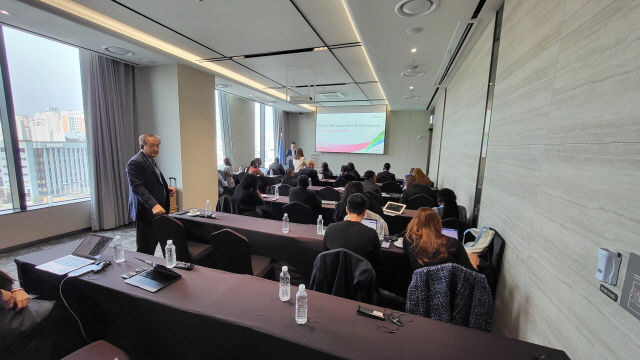
Hearings: Simultaneous interpretation
-
Cross-examination: Rapid simultaneous mode
-
Judicial deliberations: Consecutive or closed interpretation
-
Workshops: On-site interpretation
-
Networking consultations: Consecutive interpretation
Each format requires disciplined courtroom register.
4. Required Competencies
1 Deep understanding of international criminal law, international human rights law, and treaty law
2 Ability to accurately render article numbers, clauses, and citations
3 Immediate reconstruction of structured legal argumentation
4 Rapid processing of abbreviations and case references
5 Strict maintenance of judicial neutrality and formal tone
5. Representative Interpretation Scenarios
Case 1 International Criminal Court Focus Moot
Simultaneous interpretation during pleadings concerning command responsibility and jurisdiction.
Maintained structured legal logic and precise citation delivery.
Outcome
Clear comprehension among judges and academic evaluators.

Case 2 ICJ Territorial Dispute Simulation
Interpretation for arguments referencing maritime delimitation principles and precedent case law.
Ensured accurate delivery of treaty interpretation under VCLT framework.
Outcome
High evaluative feedback for clarity and precision.
Case 3 Human Rights Moot Session
Handled layered judicial questioning on refugee protection obligations.
Structured responses to preserve logical sequencing and legal nuance.
Outcome
Enhanced courtroom coherence and advocacy clarity.
6. Interpretation Notes
Legal Abbreviation Precision
VCLT must reflect Vienna Convention on the Law of Treaties.
CAT must reflect Convention Against Torture.
IHL must reflect International Humanitarian Law.
Article, paragraph, and clause distinctions must be preserved.
Handling Complex Judicial Questions
Judicial questions often contain
-
Multiple sub-issues
-
Hypothetical conditions
-
Procedural references
Interpretation should follow
Issue identification → Legal basis → Clarification → Conclusion
Neutrality in Sensitive Topics
Cases may involve
-
Armed conflict
-
Alleged violations
-
Criminal responsibility
Interpretation must remain strictly objective and detached from emotional framing.
Precision in Testimony
Dates, timelines, geographic references, and legal elements must be rendered without omission.
Even minor alterations may affect case interpretation.
7. FAQ
Q1 Why is moot court interpretation considered highly demanding
Because it requires mastery of international law, structured legal reasoning, and real-time reconstruction of complex argumentation.
Q2 Are dual interpreters required
Yes. Lengthy pleadings and high cognitive load require dual simultaneous interpreters.
Q3 Is pre-event case preparation necessary
Absolutely. Review of memorials, treaty provisions, and case summaries is essential.
Q4 How is neutrality maintained
By adhering strictly to legal terminology and courtroom register without interpretive embellishment.
8. Pricing Determination Conditions
Interpretation fees are determined by
1 Complexity of legal subject matter
2 Number of hearing sessions and languages
3 Volume of case documentation for pre-review
4 Presence of international judges and observers
5 Hybrid broadcasting or recording requirements
6 Duration of hearings and cross-examination sessions
International Moot Courts are categorized as high-intensity legal proceedings requiring senior interpreters with specialized expertise in international law and judicial communication.

Conclusion
Simultaneous interpretation for an International Moot Court represents one of the most rigorous forms of legal interpretation.
It demands
-
Advanced legal literacy
-
Structured logical reconstruction
-
Judicial tone discipline
-
Citation accuracy
-
Absolute neutrality
UNIVERSE RB delivered precise and courtroom-aligned interpretation, supporting high-level international legal education and advocacy excellence.
This
case represents one of the sessions conducted as part of international policy
cooperation and global governance discussions.
Policy environments and international cooperation frameworks continue to evolve
in response to economic, environmental, and development policy changes.
→ View Public Policy & Global Governance Cases
https://universerb.com/en/11_en/118?page=39

About Our Case Archive
The case studies and project insights presented on this website are based on experience supporting international conferences, investor presentations, government forums, executive meetings, technical seminars, and multilingual corporate events.
To protect client confidentiality and comply with the Code of Professional Conduct followed by professional interpreters worldwide, certain project details have been generalized, anonymized, or adapted for educational purposes.
The purpose of these materials is to share practical insights into multilingual communication planning while respecting the confidentiality of every client and every project.
UNIVERSE RB
Designing Communication. Managing Risk. Delivering Understanding.