
Quotation


Performance
Global Leaders Policy Dialogue Simultaneous Interpretation | Geopolitical Strategy · Multilateral Governance – UNIVERSE RB
- 2025.12.08
This international strategy and governance forum explores global cooperation, economic security, geopolitical change, climate resilience, and emerging technologies within the evolving international order.
Key interpretation topics include multilateralism, the rules-based international order, strategic autonomy, supply chain geopolitics, AI and semiconductor competition, digital economy governance, carbon neutrality, energy and food security, Indo-Pacific strategy, deterrence, AI governance, data sovereignty, democracy, and social inclusion.
Because global governance integrates diplomacy, economics, security, technology, and human rights, professional interpretation is essential to accurately communicate policy terminology, strategic priorities, international cooperation frameworks, and diplomatically sensitive discussions with clarity and neutrality.
Education, Leadership & Human Capital
Category Description
This category covers interpretation cases related to education innovation,
leadership strategy, digital learning, and talent development initiatives.
UNIVERSE RB provides integrated services including:
Simultaneous interpretation Consecutive interpretation Education seminar interpretation Educational material translation QMS-based quality management operations
We support education conferences, leadership forums, and global talent development programs.

Executive Summary
The Global Leaders Policy Dialogue is a premier high-level international forum convening heads of state, ministers, leaders of international organizations, CEOs, scholars, and civil society representatives to address complex global challenges.
The dialogue integrates geopolitics, global governance, economic transformation, security strategy, climate action, AI governance, and social inclusion into a fast-paced, high-stakes discussion environment.
UNIVERSE RB provided senior-level simultaneous interpretation ensuring geopolitical accuracy, diplomatic neutrality, strategic coherence, and formal tone consistency throughout the event.
1. Overview
The Global Leaders Policy Dialogue serves as a multilateral platform for strategic reflection and policy coordination on global systemic risks and cooperation frameworks.
Participants included:
-
Heads of state and senior ministers
-
Leaders of international organizations
-
CEOs of multinational corporations
-
Security and policy scholars
-
Civil society and youth representatives
-
Global media
Interpretation required advanced diplomatic literacy and immediate comprehension of complex policy arguments delivered at high speed.
2. Core Discussion Themes
1 Global Governance and Multilateral Cooperation
-
Reform of multilateral institutions
-
Rules-based international order
-
Coalition-building frameworks
-
Crisis coordination mechanisms
Terminology such as consensus, binding framework, joint declaration, and collective commitment required precise rendering.
2 Economic Strategy and Digital Transformation
-
Supply chain resilience
-
Industrial policy modernization
-
Digital economy governance
-
Semiconductor and critical minerals cooperation
Accurate delivery of macroeconomic indicators and strategic policy language was essential.
3 Security Policy and Regional Strategy
-
Indo-Pacific strategic balance
-
Extended deterrence and integrated security
-
Cyber and space governance
-
Hybrid and emerging threats
Neutral tone was critical in discussions referencing geopolitical tensions.
4 Climate Neutrality and Sustainable Development
-
Carbon neutrality roadmaps
-
Climate finance and green transition
-
Energy security diversification
-
SDG implementation
Numerical precision in emissions targets and funding commitments was mandatory.
5 AI Governance and Technological Ethics
-
Responsible AI frameworks
-
Cross-border data governance
-
Algorithmic transparency
-
Dual-use technology concerns
Interpretation required clarity between regulatory intention and technological capability.
6 Social Inclusion and Youth Leadership
-
Inclusive growth strategies
-
Education reform initiatives
-
Youth empowerment programs
-
Democratic resilience
Tone required balanced delivery between policy structure and inspirational messaging.
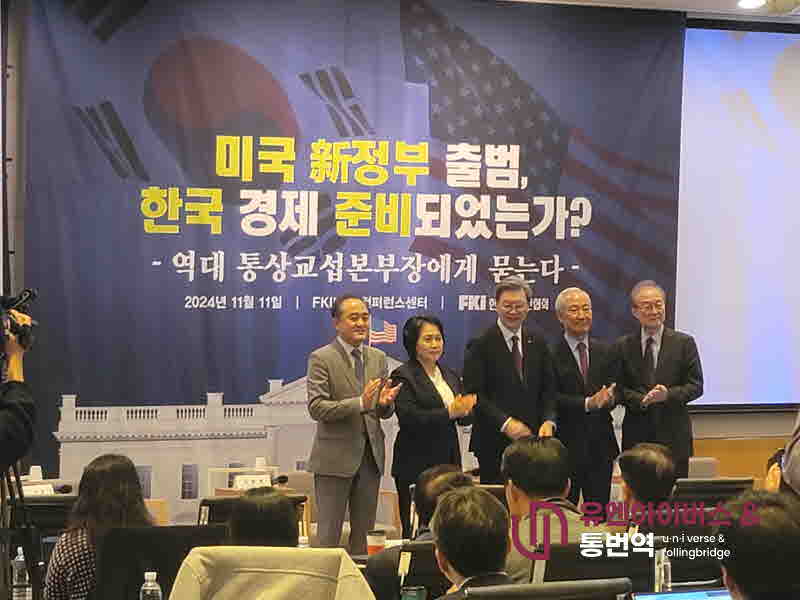
3. Interpretation Competencies Required
1 Deep geopolitical and economic literacy
2 Mastery of diplomatic and multilateral terminology
3 Rapid processing of high-density policy discourse
4 Strict neutrality in politically sensitive discussions
5 Ability to shift between formal declarations and dynamic panel exchanges
4. Representative Interpretation Scenarios
Scenario 1 Heads of State Plenary
Simultaneous interpretation of keynote addresses outlining national policy positions.
Interpreter ensured
-
Formal diplomatic register
-
Accurate rendering of commitments and targets
-
Preservation of rhetorical emphasis without exaggeration
Outcome
Maintained institutional credibility and clarity.
Scenario 2 Security and Economic Strategy Panel
High-speed exchange among ministers and CEOs regarding supply chain resilience and Indo-Pacific policy.
Interpreter maintained
-
Consistent terminology across speakers
-
Structured logical flow
-
Balanced tone during policy disagreement
Outcome
Facilitated constructive strategic dialogue.
Scenario 3 AI and Climate Roundtable
Discussion of AI governance linked with sustainability goals.
Handled
-
Technical regulatory vocabulary
-
Cross-sector terminology alignment
-
Multilateral cooperation references
Outcome
Clear cross-domain understanding among participants.
5. Interpretation Considerations
Diplomatic Neutrality
Statements involving national policy or strategic competition must be delivered verbatim without tonal escalation or reinterpretation.
Logical Structure Preservation
Policy discussions often follow a pattern:
Context → Challenge → National Position → Proposed Framework → Call for Cooperation
The interpreter must preserve this structure clearly.
Numerical and Strategic Precision
Economic indicators, defense spending figures, carbon reduction targets, and technology investment amounts must be exact.
Tone Calibration
-
Ceremonial opening requires formal gravitas
-
Policy panels require disciplined neutrality
-
Youth and social inclusion sessions require inspiring yet structured delivery
6. FAQ
Q1 Why is this dialogue considered highly challenging
Because it combines geopolitics, economics, climate policy, and technology governance within a single high-level forum.
Q2 Are dual interpreters mandatory
Yes. For multi-hour high-level dialogues, dual simultaneous teams are standard practice.
Q3 How are sensitive geopolitical remarks handled
They are delivered exactly as spoken, maintaining diplomatic restraint and neutrality.
Q4 What preparation is required
Review of participating countries’ policy frameworks, multilateral terminology, and current geopolitical developments is essential.

7. Pricing Determination Conditions
Interpretation fees are determined by
1 Number of languages and simultaneous booths
2 Participation of heads of state or senior ministers
3 Security and geopolitical sensitivity
4 Duration of plenary and roundtable sessions
5 Hybrid broadcasting and security protocols
6 Pre-event document and declaration review
7 Requirement for senior diplomatic interpreters
Global Leaders Policy Dialogues are categorized as premier diplomatic events requiring highly experienced interpreters with expertise in international relations and strategic policy communication.
Conclusion
Simultaneous interpretation for a Global Leaders Policy Dialogue represents one of the most prestigious and demanding assignments in international conference interpreting.
It requires
-
Advanced geopolitical understanding
-
Economic and strategic literacy
-
Diplomatic neutrality
-
Structured and polished delivery
Through disciplined preparation and senior-level expertise, UNIVERSE RB ensured accurate, credible, and strategically aligned interpretation supporting high-level global policy dialogue.
This
seminar represents one of the professional sessions sharing insights into
education innovation and talent development strategies.
Education models and leadership strategies continue to evolve alongside digital
learning environments and social changes.
→ View Education, Leadership & Human Capital Cases
https://universerb.com/en/11_en/258?page=39

About Our Case Archive
The case studies and project insights presented on this website are based on experience supporting international conferences, investor presentations, government forums, executive meetings, technical seminars, and multilingual corporate events.
To protect client confidentiality and comply with the Code of Professional Conduct followed by professional interpreters worldwide, certain project details have been generalized, anonymized, or adapted for educational purposes.
The purpose of these materials is to share practical insights into multilingual communication planning while respecting the confidentiality of every client and every project.
UNIVERSE RB
Designing Communication. Managing Risk. Delivering Understanding.