
Quotation


Performance
Semiconductor Supply Chain Conference Simultaneous Interpretation | Semiconductor Policy · Supply Chain Technology – UNIVERSE RB
- 2025.10.29
Advanced Manufacturing & Industrial Systems
Category Description
This category covers interpretation cases related to smart manufacturing,
industrial automation, supply chain management, and ESG-driven production
strategies.
UNIVERSE RB provides integrated services including:
Simultaneous interpretation Consecutive interpretation Industrial technology seminar interpretation Technical document translation QMS-based quality management operations
We support smart manufacturing seminars, industrial technology forums, and manufacturing innovation conferences.
Executive Summary
The Memory Semiconductor Supply Chain Conference was a high-level APEC-linked industrial policy forum addressing global supply-chain resilience, export controls, semiconductor legislation, and next-generation memory technology cooperation.
The event integrated semiconductor engineering, geopolitical strategy, industrial policy, ESG manufacturing, and workforce development frameworks.
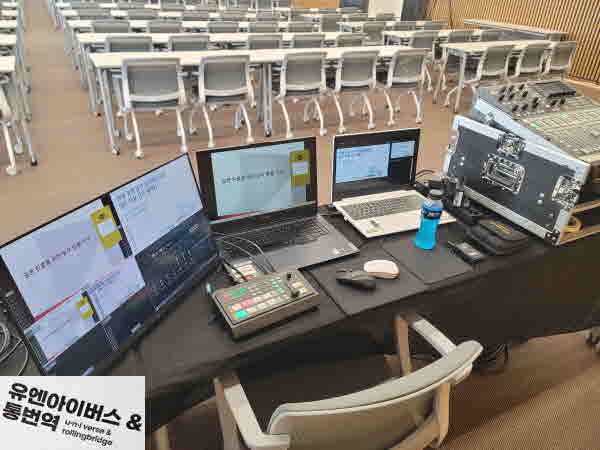
UNIVERSE RB provided simultaneous interpretation and conference material translation under a structured QMS-based semiconductor communication architecture, ensuring precision in technical, policy, and geopolitical terminology.
Event Overview
Hosted by:
-
Ministry of Trade, Industry and Energy (MOTIE, Korea)
-
Asia-Pacific Economic Cooperation – Industry Innovation Committee (APEC IIC)
-
Korea Semiconductor Industry Association (KSIA)
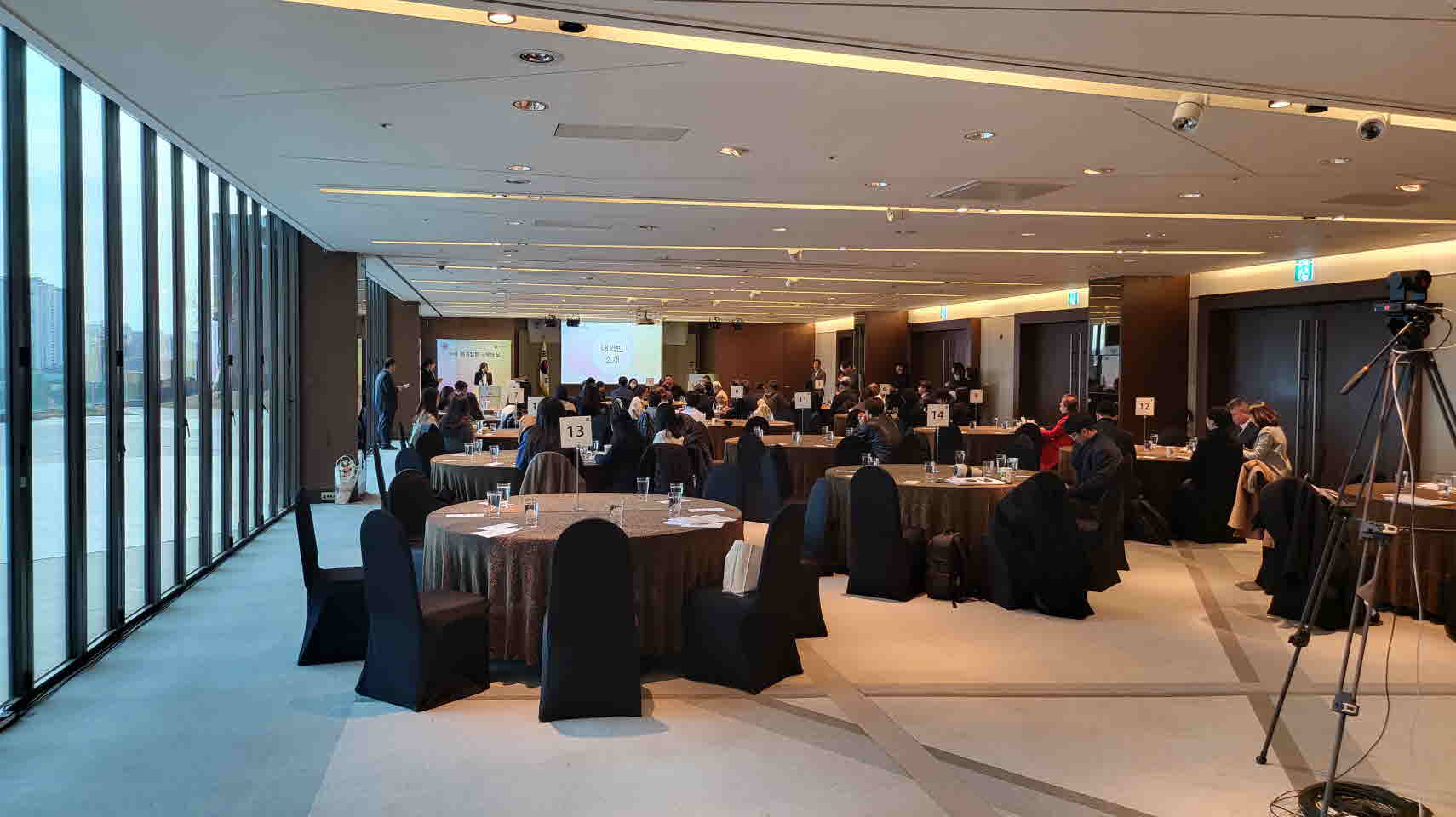
Venue: COEX, Samseong-dong, Seoul
Theme: Stabilizing the Global Memory Semiconductor Supply Chain and Advancing Technological Cooperation
Participants included officials from APEC member economies, global semiconductor manufacturers, memory and foundry companies, equipment suppliers, research institutions, standards organizations, and investment entities.
1. Interpretation Objectives
-
Deliver accurate real-time interpretation of supply-chain risk analysis, export control policies, and semiconductor roadmaps.
-
Align technical and policy terminology across APEC economies.
-
Support multilateral industrial cooperation dialogue with neutral and structured delivery.
2. Key Session Topics
① Global Memory Semiconductor Market Trends & Supply Chain Risks
-
U.S.–China technology competition and export control expansion
-
Comparative analysis of semiconductor legislation (U.S. CHIPS Act, Korea’s K-CHIPS, Japan Rapidus investment framework, EU Chips Act)
-
Diversification and reshoring strategies
② Technological Cooperation & Joint Research
-
Next-generation DRAM and NAND roadmaps
-
Material and equipment self-reliance initiatives
-
AI memory and low-power semiconductor collaboration
③ Sustainable Semiconductor Ecosystem
-
ESG-aligned fabrication processes
-
Waste treatment and recycling in semiconductor manufacturing
-
Carbon-neutral production policy frameworks
④ Policy and Workforce Development
-
Cross-border semiconductor talent programs
-
Standards cooperation under APEC frameworks
-
Technical certification alignment

3. Practical Interpretation Cases
Case 1 – Supply Chain Stabilization Panel
Interpretation for executives from Samsung Electronics, TSMC, and Micron during a session on localization of critical materials and components.
Focus:
-
Technical manufacturing terminology
-
Trade policy nuance
-
Neutral geopolitical framing
Evaluation: High precision and clarity in simultaneous delivery.
Case 2 – Semiconductor Legislation Comparison Forum
Interpretation for officials from the U.S. Department of Commerce and MOTIE.
Delivered real-time comparative explanations of:
-
CHIPS Act
-
K-CHIPS
-
EU Chips Act
Required differentiation of terms such as incentive, subsidy, tax credit, restriction, and strategic designation.
Case 3 – Sustainable Manufacturing & ESG Session
Interpreted presentations on:
-
Carbon-reduction technologies in memory fabrication
-
ESG metrics in semiconductor plants
-
Energy consumption optimization
Handled integrated environmental and engineering terminology during complex Q&A exchanges.
4. Interpretation Notes & Considerations
Mastery of Specialized Terminology
-
Supply Chain Resilience
-
CHIPS Act
-
Foundry vs. Memory
-
EUV Lithography
-
Technology Sovereignty
-
ESG Manufacturing
Consistency across multilingual sessions was critical.
Accuracy in Policy & Industry Language
Differentiate policy instruments precisely:
-
Incentive vs. Subsidy
-
Tax Credit vs. Direct Grant
-
Restriction vs. Export Control
-
Strategic Industry vs. Critical Industry
Maintain technical consistency in:
-
DRAM
-
NAND
-
EUV (Extreme Ultraviolet) Lithography
-
AI Accelerators
Cultural & Geopolitical Sensitivity
The semiconductor industry is directly linked to geopolitical strategy.
Interpretation required:
-
Neutral tone
-
Balanced framing
-
Avoidance of evaluative emphasis
-
Accurate rendering of national policy perspectives
5. Translation of Conference Materials
UNIVERSE RB also provided:
-
Advance translation of policy briefs
-
Technical session abstracts
-
Legislative comparison documents
-
ESG manufacturing data materials
-
Official MOU draft review
Terminology alignment was ensured through pre-event glossary standardization and QMS validation procedures.
6. Interpretation Performance & Evaluation
-
Delivered stable real-time interpretation across technical, economic, and policy sessions.
-
Maintained clarity during high-density semiconductor engineering discussions.
-
Supported multilateral cooperation dialogue among APEC economies.
-
Contributed to the signing of a Korea–Singapore MOU on semiconductor workforce exchange following the forum.

7. Pricing Determination Conditions
Interpretation and translation fees for semiconductor supply-chain conferences are determined by:
-
Language combinations and channel configuration
-
Technical density (memory architecture, fabrication processes, equipment)
-
Legislative and geopolitical complexity
-
Number of pre-translated policy and technical documents
-
Duration and number of simultaneous sessions
-
Requirement for ISO booth and multi-channel systems
-
Participation of high-ranking government and corporate executives
Semiconductor policy forums are categorized as top-tier industrial complexity events due to integration of engineering, trade policy, and geopolitical strategy.
8. Summary
Simultaneous interpretation for the Memory Semiconductor Supply Chain Conference required integration of:
-
Advanced semiconductor engineering terminology
-
Industrial policy and legislative frameworks
-
ESG and sustainable manufacturing concepts
-
Geopolitical awareness and diplomatic neutrality
Under the UNIVERSE RB QMS framework, interpreters functioned as semiconductor communication architects—ensuring that technical innovation, supply-chain resilience strategies, and multilateral cooperation messages were conveyed with precision, neutrality, and international credibility.
This
case represents one of the seminars discussing manufacturing innovation and
evolving industrial production systems.
Manufacturing industries continue to develop through smart factories,
data-driven operations, and automation technologies.
→ View Advanced Manufacturing & Industrial Systems Cases
https://universerb.com/en/11_en/182?page=39
https://universerb.com/en/11_en/179?page=39
The case archive on this
website is based on interpretation and global communication experiences
conducted in international seminars, policy forums, corporate presentations,
and industry conferences.
To comply with client confidentiality and the Code of Professional Conduct,
some event details are described in a generalized manner.